Abdera: An Archaeological Museum of Ancient Greek Life and Burial Customs

Site at a Glance
- Rating
- 4.7
- Popularity
- Low
- Country
- Greece
- Primary era
- Classical
- External website
- Open
- Eras represented
- Iron Age, Classical, Medieval
- Civilizations
- Ancient Greek
- Site type
- Museum
On this page7 sections
History
The Archaeological Museum of Abdera is a museum in Greece, in the modern settlement of Avdira, preserving finds from the ancient Greek city of Abdera and its cemeteries. Its collections span the seventh century BC to the thirteenth century AD and present the city’s public life, private activities, crafts, religious practices, and burial customs.
Excavation and museum planning
Excavations at ancient Abdera began in 1950, creating the need for a dedicated institution to preserve and interpret the discoveries. The earliest finds were kept at the Archaeological Museum of Kavala before being transferred to the Archaeological Museum of Komotini in 1973.
Planning for a museum at Avdira began in 1976 through the Ministry of Culture. The decision to establish the museum followed in 1984, a municipal building permit was issued in 1985, and construction took place from 1989 to 1992. Archaeological material returned from Kavala and Komotini between 1995 and 1998. The permanent exhibition was renewed in 1998 and 1999, and the museum opened on 20 January 2000.
Collections and public role
The museum belongs to the 31st Ephorate of Prehistoric and Classical Antiquities of Xanthi, a regional archaeological authority responsible for archaeological sites and antiquities. It was planned both as an educational institution for primary and secondary students and as a place for visitors with advanced interests in history and archaeology.
The exhibition is arranged around public life, private life, and burial customs. Its themes include religion, administration, warfare, coinage, trade, crafts, domestic work, clothing, and funerary practices. The museum has also hosted scientific tours and educational programs. Its multipurpose hall held a symposium on Clazomenae, Teos, and Abdera as metropolis and colony on 20 and 21 October 2001. In this context, a metropolis was the founding Greek city and a colony was the settlement established from it. A further meeting involving Greek and Spanish participants took place in June 2002 within regional cooperation linking Eastern Macedonia and Thrace, the Spanish region of Adra, and the University of Granada.
The archaeological service also planned the museum as a venue for broader cultural activity, including photographic exhibitions, temporary archaeological and art exhibitions, and audiovisual presentations.
Remains
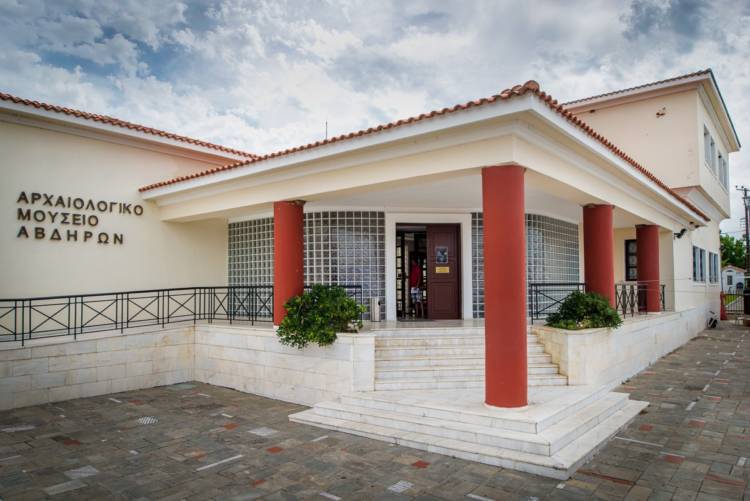
The museum stands in modern Avdira in the Xanthi regional unit of northern Greece. Designed by G. Polychroniou and N. Filippidis of the Ministry of Culture’s museum-study service, its exterior refers to traditional buildings of Thrace. The structure has a basement, a ground floor, and an upper floor, combining exhibition areas with conservation, storage, administrative, and public-service facilities.
Museum building
The basement contains workshops, storage rooms for antiquities and materials, and electrical and mechanical installations. Conservation workshops, public-service areas, the multipurpose hall, and part of the exhibition space occupy the ground floor. Offices and additional exhibition space are located on the upper floor. Explanatory texts, photographs, illustrations, maps, and diagrams accompany the displays.
Public and private life collections
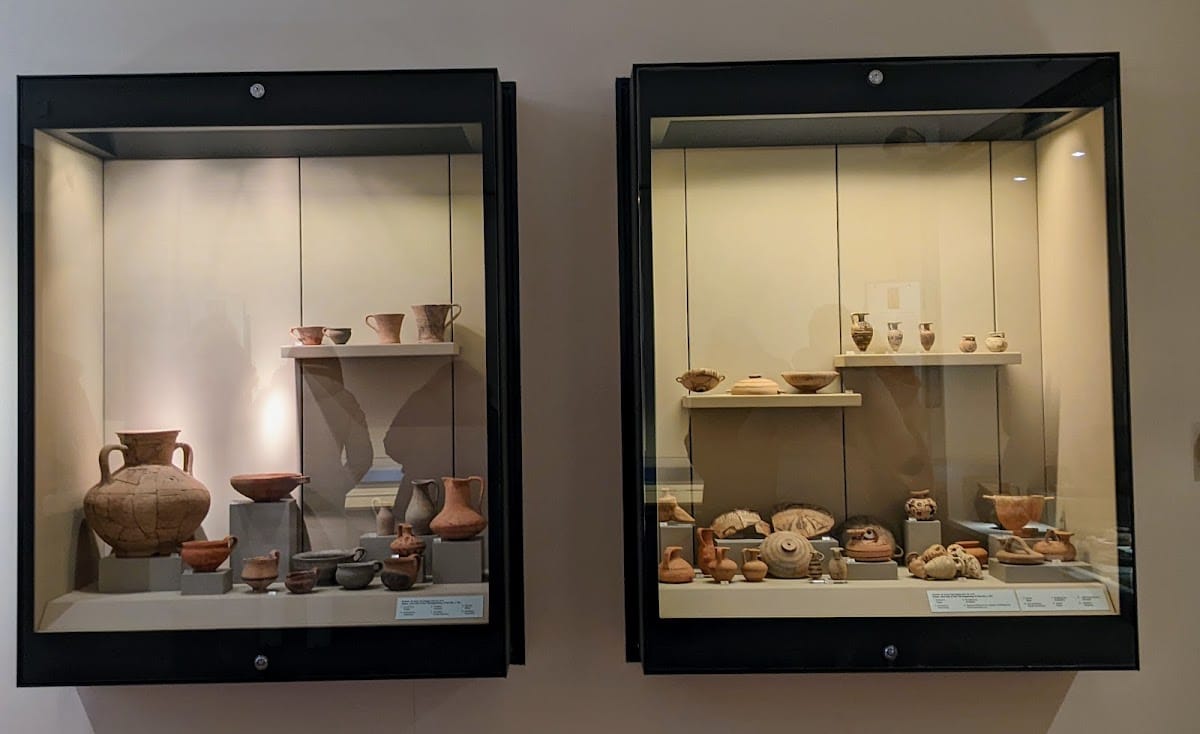
Objects from ancient Abdera and its cemeteries form the museum’s central collections. Displays on public life include inscriptions, figurines, vessels used in cult practices, reliefs, coins, official measures, weights, seals, and weapons. Together, these materials present religious activity, administration, warfare, exchange, and civic organization.
Exhibits associated with private life include tools for fishing, medicine, and animal husbandry, along with material connected to workshops and craft industries. Building elements, pottery, weaving equipment, clothing, personal adornment, and jewelry broaden the picture of work and domestic life in Abdera.
Burial customs
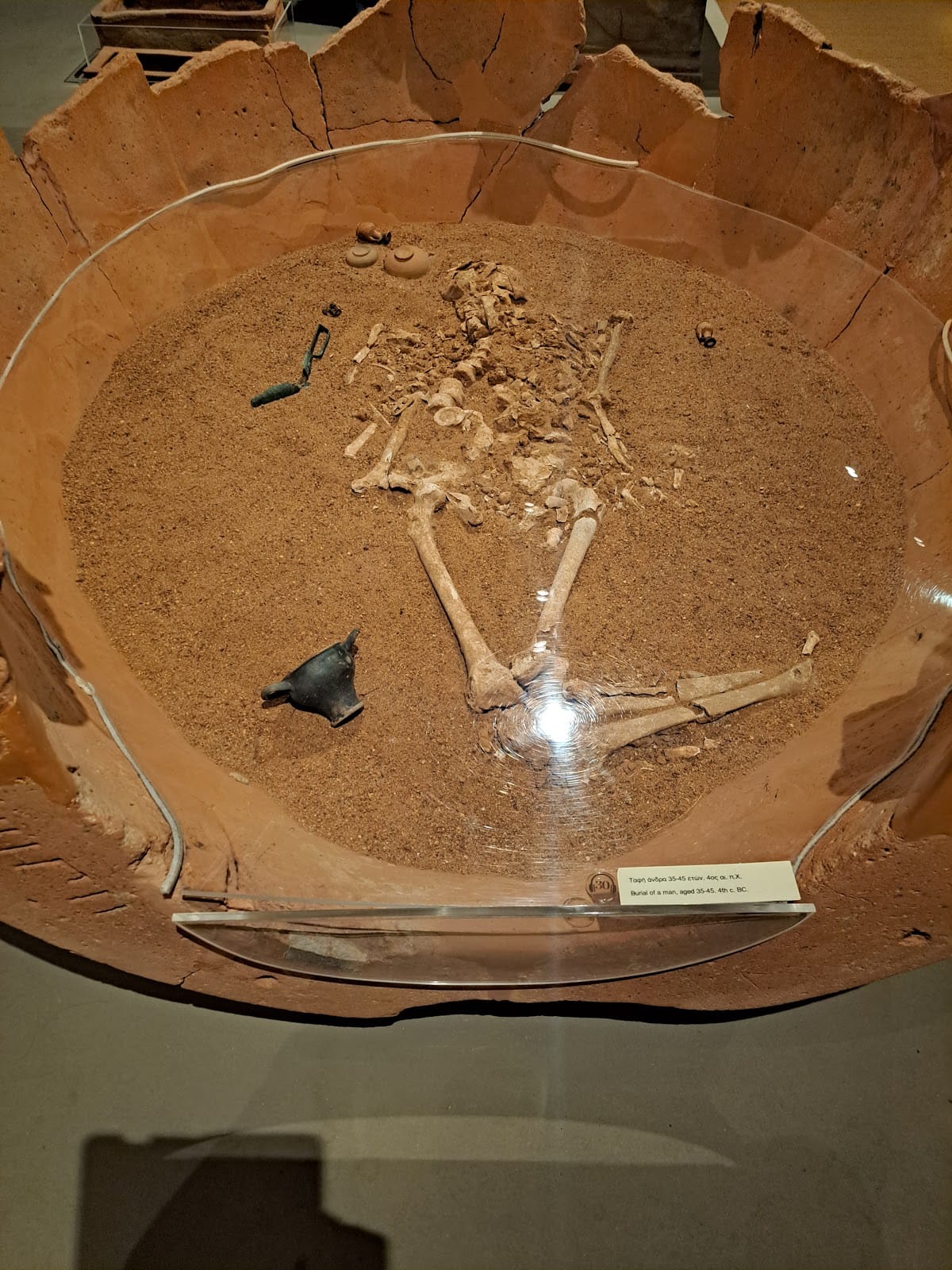
The burial section contains wreaths, grave stelai, sarcophagi, ash containers, burial offerings, and reconstructions of burials. A grave stele is an upright funerary marker, often bearing an inscription or an image of the deceased, while a sarcophagus is a stone or clay coffin usually made for burial and commonly fitted with a separate cover. These displays illustrate changes in burial practices and ritual over the long period represented by the collections.