Ustra Fortress: A Medieval Stronghold in Bulgaria


Site at a Glance
- Rating
- 4.8
- Popularity
- Low
- Country
- Bulgaria
- Primary era
- Medieval
- Eras represented
- Medieval
- Civilizations
- Byzantine
- Site type
- Military
- Remains
- Fort
On this page10 sections
History
Ustra Fortress is a medieval stronghold in Bulgaria, located in the eastern Rhodope Mountains. Archaeological evidence dates its construction to the tenth century, probably during the reign of Byzantine emperor Constantine VII Porphyrogennetos, who ruled from 913 to 959. The fortress was built to protect an important trade route and remained predominantly under Byzantine control during much of its history.
Early Bulgarian and Byzantine Control
The Bulgarian ruler Simeon I the Great captured Ustra during the first decade of the tenth century. Simeon’s reign brought major territorial expansion and repeated conflict with Byzantium, the medieval Roman Empire centered on Constantinople. Ustra was probably among the strongholds returned to the Byzantine Empire in 913, as part of an agreement that recognized the Bulgarian rulers’ imperial title of tsar.
Following the Byzantine–Bulgarian War of 913–927, Ustra was likely placed under Byzantine control again through the peace settlement of 927. The fortress may have changed hands several times between the twelfth and fourteenth centuries. It was probably captured by the Bulgarians during the reign of Ivan Asen II, an emperor of the Second Bulgarian Empire.
The Campaign of 1254
Ustra’s surrender during a successful Bulgarian campaign in 1254 was recorded by the Byzantine chroniclers George Akropolites and Theodore Skoutariotes. The campaign was led by the Bulgarian emperor Michael II Asen after the recent loss of territories in the Rhodope Mountains to the Nicaean Empire, the Byzantine successor state centered on Nicaea after the capture of Constantinople by the Fourth Crusade in 1204.
The fortress ultimately came under Ottoman control after the Ottoman conquest of the region in the second half of the fourteenth century.
Archaeological Study and Protection
Archaeologist Stamen Mihaylov and historian Ivan Balkanski studied Ustra between 1971 and 1973. Excavations produced more than 1,000 objects, including iron arrowheads, bronze and silver crosses, copper coins, and clay vessels. In 2006, research identified traces of large-scale fortification works on the ridge descending northeast from the fortress.
Ustra has been a monument of culture of national importance since 1968. It is also part of the Rock Formations in the Kaleto Locality Natural Landmark, declared in 1972 to protect the rock formations and the fortress. Ustra Peak on Livingston Island in the South Shetland Islands was named after the fortress by the Bulgarian Antarctic Place-Names Commission following the 2004–2005 Tangra expedition.
Remains
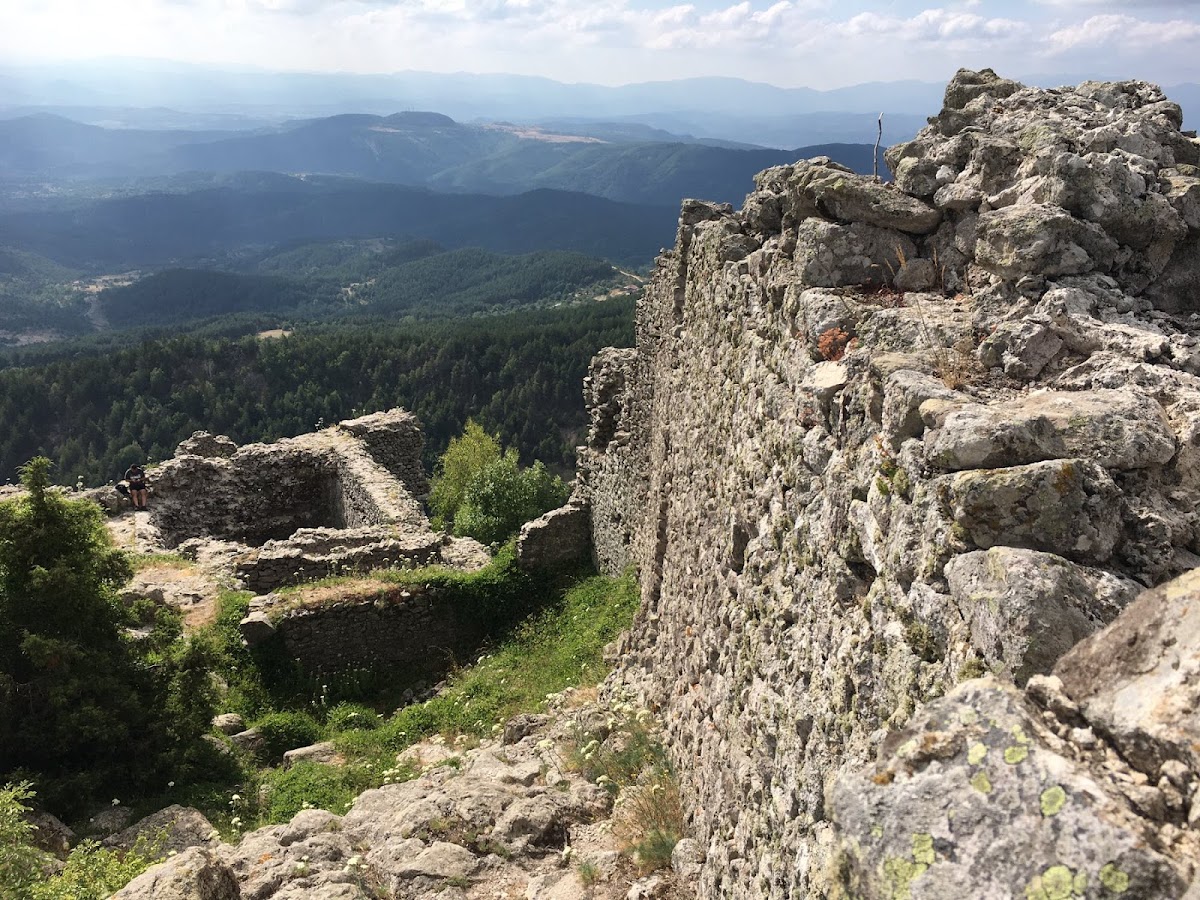
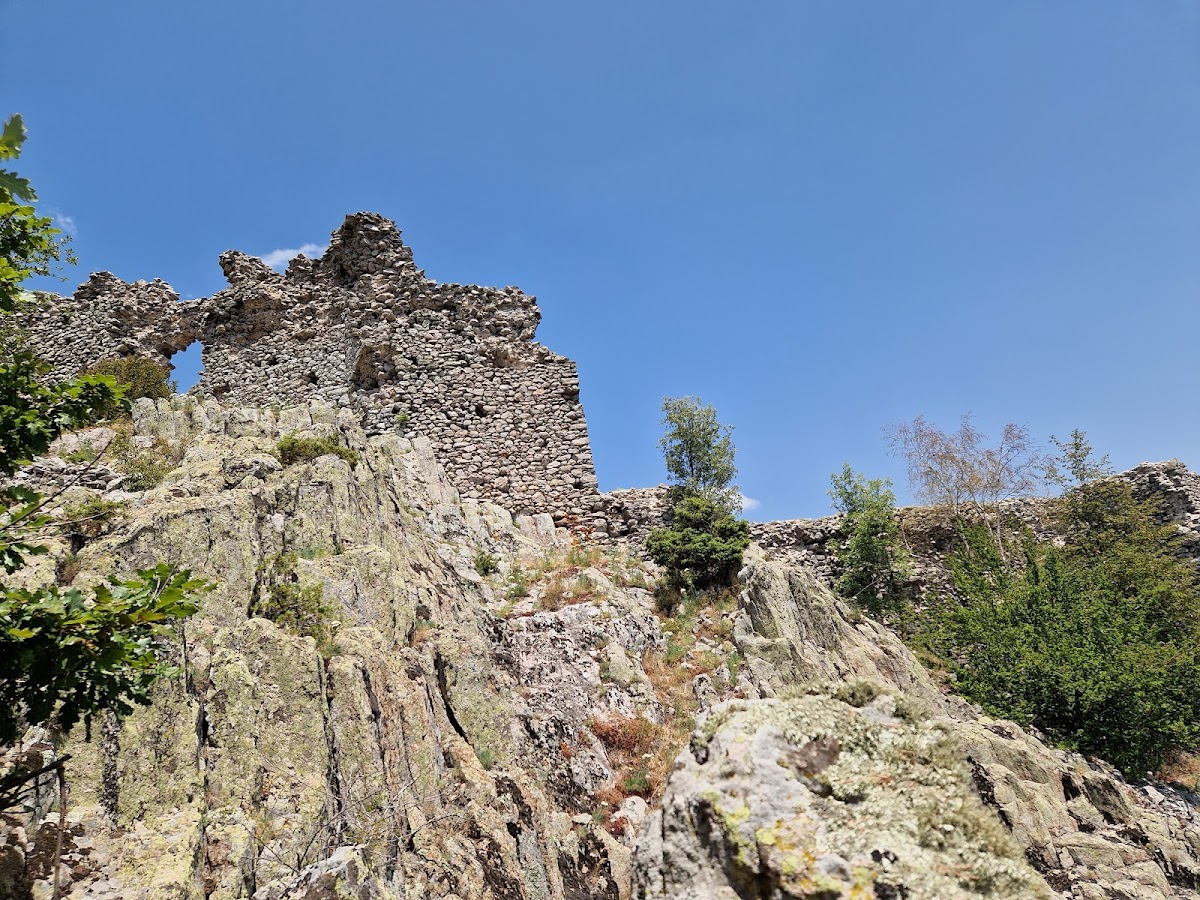
Ustra occupies an elongated, rocky summit at approximately 1,015 metres above sea level in Dzhebel Municipality, Kardzhali Province. The steep promontory covers 1,290 square metres and has an open quadrangular plan resembling the Cyrillic letter pe. Sheer cliffs descend almost vertically along the northern and northwestern sides, while the summit provides extensive visibility across the eastern Rhodope Mountains. Monyak Castle can be seen far to the northeast, and traces of another medieval fortress lie about 1.7 kilometres in that direction as part of the same fortification system.
Defensive Structures
Fortification Wall
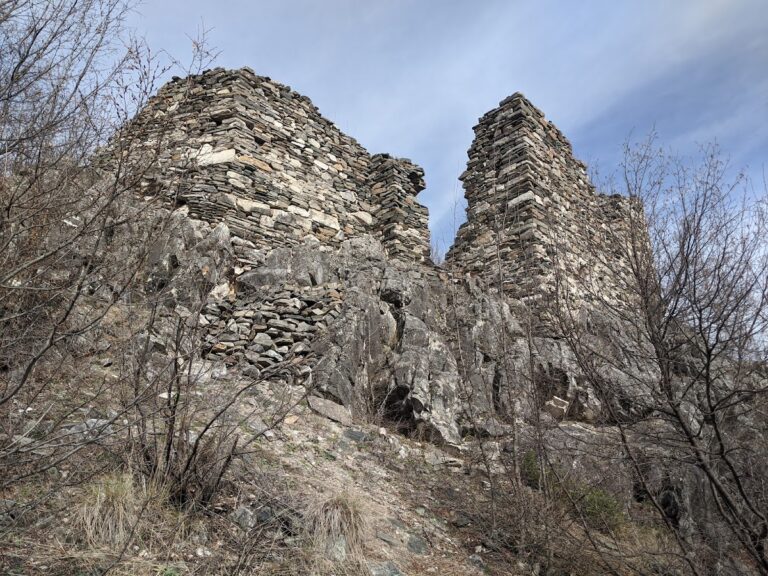
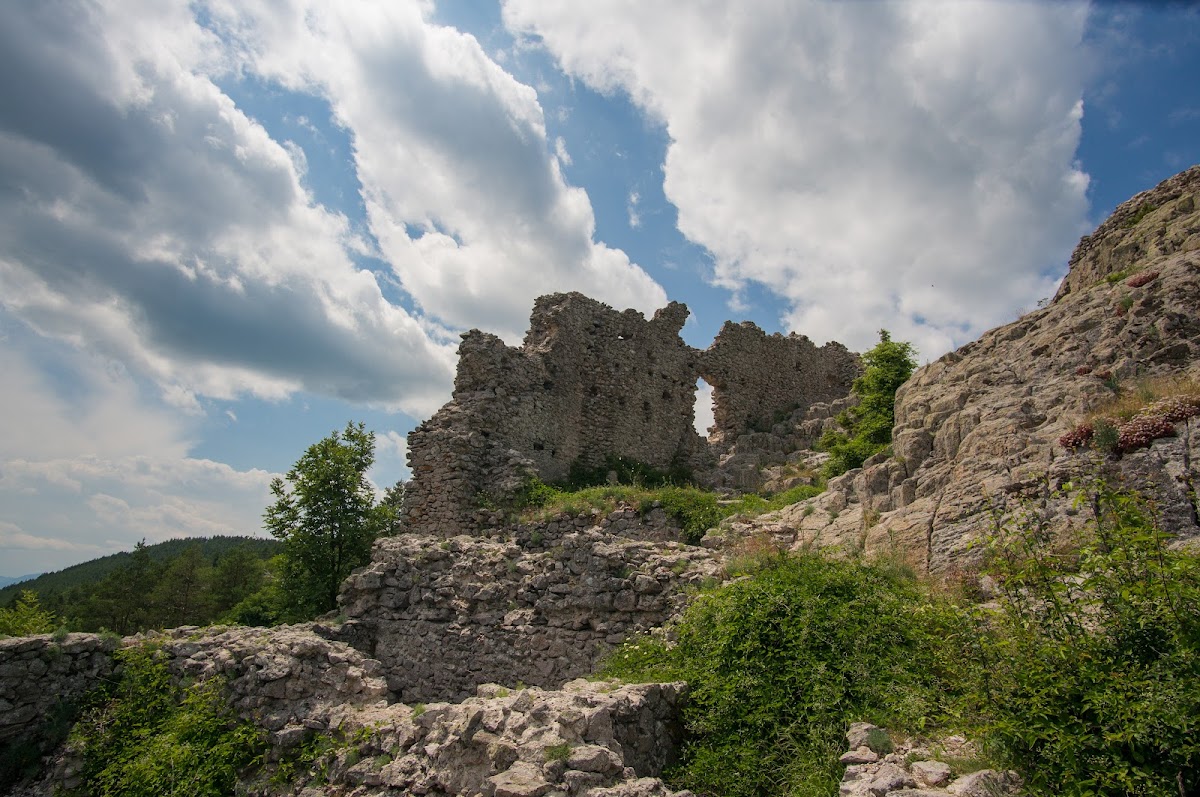
The defensive wall extends for 113 metres. It is 2.8 metres thick at the base and 1.75 metres thick at the top, surviving to a height of up to 8–10 metres in places. The outer face was built of dressed stone joined with white mortar. Rubble bonded with abundant white mortar fills the interior of the wall.
Defensive Towers
Three three-storey towers strengthened the defenses: one semicircular tower and two rectangular towers. Their first floors served as reservoirs. Mortar plaster up to 0.2 metres thick coated the towers, and its mixture included broken bricks and large pottery fragments. Stone stairways gave access to the interiors, with parts of the stairways surviving in two towers.
Eastern Entrance
The entrance stood at the easternmost end of the fortress and was reached by seven steps cut into the rock. Foundations of a room used by the entrance guards survive nearby. An attacker approaching the gateway had to move around the entire exterior space occupied by the wall and towers.
Buildings Within the Enclosure
Eight building remains occupy the southern and southeastern parts of the enclosed area. The largest measures 11 by 6 metres, while the smallest measures 1.7 by 0.5 metres. Their functions were probably connected with residence and storage. The fortress is preserved as ruins, with foundations of many buildings and towers still remaining.
Nearby sites