Steinvikholm Castle: Norway’s Last Catholic Stronghold

Visitor Information
Google Rating: 4.2
Popularity: Low
Official Website: fortidsminneforeningen.no
Country: Norway
Civilization: Unclassified
Site type: Military
Remains: Castle

History
Steinvikholm Castle stands on the island of Steinvikholm in the municipality of Skatval, Norway. It was constructed in the early 16th century by Olav Engelbrektsson, who was the last Catholic Archbishop of Nidaros before the onset of the Reformation in Norway.
The fortress was built between 1524 and 1532 under Archbishop Olav’s direction, both to serve as a strong defensive residence and as a symbol of the Catholic Church’s presence in the region. It became the final stronghold for Catholic authority in Norway during a period marked by religious upheaval. Following the advent of the Protestant Reformation, Olav Engelbrektsson was forced into exile in 1537, signaling the castle’s loss of ecclesiastical importance.
For some decades after the Reformation, the castle functioned as an administrative center for the local royal governor, known as the lensherre, until about 1575. During this time, it also experienced military tensions, notably during the Nordic Seven Years’ War from 1563 to 1570. The castle was besieged but capitulated without battle, primarily due to shortages of water and the presence of non-combatants.
After the late 16th century, Steinvikholm Castle gradually fell into disuse and began to deteriorate. From 1661 onward, it was partially dismantled, with stone quarried from its walls for other purposes. This period saw much of the castle’s history fade into obscurity until archaeological interest revived in the 19th century.
Archaeological excavations first started in 1849, followed by more thorough restoration and research after the Norwegian Society for the Preservation of Ancient Monuments acquired the site in 1893. Subsequent efforts throughout the 20th and into the early 21st centuries focused on stabilizing and restoring the remaining structures, including repairs to roofs and walls. Since 1993, the castle has hosted an annual opera portraying the final night of Archbishop Olav Engelbrektsson at Steinvikholm, reflecting its enduring cultural legacy.
Remains
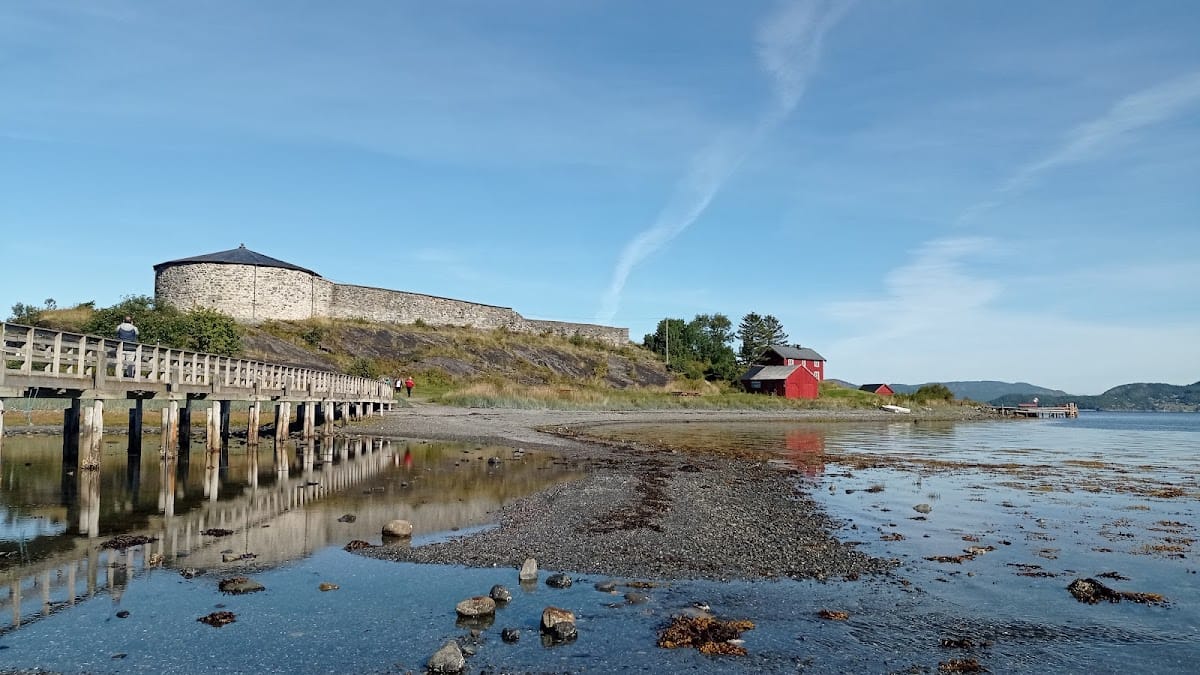
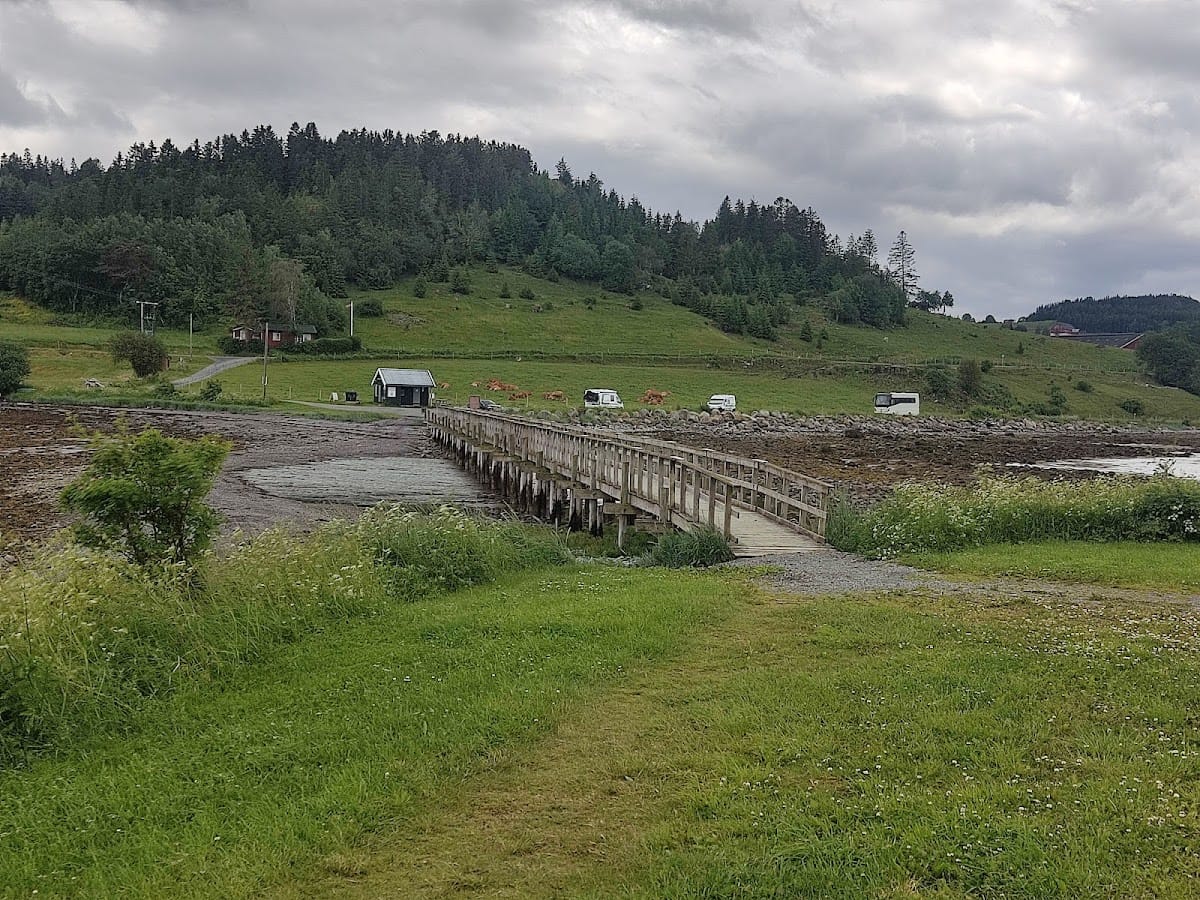
Steinvikholm Castle occupies roughly half of the rocky island upon which it stands, forming an almost square layout with external dimensions around 52.5 by 50 meters. The fortress was built directly against the island’s rugged terrain and originally could only be accessed by boat or a wooden bridge, which connected the castle to the mainland when sea levels were higher.
The castle’s outer walls, measuring between 3.8 and 4.4 meters thick, were made primarily from soapstone, known locally as kleberstein. This durable stone was transported by boat from quarries located south of Trondheim, such as those in Orkdal. Two main round towers anchor opposite corners of the fortress; the larger tower, called “Bonden,” with a diameter near 20 meters, stood on the highest point and was heavily armed to cover the land approach, the bridge, and the nearby fjord. The second tower, slightly smaller, faced the fjord and surrounding waters and was less fortified.
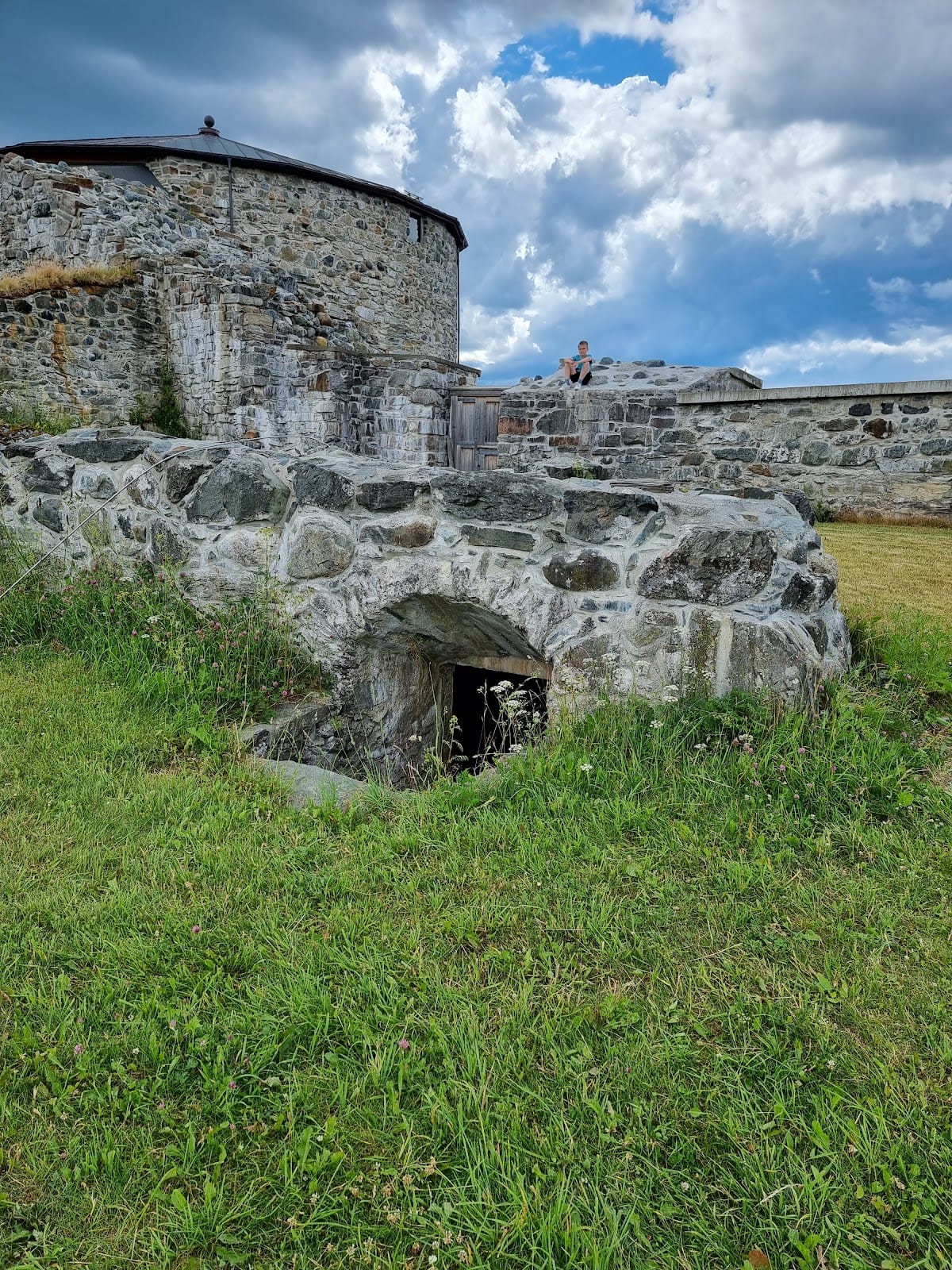
Within the fortress, the courtyard enclosed an area of about 17 by 24 meters, roughly 400 square meters, a relatively modest open space surrounded by the castle’s sturdy walls. The building rose to at least two stories and included cellars on the northwest side, likely used for storage or shelter.
A notable defensive feature was the wooden bridge leading from the island to the mainland, protected by a fortified gate equipped with a portcullis—a heavy, vertically sliding grille used to block entry. This gate was further defended by two wooden palisades spaced approximately 25 meters apart. The fortress also mounted cannons on the towers and along its eastern wing, providing artillery coverage across land and sea.
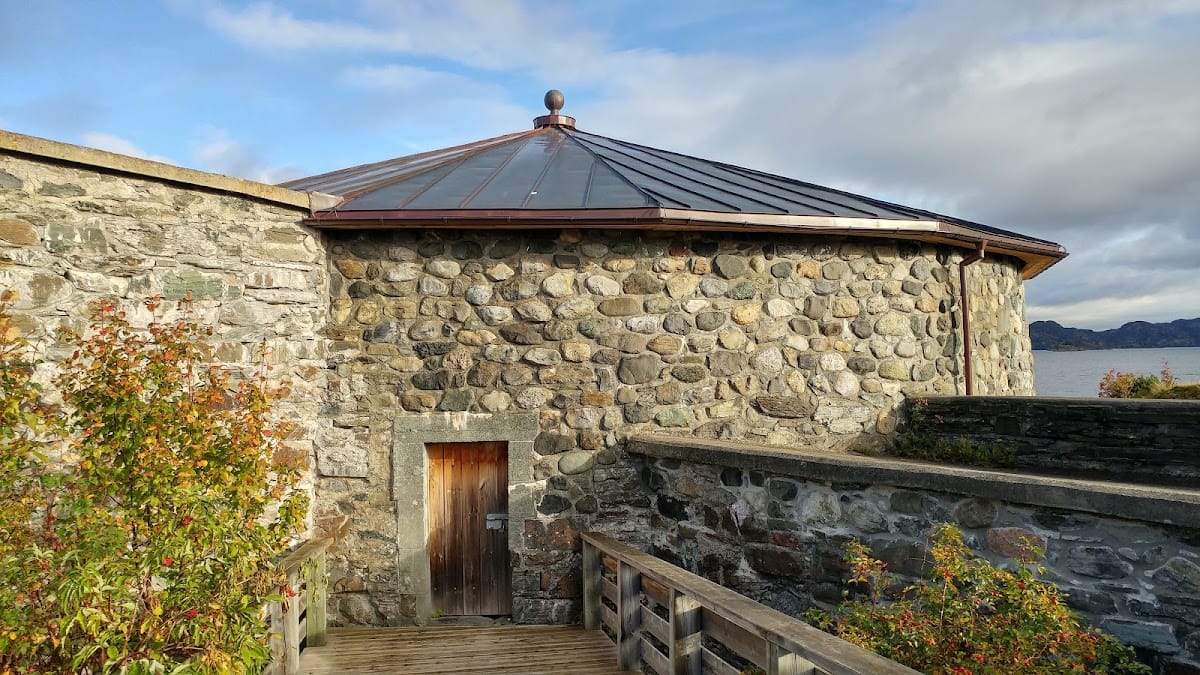
Distinctively, the outer walls of Steinvikholm Castle served double duty as the walls of the main building, as no separate outer ring wall was constructed. In the northeastern tower, a concealed exit led to a hidden anchorage, allowing discreet access to or escape from the fortress by boat without being visible from land.
Water supply was a continual challenge for the castle, as no natural springs or fresh water sources existed on the island. Water had to be carried in from the mainland until a well was dug and deepened in 1542. This well reportedly never ran dry after that time.
The construction of Steinvikholm Castle features carved stonemasons’ marks, known as bumerker, which are the youngest examples discovered in Norway. These marks suggest that Norwegian stonemasons from the guild associated with Nidaros Cathedral built the fortress, possibly under the direction of a master mason named Peter Steinhugger.
Over the centuries, the castle’s height has significantly decreased; originally it stood much taller than the present ruins indicate, likely reaching about three times the height of the current remaining walls. Today, the castle remains a ruin, although it has undergone important restoration, including masonry repairs and the installation of new copper roofs on its towers in recent decades.