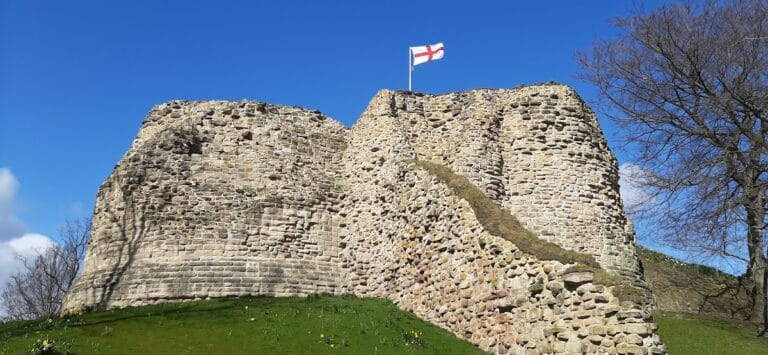
Harewood Castle: A Medieval Norman Stronghold near Leeds


Visitor Information
Google Rating: 4.5
Popularity: Low
Google Maps: View on Google Maps
Official Website: harewood.org
Country: United Kingdom
Civilization: Unclassified
Remains: Military

History
Harewood Castle, located in Harewood near Leeds in the United Kingdom, was established by the Norman De Lisle family during the 12th century. This medieval stronghold was part of England’s network of fortified residences built by noble families to assert control and provide defense during a period of feudal consolidation.
In the mid-14th century, the castle changed hands through marriage when Sir William de Aldeburgh wed Elizabeth de Lisle, the castle’s heiress. Sir William obtained a licence to crenellate in 1366, granting him royal permission to fortify the castle with battlements, reflecting the importance of defensible architecture during that era. This period marked the height of Harewood Castle’s use as a noble residence.
Following the death of the second Baron Aldeburgh in 1391, who left no heirs, ownership passed by inheritance and marriage to the Ryther and Redmayne families. Over the course of the 16th century, full control was secured by James Ryther and William Plompton in 1574 through purchasing interests from the Redman family. The castle remained a family estate through these changes, embodying shifting alliances and property strategies common among English gentry.
By 1600, financial strain forced the sale of Harewood Castle to Sir William Wentworth. This change likely signified the end of the castle’s function as a principal family residence. Documents reveal the castle was still occupied into the 1630s but had begun to decline. By the mid-17th century, it was offered for sale primarily for its building materials, suggesting that parts of the structure were dismantled or repurposed.
In subsequent years, ownership passed to Sir John Cutler and then through his daughter Elizabeth, Countess of Radnor, extending into the Boulter family lineage. Eventually, the estate was acquired by Henry Lascelles in the 18th century. His son, Edwin Lascelles, later 1st Baron Harewood, commissioned the construction of Harewood House nearby, marking a shift from medieval fortification to grand country house living.
Despite its decline and partial ruin, Harewood Castle continued to be recognized as a landmark into the late 18th century, famously captured in paintings by the artist J. M. W. Turner in 1797. The castle’s long history reflects broader social and economic transformations in England, from feudal stronghold to historical relic.
By the late 20th century, the castle’s condition had worsened, leading to its inclusion on the Buildings at Risk Register. Around 2000, a major restoration project supported by English Heritage and the Harewood Estate began. This careful conservation effort, involving a range of experts, brought the castle back from neglect. By 2008, the restoration was nearly complete, and the structure was removed from the risk register, securing its preservation for the future.
Remains
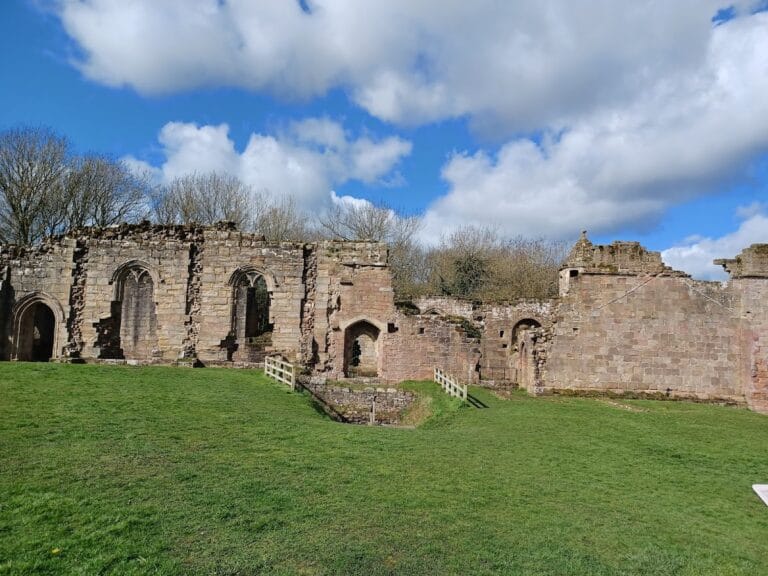
Harewood Castle is arranged as a rectangular stone fortress typical of 14th-century hall houses, combining residential and defensive functions within its layout. The complex consists of a main keep with four corner towers made from durable stone, emphasizing both fortification and domestic comfort. One of the towers serves as a straightforward entrance, providing controlled access into the castle grounds.
The central great hall rises two stories and was used as a communal space for dining and gatherings. Adjoining this, a three-story accommodation wing provided living quarters, reflecting the layered organization of noble residences during this period. Above the portcullis chamber—a fortified gateway designed to secure entry—sits a chapel, indicating the castle’s provision for private worship within its walls.
A notable feature of Harewood Castle is its four-story kitchen wing, which includes a barrel-vaulted basement. Barrel vaulting is an architectural technique creating a continuous arch roof, in this case strengthening the basement area. The cellar contains a well, offering a secure water supply essential for daily life and siege resistance.
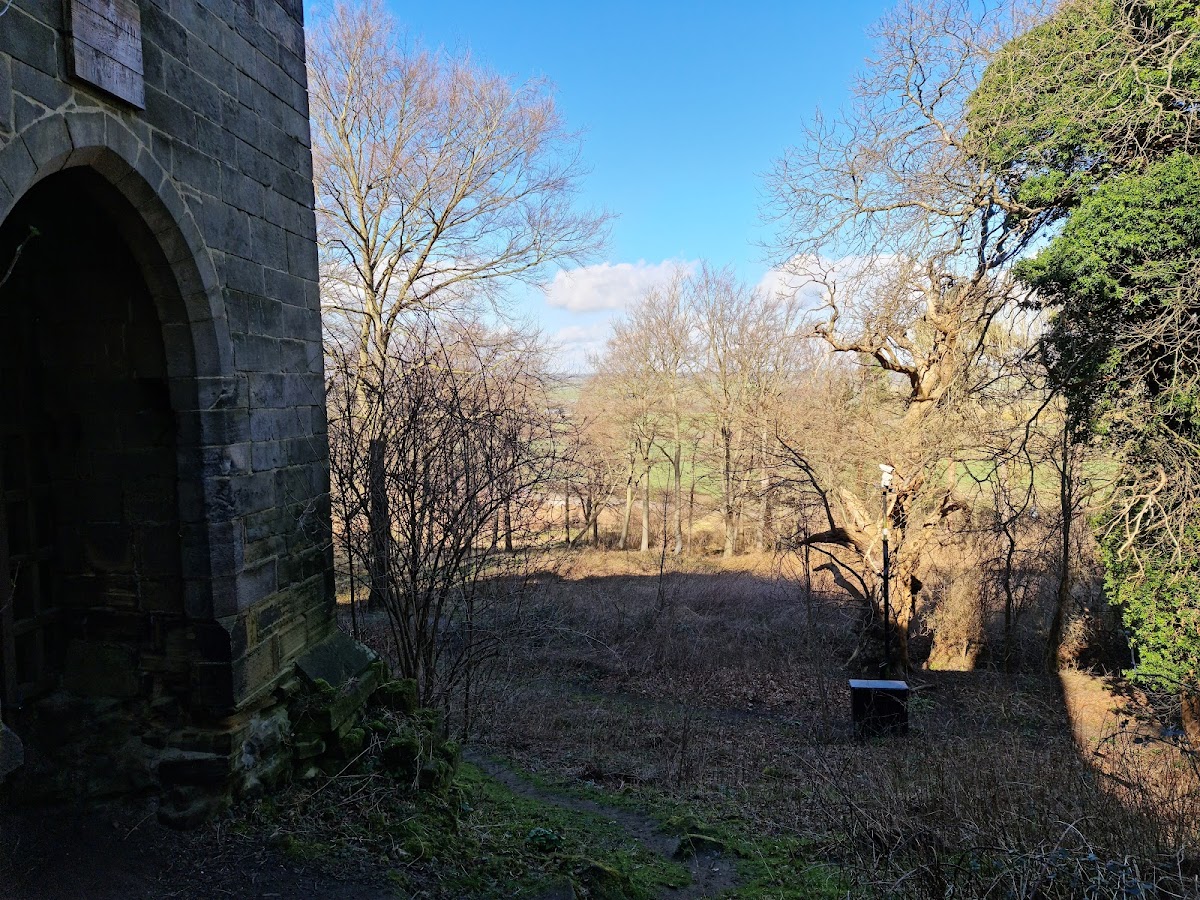
The castle occupies a prominent position on a steep slope, elevating it about 90 meters above sea level. This vantage point allows visibility from a considerable distance and adds to its defensive advantage. The surrounding landscape is mostly flat with hills to the west, which frames the site in a natural setting.
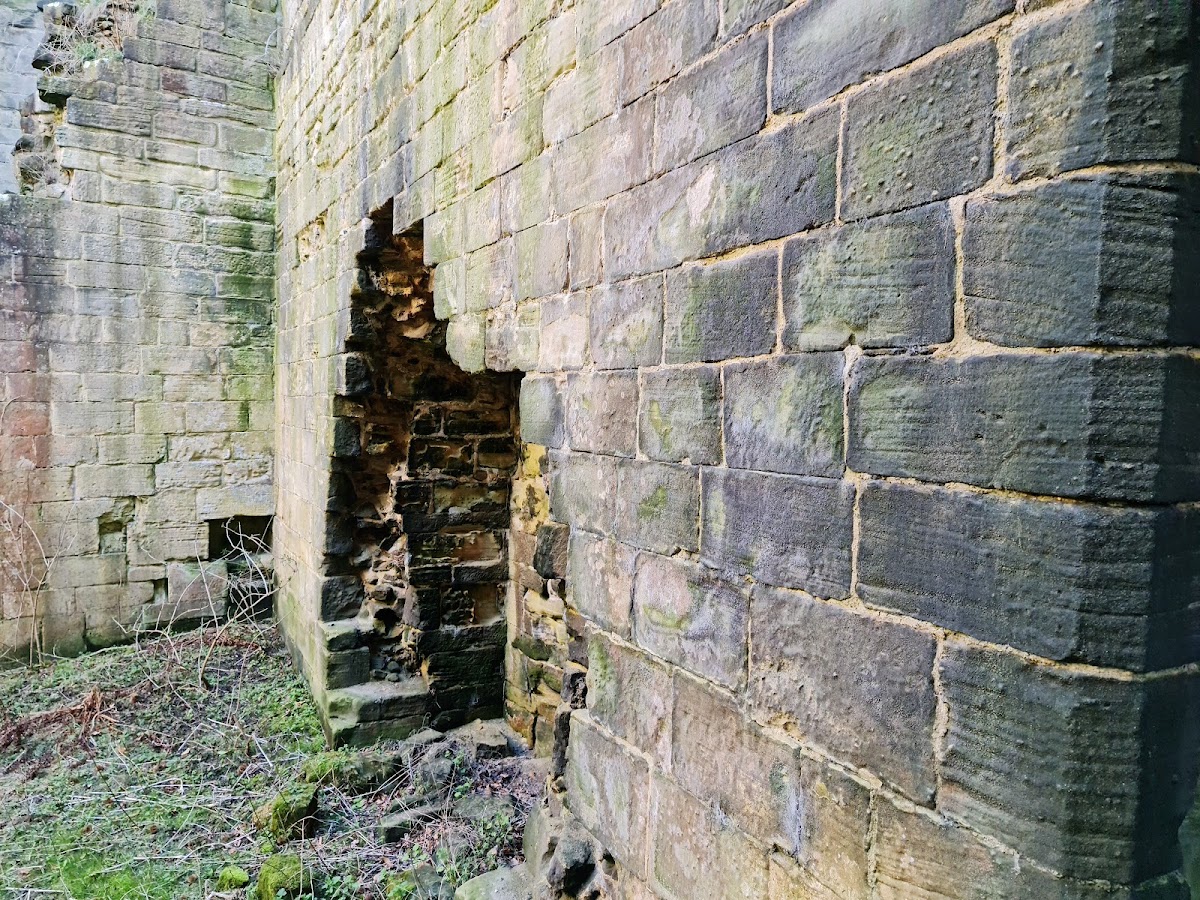
As a Grade I listed building, Harewood Castle is recognized for its exceptional historical and architectural importance. The structure has undergone significant restoration and maintains substantial portions of its walls, towers, and internal spaces. Its preservation allows it to stand as a rare example of a medieval fortified hall house, capturing aspects of both the domestic and military architecture of its time.
Nearby sites