Dezak Castle: A Qajar-Era Fortress and Residence in Iran


Visitor Information
Google Rating: 4.2
Popularity: Very Low
Google Maps: View on Google Maps
Official Website: fa.wikipedia.org
Country: Iran
Civilization: Unclassified
Remains: Military

History
Dezak Castle is situated in the village of Dezak, within the municipality of Dezak in Iran, and was constructed during the Qajar dynasty by the Bakhtiari tribe. Its origins trace back to the year 1292 AH (1875-1876 CE), when Amir Mofakham Bakhtiari commissioned the fortress.
Initially envisioned as a military stronghold, the castle soon underwent interior transformations that introduced decorative elements, lending it the elegance of a palace. During Amir Mofakham’s lifetime, he entrusted the castle to his eldest son, Fathali Khan Sardarmozam, who managed its affairs. This shift from the castle’s original defensive purpose to a more residential and representative function reflects the evolving needs of its occupants.
In the politically tumultuous periods that followed, Dezak Castle became a place of refuge for several significant Iranian figures. After the Minor Tyranny, a brief but oppressive regime, intellectuals such as Vahid Dastgerdi and Ali Akbar Dehkhoda sought sanctuary within its walls. Dehkhoda, renowned for his monumental dictionary work, spent approximately six months living at the castle during World War I, making extensive use of its library.
The castle also hosted notable visitors across different eras. Celebrated poet Farkhi Yazdi, political leader Dr. Mohammad Mosaddegh during the 1953 coup, and prominent intellectual Malek o-Shoara Bahar were among those who found shelter or inspiration there. Foreign travelers, including Bishop, Rawlinson, and René Dalman, visited the site, indicating its regional importance.
Currently, the castle’s ownership transferred to the Cultural Heritage and Tourism Organization, reflecting efforts to preserve its historical legacy. Over time, the site’s function expanded beyond its original military role, adapting to cultural and scholarly uses while witnessing changes in political and social contexts around it.
Remains
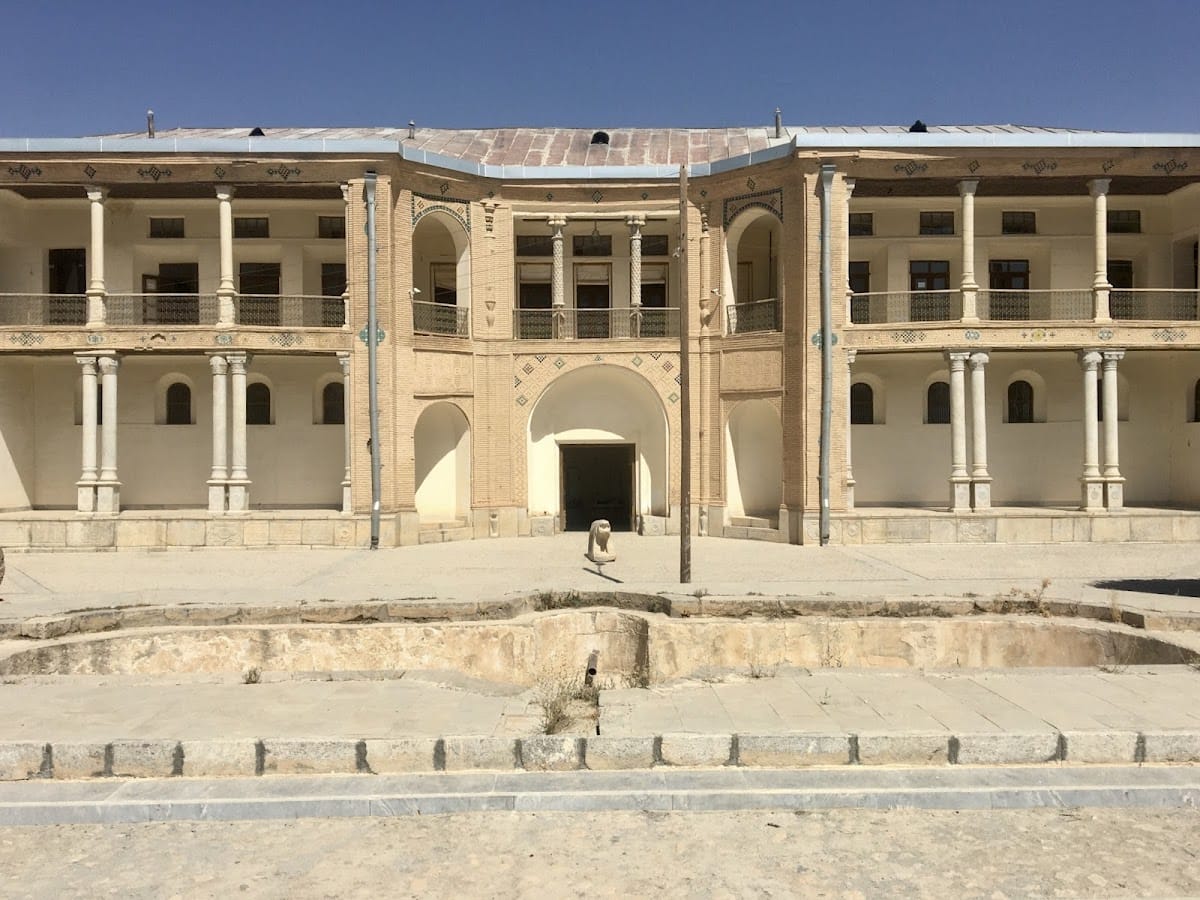
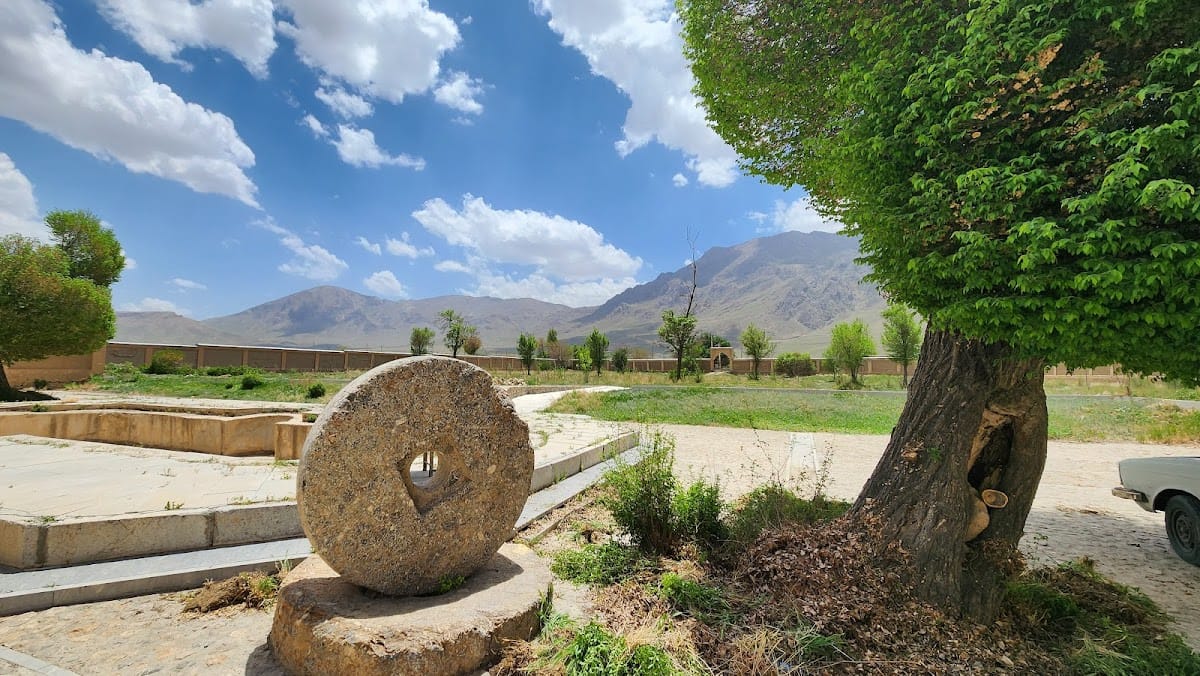
Dezak Castle occupies an expansive area of approximately 20,5076 square meters and consists of two main floors oriented toward the Qibla, the direction Muslims face during prayer. It overlooks nearby forests ascending toward the mountains, suggesting the site was chosen for both strategic and aesthetic reasons. The building is constructed on thick foundations and walls designed for thermal insulation, combining layers of brickwork covered externally with plaster made from white lime.
The ground floor centers around a vestibule called the hashti, a traditional Iranian architectural element, from which four iwans (vaulted open halls) extend—two facing north and two south. Notably, the northern and entrance iwans feature stucco-carved columns topped by wooden beams decorated with basket-weave designs, showcasing skilled craftsmanship. Access to the second floor is gained via staircases located in the northern iwans.
On the upper level, a large courtyard known as the howzkhaneh forms a central open space. Two distinct iwans open to the north, while a continuous southern iwan hosts multiple three-door rooms along its length. Among these rooms, a grand hall named Divanhane or Sofrehkhane served as a dining area and is situated in the middle of the southern façade. This hall is richly adorned with stucco reliefs depicting mythical imagery such as angels, lions—figures significant in Bakhtiari culture—and hunting scenes intertwined with designs inspired by classical Persian poetry, namely the Haft Peykar by Nizami. Historically, a large Bakhtiari carpet spanning approximately 50 meters carpeted this space, though it no longer exists.
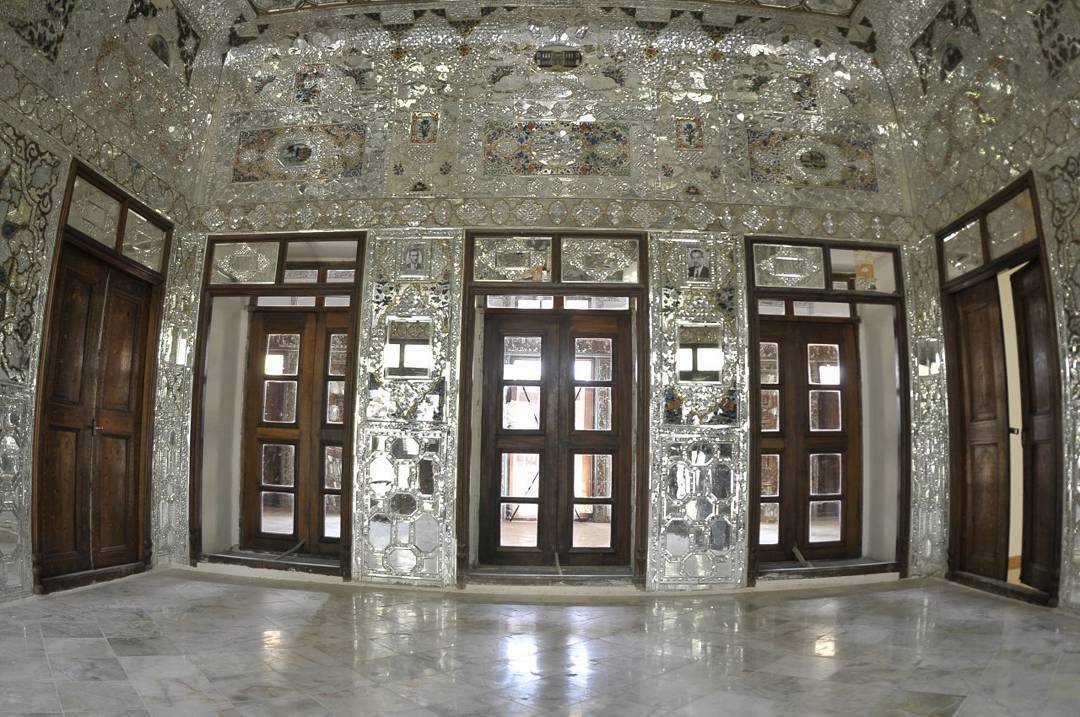
Adjacent to the dining hall lies the Mirror Room, one of eight surviving rooms in the area featuring original mirror decoration. Its walls and ceiling are covered extensively with mirror mosaics and reverse glass paintings that portray equestrian scenes, palatial imagery, and floral patterns rendered in a European artistic style. During the mid-20th century, some mirror frames were added, and electric lighting was installed to enhance the room’s brilliance.
The castle is guarded by four conical towers placed symmetrically at its corners, though they were never intended for active military defense. Two southern towers remain intact, while the northern ones have suffered partial damage. In addition to symbolizing strength, these towers housed practical functions like storage rooms and a prison.
Exterior surfaces reveal a combination of decorative brickwork and glazed tiles arranged in geometric patterns. Two large symmetrical inscriptions, positioned near the stair landings, are integrated into the brickwork, highlighting both artistic and cultural intent. Stonework appears modestly throughout, including simple geometric and floral carvings on columns, bases, and southern ground-floor walls. The castle’s water features—in particular, a polygonal stone pool fed by spring water via a traditional channel called a tanbousheh in the northern courtyard—demonstrate technical refinement. The pool’s water flows through fountains with spouts carved as human faces, supervised by master stonecutter Pahlevan. The adjacent northern wall is decorated with colorful small tiles featuring geometric motifs, including an inscribed blue tile dating to 1325 AH (1907-1908 CE), marking the completion of decorative additions.
Entrances and windows throughout the castle are crafted from wood and reinforced with wrought iron mesh. Ground-floor doors maintain a simpler design, while those on the first floor show more elaborate inset carvings and inlaid decorations, reflecting the gradual enhancement of interior spaces.
Dezak Castle’s architecture and decoration reveal a harmonious blend of local Bakhtiari traditions and European influences, particularly visible in richly decorated interior rooms like the Mirror Room. Together, these features illustrate the castle’s transformation from a defensive fortress to a palatial residence interlaced with cultural symbolism.