Castell de Concabella: A Historic Castle in Concabella, Spain


Visitor Information
Google Rating: 4.3
Popularity: Low
Google Maps: View on Google Maps
Official Website: castelldeconcabella.cat
Country: Spain
Civilization: Medieval European
Remains: Military

History
The Castell de Concabella is located in the municipality of Concabella, Spain, and its origins trace back to the period of Muslim rule known as the Caliphal era in the 10th century. The earliest known documents referring to the area appear in 1031, when the bishop Sant Ermengol of Urgell granted land around Concabella, marking the earliest recorded medieval presence near the castle’s site.
From the mid-11th century until the 14th century, the castle was under the control of the Concabella family. This lineage served as vassals to the canonry of Urgell and took an active part in the political and social affairs of the County of Urgell. Notable family members during this time include Guillem Arnau de Concabella, a recognized figure at the Urgell court in 1077, and Bernat de Concabella, known in the 12th century for his violent actions within the region. The family’s influence extended into religious institutions as well, with members holding abbatial roles at the Poblet monastery in 1198 and 1253.
In a significant political shift in 1291, Bernat and Ponç de Concabella pledged loyalty to King James II, causing the territory to move from the domain of the County of Urgell into direct royal control. Soon after, the family lost possession of the castle. Ownership then passed through the hands of various noble houses during the 14th and 15th centuries, such as the Berenguer de Peramola, Gombau de Vilalta, the Oluja lords, and the Orís, Nicolau, and Requesens families. At one point, monks from the monastery of Sant Jeroni de la Vall d’Hebron also held the castle.
During the Catalan Civil War, spanning from 1462 to 1472, the castle came under the ownership of Rodrigo de Bobadilla. Later, it transferred to the Ortiz family by inheritance. From the 16th century onward, the Erill family assumed ownership and undertook extensive changes, transforming the fortress into a Renaissance-style palace. This architectural evolution reflected the changing needs and tastes of the local aristocracy, shifting from military defense toward residential grandeur.
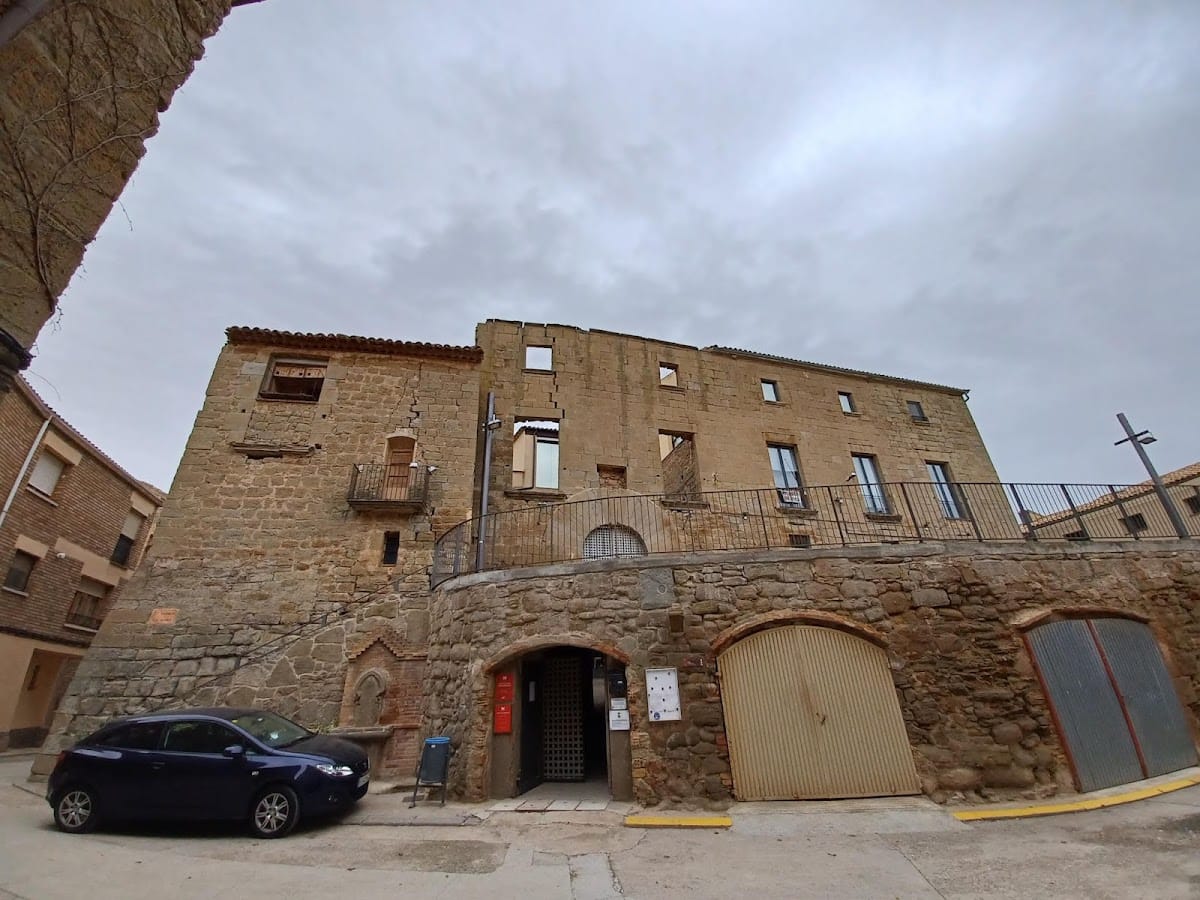
In the 20th century, notably during the Spanish Civil War between 1936 and 1939, the castle’s lower floors and adjacent buildings were repurposed as a forced labor camp. This facility housed political and common prisoners who were employed in military fortification construction.
In recent decades, the castle has been recognized as a monument of national cultural heritage. Restoration work began in 1991, including repairs to the roof and the removal of a mid-20th-century café addition that had altered the original southern façade. Additional conservation efforts starting in 2004 prepared the castle to serve as a social and health center and as the home of the Centre d’Interpretació dels Castells del Sió, a cultural institution inaugurated in 2008. Since 2014, the site also hosts the Espai Pedrolo, dedicated to the life and work of Manuel de Pedrolo, a renowned local author.
Remains
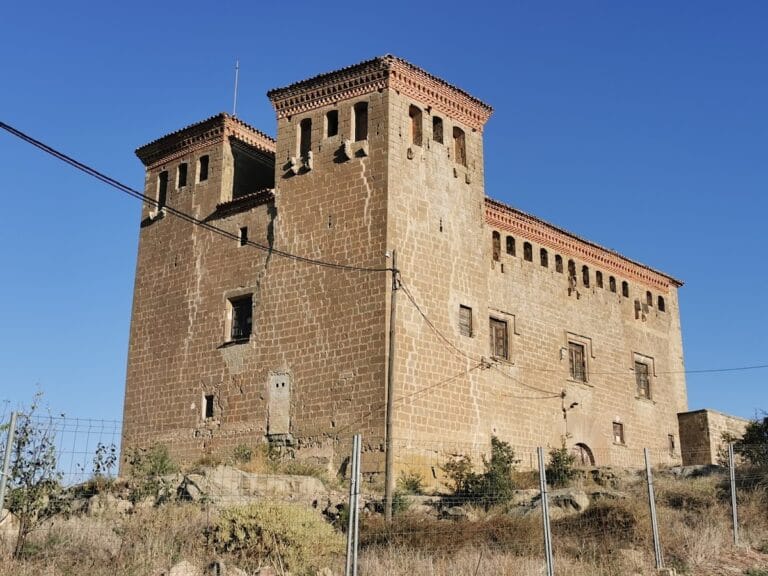
The Castell de Concabella is laid out on a square plan, featuring a prominent façade approximately 30 meters wide, a central courtyard, and several towers framing its geometric form. Its construction showcases a blend of military and residential architectural styles, reflecting its long history from fortress to noble residence.
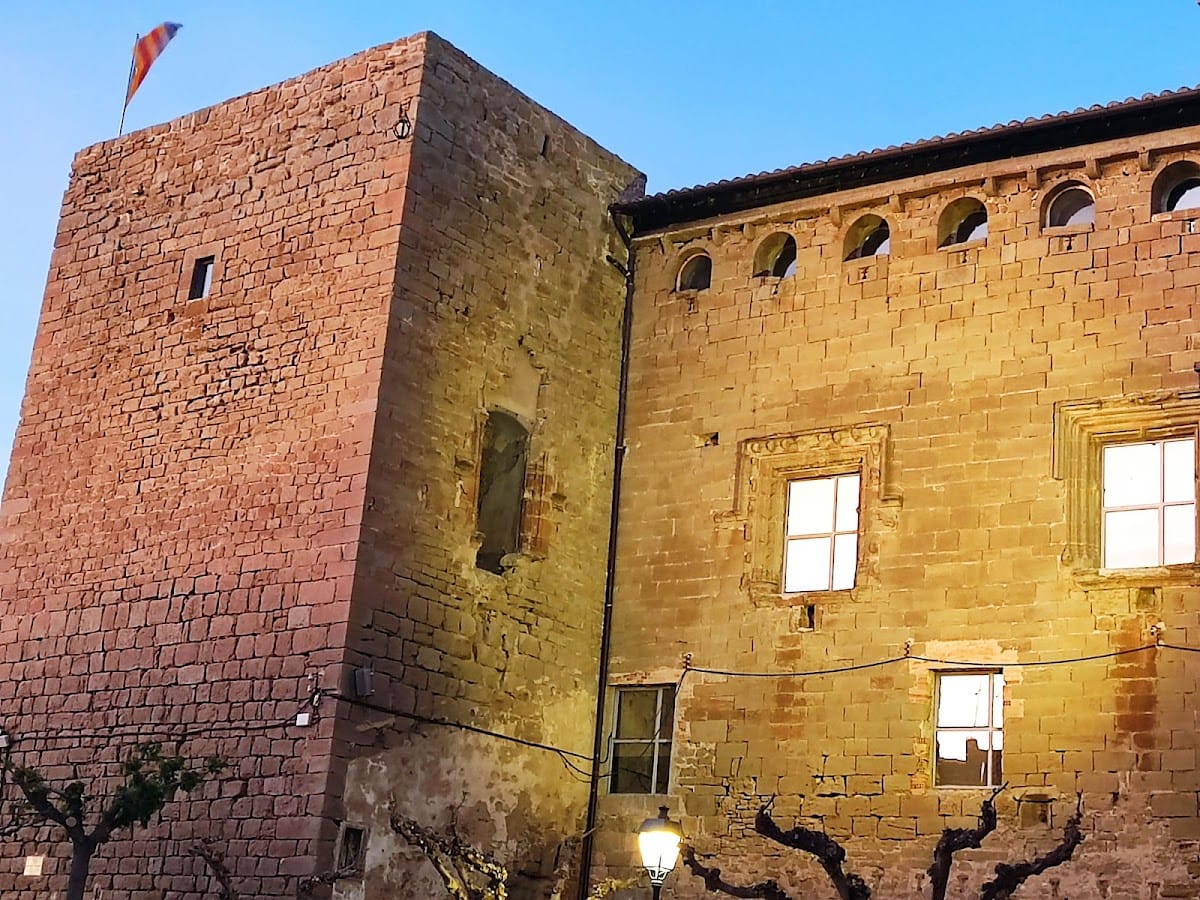
One of the oldest parts of the castle is a massive tower on the southern side, which may originate from either the 10th century Caliphal fortification period or from later 12th to early 13th-century comital construction. This tower is built using large, precisely cut ashlar stones that exhibit excellent craftsmanship. Its defensive character is underscored by the presence of inverted keyhole-shaped arrow slits, designed for archers to defend the castle while remaining protected. Some of these slits have been filled in over time but remain visible in their original form. An iron bar once stretched across the tower’s upper section, historically used to secure a cage for punishing local offenders, a testimony to the castle’s judicial role in the community.
The castle’s defensive importance waned by the 13th century, and during the 16th century the Erill family transformed it into a Renaissance palace. This period introduced large, arched doorways and a series of decorated windows on the eastern façade, highlighted by simple but elegant moldings typical of Renaissance design. Gunports—rectangular openings beneath these windows—were adapted for firearms defense, signaling the evolution of military technology. On the western side, two square towers frame the façade, which contains two large windows; one is richly adorned with carved foliage, human faces, and mythical beasts. This window forms a visual alignment with a third window placed on the adjacent tower. Above, a gallery of small arches crowns the façade, a refined architectural element derived from traditional battlements seen in nearby castles.
The castle originally had three surviving towers. Besides the southern tower, an octagonal tower occupies the southwest corner. This shape is unusual in the region of Segarra, with only one other known example surviving in a ruined state at Manresana de Sant Ramon. The northwest corner once hosted a quadrangular tower, now reduced to the remains of battered walls. Evidence suggests there was a fourth tower on the northeast corner, although it no longer exists.
Inside the castle, one distinct feature is a double latrine located on the noble floor. Supported by two stone corbels projecting from the wall, it consists of a small chamber with a high ceiling and a dedicated ventilation shaft. Such a facility is remarkable for a medieval private residence, indicating concern for hygiene and comfort unusual at the time. While the original interior rooms have largely vanished through abandonment and later modifications in the 19th century, fragments of noble floor fireplaces remain near the Renaissance windows, offering a glimpse into the castle’s former domestic settings. The ground floor contains a vaulted hall designed with four vaults converging on a central supporting pillar, demonstrating medieval architectural techniques for creating spacious interiors.
Close to the castle stands the Romanesque church of Sant Salvador. Its portal is richly decorated with ornamentation influenced by Islamic art, associated with the Lleida school of architecture during the 13th century. This connection highlights the cultural interplay in the region during the medieval period.
Restoration initiatives starting in 1991 focused notably on repairing the roof to safeguard the structure against weather damage. Additionally, a café added to the southern façade in 1953 was removed to restore the castle’s original external appearance, reinforcing the integrity and historical authenticity of the monument.
Nearby sites