Burg Seebenstein: A Historic Castle in Austria

Visitor Information
Google Rating: 4.6
Popularity: Low
Google Maps: View on Google Maps
Official Website: www.seebenstein.gv.at
Country: Austria
Civilization: Unclassified
Remains: Military

History
Burg Seebenstein is located in the municipality of Seebenstein in Austria. It sits on a strategic hill in the Pitten valley, an area historically traversed by a trade route established by Roman legionaries. The castle’s origins trace back to around 1045 when it was founded by Gottfried von Wels-Lambach, a member of an influential comital family. By the late 1040s, ownership shifted to the Formbach family, who controlled the estate until their extinction in the 12th century. Afterward, the site came under the care of the von Wildenstein family. During this early period, the name “Seebenstein” began appearing in official documents between 1159 and 1170, with nobles titled von Seebenstein mentioned in charters, signaling the emergence of the family associated with the castle.
In the 12th century, Burg Seebenstein served a vital defensive role. It protected the region of Styria from frequent raids by Hungarian cavalry and oversaw an important trade route running through the valley. Over the following centuries, control of the castle frequently changed hands among regional noble families. During the 14th century, the von Lichtenstein family took possession, followed by the von Seebeker between 1403 and 1432. From 1432 onward, the von Königsberg family held the castle, also distinguished by their significant ecclesiastical offices in the bishoprics of Salzburg and Gurk.
In 1379, Duke Leopold III of Habsburg acquired the castle from his brother Albrecht III but quickly sold it to Hans Auer von Herrenkirchen. The castle faced military challenges, notably enduring a Hungarian siege in 1488 amid ongoing conflicts between the Habsburg dynasty and King Matthias Corvinus of Hungary. Under the von Königsbergs, extensive renovations in the Renaissance period transformed the fortress into a grand palace-castle complex with updated fortifications reflecting contemporary military architecture.
Burg Seebenstein continued to demonstrate resilience in warfare; in 1683, it successfully resisted an Ottoman siege during the Austro-Turkish wars. In the 17th century, the property passed to the von Pergen family, who constructed a new residential palace down in the valley. This shift in residence led to the gradual neglect and decline of the old castle.
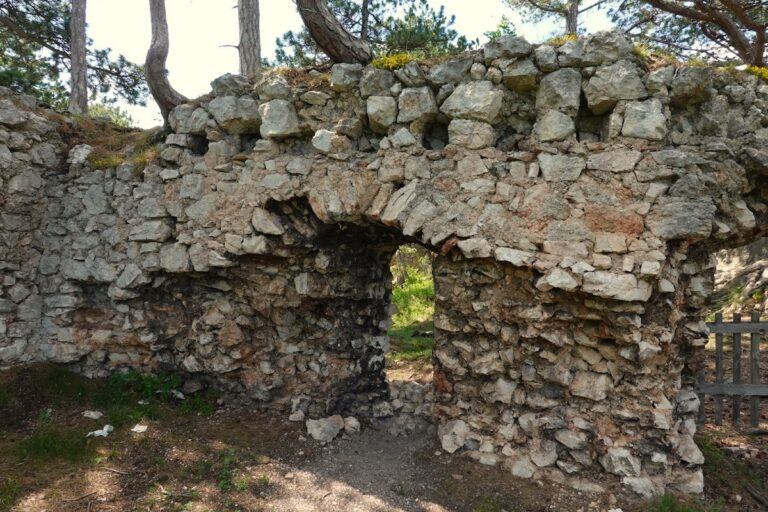
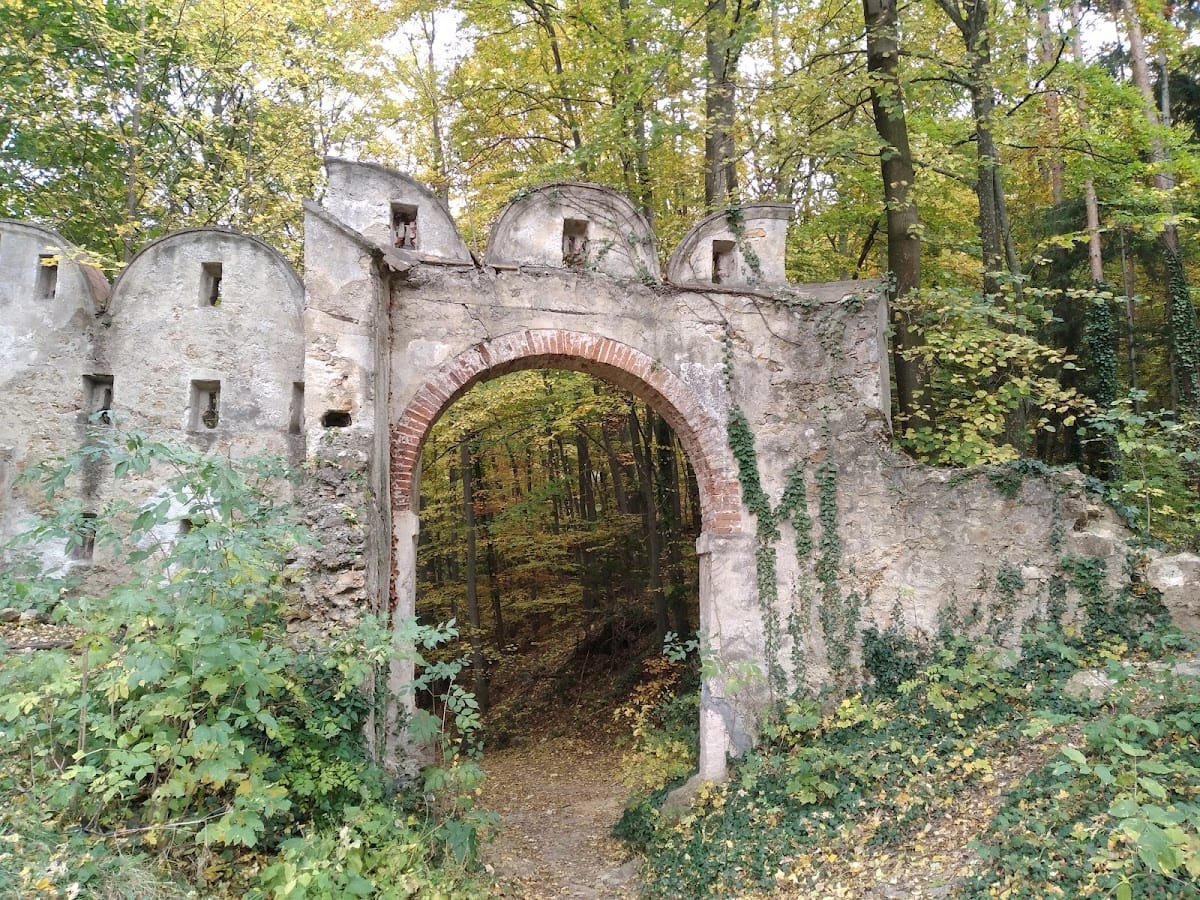
In 1790, Anton David Steiger, a scientist and entrepreneur, leased the estate and established the “Wildensteiner Knightly Society on Blue Earth,” a chivalric organization that used parts of the castle. The society disbanded in 1824, after which ownership returned to the von Lichtenstein family. Prince Johann I von Lichtenstein commissioned the creation of artificial ruins near the castle, enhancing the landscape’s romantic appeal.
By the early 20th century, the castle had fallen into disrepair. In 1942, during the Nazi period, the ruins were acquired by the von Nehammer family. Lilly Nehammer-Prinz, a family member, funded partial restorations focusing on the former residential buildings, which became a venue for displaying a collection of medieval art. Remarkably, the castle was spared damage during World War II and remains in private hands today, owned by Christine Vopara, Lilly’s grandniece.
Remains
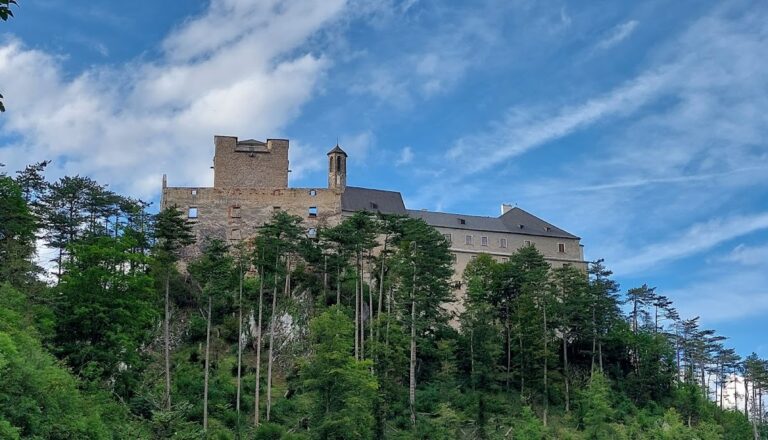
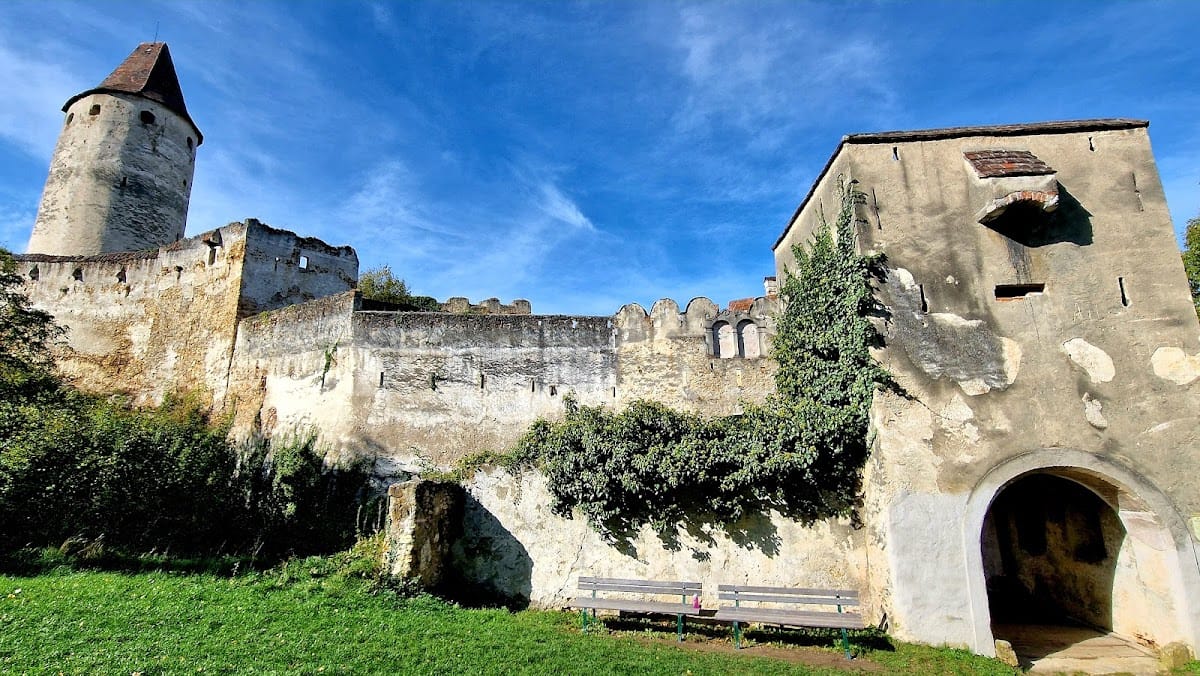
Burg Seebenstein occupies a prominent hilltop setting overlooking the Pitten valley and consists of two principal sections: the Old Castle and the New Castle. The older part dates to the 13th and 14th centuries and includes a round bergfried, or main tower, alongside the remains of a residential palace. The bergfried, approximately 23 meters tall, was constructed primarily from rubble stone and rises in seven floors separated by wooden ceilings. Access was originally through a high entrance above what is now a round-arched portal, which was later sealed in the 17th century. The original roof of the tower was considerably taller and more pointed than the present, now reduced to about half its earlier height.
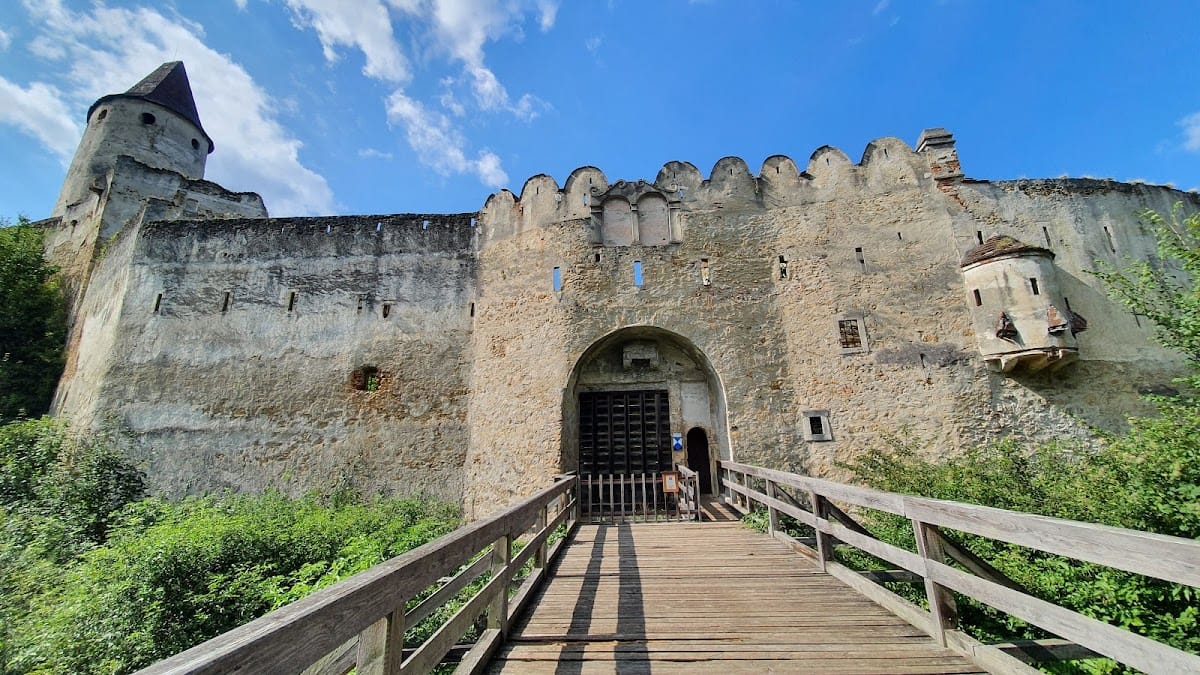
During the Renaissance, the Old Castle acted as a forework—a fortified outpost protecting the main complex—featuring a single entrance on the southern side. This access was only possible by crossing a drawbridge spanning two gates, a defensive design that controlled movement into the inner areas. The fortifications from this period were modernized but preserved rather than dismantled, reflecting advancements in military architecture.
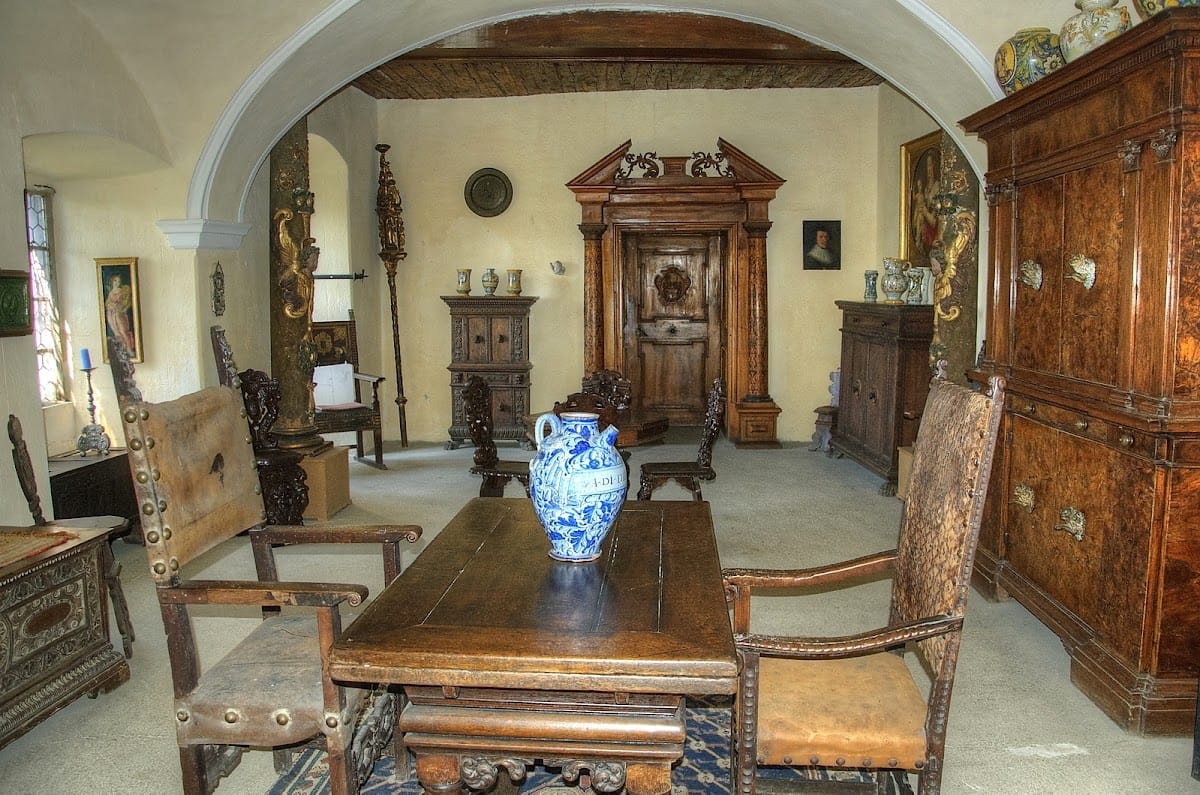
The New Castle was built between the 15th and 17th centuries on a higher elevated part of the hill. It contains roughly forty rooms, many of which have been adapted to house a museum collection. Notable exhibits include medieval weapons, paintings, tapestries, and various art objects. Among them is a statue of the Virgin Mary sculpted by Veit Stoß, a prominent artist of the late Gothic period. Until 2004, the castle also displayed a “Madonna” carved by Tilman Riemenschneider. The chapel within the New Castle is distinguished by its triangular floor plan and preserves several treasured artifacts, including an altar wing dating from around 1550 and marble sculptures of Saints Peter and Paul attributed to the acclaimed sculptor Nikolaus Gerhaert.
The residential buildings surrounding the courtyard were constructed and altered primarily during the 16th century. In 1734, the second floor of the northwest wing was remodeled into a Baroque-style ballroom. This space was later used by the Wildensteiner Knightly Society as a hall for gatherings. The castle’s interior also contains a library featuring a celestial globe created by the cartographer Peter Anich, alongside collections of musical instruments, porcelain, and Gothic statues.
Burg Seebenstein is enveloped by dense forest and stands at the heart of a large natural park. Its preservation and partial restorations have allowed its rich historical and architectural heritage to survive into the present day.
Nearby sites