Schrattenstein Castle Ruins: A Medieval Fortress in Austria


Site at a Glance
- Rating
- 4.5
- Popularity
- Low
- Country
- Austria
- Primary era
- Medieval
- Eras represented
- Medieval
- Civilizations
- Holy Roman Empire
- Site type
- Military
- Remains
- Castle
On this page5 sections
History
Schrattenstein castle ruins are the remains of a medieval fortress in Austria, located at Schrattenbach in Lower Austria. The castle dates to around 1182 and was associated with the Lords of Schrattenstein, whose early history appears in charters connected with Otakar IV, Margrave of Styria.
The Lords of Schrattenstein
The earliest documented evidence concerns Chalhoch of Schrattenstein, who appeared in a charter issued by Otakar IV confirming liberties that Chalhoch’s father had granted to Seckau Abbey. Chalhoch’s son Ortolf was recorded two years later. Both names are characteristic of the Lords of Schrattenstein, who held the castle as an allodial estate, meaning property owned outright rather than received as a feudal grant.
The family probably died out during the second half of the thirteenth century. The castle then passed to Rudolf I of Habsburg, the first Habsburg king of the Romans, who gave it to Friedrich of Hohenzollern. At the beginning of the fourteenth century, Schrattenstein became a fief, a territory granted by a feudal lord in return for formal obligations, of the Margraves of Brandenburg and the Burgraves of Nuremberg. They granted it to the Lords of Hauenfeld, who were related by marriage to the Lords of Schrattenstein.
Changes of ownership and expansion
In 1364, Jörg, also known as Georg, von Hauenfeld sold half of the fortress to Peter von Ebersdorf. His brother Stephan sold the remaining half to the same purchaser in 1365, with the approval of Count Friedrich of Nuremberg, the feudal lord. Peter von Ebersdorf, Austria’s chief chamberlain, consequently held the entire castle and its associated rights. The fortress was initially administered by burgraves.
The Ebersdorf family expanded Schrattenstein in 1416, raising the palas, the principal residential and ceremonial building of a medieval castle. The complex later passed to the Lords of Wallsee. Barbara von Wallsee transferred half of the castle to her husband, Siegmund von Schaunberg.
Decline and later history
Erasmus von Scherffenberg acquired Schrattenstein in 1542 and sold it to Baron Johann Baptist Hoyos in 1559. By then the fortress was already a ruin and was described as desolate. Stixenstein was designated as a refuge for inhabitants of the surrounding area because Schrattenstein had been taken out of use for that purpose.
Schrattenstein no longer served a role during the Turkish Wars, the conflicts between the Habsburg and Ottoman powers and their allies, because it had already been abandoned and had fallen into ruin. The castle was probably damaged and deserted during fighting against the forces of Matthias Corvinus, King of Hungary from 1458 to 1490, in the 1480s. Numerous ground finds indicate that it was at least partly inhabited during the first half of the sixteenth century. An earthquake in 1590 caused further damage.
In 1937, the City of Vienna acquired the ruin and all the surrounding land together with Stixenstein Castle. Schrattenstein is now a protected monument and is included among Austria’s listed cultural objects. The grounds and surviving fabric are partly maintained and secured.
Remains
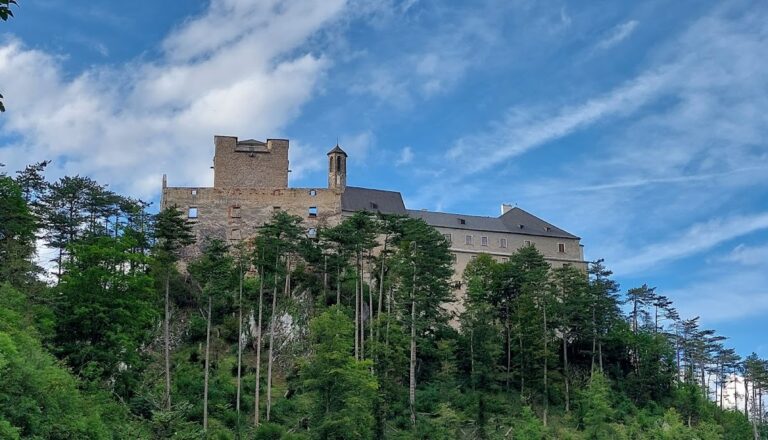
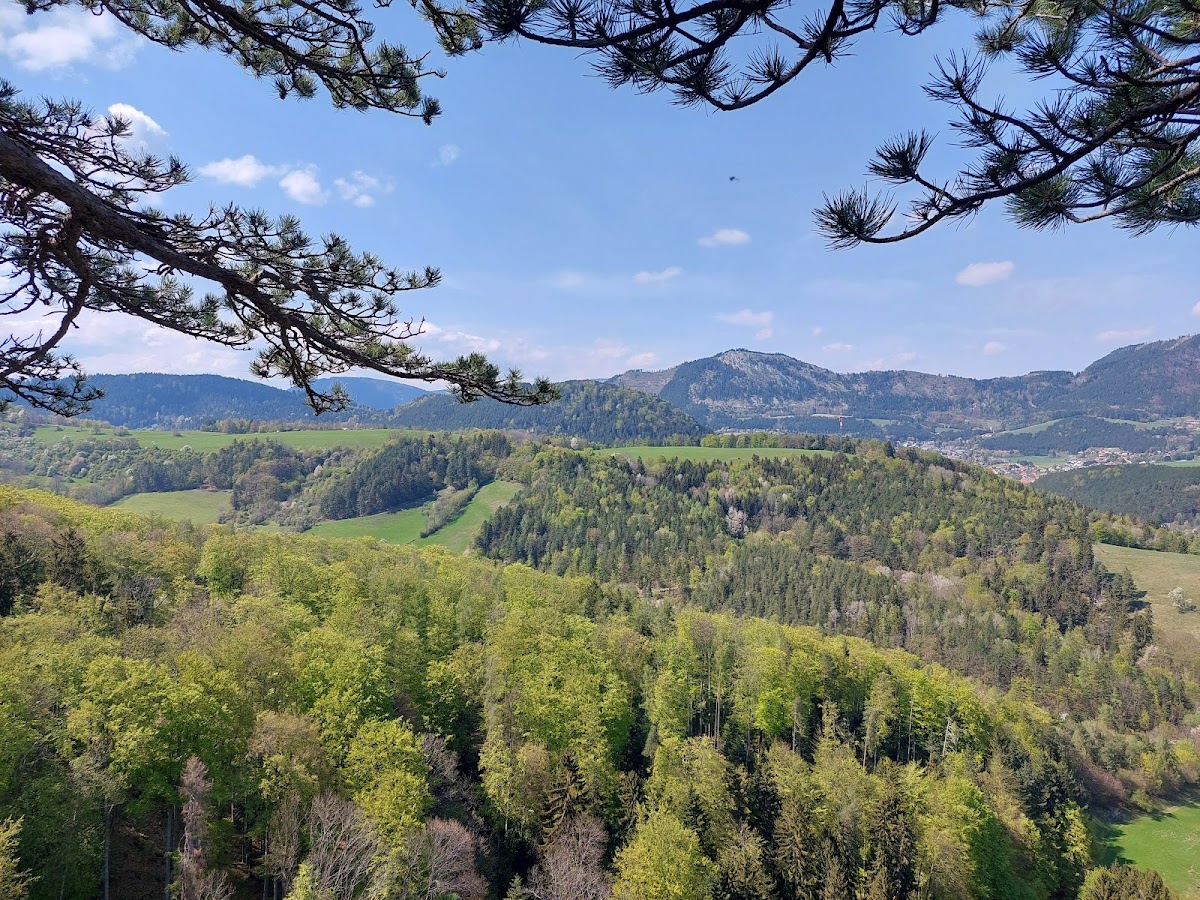
The surviving ruin occupies a rocky promontory in Schrattenbach, in the southern Alpine foothills of Lower Austria. The ground drops approximately 100 metres almost vertically toward the west and southwest, giving the site a naturally restricted defensive position.
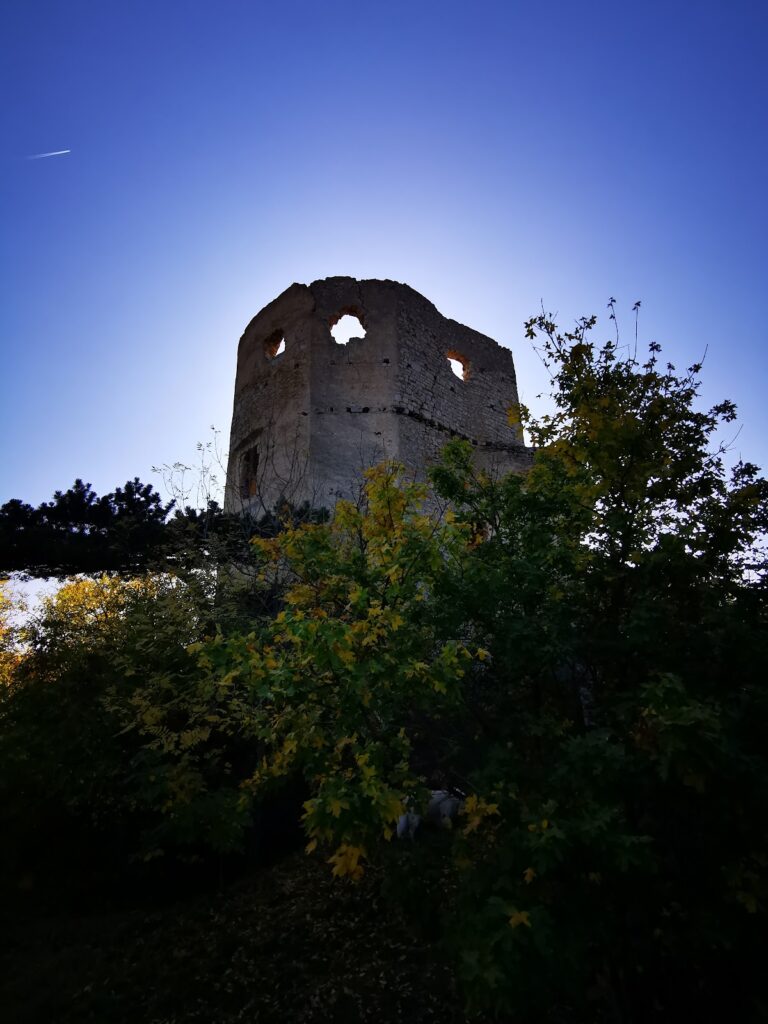
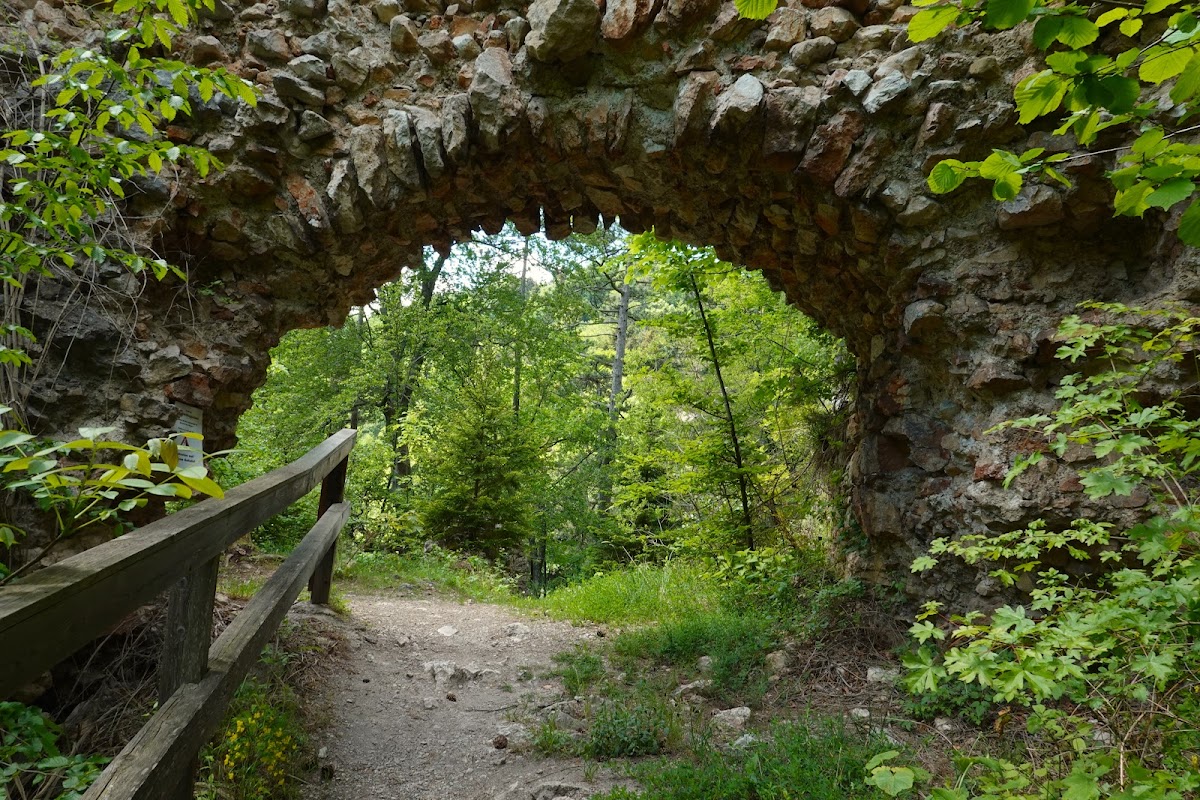
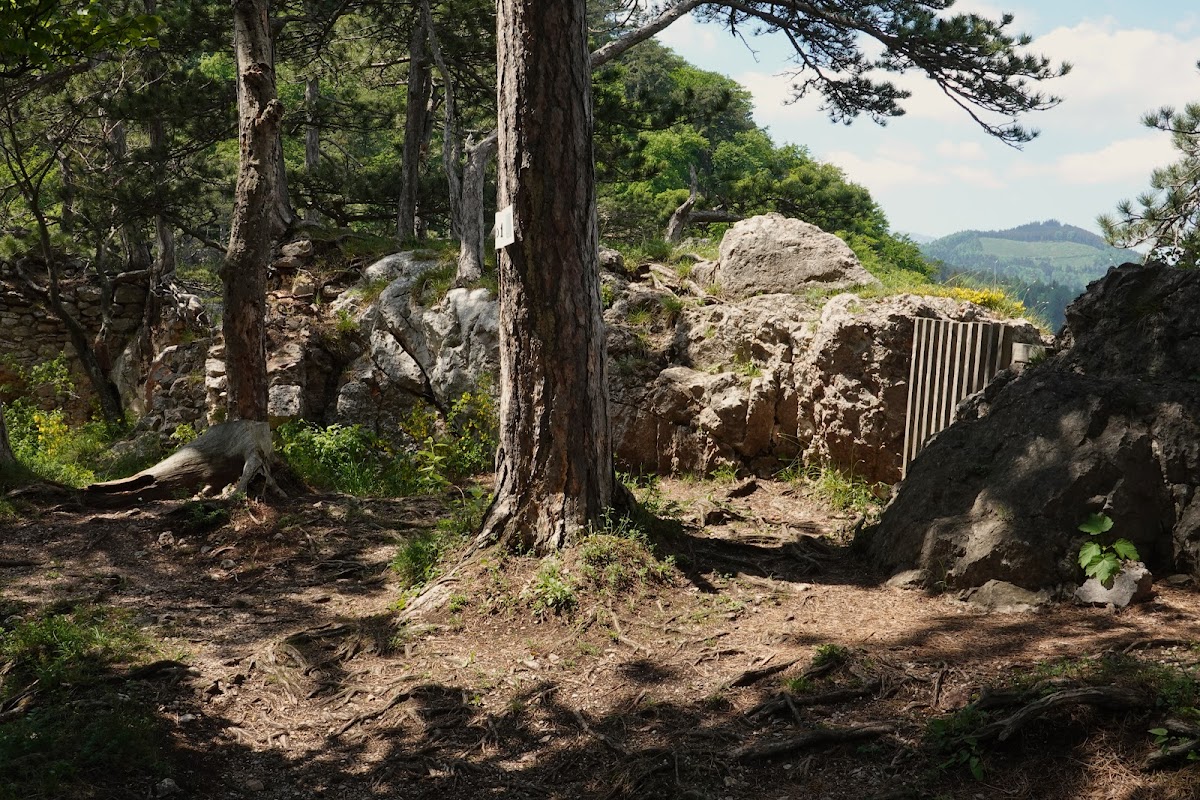
Schrattenstein was a section castle, a fortification arranged on a naturally divided or restricted part of a site, using the terrain to strengthen its defenses. The castle’s principal residential and representative building was the palas, raised in 1416 during the Ebersdorf expansion. The surviving complex remains in a ruined condition, with parts of the grounds and structures maintained and secured.