Behestan Castle: A Historic Fortress in Mahneshan, Iran




Visitor Information
Google Rating: 4.6
Popularity: Low
Country: Iran
Civilization: Unclassified
Site type: Military
Remains: Castle

History
Behestan Castle is located near Behestan village in Mahneshan, Iran. While its exact origins remain uncertain, the fortress is believed to have been initially constructed during the Sasanian Empire, with some sources proposing even earlier beginnings in the Median or Achaemenid eras.
Following its foundation, the castle continued to be used well into the Islamic period, particularly thriving from the 5th to the 7th centuries AH (roughly the 11th to 13th centuries CE). During this time, it functioned as a defensive stronghold for local rulers and communities, providing shelter and protection against enemy incursions. Architectural evidence reveals adaptations made during the Islamic era, including the addition of a prayer niche, known as a mihrab, indicating its religious role within the fortress.
Local traditions have imbued the site with a sense of mystery and legend. The castle is sometimes called “Doodkesh-e Jen,” meaning “Chimney of the Jinn,” or “Takht-e Div,” or “Throne of the Demon,” names inspired by the castle’s unusual chimney-like rock formations and enigmatic appearance. These legends echo the striking landscape shaped by natural erosion but have become embedded in the cultural memory surrounding the fortress.
Behestan Castle remained in use until at least the 5th century AH, after which its defensive relevance diminished. It stands today as one of about twenty historical castles in the Mahneshan region, having been officially registered on Iran’s National Heritage List since 1977.
Remains
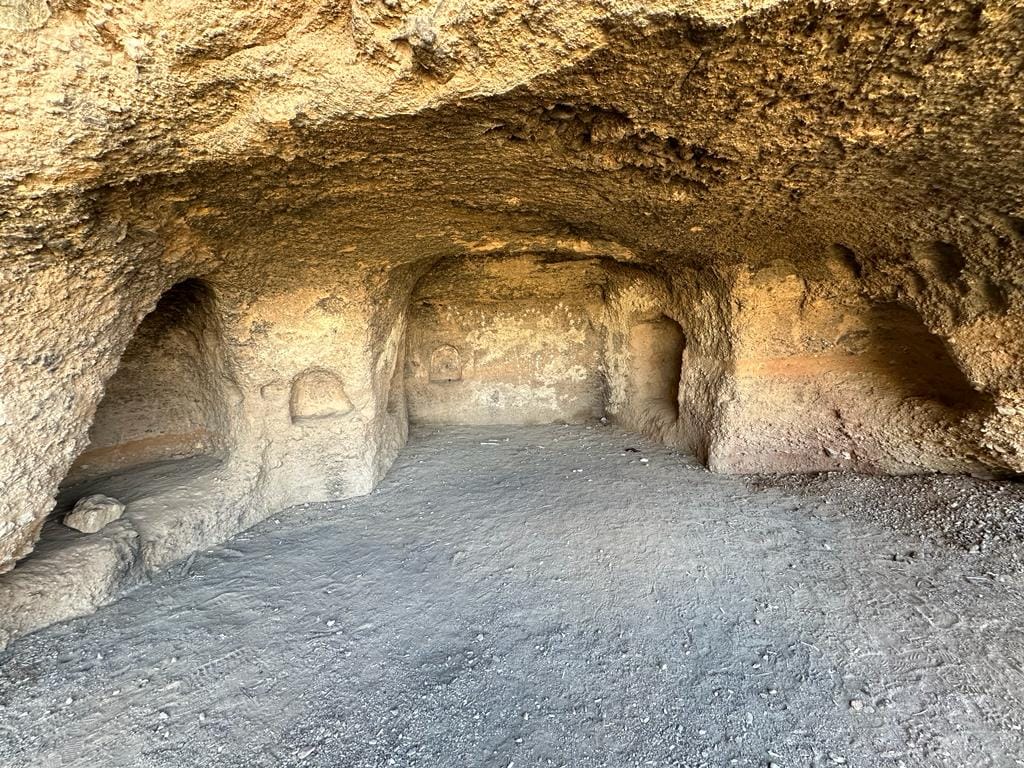
Behestan Castle is carved directly into the mountain, demonstrating a remarkable use of natural rock and soil to form a complex network of interconnected rooms, corridors, and stairways. This carved design follows an original architectural plan, allowing for functional divisions within the fortress. The structure is organized into three main types of spaces: living and storage rooms, winding corridors, and staircases that connect different levels.
The castle’s stairways are particularly notable, especially two zigzagging sets on the western and eastern sides. They begin near the lowest northern area and provided access to upper floors designed for defense. The staircase on the northwest side remains relatively intact and leads to a vaulted chamber featuring a mosque-style mihrab, a prayer niche added during the Islamic era. These stairways measure about one meter in width and reflect influences from Islamic architectural traditions.
Within the rooms, some ceilings are vaulted with pointed arches, and the walls contain triangular or circular niches. These small cavities once held oil lamps, providing light throughout the interior. The upper floors were coated with plaster, and contain a stone and traditional mortar basin roughly seven by three meters in size. This pool was supplied with water through clay pipes half a meter in diameter, locally called “Gong,” indicating a sophisticated approach to water storage and management.
The fortress’s outer appearance is striking, resembling a series of connected chimney-like rock formations known geologically as hoodoos, which have been shaped by erosion over time. This unique natural formation contributes to the castle’s distinctive silhouette, inspiring the local names that associate it with supernatural beings.
Due to extensive erosion and damage over the centuries, the lower staircases have largely deteriorated and are considered unsafe. Accessing the upper sections now generally requires climbing equipment. Despite these challenges, many original features remain in situ, providing valuable insight into the castle’s multifaceted use as a defensive structure, storage facility, and religious site.