Castle of Larciano: A Medieval Fortification in Italy


Site at a Glance
- Rating
- 4.6
- Popularity
- Low
- Country
- Italy
- Primary era
- Medieval
- External website
- Open
- Eras represented
- Medieval
- Civilizations
- Republic of Florence
- Site type
- Military
- Remains
- Castle
On this page9 sections
History
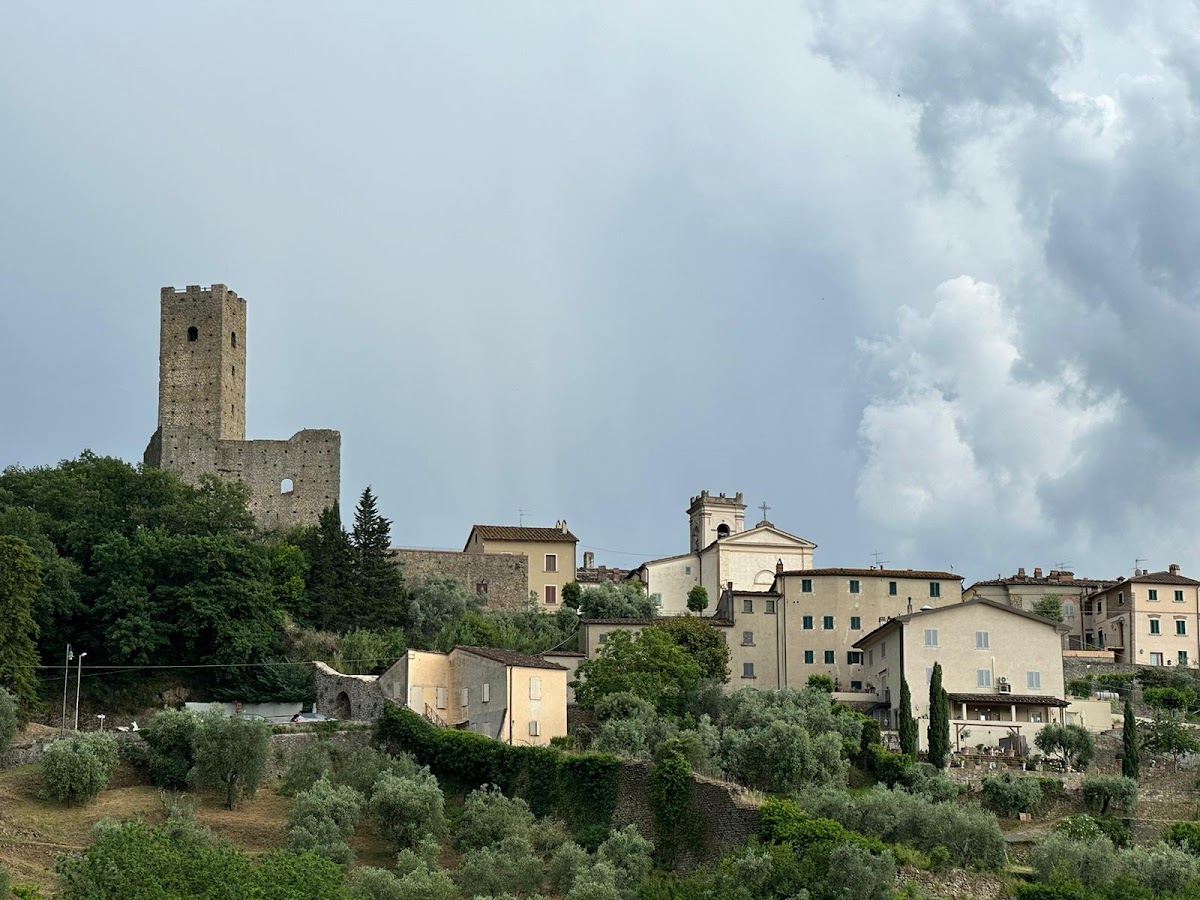
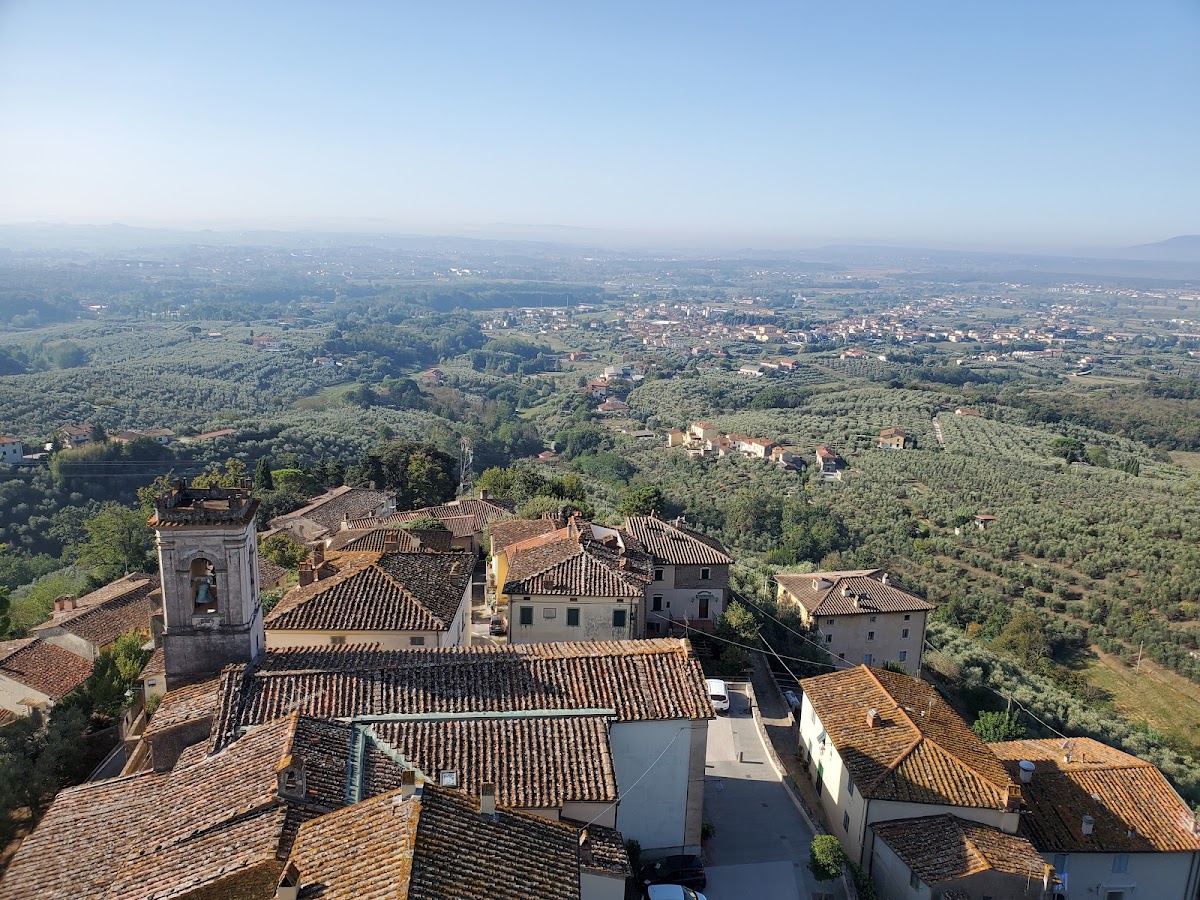
Castle of Larciano is a medieval fortification in Italy, built under the Guidi counts on the slopes of Montalbano at about 165 metres above sea level. Dating from the tenth century, it served the people of Pistoia as a watchtower over the Valdinievole and the Florence, Prato, and Pistoia plain. From the stronghold, guards could observe Cecina di Larciano, Montevettolini, Monsummano, and the fortress of Serravalle Pistoiese.
From earlier settlement to Guidi stronghold
The hill had already been occupied by an Etruscan villa and later by a Roman villa. The medieval castle was established by the Guidi, a powerful Lombard-origin comital family whose possessions extended across the Valdinievole and other parts of Tuscany. In 927, Count Tegrimo Guidi, ancestor of the family’s Modigliana branch, ordered the construction of a 40-metre-high watchtower to protect the Valdinievole. That tower remains part of the fortification.
Pistoian rule and military conflicts
In 1225, the four sons of Guido Guerra of Modigliana sold Larciano Castle to the Commune of Pistoia for 6,000 lire in Pisan currency. The people of Larciano consequently came under Pistoian authority and were required to make a substantial annual payment to the city. Pistoia then enlarged and strengthened the castle, making it the city’s principal southern defensive stronghold. Its position allowed it to control the marshes, the Arno basin, and the section of the Via Francigena, a major medieval pilgrimage and travel route to Rome, that crossed Montalbano from the Valdinievole toward Florence.
In 1302, Florentine troops allied with forces from Lucca captured Larciano while besieging Pistoia’s strongholds. Pistoia recovered the castle in 1310 after paying 10,000 gold florins. In 1391, the threat posed by Gian Galeazzo Visconti, the Milanese ruler whose expansion endangered Tuscany, brought Florence and Pistoia into temporary cooperation. Larciano became a common base for their armies, while military resistance and garrisons held back Visconti’s Lombard cavalry and infantry.
Florentine administration
After Pistoia submitted permanently to Florence in 1401, Larciano became the seat of one of four podesterie, territorial jurisdictions administered by a podesta responsible for civil and judicial governance. The other jurisdictions were Serravalle, Tizzana, and Montale. This arrangement placed the surrounding countryside under Florence’s fiscal authority and continued in later periods.
During the same period, Florence erected a stele-like column in the castle square and crowned it with a Marzocco, the seated heraldic lion of Florence. The lion held a shield bearing the Florentine lily. The surviving monument is headless, and local tradition attributes this damage to the longstanding rivalry between Larciano and neighbouring Cecina.
Administrative change and modern use
Between 1772 and 1774, the Austrian cadet branch ruling Florence abolished the podesteria of Larciano, placed the territory under the tribunal of Serravalle Pistoiese, and united it with the municipality of Lamporecchio. At the end of the nineteenth century, legislation introduced under the government of Francesco Crispi separated Larciano from Lamporecchio and established the town’s definitive municipal autonomy, with the administrative seat at San Rocco in the plain.
Castle of Larciano is designated Italian national heritage. Its tower now houses the Civic Archaeological Museum of Larciano Castello, whose collection includes finds from the eastern Valdinievole dating from prehistory to the late Renaissance. Larciano Castello also continues to host a traditional Medieval Festival, including a historical pageant and the Palio De lo Marzocco, whose games are associated with the medieval period.
Remains
Walls, gates, and courtyard
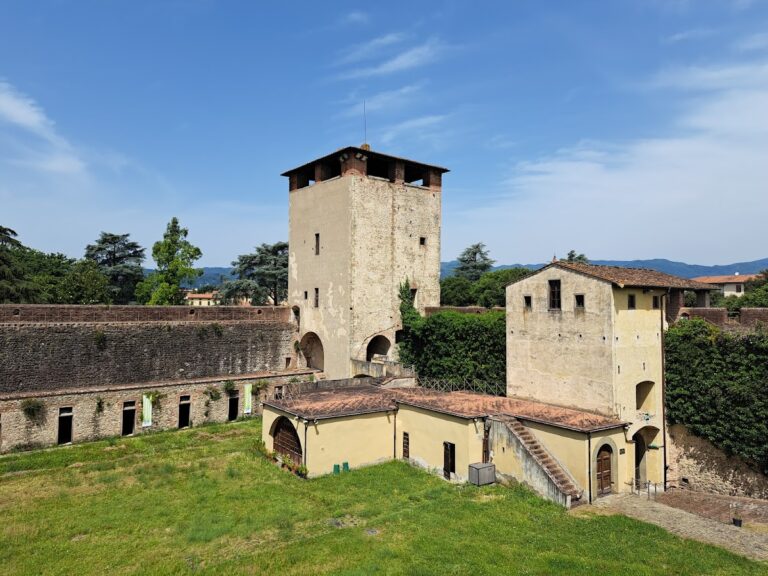
The fortification’s present form belongs mainly to the thirteenth century, when Pistoia expanded the earlier Guidi structure and reinforced its defenses. The walls once enclosed a circuit of about 1,050 metres. Part of this circuit survives intact, with walls and gates in good condition. Three gates, all facing the castle’s single square, lead into the enclosure, and three streets run from them toward the main square. The original defenses also included a raised walkway linking four guard posts at the corners. Former internal partition walls have disappeared, while the ancient water cistern remains in the centre of the courtyard and is still functioning.
Tower and inner stronghold
The medieval enclosure had strong towers at its three gates and another principal tower at the highest point of the castle. Only this highest tower survives. It is enclosed by the cassero, the fortified inner enclosure or stronghold. The tower can still be climbed by approximately 200 steps and contains the Civic Archaeological Museum, where archaeological finds from the prehistoric period through the Renaissance are preserved.
Marzocco monument
The square in front of the castle contains the surviving Marzocco monument. It depicts a seated lion holding a shield with the Florentine lily in its right paw. The lion is headless, preserving the physical feature associated with the local tradition concerning the rivalry between Larciano and Cecina.