Wildenstein Castle (Bad Ischl): A Habsburg Administrative Fortress

Site at a Glance
- Rating
- 4.6
- Popularity
- Low
- Country
- Austria
- Primary era
- Medieval
- Eras represented
- Medieval
- Civilizations
- Habsburg, Holy Roman Empire
- Site type
- Military
- Remains
- Castle
On this page6 sections
History
Origins and medieval development
Wildenstein Castle is a medieval hilltop castle in Austria, in Kaltenbach near Bad Ischl, with origins traditionally placed around 1100. Its first documentary mention dates to 1392, while its construction is generally considered to belong at least to the thirteenth century. The castle stood on the Katrin, the local mountain of Bad Ischl, and was the only castle in the inner Salzkammergut. Along with the small Pflindsberg Castle, it was one of only two castles in the historic Salzkammergut, a traditional Austrian salt-producing region.
Habsburg administration
From 1419, Wildenstein belonged to the Habsburgs, the dynasty that ruled the Austrian territories and later the Habsburg monarchy. The castle served as the seat of a princely administrative official, who governed a defined district on behalf of the sovereign. From 1452, an imperial official held the position. The office administered the Ischl district, which approximately corresponded to the modern Bad Ischl judicial district, and later became the nucleus of a separate Salzkammergut administration connected with the region’s salt economy.
Fire, abandonment, and preservation
A devastating fire struck the castle on 28 August 1593. Wildenstein burned down completely for a second time in 1715, after which it was not rebuilt and gradually deteriorated. The administrative office moved to Reiterndorf near Ischl in 1717, later to the market town of Ischl, and from 1770 was based at Goisern, in Neu-Wildenstein.
The Bad Ischl Heimatverein has worked to slow the ruin’s further deterioration, and donations have allowed small sections to be restored. Since October 2009, the Raubritter zue Wildensteyn association has also supported the preservation of the remains. Wildenstein Castle is protected as a cultural-heritage property in Austria.
Remains
Fortified hilltop complex
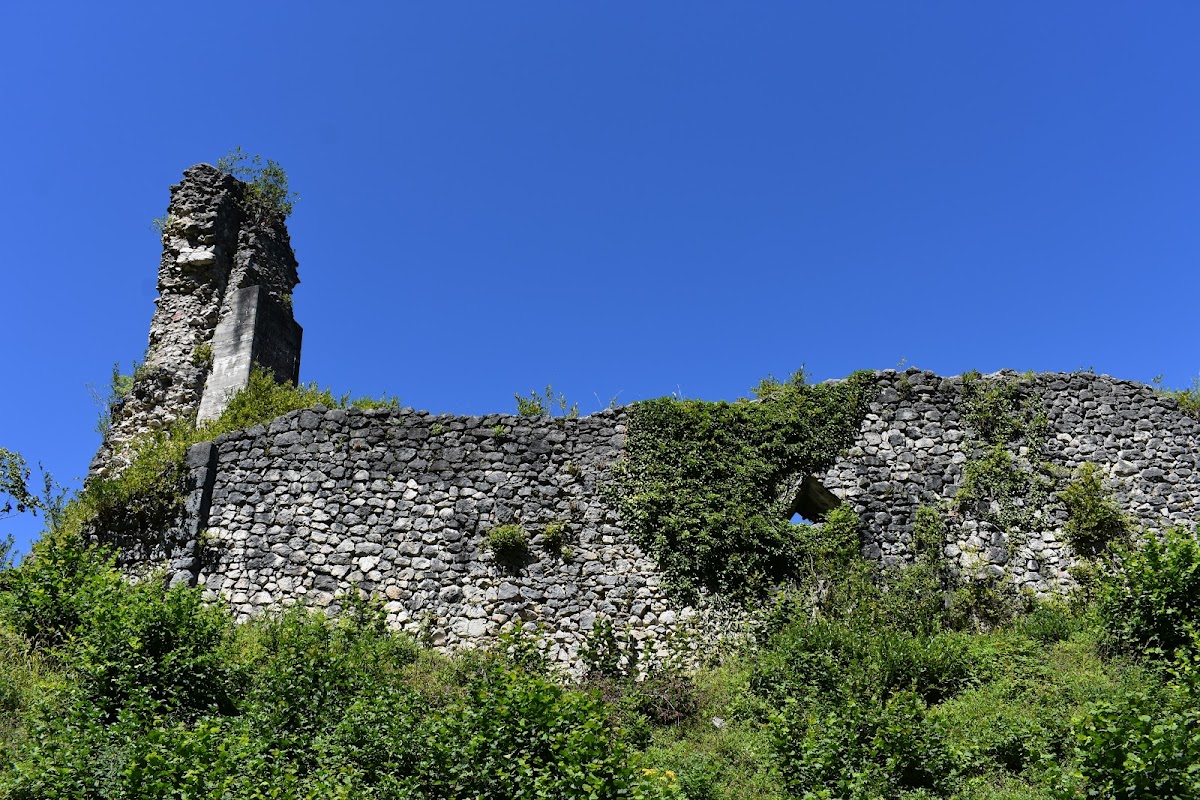
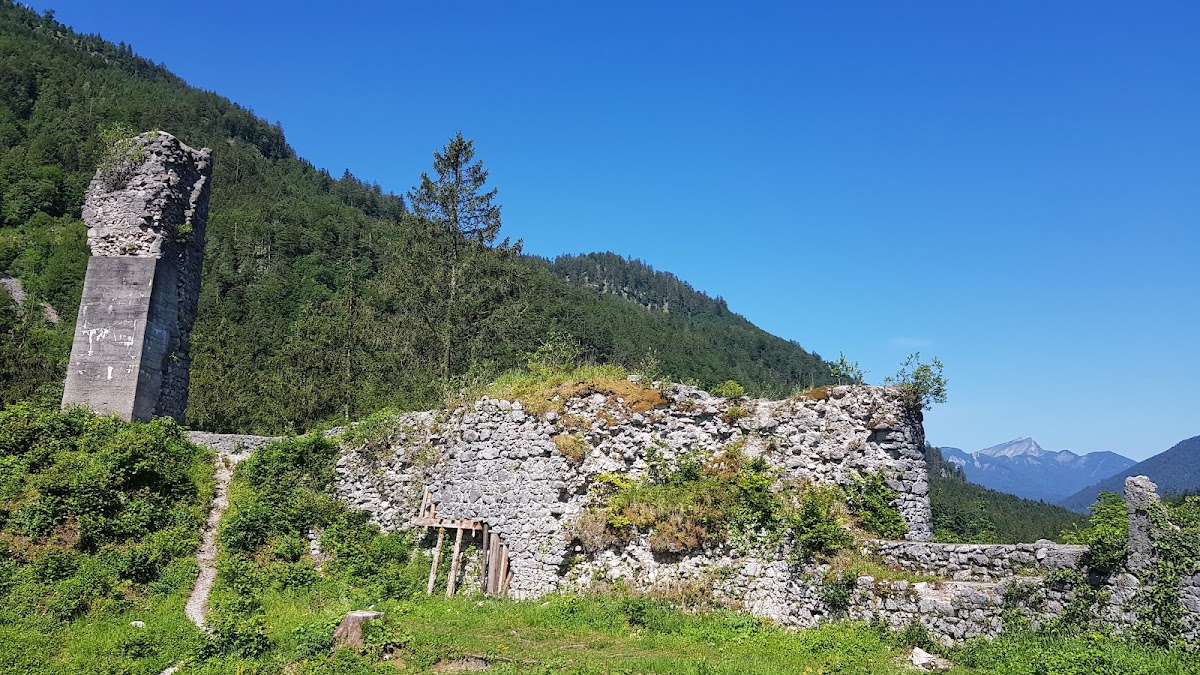
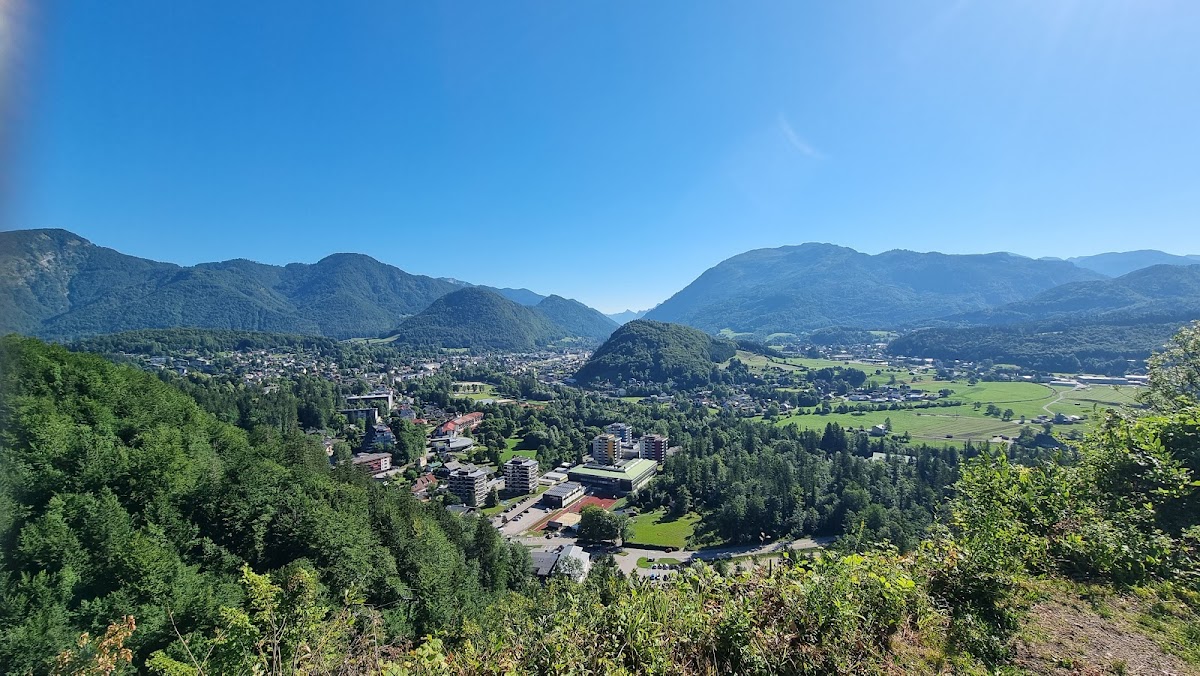
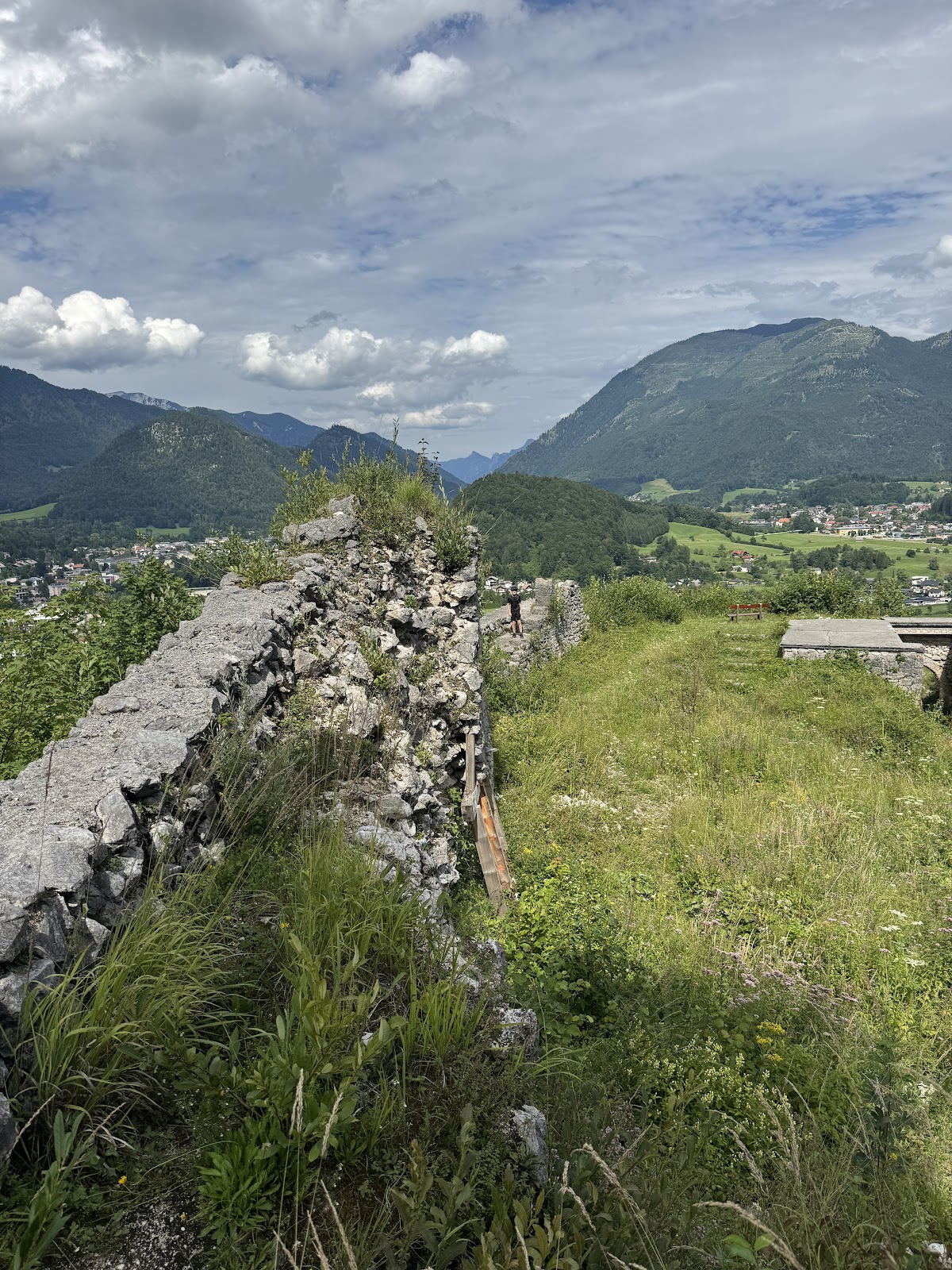
The ruin occupies a rocky spur on the Katrin in the heart of the Salzkammergut. Its elevated position gave the castle a broad view along the Traun valley and a strategic advantage. The surviving complex was arranged as a fortified hilltop residence and military installation, with towers, enclosing ring walls, wall walks, narrow loopholes for weapons, an artificially built moat, a gate, and a drawbridge. These features formed a defensive enclosure around the castle buildings and controlled access across the approach.
The site survives as a ruin following the complete fire of 1715. Because the castle was not rebuilt after that destruction, the remaining sections preserve the physical traces of its fortified layout rather than a later reconstructed form. Small parts of the ruin have undergone restoration as preservation work continues.