Baldern Castle: A Baroque Residence and Arms Collection in Germany


Site at a Glance
- Rating
- 4.3
- Popularity
- Low
- Country
- Germany
- Primary era
- Early Modern
- External website
- Open
- Eras represented
- Early Modern, Modern
- Civilizations
- German, Holy Roman Empire
- Site type
- Domestic
- Remains
- Castle
On this page10 sections
History
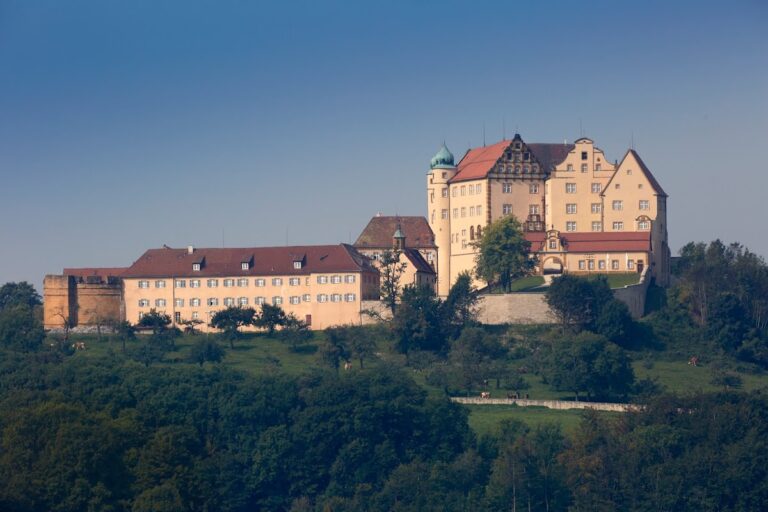
Baldern Castle is a German castle near Bopfingen, rebuilt in the Baroque style between 1718 and 1737 as the residence of the Counts of Oettingen-Baldern. Its history reaches back to the eleventh century and includes centuries under the noble von Baldern family and the Counts of Oettingen.
Medieval Lordship
The castle, also known as Hohenbaldern Castle, was first documented in the eleventh century. By the middle of the twelfth century, the noble von Baldern family held the lordship of Baldern.
In 1280, the castle passed to Count Ludwig V of Oettingen. His descendants later pledged the property during financial difficulties in the fifteenth century, but the castle was redeemed in 1507.
Baroque Residence
Between 1718 and 1737, the medieval complex was rebuilt as a Baroque residence. Baroque was an elaborate architectural and artistic style prominent in Europe during the seventeenth and eighteenth centuries. The work was first directed by Franz de Gabrieli, an architect from Graubünden, a region now in Switzerland, and continued after his death by his brother Gabriel de Gabrieli.
The Oettingen-Baldern line became extinct in 1798, after which the inheritance passed to the princely house of Oettingen-Wallerstein, a German princely family that still owns the castle.
Garden, Museum, and Collections
A landscape garden was created around the castle during the nineteenth century. In 1887, a tower was added under the direction of August von Beyer. The castle became accessible to the public in 1896, when a museum was established in the building.
The museum presents the former residential rooms of the Oettingen family and their servants, together with the ceremonial hall. Apparitions were reportedly seen repeatedly at the castle during the eighteenth century. Since 1930, Baldern has housed a large private collection of arms and remains in the private ownership of the princely house of Oettingen-Wallerstein.
Remains
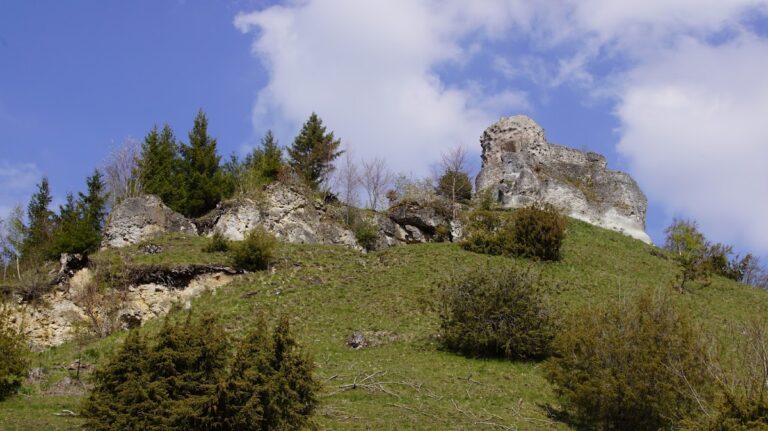
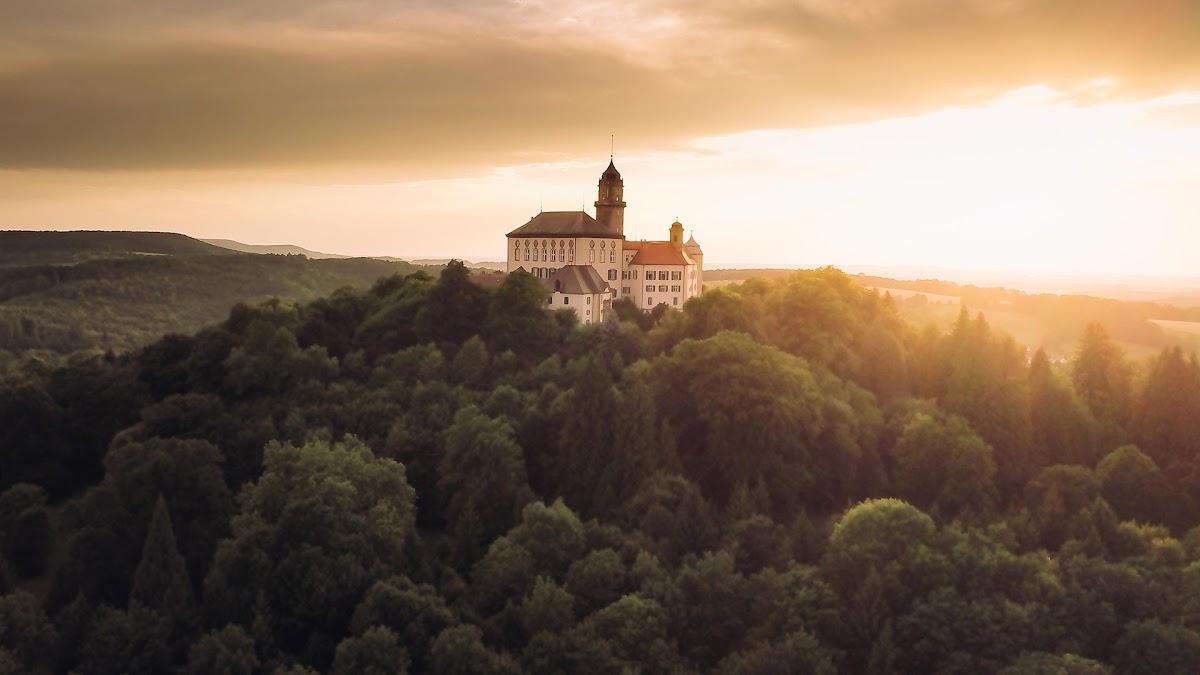
Baldern Castle stands on an isolated, elevated hill northwest of Bopfingen, almost five kilometres north of the eastern Schwabian Alb escarpment. The hill is formed from Brown Jurassic strata covered by multicolored debris deposited by the meteorite impact that created the Nördlinger Ries, a large impact-crater landscape in southern Germany. The present complex is chiefly the eighteenth-century Baroque rebuilding, set within a nineteenth-century English-style landscape garden.
Castle Buildings and Grounds
Baroque Castle
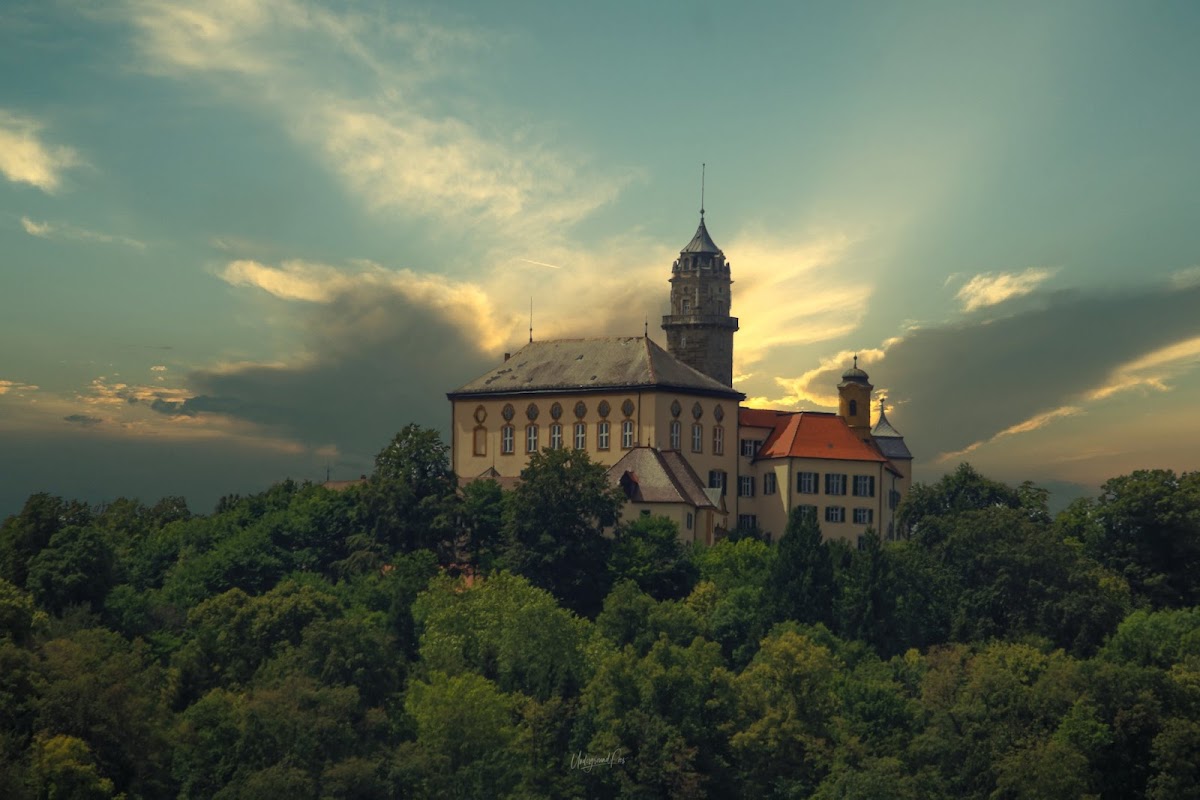
The complex includes a Baroque castle church, richly furnished residential and representative rooms, former servants’ quarters, and a ceremonial hall. Together, these spaces preserve the arrangement of a princely residence, combining religious, domestic, and formal functions within the rebuilt castle.
Tower and Landscape Garden
A tower constructed in 1887 rises above the main building. The surrounding hill was landscaped during the nineteenth century as an English-style landscape garden. From the ceremonial hall, views extend eastward across the Nördlinger Ries and southward toward the Schwabian Alb escarpment.
Arms Collection
European and Oriental Weapons
The castle’s arms collection contains approximately 800 individual European and Oriental weapons dating from the fourteenth to the eighteenth century. It presents European and Oriental military art and forms one of the principal collections preserved at Baldern.
Nearby sites