Roman Amphitheatre Sutri: A Roman Public Arena in Italy



Site at a Glance
- Rating
- 4.5
- Popularity
- Low
- Country
- Italy
- Primary era
- Classical
- External website
- Open
- Eras represented
- Classical
- Civilizations
- Roman
- Site type
- Entertainment
- Remains
- Amphitheatre
History
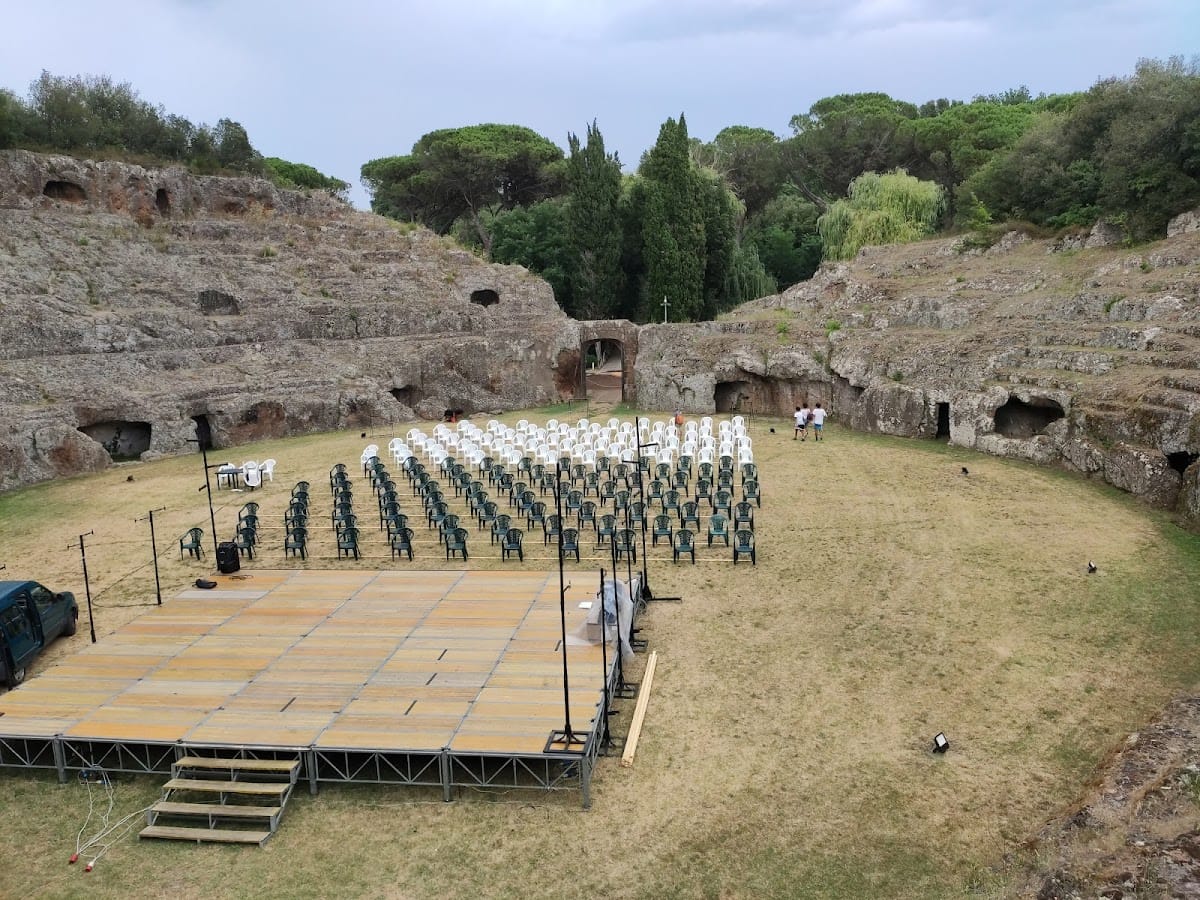
Roman Amphitheatre Sutri is a Roman archaeological monument in Italy, built during the Roman period and generally dated to about the first century AD. Its construction is broadly placed between the late second and first centuries, although its exact date remains uncertain. The elliptical amphitheatre was built from tuff, a relatively soft volcanic stone widely used in central Italy because it could be cut into architectural forms.
The building covered approximately 2,000 square metres and could accommodate more than 9,000 people in three tiers of seating. Its upper crowning level once contained decorative features including niches, statues, and columns, of which only parts survive.
After centuries in which the monument was not visible, it was rediscovered during the first half of the nineteenth century. Local inhabitants excavated the site between 1835 and 1838, bringing the Roman structure back to view. The amphitheatre is protected as Italian national heritage.