S’ Argamassa Roman Fish Farm: An Ancient Aqueduct and Processing Site in Ibiza

Visitor Information
Google Rating: 4
Popularity: Very Low
Google Maps: View on Google Maps
Country: Spain
Civilization: Roman
Remains: Infrastructure

History
The S’ Argamassa Roman Fish Farm is located in Santa Eulària des Riu, within the Balearic Islands of Spain. This site was established by the Romans after they conquered Ibiza in 146 BC, following their victory over the Carthaginian Empire. The island, known as Ebusus in antiquity, was granted municipium status within the Roman Empire, allowing it a degree of self-governance.
During the Roman period, Ibiza experienced growth in several industries, including salt mining, agriculture, and fishing. The S’ Argamassa site was developed as a fish farm and processing center, primarily focused on tuna. The Romans employed the almadraba technique, a traditional method of trapping tuna, to supply the installation. Surplus fish were preserved by salting and drying, a process called salazón, or transformed into garum, a fermented fish sauce highly prized throughout the Roman world.
The aqueduct at S’ Argamassa was constructed to bring fresh water from a nearby stream to the fish processing facilities and fermentation tanks near the coast. This water supply was essential for producing garum. Additionally, the aqueduct served a secondary industrial purpose by draining water from the nearby silver galena mines of S’Argentera, showing the site’s connection to both fishing and mining activities.
The site remained in use during the Roman period but was eventually abandoned. In 1999, the aqueduct and fish processing remains were officially recognized as a cultural heritage monument.
Remains
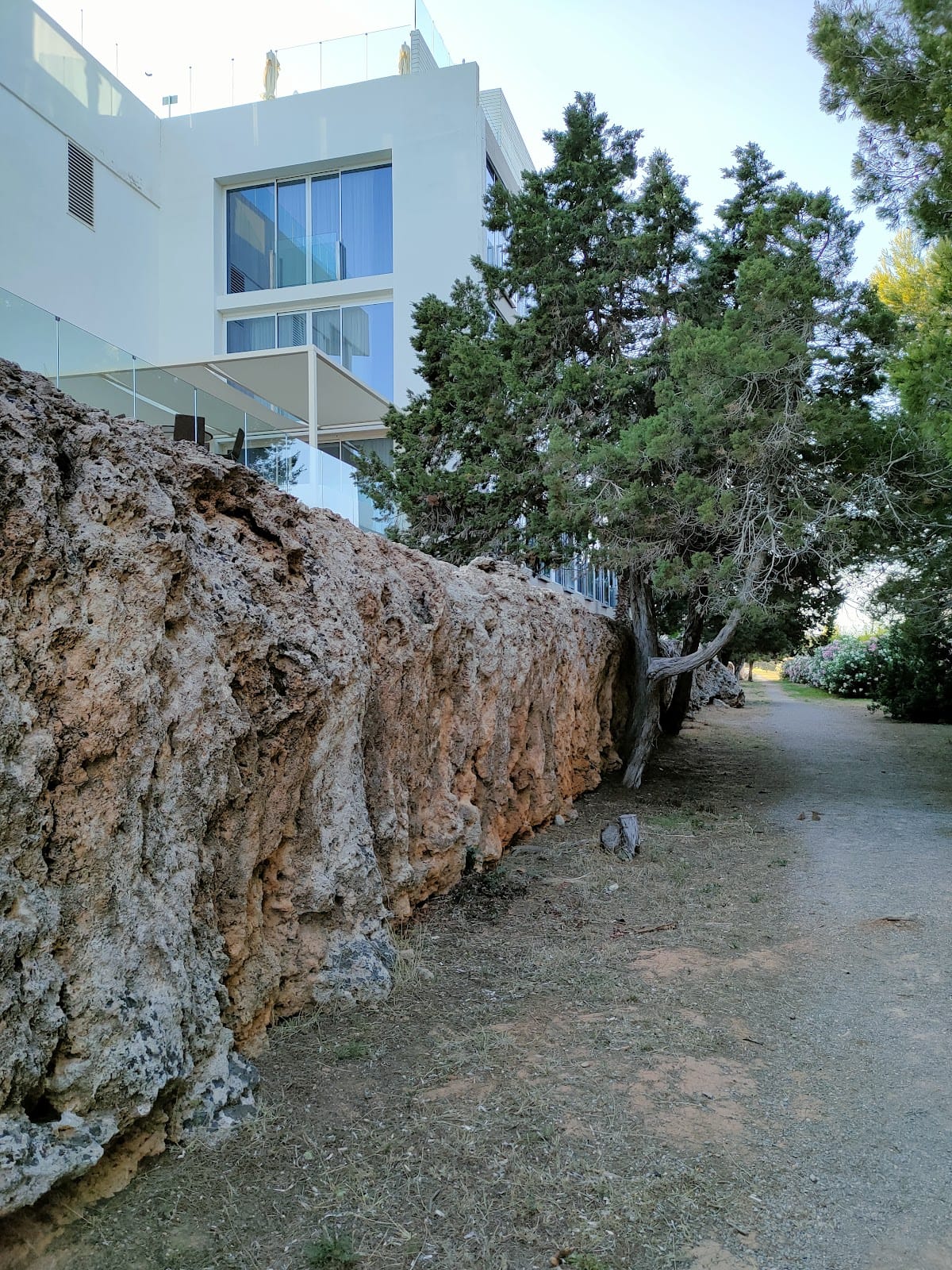
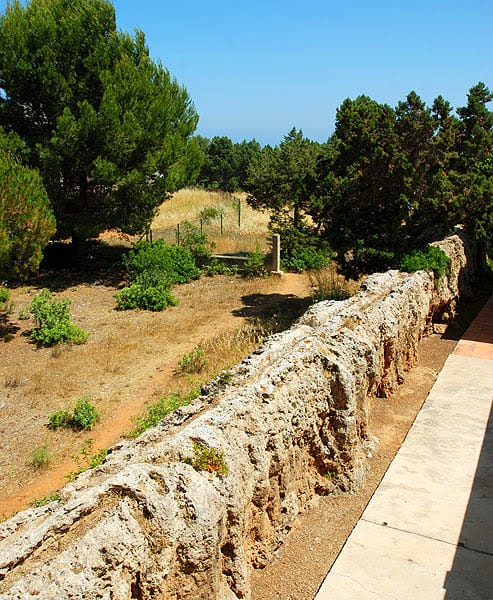
The archaeological remains at S’ Argamassa include a long aqueduct and the ruins of a fish processing installation. The aqueduct extends approximately 425 meters, running from northwest to southeast, with its southern end near the sea standing about 2.8 meters high. It gradually descends to 0.3 meters at the northwest end. Near the coast, the aqueduct splits into two branches; the western branch, partly excavated and heavily damaged, likely led to a cistern that has yet to be located. The eastern branch is hidden beneath vegetation and modern gardens.
Constructed from roughly shaped stones of various sizes, the aqueduct was bonded with opus caementicium, a Roman mortar made from lime and coarse sand. The water channel atop the aqueduct is irregular in size, averaging 0.2 meters wide and 0.3 meters deep. This structure was built over an earlier conduit of similar design but with a nearly square cross-section. An additional wall was added to support the newer channel.
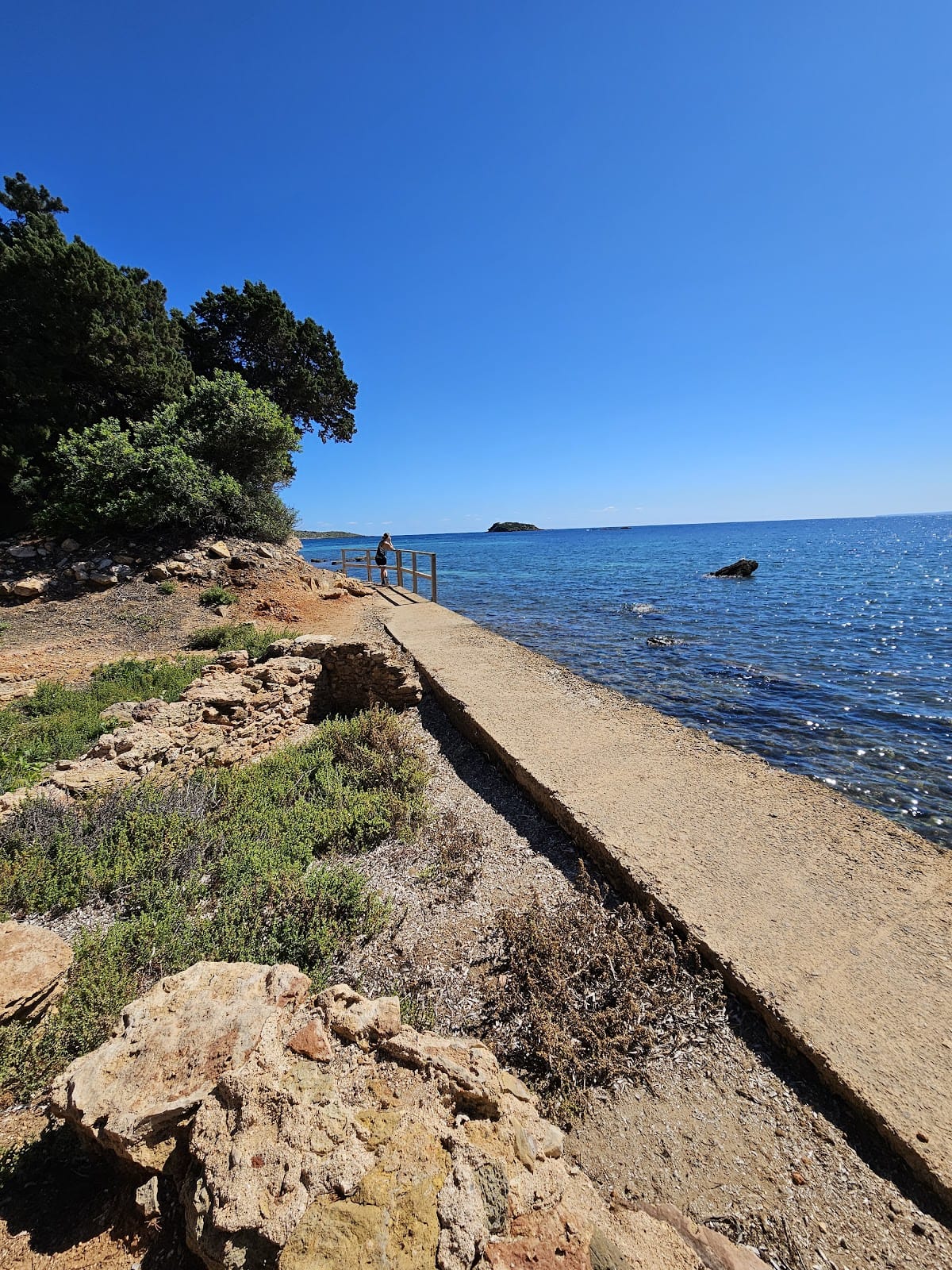
At the coastal end of the aqueduct, rectangular remains of fermentation tanks are visible. These tanks were used to produce garum, the fermented fish sauce. Nearby, large amphoras made locally have been found, indicating storage and export of the fish products. Part of the aqueduct’s conduit has been lost to sea erosion, making it difficult to determine its full original length.
The site also includes architectural remains of an industrial complex and a maritime-rural settlement connected to the aqueduct and fish farm. These features together illustrate the integrated nature of fish processing and water management in Roman Ibiza.