Where were Roman amphitheatres built?
We are all familiar with the colosseum in Rome. Once the land the Colosseum now stands on was part of Nero’s giant “domus aurea” (Golden house). A large tract of land in the centre of Rome, confiscated after the great fire of the year 64 destroyed this part of the city. After Nero’s demise emperor Vespasian decided to give this area back to the people, a gesture to ensure the people’s support for his reign. The area, which was a lake at the time, was confiscated and redesigned to eventually incorporate the colosseum.
The Colosseum was the largest of more than 200 amphitheatres that were to be built across the empire. The Colosseum could host around 50.000 people, although some estimates go up to 80.000.
A quick look at the map shows a curious distribution of these amphitheatres: They are exclusively located in the western part of the empire.
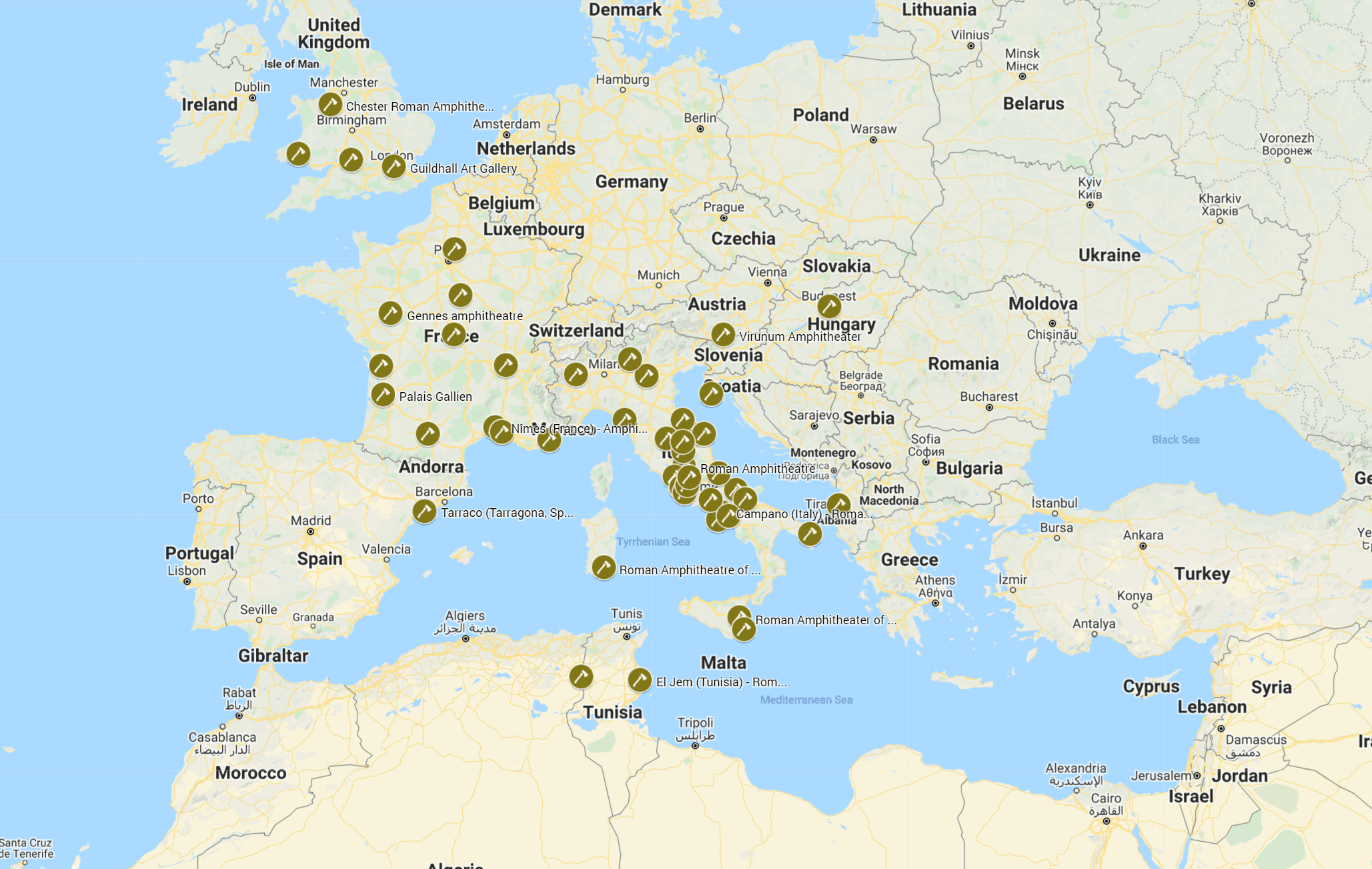
The category “Roman cities/ areas” of course also includes cities/ areas with amphitheatres, so the below overview is not fully complete. Also, the map only includes areas that are worth visiting or that have been excavated. As a result, I have taken the coordinates of a Wikipedia list consisting of all known amphitheatres. I have plotted them on a map which can be seen below. This confirms the above statement: Less than 20 of the more than 200 amphitheatres in the Roman empire were constructed in the east.
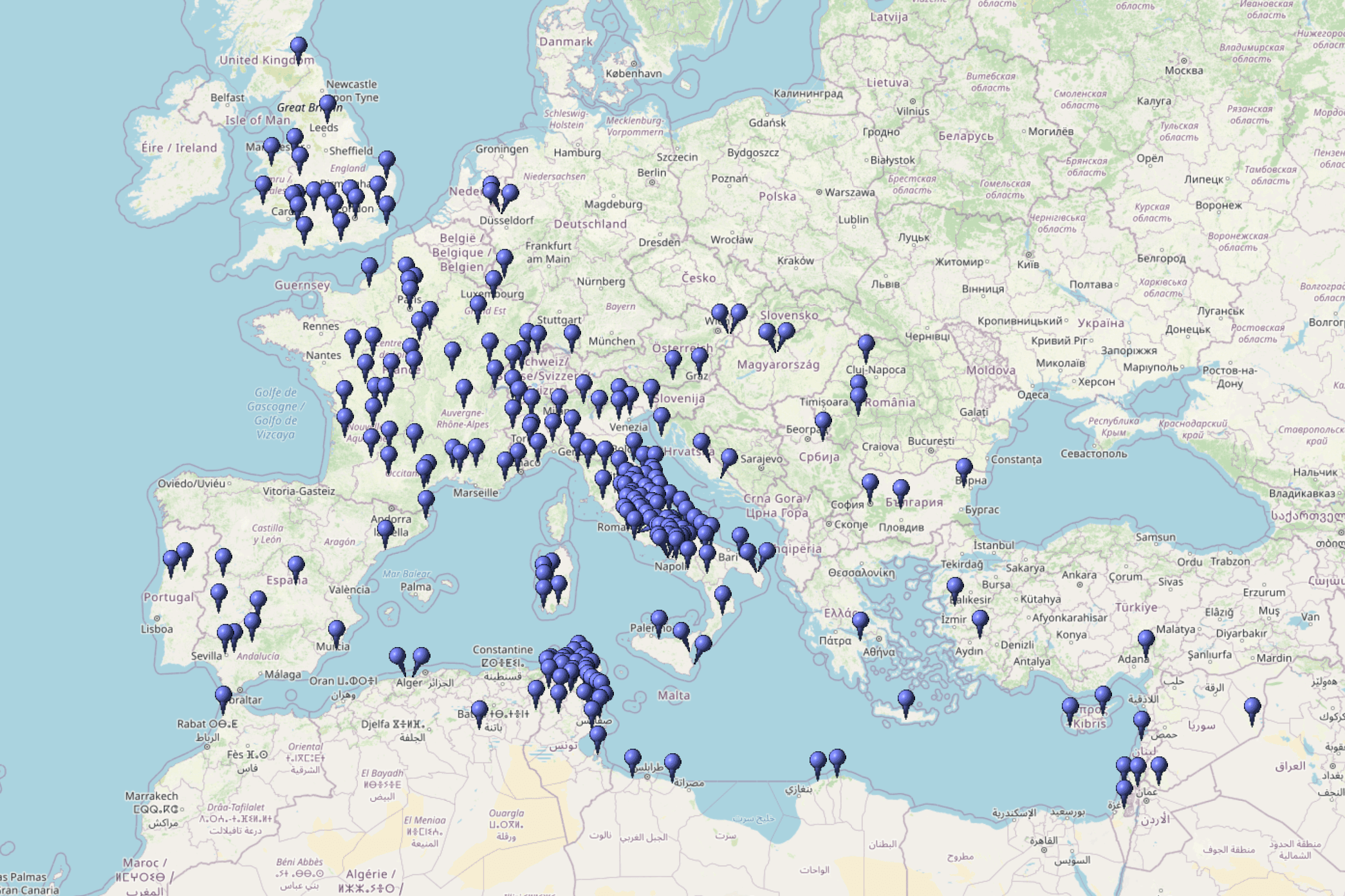
This is not a coincidence. The western half of the Roman empire was much more influenced by Roman culture than the eastern half, which roughly speaking had a larger Greek influence. Roman gladiator fights probably originated in ancient funerary rituals. Another theory is that the culture was imported from Etruscan culture. In any case, the culture originated on the Italian peninsula. With the expansion of the Roman empire, Romanization and the army ensured the construction of amphitheatres in other provinces and areas.
The easternmost Roman amphitheatre can be found in Dura Europos, where in the military quarter an amphitheatre was constructed for the soldiers. The Wikipedia entries do seem to contain some errors, for example, Bosra has one of the largest theatres of the empire, but no amphitheatre. The distinguishing factor being that a theatre is semi-circular whereas an amphitheatre is circular (Amphi is Greek for “around”). Similarly, Caesarea Maritima does not feature an amphitheatre but does have a theatre.
That leaves the sites of Dura Europos, Eleutheropolis, Anazarbus, Gortyn (Crete), Ptolemais, Mastaura, Pergamom and Corinth. Anyhow, we can safely state that amphitheatres are much more ubiquitous in the west than in the east. Although visiting a Roman archaeological site in western Europe will show much of the same buildings and city planning, these slight differences will help the attentive visitor distinguish the cultural differences that still existed within the empire.