The Best Preserved Greek Ruins in Italy
Introduction
Magna Graecia, or “Great Greece,” was a region in southern Italy and Sicily, settled by Greeks. Currently around 10 well-preserved Ancient Greek sites can be found in Italy.
The Greek colonization began around the 8th century BC. Seeking fertile land and trade opportunities, Greeks ventured west.
These colonies quickly grew and thrived. They became influential hubs of Greek culture. The Greeks introduced their customs and political systems. The local Italic tribes were greatly influenced by Greek ways. Cities like Sybaris became very wealthy and densely populated. By around 600 BC, Sybaris was highly significant. It might have had a population of up to 300,000 people.
Trade was a major part of life in these Greek colonies. The Greek settlers traded extensively with other civilizations. They also interacted with various Greek city-states. This trade fostered cultural exchanges and brought wealth. Greek art, philosophy, and science spread through the region. Many cities were noted for their contributions to these fields. Despite their success, the Greek colonies faced several difficulties. They were frequently at odds with neighboring tribes. Rival Greek cities also caused conflicts. Internal disputes further weakened the city-states. Nevertheless, Greek influence continued to be strong for centuries.
Roman expansion
Eventually, Roman expansion began to impact Magna Graecia. As Rome grew, it gradually took over these Greek colonies. This process involved both battles and alliances. By the 3rd century BC, Rome had firmly established control. Roman rule introduced significant changes to the region.
Under Roman control, the Greek cities were incorporated into the empire. They continued to prosper but under Roman administration. This period saw a mix of Greek and Roman cultures. New architectural and cultural advancements emerged during this time. Even with Roman dominance, the impact of Greek culture remained. The Greek cities played an important role in the Roman Empire. They contributed to Roman learning and cultural life.
Cultural influence
The Greeks founded cities like Syracuse, Neapolis (Napoli), and Taras (Taranto). Each city had its own unique characteristics but shared common Greek elements. Greek architecture was prominent in these cities. Temples and public buildings showcased Greek design principles. The use of columns, friezes, and pediments became common. Art was an essential part of life in Magna Graecia. Greek artists produced a variety of works, including sculptures and pottery. Many of their sculptures depicted gods, athletes, and historical figures. Pottery often featured mythological scenes.
The cultural influence of Magna Graecia on the Roman Empire was profound and multifaceted. Here’s a detailed exploration of how Greek culture, as represented in Magna Graecia, shaped various aspects of Roman civilization:
Art and Architecture
Magna Graecia was renowned for its high level of artistic achievement, including sculpture, pottery, and painting. Greek sculptors and potters who settled in southern Italy contributed to the development of a distinctive style in art. Roman artists and architects were heavily influenced by these Greek traditions. The Romans adopted and adapted Greek artistic styles, integrating them into their own artistic expressions. For example, Roman sculpture often emulated Greek forms, and Roman pottery was influenced by the styles developed in Magna Graecia.
The architectural achievements of Magna Graecia, such as the development of the Doric and Ionic styles, were assimilated by the Romans. The design principles of Greek temples and public buildings influenced Roman architecture, leading to the incorporation of Greek columns, capitals, and decorative elements into Roman structures. The Romans adopted and modified the Greek orders (Doric, Ionic, and Corinthian) in their own public and private buildings, creating a distinctive Roman architectural style that was deeply rooted in Greek tradition.
The coinage of Magna Graecia, which can be seen as a form of art, also influenced Roman coinage, particularly in the use of imagery and symbols. Roman coins often featured Greek-style iconography, including depictions of gods, heroes, and important figures from Greek mythology.
Literature and Philosophy
Greek literature, particularly the works of poets, playwrights, and philosophers from Magna Graecia, significantly influenced Roman writers. The Roman poets Virgil and Ovid, for example, drew on Greek epic poetry, including the works of Homer and Hesiod, for inspiration. Roman dramatists like Plautus and Terence adapted Greek comedies, particularly those of Menander and Aristophanes, to Roman tastes.
Magna Graecia was home to several influential philosophers, such as Pythagoras, Parmenides, and Empedocles. Their philosophical ideas and schools of thought had a lasting impact on Roman philosophy. Roman thinkers like Cicero and Seneca engaged deeply with Greek philosophical traditions, including Stoicism, Epicureanism, and Platonism, all of which had roots in the Greek intellectual traditions that flourished in Magna Graecia.
Urban Planning and Public Life
The Greeks of Magna Graecia developed advanced urban planning concepts, including the use of a grid plan for city layouts, which the Romans adopted and refined. Roman cities often employed similar planning principles, such as the use of a central forum surrounded by important public buildings, reflecting Greek urban design.
Many aspects of Roman public life, such as the use of theaters, baths, and gymnasiums, were inspired by Greek practices. The Romans incorporated Greek-style theaters and gymnasiums into their cities, adapting them to Roman needs and preferences. The Roman public bathhouse (thermae) was influenced by Greek bathing practices, which were prevalent in Magna Graecia.
Religion and Rituals
The Romans adopted many Greek deities and religious practices, integrating them into their own religious system. Deities such as Jupiter (Zeus), Neptune (Poseidon), and Venus (Aphrodite) were directly inspired by their Greek counterparts. Greek religious rituals, including sacrifices and festivals, were incorporated into Roman religious practices.
The Roman calendar and religious festivals were influenced by Greek traditions. For example, the Roman festival of Saturnalia had parallels with Greek celebrations such as the Dionysia. Roman religious rituals and practices often mirrored those found in Magna Graecia, reflecting the deep cultural integration between the two civilizations.
Language and Education
Greek was the language of culture and education in the Roman Empire, particularly among the elite. Many Roman aristocrats were fluent in Greek and engaged with Greek literature and philosophy. The Greek language became a key component of Roman education, with Greek teachers and scholars being highly sought after in Rome.
Roman education was heavily influenced by Greek pedagogical practices. Greek tutors and scholars played a significant role in educating Roman children, particularly in the areas of rhetoric, philosophy, and the arts. The Roman educational system adopted Greek methods of teaching and incorporated Greek texts into its curriculum.
In short, the cultural legacy of Magna Graecia profoundly shaped the Roman Empire. The Romans admired and absorbed many aspects of Greek culture, including art, literature, philosophy, and public practices. This integration not only enriched Roman civilization but also helped preserve and transmit Greek cultural achievements to future generations. As a result, the Roman Empire became a cultural heir to the Greek traditions, blending them with its own innovations.
Explore the Best Preserved Greek Ruins in Italy
Below is a categorized list of Greek sites that have detailed articles.
Primary Function: All
Type: All
Popularity: All
Rating: All
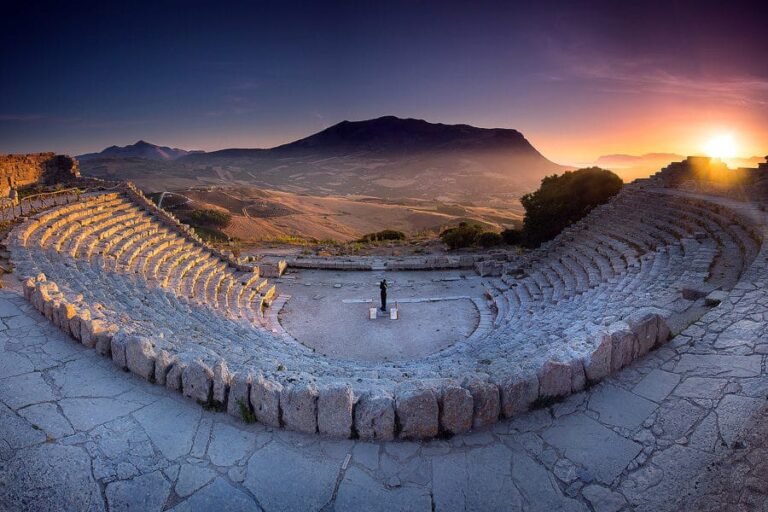
Segesta Archaeological Park preserves a significant ancient city founded by the Elymians, showcasing cultural synthesis from Elymian, Greek, Punic, Roman, and medieval periods, with well-preserved mo…
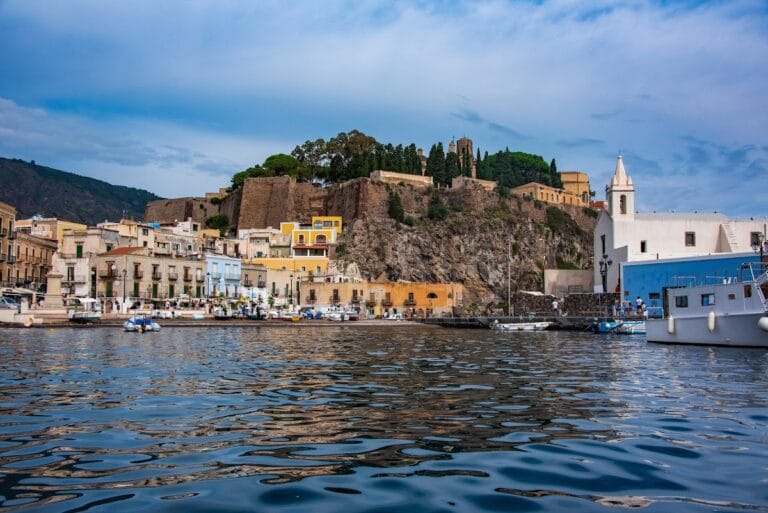
The Castello di Lipari stands on a volcanic acropolis in Italy, showcasing layers of human settlement from prehistoric times through Greek, Roman, Norman, and later periods, reflecting its enduring r…
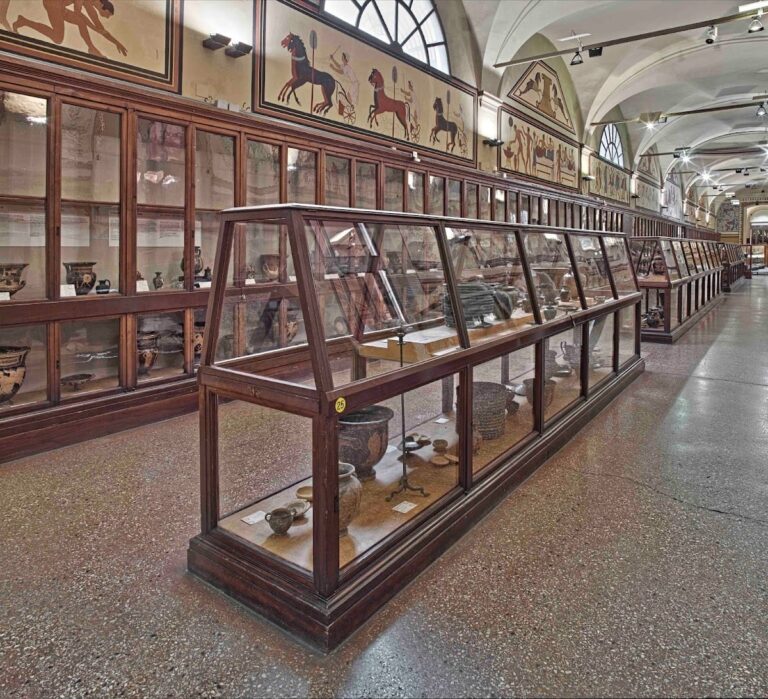
The Civic Archaeological Museum of Bologna showcases artifacts spanning from prehistoric times through the Roman era, highlighting the city's connections across the Mediterranean and beyond.
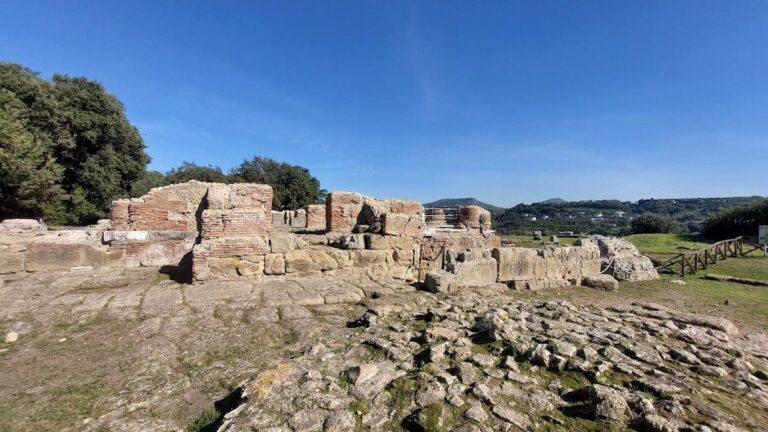
Cuma Archaeological Park is a key historical site near Pozzuoli, Italy, representing one of the earliest Greek colonies in Italy and showcasing continuous occupation through Greek, Samnite, Roman, an…
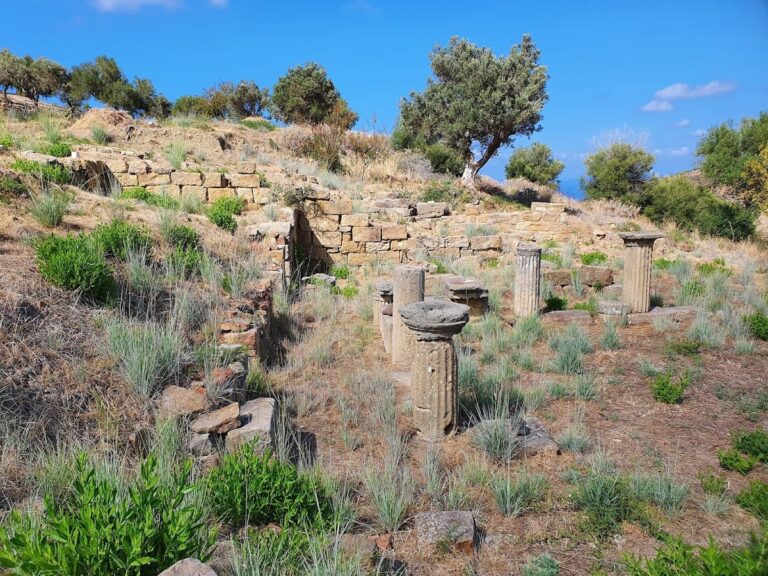
Halaesa Arconidea was a strategically located ancient city founded by Greek colonists in the 5th century BCE, later becoming a Roman municipium. Its archaeological remains reveal significant urban de…

The Museo Provinciale Campano in Capua showcases a rich collection of artifacts from ancient Campania, reflecting the region's diverse cultural history through its archaeological and medieval exhibit…

Located in Ancona, this museum showcases artifacts from ancient cultures of the Marches region, offering insights into the area's diverse historical past.
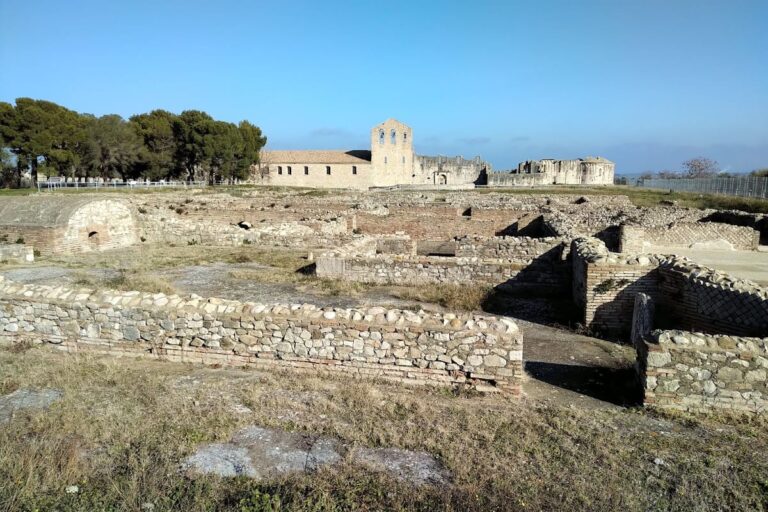
The Parco archeologico di Venosa preserves extensive remains from the Iron Age through late antiquity, illustrating the site's evolution from a Daunian settlement to a Roman colony and municipium, hi…

The Regional Archaeological Museum Antonio Salinas in Palermo showcases a rich collection of artifacts from Sicilian archaeological sites, housed in a historic former monastery that blends religious …

Rocca Sillana is a hilltop fortress with roots in medieval times and connections to earlier civilizations, offering insights into the region's military and religious history.
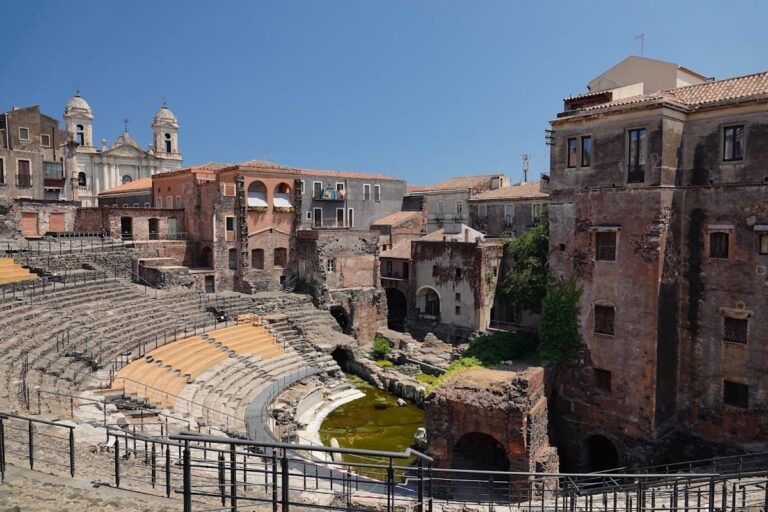
The Greek-Roman theatre of Catania reflects the city’s rich history from its Greek origins through Roman transformation, offering insights into ancient architectural and cultural practices.
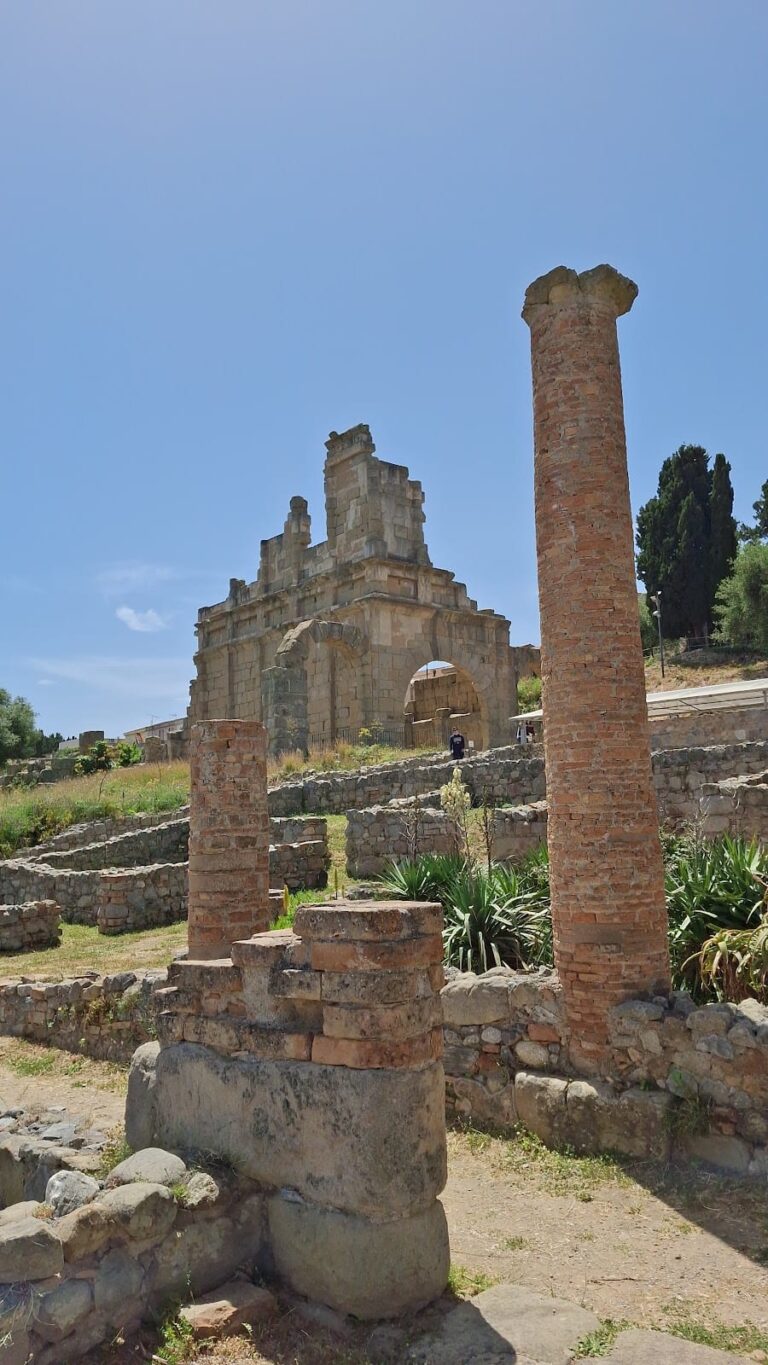
The Parco Archeologico di Tindari is a significant archaeological site showcasing a Hellenistic foundation that evolved through Roman and Byzantine periods, reflecting its strategic maritime role and…
Show full list of sites
| Title | Country | Type | Rating | Popularity | Excerpt |
|---|---|---|---|---|---|
| Castello di Acri: A Historic Fortress in Southern Italy | Italy | Military | 4.8 | Very Low | The Castello di Acri, built by the ancient Bruttii and later used by Romans and medieval communities, reflects a rich history of cultural and military importance in southern Italy. |
| Temple of Athena, Syracuse: An Ancient Greek Sanctuary in Sicily | Italy | Religious | 4.8 | Low | The Temple of Athena in Syracuse reflects the city’s rich history from its Greek origins through Roman times to its Christian transformation, showcasing layers of cultural and religious evolution. |
| Capitoline Museums: Preserving Rome’s Ancient Heritage | Italy | Museum | 4.7 | High | The Capitoline Museums in Rome showcase a vast collection of ancient Roman art and artifacts, housed in historic Renaissance palaces on the Capitoline Hill, a site central to Rome's political and rel… |
| National Archaeological Museum of Taranto: Preserving Magna Graecia’s Heritage | Italy | Museum | 4.7 | Medium | The National Archaeological Museum of Taranto showcases the rich archaeological heritage of Taranto and the Apulia region, highlighting its origins as a Greek colony and its historical development th… |
| Paestum: An Ancient Greek and Roman City in Southern Italy | Italy | City, Civic | 4.7 | Very High | Paestum is a significant archaeological site showcasing well-preserved Greek temples and Roman urban structures, reflecting its historical role as a prosperous polis and later Roman colony in Campani… |
| Temple of Heracles in Akragas: An Ancient Greek Monument in Agrigento | Italy | Religious | 4.7 | Medium | The Temple of Heracles in Agrigento is one of the oldest Greek temples in the region, reflecting the architectural and cultural heritage of Magna Graecia. It offers insight into ancient religious pra… |
| Ancient Theatre of Taormina | Italy | Entertainment | 4.6 | Very High | Discover the ancient theatre of Taormina, Sicily. |
| Archaeological Museum of Centuripe: Showcasing Sicily’s Ancient Heritage | Italy | Museum | 4.6 | Low | The Archaeological Museum of Centuripe offers insight into the town's evolution from Siculi origins through Hellenistic influence to Roman prominence, preserving artifacts that reflect its cultural a… |
| Castello di Santa Lucia del Mela: A Historic Fortress and Religious Site in Italy | Italy | Military | 4.6 | Low | The Castello di Santa Lucia del Mela is a historic fortress with roots in ancient Greek settlement, evolving through Roman, Byzantine, Norman, and later periods. It has served military, royal, and re… |
| Motya: An Ancient Phoenician City in Sicily | Italy | City | 4.6 | Medium | Motya was a thriving Phoenician settlement on a small island near Marsala, Sicily, known for its strategic location, rich cultural heritage, and well-preserved archaeological remains that reveal its … |
| Parco Archeologico di Rudiae: An Ancient Messapian and Roman Site in Apulia, Italy | Italy | Burial, City | 4.6 | Low | The Parco Archeologico di Rudiae is a significant archaeological site in southern Italy, illustrating the cultural and historical evolution from the Messapian civilization through Roman times, with n… |
| Scolacium Archaeological Park: A Greek and Roman Settlement in Calabria, Italy | Italy | Burial, City | 4.6 | Medium | Scolacium Archaeological Park preserves significant Greek and Roman remains illustrating the site's historical role as a strategic coastal settlement and municipium in southern Italy. |
| Segesta Archaeological Park: An Elymian and Roman Site in Western Sicily | Italy | Burial, City | 4.6 | Medium | Segesta Archaeological Park preserves a significant ancient city founded by the Elymians, showcasing cultural synthesis from Elymian, Greek, Punic, Roman, and medieval periods, with well-preserved mo… |
| Castello di Lipari: A Historic Volcanic Fortress in Italy | Italy | Military | 4.5 | Medium | The Castello di Lipari stands on a volcanic acropolis in Italy, showcasing layers of human settlement from prehistoric times through Greek, Roman, Norman, and later periods, reflecting its enduring r… |
| Civic Archaeological Museum of Bologna | Italy | Museum | 4.5 | Medium | The Civic Archaeological Museum of Bologna showcases artifacts spanning from prehistoric times through the Roman era, highlighting the city's connections across the Mediterranean and beyond. |
| Cuma Archaeological Park: An Ancient Greek and Roman Site in Southern Italy | Italy | Burial, City | 4.5 | Medium | Cuma Archaeological Park is a key historical site near Pozzuoli, Italy, representing one of the earliest Greek colonies in Italy and showcasing continuous occupation through Greek, Samnite, Roman, an… |
| Halaesa Arconidea: An Ancient Greek and Roman City in Northern Sicily | Italy | Burial, City | 4.5 | Low | Halaesa Arconidea was a strategically located ancient city founded by Greek colonists in the 5th century BCE, later becoming a Roman municipium. Its archaeological remains reveal significant urban de… |
| Museo Provinciale Campano: Preserving Capua’s Archaeological and Historical Heritage | Italy | Museum | 4.5 | Low | The Museo Provinciale Campano in Capua showcases a rich collection of artifacts from ancient Campania, reflecting the region's diverse cultural history through its archaeological and medieval exhibit… |
| National Archaeological Museum of the Marches: Preserving the Heritage of Central Italy | Italy | Museum | 4.5 | Low | Located in Ancona, this museum showcases artifacts from ancient cultures of the Marches region, offering insights into the area's diverse historical past. |
| Parco archeologico di Venosa: An Archaeological Park in Southern Italy | Italy | Burial, City | 4.5 | Low | The Parco archeologico di Venosa preserves extensive remains from the Iron Age through late antiquity, illustrating the site's evolution from a Daunian settlement to a Roman colony and municipium, hi… |
| Regional Archaeological Museum Antonio Salinas | Italy | Museum | 4.5 | Medium | The Regional Archaeological Museum Antonio Salinas in Palermo showcases a rich collection of artifacts from Sicilian archaeological sites, housed in a historic former monastery that blends religious … |
| Rocca Sillana: A Medieval Fortress in Pomarance, Italy | Italy | Military | 4.5 | Low | Rocca Sillana is a hilltop fortress with roots in medieval times and connections to earlier civilizations, offering insights into the region's military and religious history. |
| Greek-Roman Theatre of Catania: An Ancient Cultural Landmark | Italy | Entertainment | 4.4 | Medium | The Greek-Roman theatre of Catania reflects the city’s rich history from its Greek origins through Roman transformation, offering insights into ancient architectural and cultural practices. |
| Parco Archeologico di Tindari: A Strategic Coastal Archaeological Site in Northeastern Sicily | Italy | Burial, City | 4.4 | Low | The Parco Archeologico di Tindari is a significant archaeological site showcasing a Hellenistic foundation that evolved through Roman and Byzantine periods, reflecting its strategic maritime role and… |
| San Leucio Archaeological Park: From Hellenistic Temple to Paleochristian Basilica in Canosa di Puglia | Italy | Religious | 4.4 | Low | San Leucio Archaeological Park in southern Italy reveals the evolution of Canosa di Puglia from a Hellenistic center influenced by Magna Graecia to a site transformed by early Christianity, showcasin… |
| Velia: An Ancient Greek and Roman City in Southern Italy | Italy | Burial, City | 4.4 | Medium | Velia, founded by Greek colonists in the 6th century BCE, was a significant cultural, philosophical, and economic center in Magna Graecia that later became a Roman municipium, with well-preserved arc… |
| Archaeological Museum of Gabriele Judica: Preserving the History of Akrai in Sicily | Italy | Museum | 4.3 | Very Low | The Archaeological Museum of Gabriele Judica in Palazzolo Acreide showcases artifacts from the ancient Greek city of Akrai, tracing its development through Greek and Roman periods. |
| Archaeological Museum of Pithecusae: Preserving the Legacy of Ancient Pithekoussai | Italy | Museum | 4.3 | Low | The Archaeological Museum of Pithecusae in Lacco Ameno showcases artifacts from one of the earliest Greek colonies in the western Mediterranean, offering insights into early Greek expansion and local… |
| Area Archeologica di Solunto: An Ancient Phoenician, Hellenistic, and Roman Site in Sicily | Italy | Burial, City | 4.3 | Low | Area Archeologica di Solunto is a significant archaeological site in northern Sicily, illustrating a layered history from Phoenician origins through Hellenistic redevelopment to Roman provincial inte… |
| Locri Epizefiri Archaeological Park: A Greek and Roman Heritage Site in Calabria, Italy | Italy | Burial, City | 4.3 | Low | Locri Epizefiri is a significant archaeological site in southern Italy, showcasing continuous occupation from its Greek foundation in the 7th century BCE through Roman and late antique periods, refle… |
| Museo Archeologico Regionale Paolo Orsi: Preserving Syracuse’s Ancient Heritage | Italy | Museum | 4.3 | Medium | The Museo Archeologico Regionale Paolo Orsi in Syracuse offers a rich collection of artifacts from prehistoric times through the Greek, Roman, and early Christian periods, reflecting the diverse hist… |
| Neapolis Archaeological Park, Syracuse: A Historic Greek and Roman Site in Sicily | Italy | City, Civic | 4.3 | Very High | The Neapolis Archaeological Park in Syracuse preserves significant Greek and Roman remains, illustrating the city's historical evolution from a Greek colony to a Roman urban center and its later Chri… |
| Monte Iato: An Ancient Indigenous and Hellenistic Polis in Western Sicily | Italy | Burial, City | 4.2 | Low | Monte Iato is a significant archaeological site in western Sicily, illustrating a long history from indigenous Bronze Age origins through Greek, Carthaginian, Roman, and medieval occupations, reflect… |
| Morgantina: An Archaeological Site Reflecting Sicel, Greek, and Roman Heritage in Sicily | Italy | Burial, City | 4.2 | Low | Morgantina is a significant archaeological site in central Sicily that reveals a rich history of indigenous Sicel origins, Greek colonization, and Roman influence, illustrating the cultural and polit… |
| Poira Castle: A Medieval Fortress in Paternò, Italy | Italy | Military | 4.1 | Very Low | Poira Castle, built on ancient Siculi grounds, served diverse roles from medieval residence to farmstead, reflecting the layered history of Paternò and its surrounding region. |
| Akrai Archaeological Park: A Greek and Roman Settlement in Southeastern Sicily | Italy | Burial, City | 3.9 | Very Low | Akrai Archaeological Park preserves a significant ancient city founded as a Greek colony in the 7th century BCE, which evolved through Classical, Hellenistic, Roman, and Byzantine periods before its … |
| Castello Eurialo: An Ancient Greek Fortress in Syracuse, Italy | Italy | Military | 3.6 | Low | Castello Eurialo is a historic fortress built by the ancient Greeks to protect Syracuse. Its strategic location and complex defenses highlight its role in various military conflicts from the 5th cent… |