Regional Archaeological Museum Antonio Salinas: Palermo’s Archaeological Collections


Site at a Glance
- Rating
- 4.5
- Popularity
- Medium
- Country
- Italy
- Primary era
- Classical
- External website
- Open
- Eras represented
- Bronze Age, Classical, Medieval
- Civilizations
- Ancient Greek, Byzantine, Carthaginian, Egyptian, Etruscan, Phoenician, Roman
- Site type
- Museum
On this page15 sections
History
The Regional Archaeological Museum Antonio Salinas is an archaeological museum in Palermo, Italy, whose collections originated in 1814 as the University Museum of Palermo. It occupies a former religious complex at the Olivella, built from the late sixteenth through the seventeenth century, and preserves material ranging from Sicilian prehistory to the Middle Ages, including Phoenician, Punic, Greek, Roman, Byzantine, Egyptian, and Etruscan antiquities.
From university collection to royal museum
The institution began in the House of the Theatine Fathers of San Giuseppe with donations and private collections belonging to Palermo’s nobility. The bequest of Giuseppe Emanuele Ventimiglia, Prince of Belmonte, formed the most important early addition. This University Museum collection remains the oldest component of the institution and was later transferred by the University of Palermo to the archaeological museum.
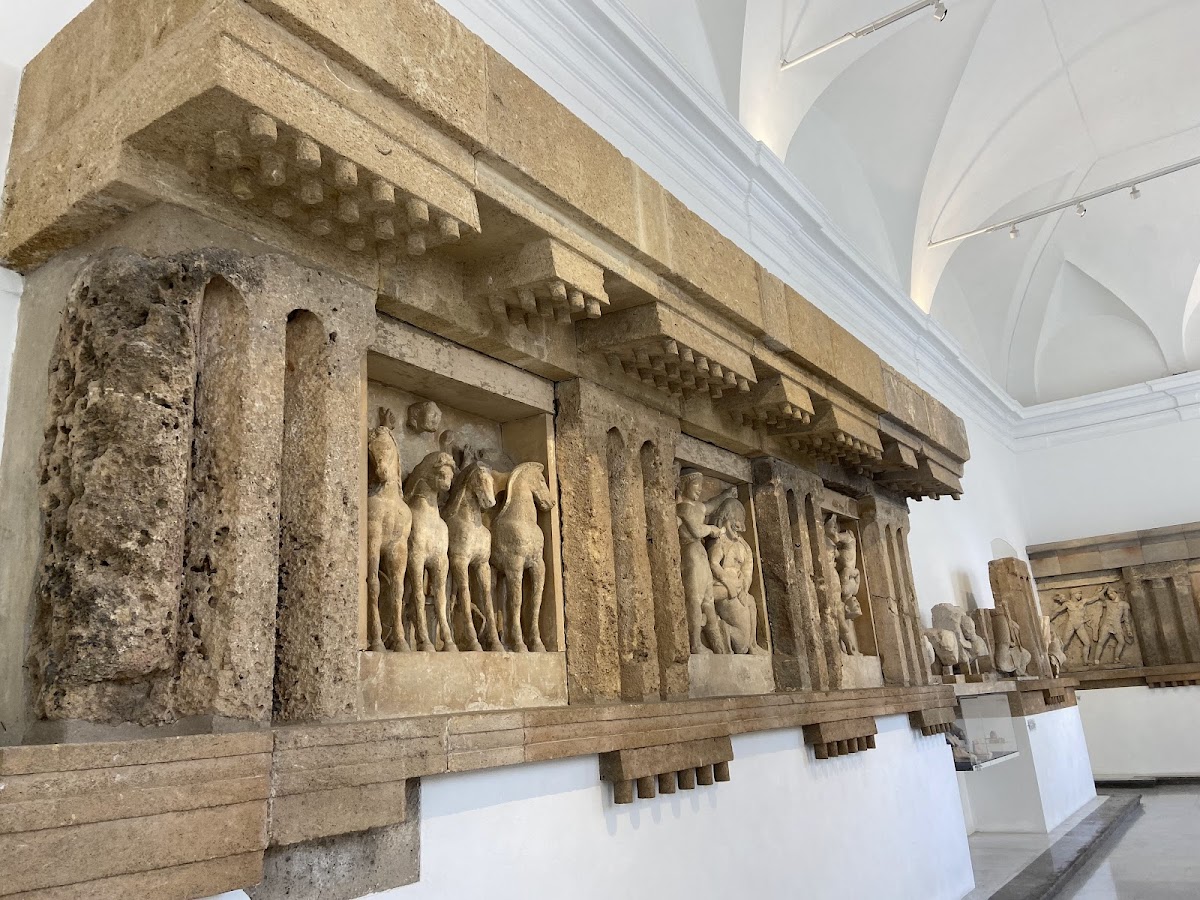
In 1823, the Bourbon government added the Archaic metopes, relief-bearing panels from a Greek temple frieze, from Temple C at Selinunte. British architects Samuel Angell and William Harris had excavated the panels and tried to send them to the British Museum, but local authorities diverted the shipment to Palermo. The museum also acquired the Gandolfo numismatic collection in 1820 from Francesco Gandolfo of Termini.
During Garibaldi’s dictatorship in July 1860, the museum was separated from the University of Palermo and placed under the Commission for Antiquities and Fine Arts, with Giovanni D’Ondes Reggio as director. Its holdings then grew through the Salnitriano Museum, founded in Palermo by the Jesuit Father Ignazio Salnitro in 1730, as well as through Girolamo Valenza’s donation of gems, coins, and approximately 4,000 books. The purchased collection of Baron Antonino Astuto added Greek and Roman finds acquired on the antiquities market between 1760 and 1811.
A decree of 1863 required ancient objects found in excavations in the provinces of Palermo, Trapani, Girgenti, and Caltanissetta to be deposited in the Royal Museum of Palermo. In the same year, the Kingdom of Italy acquired the Etruscan collection of Count Pietro Bonci Casuccini through the intervention of Michele Amari, an Italian historian and statesman who was then Minister of Education. The collection reached Palermo in 1865 and is regarded as the most important Etruscan collection outside Tuscany.
The Olivella complex and nineteenth-century expansion
After the 1866 law suppressing religious orders, the museum left its inadequate university premises and moved into the confiscated complex of the Congregation of Saint Philip Neri at the Olivella. Designed by Antonio Muttone, the complex included a church, an oratory, cells, kitchens, and other monastic rooms. Between 1866 and 1870, these spaces were extensively altered and reorganized for museum use, creating the seat of the national museum.
The institution continued to grow. In 1870 it received the archaeological collection formerly held by the Benedictine Abbey of San Martino delle Scale. Almost all of its gold and silver coins and ancient goldwork were stolen in December 1871. Further acquisitions included the Gandolfo collection and the collection of the British consul Robert Fagan, which contained a fragment of the sculptural decoration of the Parthenon, the fifth-century BC temple on the Acropolis of Athens.
Antonino Salinas directed the museum from 1873 until his death in 1914. A Palermo archaeologist and numismatist, or specialist in ancient coins, he strengthened the institution through research at Mozia, Tindari, and Selinunte. Excavations brought new material to Palermo, including four Archaic metopes. Salinas also organized the recovery of artworks from the ruins created by the 1908 Messina earthquake and acquired works and other materials threatened with dispersal. He left his personal collection to the museum by testament in 1914. That bequest contains 6,641 items, including books, manuscripts, prints, photographs, personal belongings, and about 6,000 coins.
War, restoration, and regional administration
During the Second World War, director Jole Bovio Marconi moved the museum’s entire collection to the monastery of San Martino delle Scale to protect it from Allied bombing. The museum nevertheless suffered heavy damage. In 1949, Bovio Marconi directed its reorganization and recovery, while the architectural restoration was designed by Guglielmo De Angelis d’Ossat.
Postwar excavations in western Sicily further enlarged the collections and extended their chronological coverage from prehistory through the Middle Ages. The museum also housed an art collection until 1954, when it was transferred to Palazzo Abatellis. That institution became the Regional Gallery of Sicily in 1977.
In 1977, responsibility for cultural heritage passed from the Italian state to the Sicilian Region. The former national museum became a regional institution managed through the department responsible for cultural heritage and Sicilian identity, and it took the name of Antonino Salinas. The museum has national heritage status. It closed for restoration and modernization in 2009 and partially reopened in July 2016. In the same year, it became part of the Regional Hub of Palermo for archaeological parks and museums.
The museum’s changing collections have also shaped the history of cultural restitution. In 2022, it permanently returned to Athens the Parthenon fragment known as the Palermo fragment, which depicts the foot of Artemis, a Greek goddess associated with the hunt and wilderness. The return followed an agreement with the Acropolis Museum, while Greece provided the Salinas Museum with a headless statue of Athena on loan. An earlier temporary return in 2008 ended when the fragment came back to Palermo in 2010.
Remains
The former Olivella religious complex
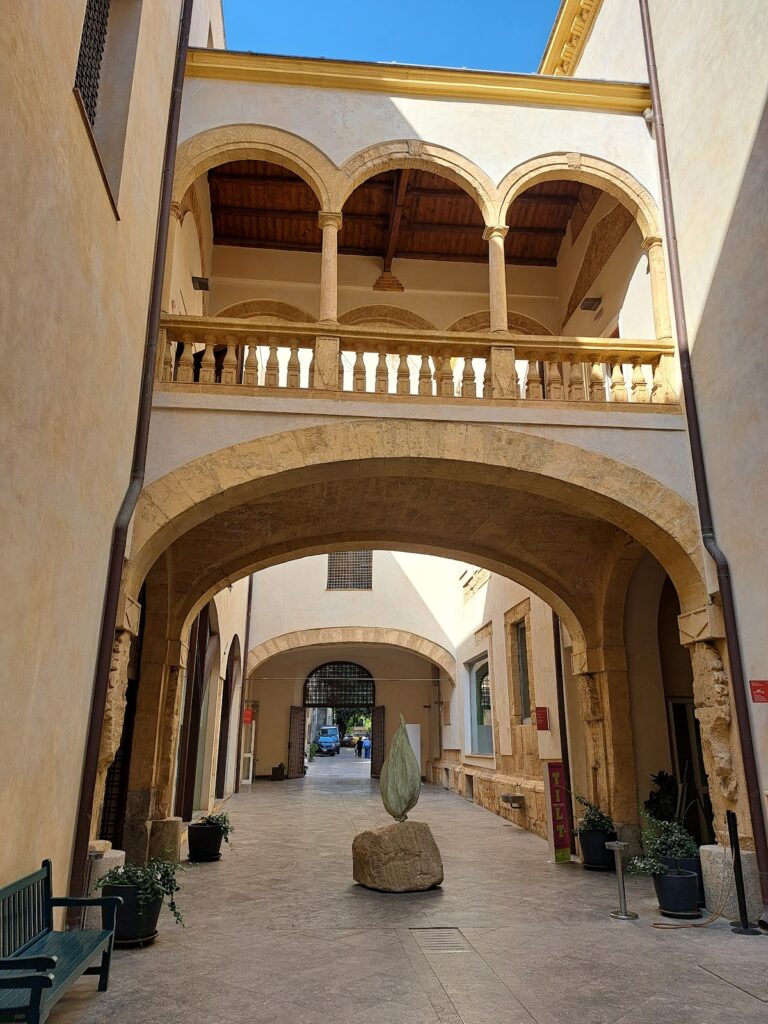
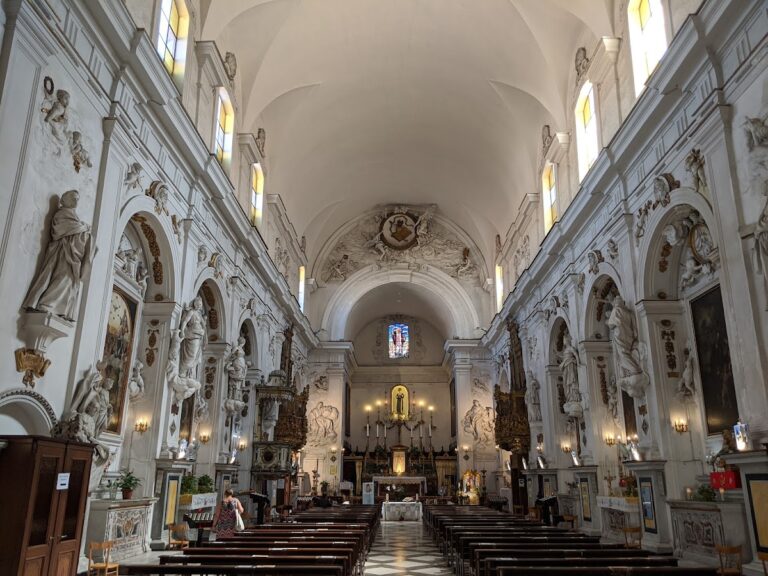
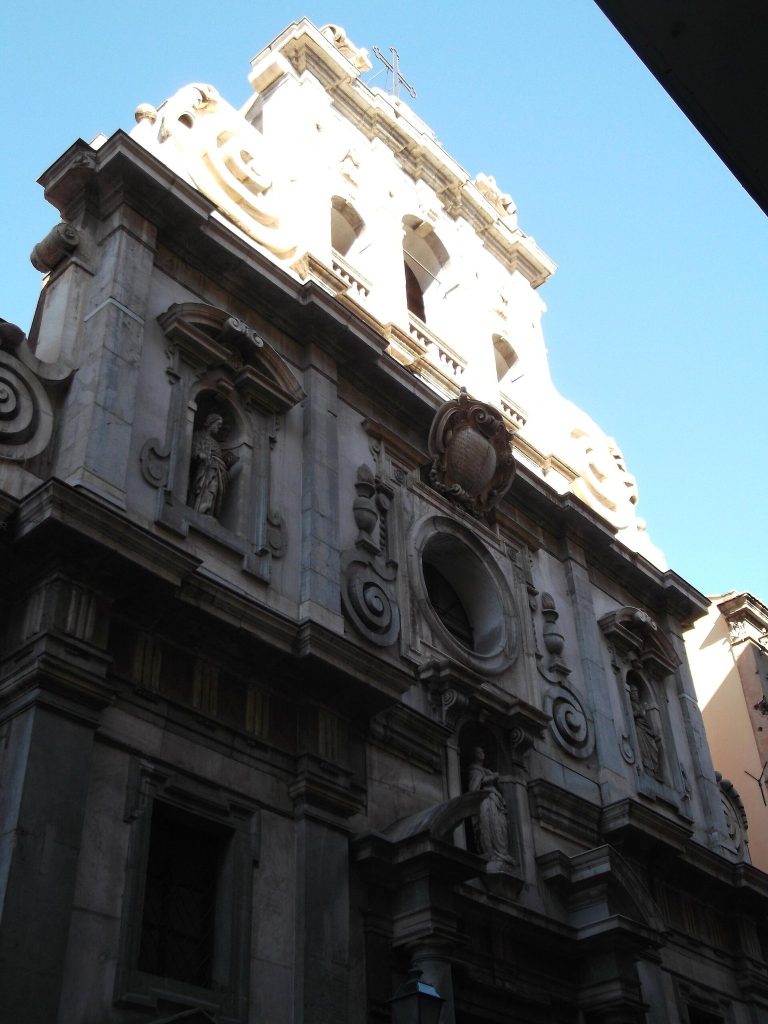
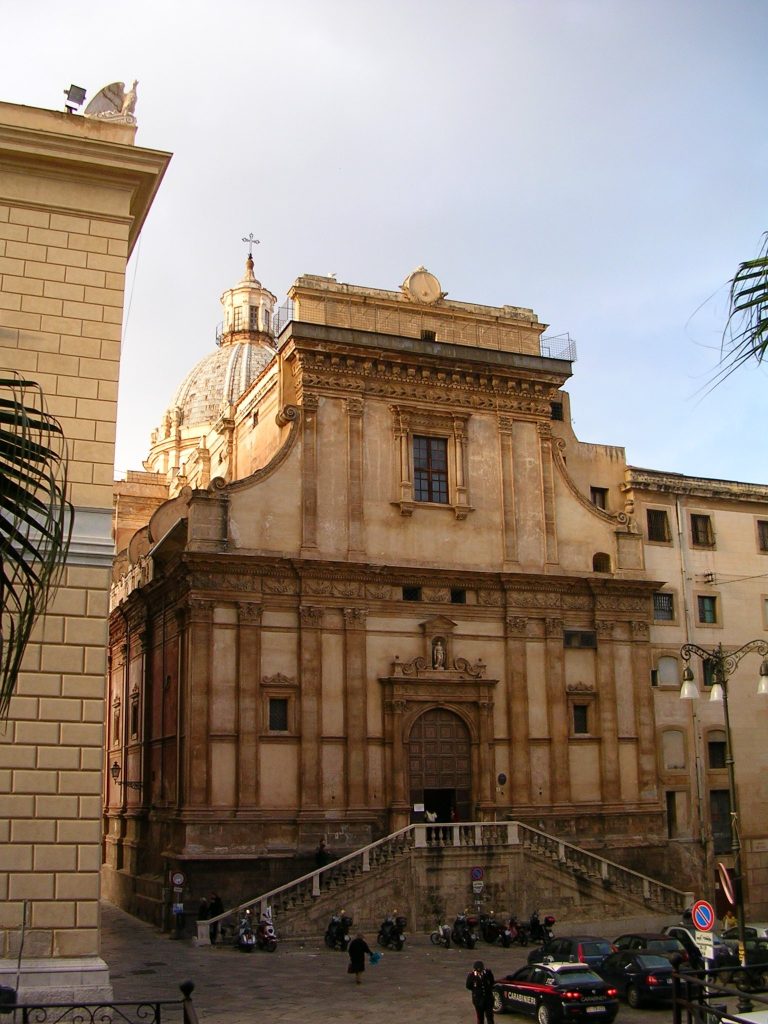
The museum occupies the former House of the Congregation of Saint Philip Neri within Palermo’s Olivella monumental complex, alongside the Church of Sant’Ignazio and the Oratory of Saint Philip Neri. The complex was designed by Antonio Muttone, and construction began toward the end of the sixteenth century before completion during the seventeenth century. Its original arrangement combined religious and communal spaces, including the church, oratory, cells, kitchens, and other rooms. Conversion between 1866 and 1870 reorganized much of this arrangement around the storage and display of archaeological collections.
Oratorian chapel
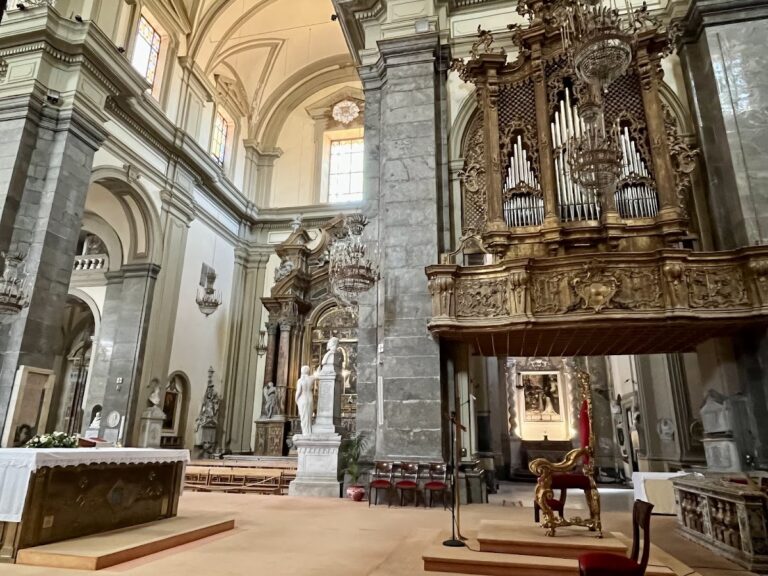
The surviving seventeenth-century chapel of the Oratorian Fathers preserves stuccoed and frescoed ceilings, together with decoration in wood, gold, and ivory. These elements retain the character of the building’s earlier religious use within the museum complex.
Former recreation room
Restoration in 2009 revealed a seventeenth-century wooden ceiling with polychrome decoration in the former recreation room of the religious community. The ceiling had been concealed beneath a nineteenth-century covering and became part of the surviving architectural evidence of the original complex.
Covered agora
The third convent courtyard was covered during the nineteenth century and first served as a carriage-service area before being used to display large Roman mosaics. It was converted into the covered agora, inaugurated in March 2018. A glass-and-steel roof now spans the courtyard, and a glass floor panel exposes the ancient paving below. The space also functions as a setting for conferences, temporary exhibitions, artistic performances, and concerts.
Archaeological galleries and major collections
Phoenician and Punic collections
The ground-floor underwater archaeology section contains ship cargo, stone anchors, lead anchor stocks, lamps, amphorae, and inscriptions from Punic and Roman cultural contexts. Nearby, the Phoenician-Punic galleries include two large anthropomorphic sarcophagi from the fifth century BC, found in the necropolis of Pizzo Cannita near Misilmeri. Sculptures of Phoenician deities, votive stelae from Mozia and Lilybaeum, glass vessels from Monte Porcara, and painted shrine-like objects bearing the sign of Tanit and the caduceus illustrate the range of the collection. The caduceus is a staff entwined by serpents, while Tanit was a major goddess of the ancient Punic world.
Selinunte and Himera
The Selinunte section occupies the eastern part of the building. Its rooms contain material from Temples C, Y, E, and F, including metopes with mythological reliefs, Archaic and Classical sculptures, the Selinunte Table, and paired stelae from the sanctuary of Zeus Meilichios.
The covered agora displays twelve lion-headed waterspouts from the northern side of the Temple of Himera and five from its southern side. The temple was built around 480 BC, and one waterspout retains traces of its original painted surface. The courtyard also contains a reconstruction of the pediment, the triangular architectural area above a temple’s front colonnade, from Selinunte’s Temple C. Archaeologist Ettore Gabrici’s 1926 drawings provided the basis for the reconstruction, whose central Gorgon is described as the largest known gorgoneion, or image of the Gorgon’s head, in Greek architecture.
Collections from Sicilian and Etruscan sites
Other galleries contain objects and sculptures from Solunto, Megara Hyblaea, Tindari, Kamarina, and Agrigento. Roman-period holdings include sculptures and detached mosaics from villas in the Piazza Vittoria area of Palermo, near the forum of the Roman city. On the second floor, prehistoric material from caves in the Palermo area and from the Trapani territory, including Levanzo, was rearranged through the work and contribution of Sebastiano Tusa.
The Casuccini collection brings together sarcophagi, funerary markers, funerary statues, urns, Attic black- and red-figure ceramics, bronzes, and complete funerary assemblages from Chiusi. Count Pietro Bonci Casuccini assembled more than 10,000 objects from excavations on his estates and housed them in a museum open to the public. The Astuto collection, by contrast, consists largely of Greek and Roman finds acquired between 1760 and 1811 and restored according to Neoclassical principles.
Bronze sculpture
Among the museum’s major works is a bronze ram from Syracuse, dated to the first decades of the third century BC. Attributed to the circle of Lysippus, a major Greek sculptor of the fourth century BC, it was made by lost-wax casting, a process in which molten metal is poured into a mold formed around a wax model. The crouching animal appears ready to spring.
One tradition connects the sculpture with two bronze rams that the Byzantine admiral George Maniakes supposedly brought from Constantinople to Syracuse and placed on a fortress there. Another hypothesis places their discovery in chance excavations at Syracuse, while the tradition involving Maniakes is considered doubtful. Conservation of the ram began in 2005 because atmospheric humidity threatened it with corrosion. Anna Maria Carruba carried out the work under the direction of museum director Agata Villa, and the sculpture was shown in the Royal Academy of Arts exhibition “Bronze” in London from 15 September to 9 December 2012.
The galleries also display a Roman copy of a Lysippus sculpture showing Heracles bringing down the Ceryneian Hind, the deer associated with one of the hero’s mythological labors, and a Roman marble copy of Praxiteles’ “Pouring Satyr.” Lysippus and Praxiteles were major fourth-century BC Greek sculptors whose works were often reproduced in Roman times.
Palermo Stone
The Palermo Stone is a fragment of a black amphibolitic-diorite stele and the largest of seven known fragments. It measures 43 centimetres high and 30.5 centimetres wide. Both faces carry royal annals, historical records arranged around successive rulers and their reigns, listing Egyptian kings from the First through Fifth Dynasties, their mothers’ names, annual Nile-flood levels, and royal donations of land and goods to Ra, Hathor, and the souls of Heliopolis.
The stone’s date and original location remain uncertain. Its inscription may have been produced in one phase or supplemented later, but its most probable date is the middle of the Fifth Dynasty during Egypt’s Old Kingdom, approximately 2500–2350 BC. Heliopolis and the ruins of the Temple of Ptah at Memphis have been proposed as possible original locations. The complete stele is estimated to have been about 2 metres long and 60 centimetres high.