National Archaeological Museum of Taranto: A Museum of Magna Graecia and Apulia


Site at a Glance
- Rating
- 4.7
- Popularity
- Medium
- Country
- Italy
- Primary era
- Classical
- External website
- Open
- Eras represented
- Stone Age, Bronze Age, Classical, Medieval, Early Modern
- Civilizations
- Ancient Greek, Byzantine, Roman
- Site type
- Museum
On this page15 sections
History
The National Archaeological Museum of Taranto is a state museum in Taranto, Italy, dedicated chiefly to the history of the ancient Greek and Roman city and the wider region of Apulia. Founded in 1887, it was intended by the archaeologist Luigi Viola to become a museum of Magna Graecia, the ancient Greek-speaking world of southern Italy. Its collections instead developed into a broad record of Apulia, extending from prehistory through the Early Middle Ages.
Foundation and the former convent
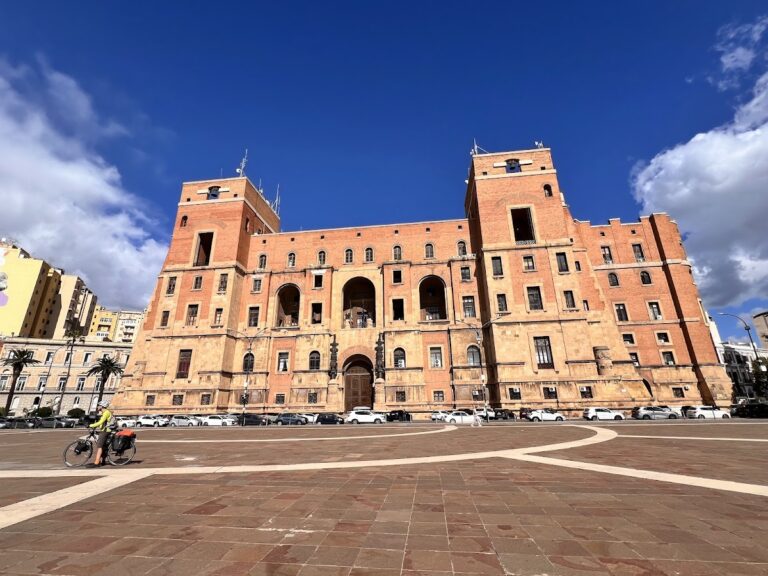
The museum occupies the former San Pasquale of Baylon convent, an eighteenth-century complex on what is now Corso Cavour. San Pasquale of Baylon was a Spanish Franciscan friar and saint. The building was adapted for museum use as the institution expanded, while its neoclassical facade was created through work begun in 1903 and designed by the architect Guglielmo Calderini.
The museum is operated by Italy’s Ministry of Culture and has held special administrative autonomy since 2014. This status gives a state museum greater independence in management and administration, while the institution continues to serve as a center for the interpretation of Taranto and the Apulian world.
Expansion and reorganization
A new wing was added between 1935 and 1941. The building was damaged during the Second World War and restored between 1949 and 1952. Further enlargement, restoration, and reorganization began in 2000. During this extended process, part of the exhibition remained open at Palazzo Pantaleo.
The museum closed in the early 1960s for enlargement and reorganization. The later redevelopment created the present division of the collections, including the Greek-Roman displays on the first floor and the prehistoric exhibition on the second floor. The prehistoric section, inaugurated in summer 2016, presents the Paleolithic and Bronze Age history of Apulia.
Collections and historical interpretation
The Greek-Roman collection follows Taranto from its foundation through the Archaic period and the later Romanization of the city. Romanization describes the adoption or imposition of Roman political, social, and cultural practices. Objects from monumental tombs, necropolises, public buildings, and private houses allow the displays to address urban life, religious practice, aristocratic society, and funerary customs.
A permanent exhibition examines Taranto’s aristocratic society between the sixth and fourth centuries BC. Other displays trace the development of the city through its material culture, including imported Corinthian and Protocorinthian ceramics, sculpture, goldwork, mosaics, and inscriptions. The museum holds one of the largest assemblages of artifacts from Magna Graecia and is especially known for the Gold of Taranto, including Hellenistic jewelry recovered from tombs in southern Italy.
On 5 April 2023, the museum presented the sculptural group Orpheus and the Sirens, which dates to the fourth century BC. The group had been illicitly removed to Switzerland in the 1970s and later held by the Paul Getty Museum in Los Angeles. It returned to Italy approximately fifty years later and is now permanently displayed on the first floor.
The Ricciardi Collection
The museum also preserves the Ricciardi Collection, which entered the former royal museum through the handwritten will of Giuseppe Ricciardi, bishop of Nardò, deposited in 1908. The bequest comprised paintings from his palace in Taranto and the episcopal palace in Nardò.
The collection includes a Byzantine icon, a mourning Addolorata painted on zinc, and eighteen other religious paintings from the seventeenth and eighteenth centuries. Several are associated with the Neapolitan school, including works connected with Paolo de Matteis, Francesco De Mura, Luca Giordano, Francesco Solimena, and Andrea Vaccaro. Later works are attributed to Leonardo Antonio Olivieri of Martina Franca and the Sienese painter Rutilio Manetti. The Byzantine era refers to the period of the eastern Roman Empire, conventionally extending from late antiquity into the Middle Ages.
Remains
The convent complex and exhibition floors
Building and facade
The museum is arranged within the former eighteenth-century convent complex on Corso Cavour. Its neoclassical facade belongs to the building campaign begun in 1903, and the later wing added between 1935 and 1941 forms part of the present museum structure. The raised ground floor accommodates temporary exhibitions and conferences, while the historic complex provides the architectural framework for the permanent collections.
Collection layout
The first floor contains the Greek-Roman section devoted to Tarantine society. Its galleries are arranged by material and subject, bringing together marble sculpture, monumental tombs, soft-stone sculpture, necropolis ceramics, goldwork, mosaics, and inscriptions. The second floor contains the prehistoric section, which covers the Paleolithic and Bronze Age throughout Apulia.
Greek and Roman sculpture
Marble and terracotta sculpture
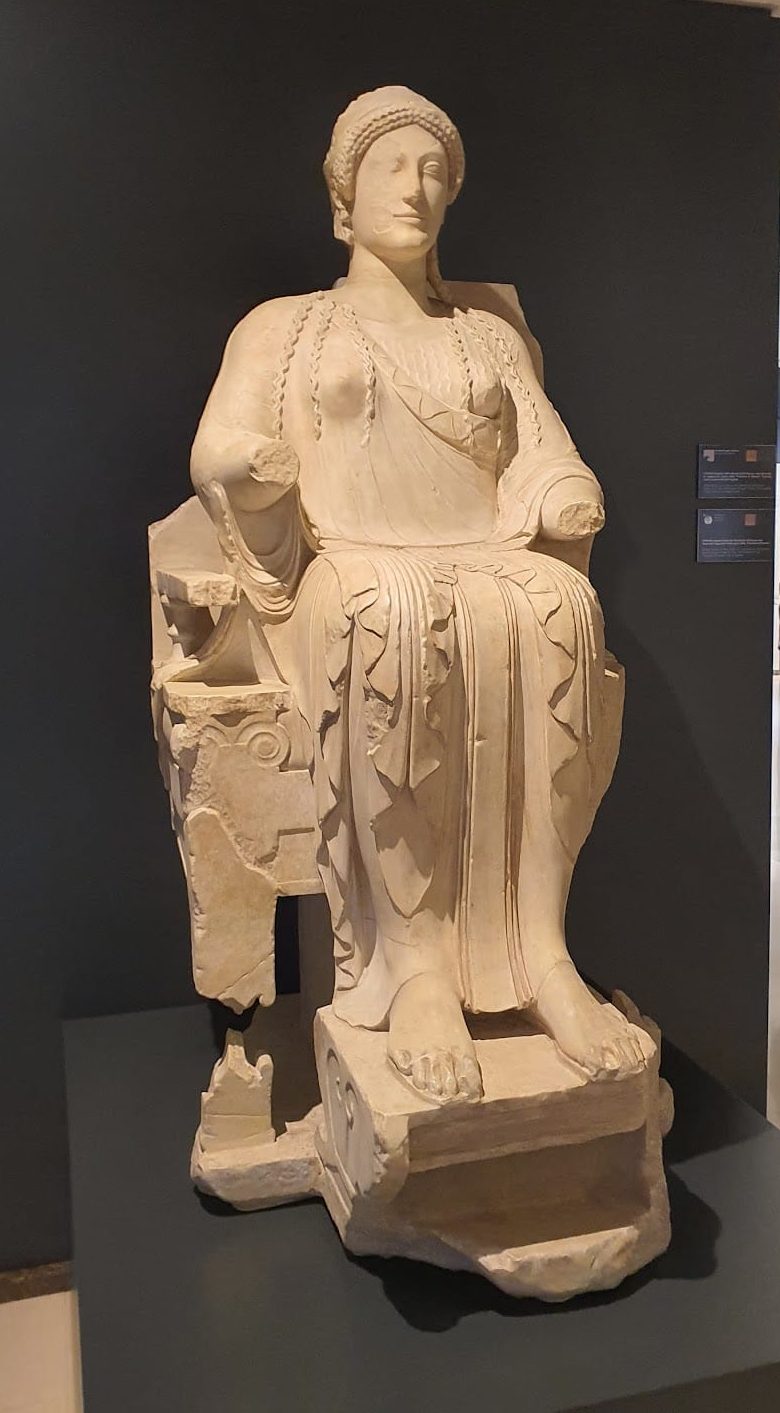
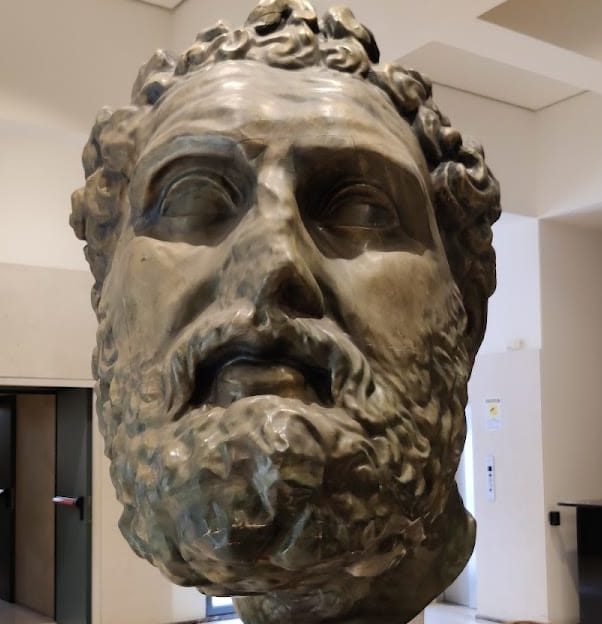
Two rooms contain Hellenistic marble sculptures, including works carved from white marble imported from the quarries of Paros. Smaller works are also displayed, including copies of famous originals. The marble collection includes a headless statue of a female deity, a fifth-century BC Kore, a head of Aphrodite, a votive statue of Athena, a head of Herakles copied after Lysippus, and the body of a nymph.
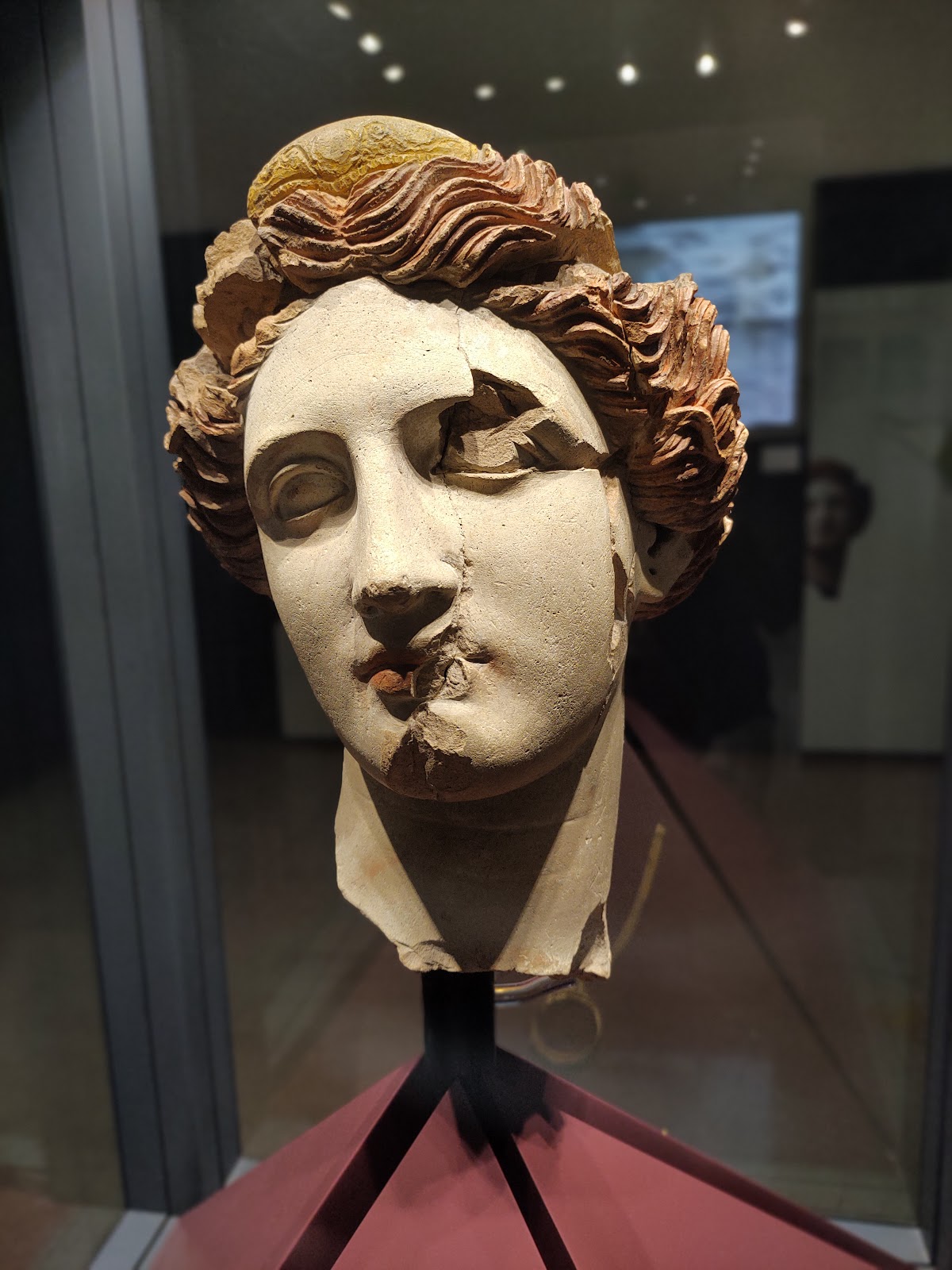
Other sculptural works include a polychrome terracotta female head wearing a diadem, a young man’s torso, a man’s torso, a portrait of Augustus with his head veiled, and heads representing a man, a child, and a woman. The bronze Zeus of Ugento dates to around 530 BC. The museum also displays the fourth-century BC group of Orpheus and the Sirens, a third-century BC metope showing a Greek warrior fighting an Amazon, an Ionic capital, and a statue of Athena.
Public and private building material
A separate room brings together sculptures, mosaics, and inscriptions from public and private buildings. Roman-period heads were carved in local carparo, a limestone or sandstone used in Apulia. The Roman material includes Imperial-period mosaics and inscriptions associated with both public and private architecture.
Necropolis ceramics and funerary material
The ceramics from Taranto’s necropolises are arranged along a chronological sequence extending from the city’s foundation to the Archaic period. A necropolis is a cemetery containing graves and their associated funerary goods. Imported Corinthian and Protocorinthian vessels, made in Corinth and exported to Taranto, form part of this funerary material.
Vessels from the Archaic necropolises are made from pinkish clay and decorated with black figures representing mythological characters and athletic scenes. The displays also include a completely painted Archaic sarcophagus, a kline, or couch used in domestic and funerary settings, pediments, and beams from house facades.
The ceramic holdings include a bronze horse figurine, an aryballos, a small vessel, a skyphos associated with the Theseus Painter, three kylikes, drinking vessels, a kylix with a Gorgon mask, and a kylix associated with the Fish Painter. An Apulian bronze oinochoe, a wine jug, dates to approximately 450–400 BC, while two other Apulian oinochoai have bodies shaped as female heads.
A black-figure amphora depicts a chariot race. An Attic red-figure lekanis fragment, a lidded vessel, dating to approximately 410–400 BC shows Agamemnon seated on a rock. Other ceramics, dating to around 580 BC, came from a tomb in Taranto’s arsenal area.
Several vessels present mythological narratives. One group shows Persephone and Hades in the underworld with Hermes Psychopompos, Hekate, Megara, Orpheus, and the Danaids. Hermes Psychopompos is Hermes in his role as guide of souls. Another vase depicts Andromeda seated opposite her mother Cassiopeia, with Perseus and Cepheus, figures in eastern dress associated with Ethiopia, Eros, Harmonia, and women preparing for a wedding.
Goldwork, mirrors, and small objects
The gold collection ranges from the Archaic period to the Byzantine era and includes jewelry and small objects for everyday use. It contains a floral diadem from Canosa, crowns, conical earrings with pendants, disk earrings with three pendants, bracelets, mirrors, cosmetic boxes, and hairpins. One diadem is decorated with garnets, carnelians, and multicolored enamel; another uses gold filigree, while a third takes the form of the Knot of Herakles.
A gold earring from Taranto dates to the fourth century BC. A bronze-and-gold nutcracker, approximately 16.5 centimeters high and dating to around 300 BC, consists of two articulated forearms covered with gold foil. Necklace fasteners often take the form of two lion jaws, a motif also used on bracelets and rings. A gold bracelet has figurative decoration on its worked ends.
One third-century BC mirror from Taranto depicts Aphrodite and Eros playing Pan’s pipes. Another, shaped like a shell and made of gilded silver, shows a Nereid carried by a sea monster. The displays also include a comb showing Achilles dragging Hector’s body behind a chariot, a box shaped as two valves imitating a scallop shell, and a semi-elliptical antefix decorated with a Gorgon. An antefix is a decorative element covering the ends of roof tiles.
Mosaics, copies, and other archaeological objects
Roman mosaics show a panther with a goat’s head, griffins, and a lion attacking a horse. Other objects include terracotta gladiator figurines, a polychrome terracotta statuette, a Greek terracotta mask, and a polychrome terracotta seat dating to the fourth century BC.
The museum displays a laser-scanned copy made in 2016 of the enthroned goddess known as the Goddess of Taranto. The original is held by Berlin’s Altes Museum. A copy of a bronze-sheet fragment of the Lex Municipii Tarentini, a municipal legal text associated with ancient Tarentum, is also shown.
Additional displays include the Ostrakon Mappa di Soleto, an ancient Greek map inscription on a pottery fragment, a Greek terracotta mask, a Roman statue, and an icon attributed to the late fifteenth or early sixteenth century.