Parco Archeologico di Tindari: The Ancient Greek and Roman City of Tyndaris

Site at a Glance
- Rating
- 4.4
- Popularity
- Low
- Country
- Italy
- Primary era
- Classical
- External website
- Open
- Eras represented
- Bronze Age, Classical, Medieval
- Civilizations
- Ancient Greek, Roman
- Site type
- City
On this page22 sections
History
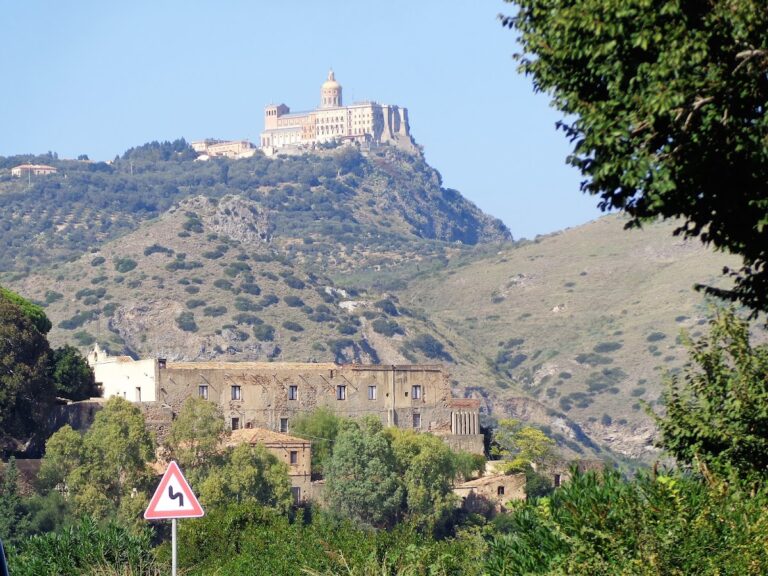
Parco Archeologico di Tindari preserves the ancient city of Tyndaris in Italy, a Greek colony founded around 396 BC by Dionysius I, the tyrant of Syracuse, on part of the territory of Abacaenum. The settlement occupied a promontory above the Gulf of Patti and was established by Locrians, Messenians, and Medmaeans. Its name referred to the Tyndarids, the divine twins Castor and Pollux, who became the city’s protectors. The site later developed into a Roman imperial colony while retaining evidence of its earlier Greek identity.
Before and during the Greek foundation
A settlement occupied the promontory long before the Greek colony. Finds beneath a Roman urban block indicate an Early Bronze Age community, probably dating between the twentieth and seventeenth centuries BC. Its handmade pottery included small fine vessels for serving and eating, larger thick-walled containers for storage, and burnished or smoothed black and brown wares. Terracotta horns, counting discs, and vessels with linear and zigzag decoration point to contacts with communities of the Aeolian Islands. This material belongs to the Rodì-Tindari-Vallelunga cultural tradition, from which Luigi Bernabò Brea and Madeleine Cavalier proposed that the later Thapsos-Milazzese culture developed.
In 344 BC, Tindari supported the expedition of Timoleon of Corinth, who had been called to restore democracy at Syracuse. The victory brought roughly six decades of peace. During this period the city expanded, acquiring monuments and temples that shaped its later civic and sacred landscape.
Conflict, alliance, and Roman rule
Tindari supported Syracuse in its struggle against the Mamertines. In 269 BC, it was associated with the Syracusan victory at the Battle of the Longanus, after which the Mamertine commander was captured and Mylae and Alaesa were conquered. During the First Punic War, the waters between Tindari and the Aeolian Islands became the scene of the Battle of Tyndaris in 257 BC. The Roman fleet commanded by Marcus Atilius Regulus defeated the Carthaginians, who withdrew to Lipari.
After Rome occupied Palermo in 254 BC, Tindari became a civitas decumana, a community required to pay a tithe of specified agricultural produce to Rome, and openly opposed Carthage. Between 218 and 202 BC, the city supplied men and ships for the Roman expedition against Carthage. In 204 BC, Scipio Africanus rewarded this loyalty and military support with a gold statue of Mercury for the gymnasium. War booty later carried the statue away, but it was returned after Rome’s victory over Carthage and restored to the gymnasium.
Tindari supported Sextus Pompey during the civil wars of 42-36 BC. In 36 BC, Pompey sacked and abandoned the city, and Octavian captured it after Marcus Vipsanius Agrippa’s victory at Naulochus. Under Augustus, Tindari was reorganized as an imperial colonia, a Roman colony established or restructured under Roman authority, and inscriptions call it Colonia Augusta Tyndaritanorum. It was also classified as a civitas decumana, continuing its obligation to pay agricultural tithes.
Imperial prosperity and decline
A major landslide in AD 17, probably caused by a local earthquake, brought down structures and carried part of the northeastern settlement into the sea. Economic conditions improved during the first century AD. New houses were built, and the Greek theatre was adapted for circus games, reflecting the city’s continued use under Roman rule.
Religious life remained varied. Coins, inscriptions, and statues associate Tindari with Zeus or Jupiter, Libitina, Poseidon or Neptune, Venus Erycina, Cybele, the Dioscuri, Apollo, Athena, Asclepius, Demeter or Ceres, Kore or Persephone, and Mercury. After the Punic Wars, Tindari was one of 17 Sicilian cities allied with Rome that received authorization to carry a crown to Venus Erycina.
Earthquakes in 365 and 374 contributed to the city’s definitive decline. The end of Roman rule is associated with the expedition of the Vandal ruler Geiseric in 440. By the late sixth century, correspondence from Pope Gregory I mentioned the bishops Eutychius and Benenatus, as well as the senior ecclesiastics Severinus and Theodore, in connection with the early diocese of Tindari. A document of 886 refers to a fortress at Tindari containing a Christian cult site, probably incorporated over an earlier pagan temple.
Destruction, rediscovery, and excavation
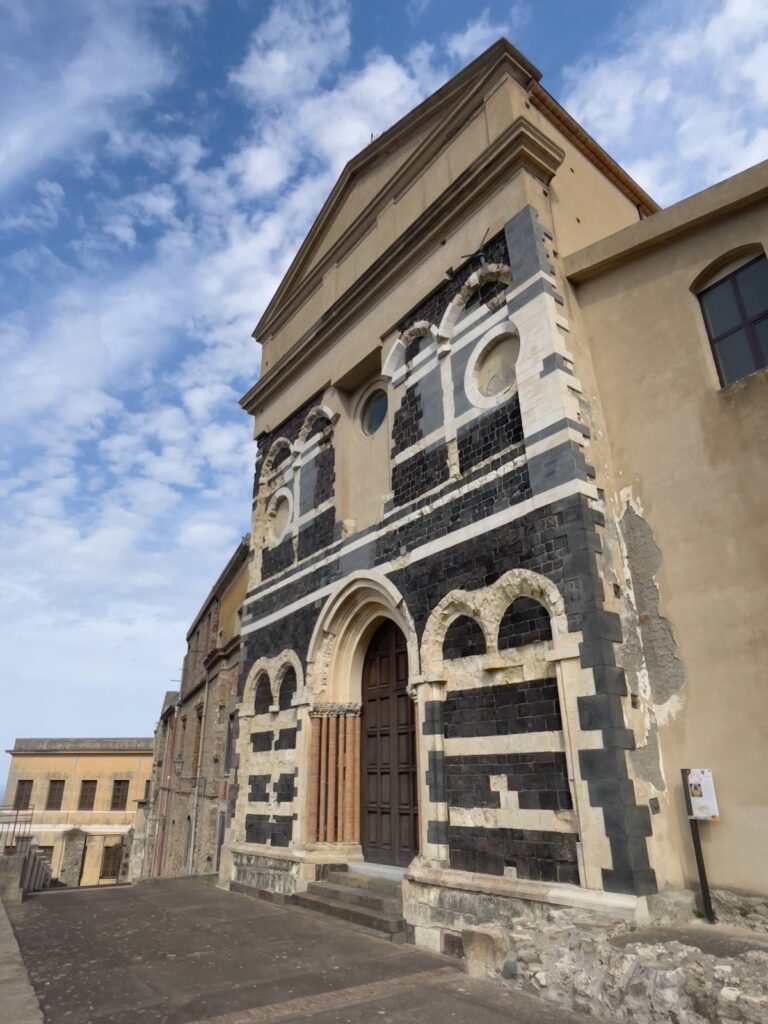
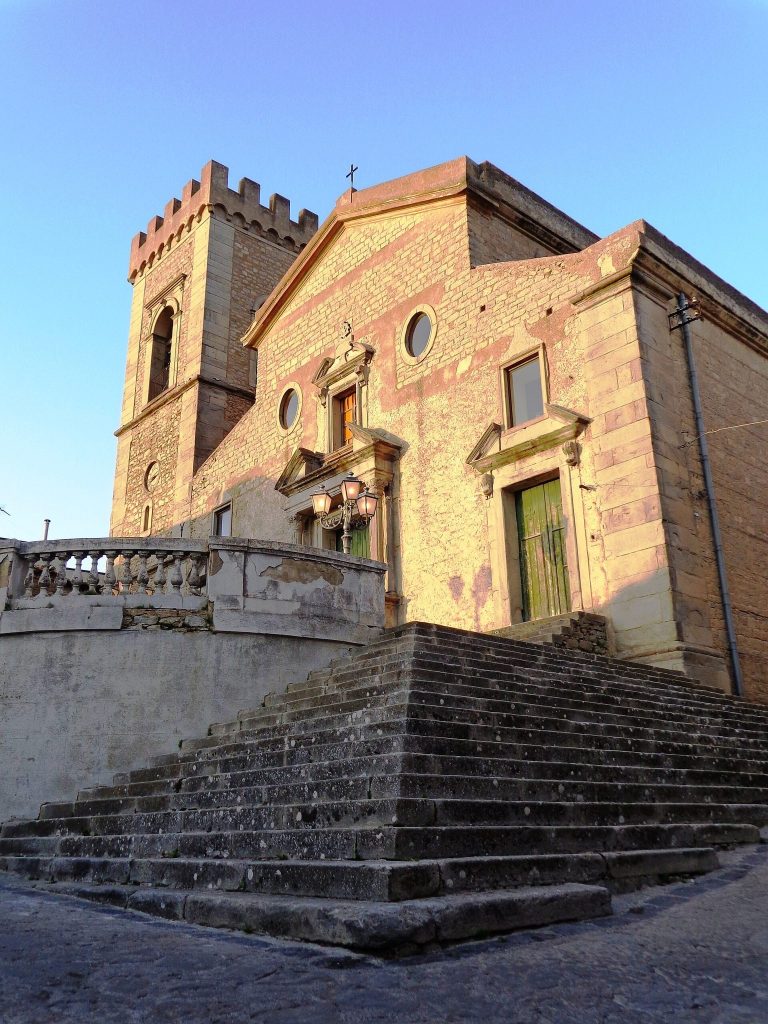
In 836, al-Fadl ibn Yaqub destroyed the city. The remaining inhabitants moved to other settlements, including nearby Patti. Tindari still stood during the reign of Frederick III of Sicily, but afterward entered a prolonged decline. By the survey of the sixteenth-century antiquarian Tommaso Fazello, the site was largely ruined apart from the church of Santa Maria da Tindaro on the highest rock. Francesco Maurolico later visited and described the area.
Interest grew during the Grand Tour, the tradition of educated European travel to cultural and archaeological sites. Movable remains emerging from beach deposits created by the ancient landslide attracted scholars, collectors, and illicit dealers. Jean-Pierre Houël published the first detailed description of the ruins in 1776. In 1781, the Prince of Biscari reported a statue at the castle of the Scala family, and Robert Fagan conducted the first excavation campaign in 1808.
Investigations continued in the early twentieth century and through campaigns in the 1950s and 1960s. These excavations exposed much of the urban fabric and produced the material now presented in the park’s Antiquarium. The archaeological park is administered within the cultural-heritage system of the Sicilian Region and is associated institutionally with the Superintendency for Cultural and Environmental Heritage of Messina.
Remains
The ancient city occupied a level, gently north-sloping section of an east-west promontory above the Gulf of Patti. Its regular plan extended for approximately 1,500 metres in length and 200 metres in width, at about 268 metres above sea level. Broad east-west streets, called decumani, were crossed by narrower north-south cardines. Paved roads, sewers, and water-supply channels formed the infrastructure of the settlement, while the main decumanus connected its principal civic areas.
Defences and sacred areas
Fortifications
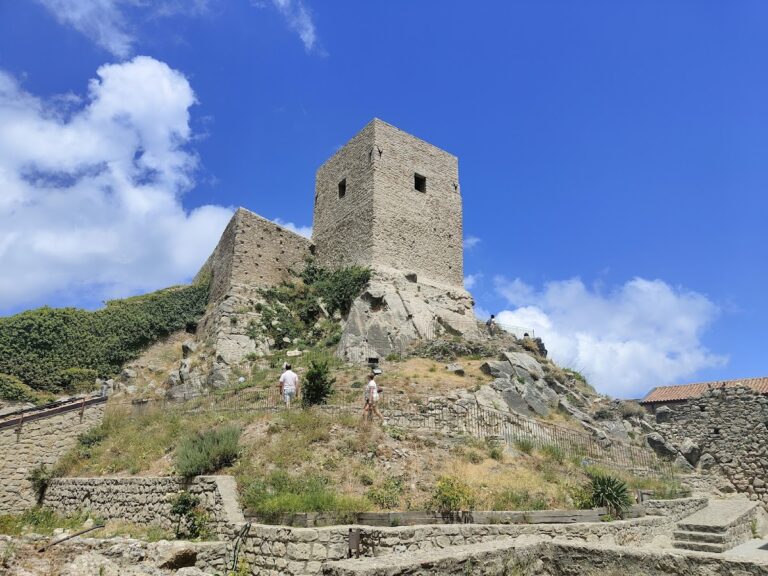
The earliest defences formed a circuit associated with Dionysius I in the fourth century BC. In the early third century BC, these were replaced or strengthened by a double curtain built from squared sandstone blocks arranged in regular courses of equal height. Drainage channels, small secondary openings, quadrangular towers, and the large pincer-shaped Porta dell’Urbe formed part of this stronger circuit.
Sacred acropolis
The sacred acropolis probably occupied the highest eastern area, where the Sanctuary of Tindari now stands. It may have been built over the foundations of a temple of Cybele. Roccia San Filippo and Roccia Lojacono are associated with this elevated part of the ancient city. A broad road from the agora followed the acropolis in a wide curve toward the city’s only gate, near which a necropolis was located.
Civic centre and public buildings
Agora and forum
At Contrada Cercadenari, a monumental propylon, or formal entrance structure, opened toward a colonnaded agora. The civic and monumental centre also included the forum of Tyndaris and a Senatorial palace. The northern decumanus passed through a commercial district of shops, warehouses, and middle-class houses before reaching the western terrace of the asty, the built-up area of the Greek city, at Contrada Cercadenari. A port landing lay at Contrada Panicastro.
Gymnasium and Basilica
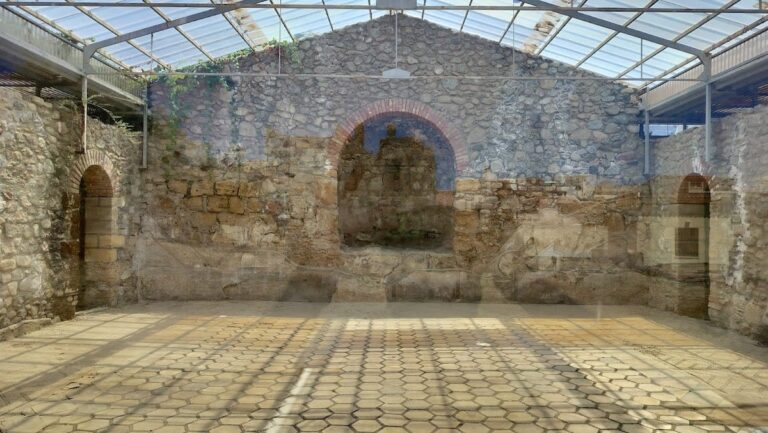
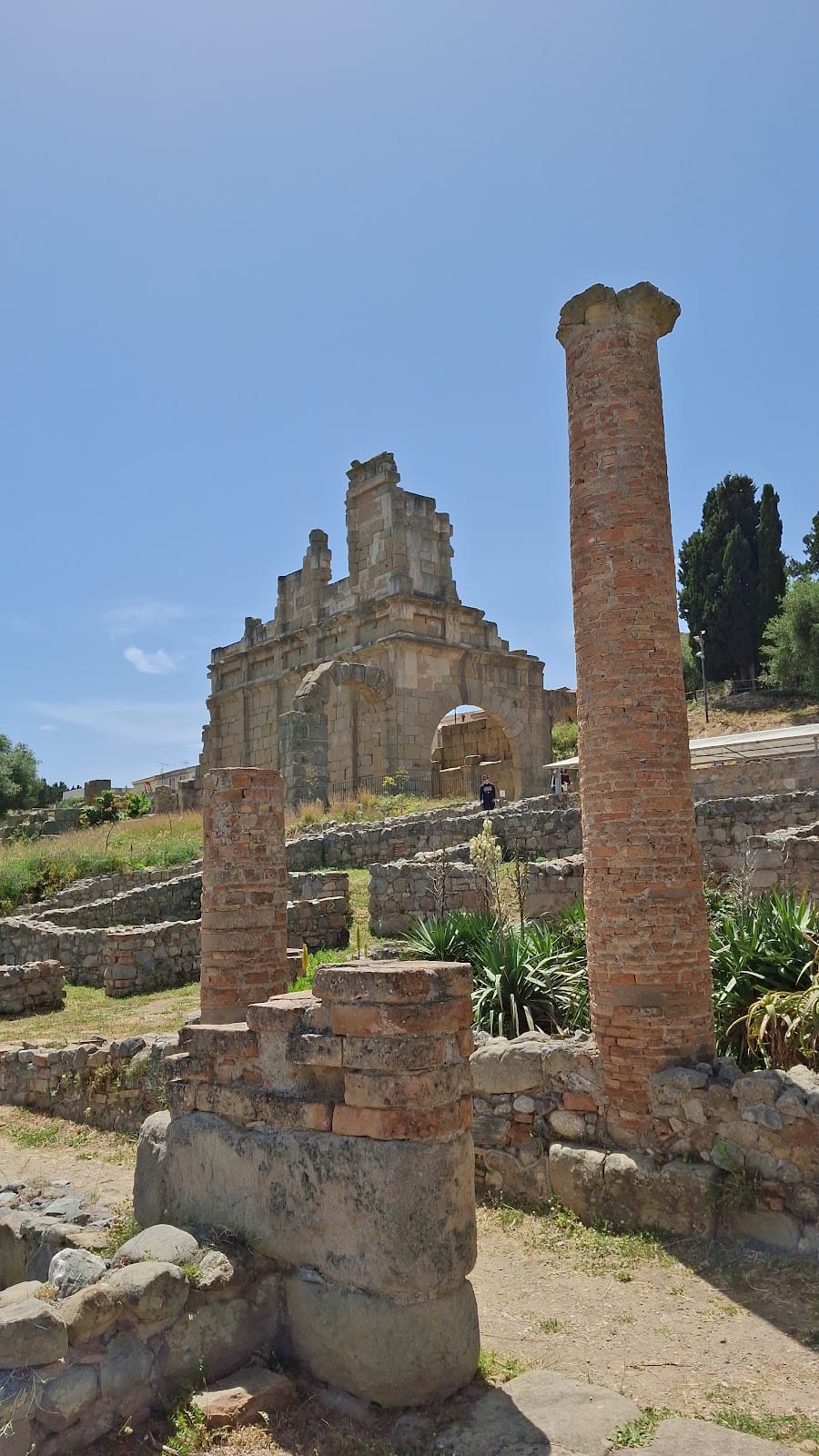
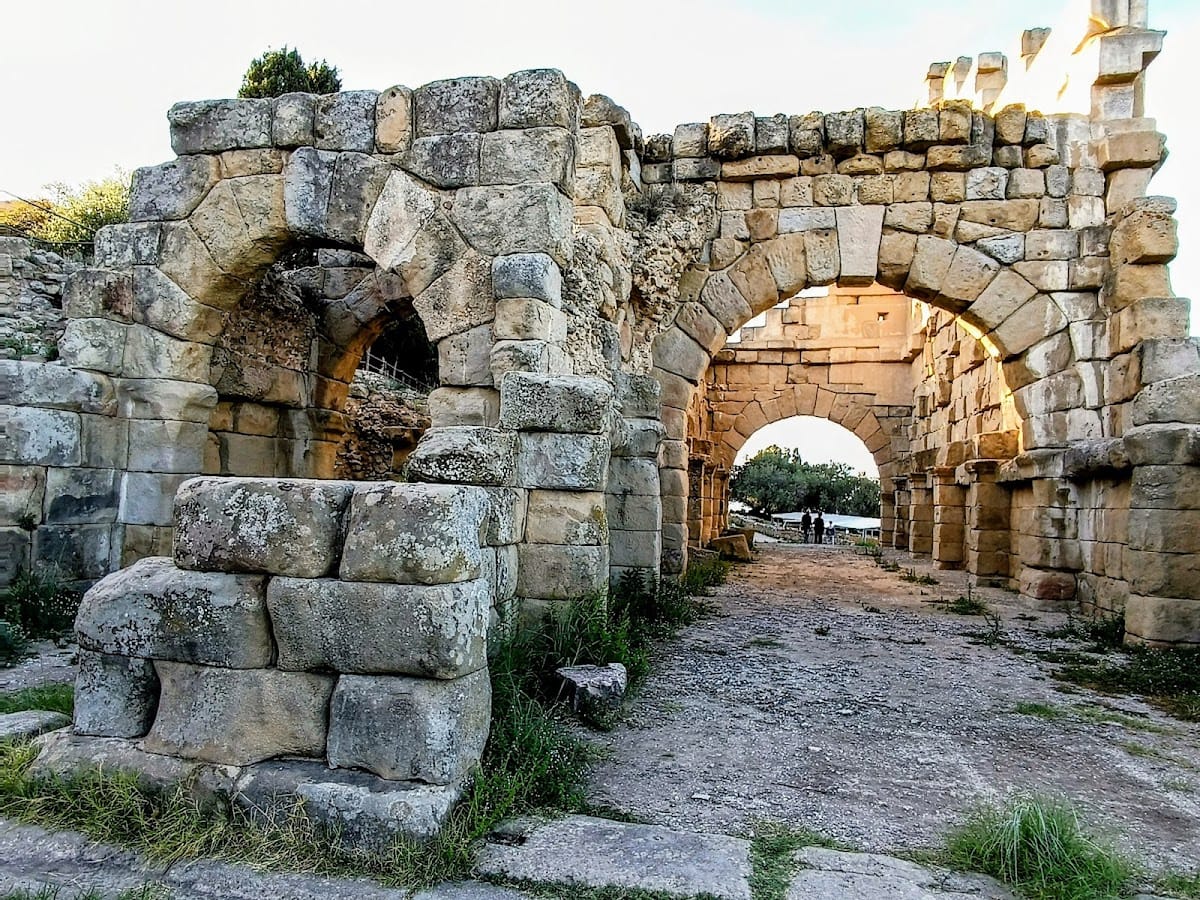
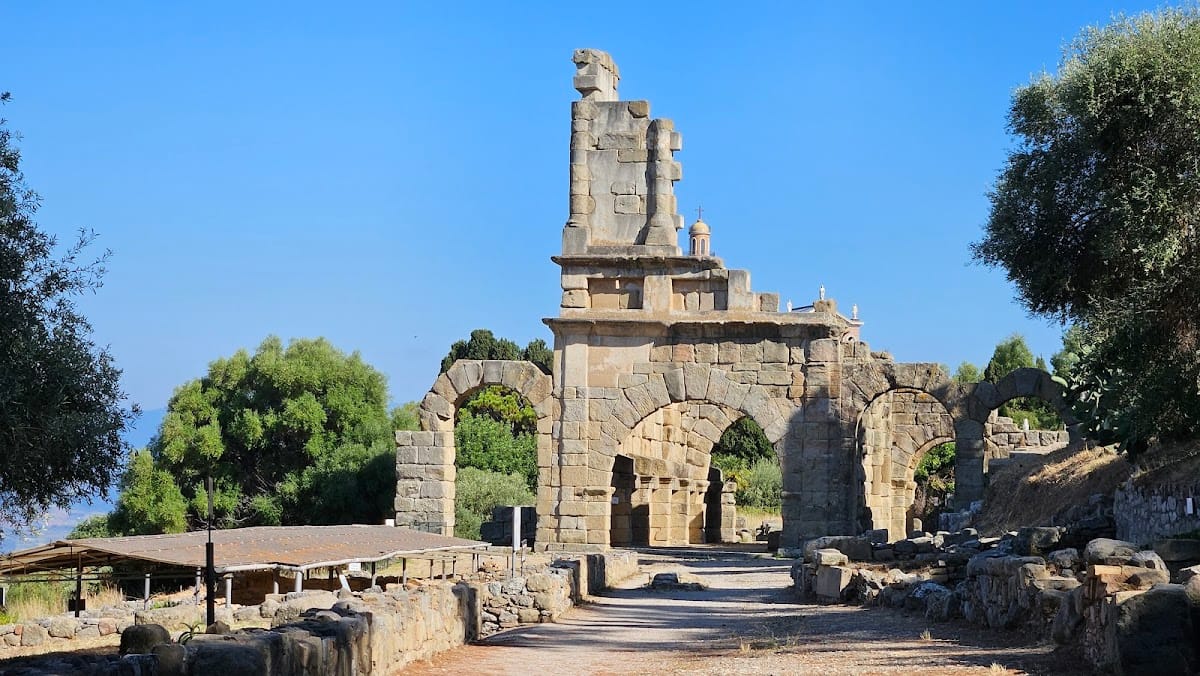
The building known as the Basilica had served as the gymnasium during the Greek period and occupied the upper decumanus. It probably received its present form during the Augustan period and continued in use until the fifth century AD, when it also performed official functions. The three-storey building survives partly at its lower level, where a broad arcaded nave preserves evidence of the activity of Democritus, a gymnasiarch responsible for overseeing the Greek gymnasium and its activities.
Its gallery could be entered only from the two ends. Two open-air streets flanked the building and led toward the agora through openings incorporated into its facade. The building held the gold statue of Mercury presented by Scipio Africanus, a monument to Marcus Claudius Marcellus, and a marble-based statue of Verres. The statue of Verres was pulled down after he was expelled from Tindari and Sicily.
Theatre
The theatre was cut into the slope above the main decumanus between the end of the fourth and the beginning of the third century BC. It could accommodate approximately 3,000 spectators. Its three-tiered stage building was added slightly later, and the theatre was modified during the Roman imperial period for circus games.
Houses, baths, and urban blocks
Insula IV
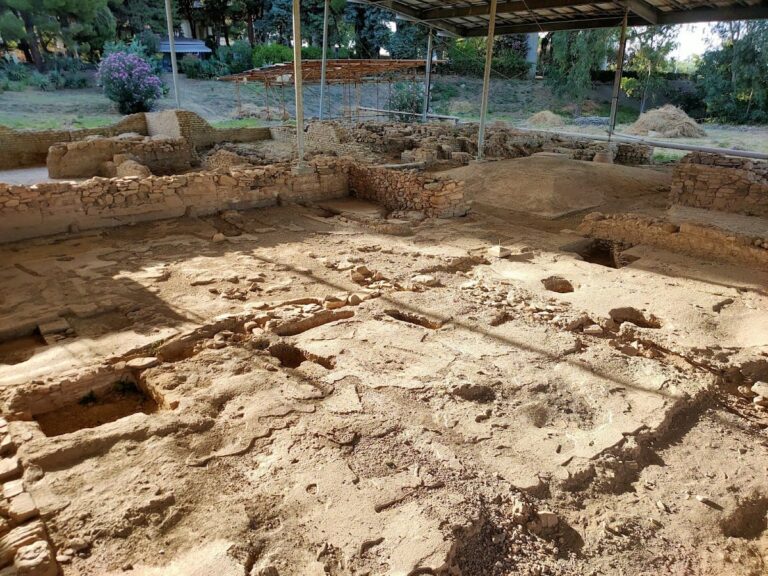
Insula IV, an urban block enclosed by streets, is the only city block excavated in its entirety. It was arranged across four terraces. Six shops opened onto the central decumanus at the lowest level, while two peristyle houses, each organized around a colonnaded courtyard, occupied the higher terraces. The upper terrace held a public bath complex dating to the third century BC.
Public baths
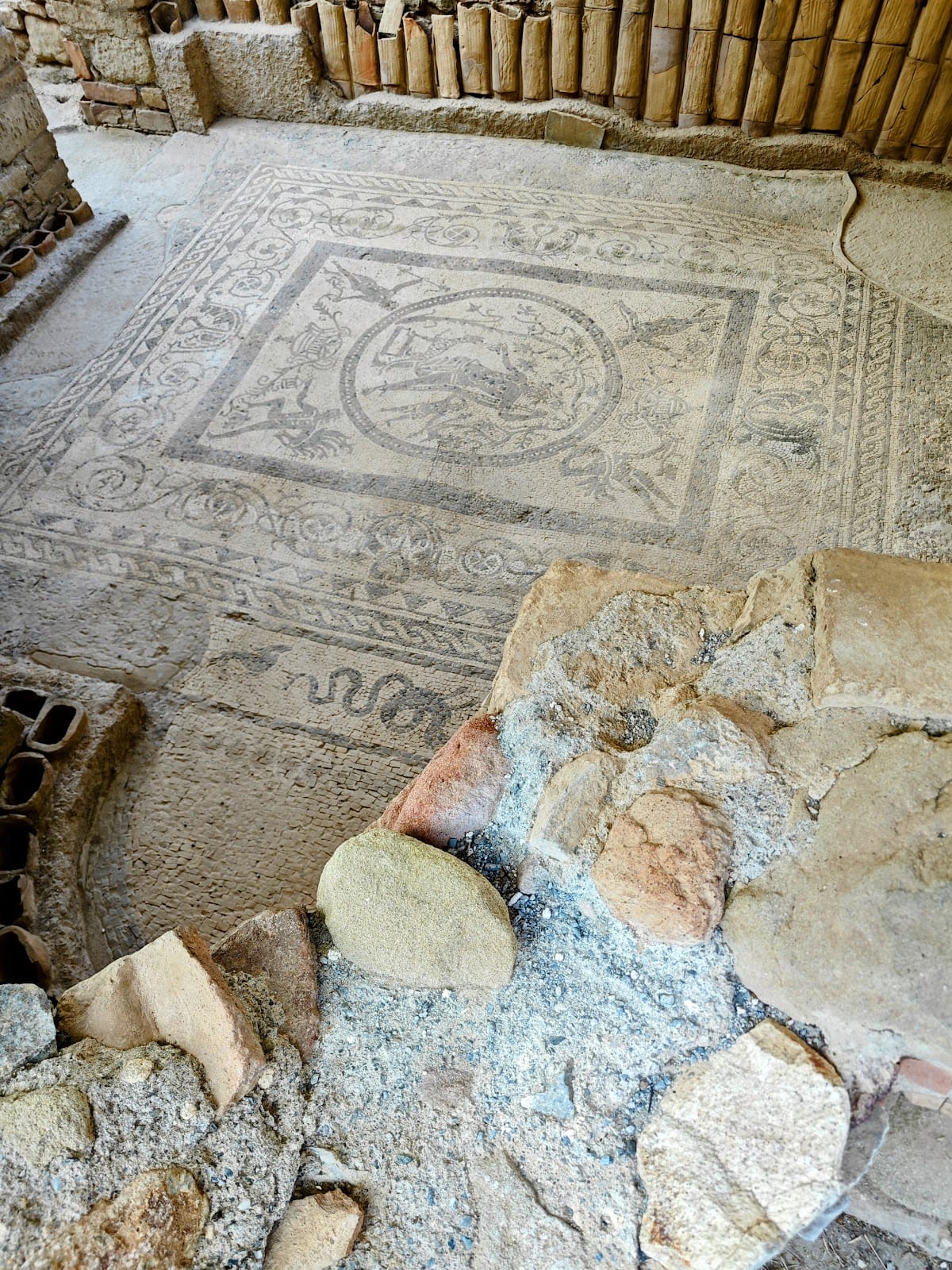
The bath complex faced the upper decumanus and included a colonnaded court, two small changing rooms, and rooms identified as a frigidarium, a cold room, a tepidarium, a warm room, and a calidarium, a hot room. Mosaic pavements survived in these bathing areas.
Peristyle houses
Two large Roman houses were built in the first century BC over earlier dwellings from the period after Timoleon. Their peristyles used stone Doric capitals. One house had a two-column facade with terracotta Corinthian-Italic capitals. During the imperial period, both houses were renovated. Earlier floors made with coloured marble tesserae, opus signinum, white tesserae set in crushed-ceramic mortar, and polychrome mosaics were replaced by figured black-and-white mosaics.
Contrada Cercadenari
A Roman domus and a large public building can be seen at Contrada Cercadenari. A monumental stepped building in the same area produced a large marble reproduction of a tragic theatrical mask representing King Priam, dating to the Roman imperial period.
Antiquarium and excavated material
The Antiquarium occupies five rooms and arranges excavated material by place and period, from the prehistoric settlement through the Roman era. Its collections include Greek and Roman inscriptions, funerary stone markers and tomb slabs, mosaics, coins, medals, household utensils, glass, bronze objects, architectural decoration, and marble sculpture.
Rooms I and II
Room I contains plans, explanatory panels, and a reconstruction model of the Hellenistic theatre stage. Room II presents inscriptions and assorted marble pieces, including two fragmentary winged Victories, or Nikai, from the second century BC. These sculptures were probably decorative elements from the edge or apex of a temple roof. The room also contains the large marble theatrical mask of King Priam from Contrada Cercadenari.
Rooms III and IV
Room III holds a large marble head of the deified emperor Augustus, dating to the first century AD and recovered from the Basilica area. It also contains marble honorific statues of male figures wearing togas from the later Roman imperial period. Room IV includes a terracotta Corinthian capital from the principal reception room of House C in Insula IV, together with Greek and Roman ceramics recovered from rooms, cisterns, and sewers.
Room V and related sculpture
Room V contains handmade coarseware from the Early Bronze Age settlement beneath House C, Greek funerary groups, ceramics, figurative terracottas, theatrical masks, and statuettes. Materials from the Roman houses and occupation levels include ceramic utensils, figurative terracottas, painted-plaster fragments, and stucco with ornamental motifs.
Other finds connected with Tindari are held in museums elsewhere. They include a Nike in the Regional Archaeological Museum Paolo Orsi in Syracuse, a statue of Zeus identified as Zeus Horios or Jupiter Terminus in the Regional Archaeological Museum Antonio Salinas in Palermo, and statues of Julia Mamaea, Trajan, and Hadrian in other museum collections.