Museo Campano: A Provincial Museum of Campania’s Archaeological Heritage
Site at a Glance
- Rating
- 4.5
- Popularity
- Low
- Country
- Italy
- Primary era
- Classical
- External website
- Open
- Eras represented
- Stone Age, Iron Age, Classical, Medieval, Early Modern, Modern
- Civilizations
- Ancient Greek, Crown of Aragon, Egyptian, Italian, Kingdom of the Two Sicilies, Lombard, Papal States, Roman
- Site type
- Museum
On this page29 sections
History
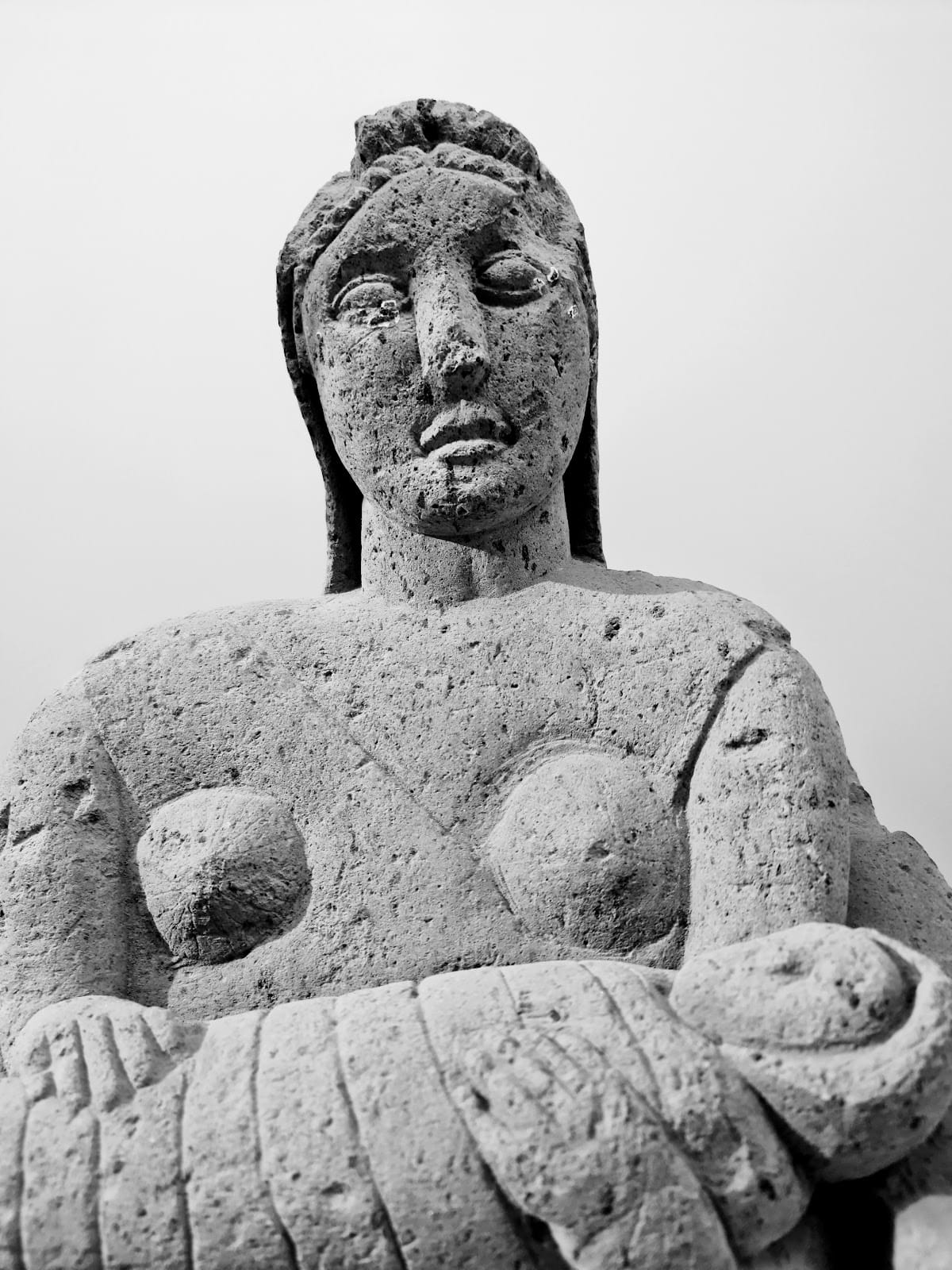
Museo Campano, formally the Museo Provinciale Campano di Capua, is a provincial museum in Capua, Italy, founded in 1870 to preserve archaeological material from ancient Campania and Terra di Lavoro. Its creation followed a royal decree of 21 August 1869 and was promoted by the canon and archaeologist Gabriele Iannelli. The museum became especially known for its collections from ancient Capua, including the world’s most important collection of Matres Matutae, pre-Roman Italic votive statues associated with fertility, childbirth, and the protection of mothers and children.
Foundation and early development
The museum opened to the public in 1874 in Capua’s historic centre. It first occupied Palazzo Antignano and later expanded into part of the former Monastery of the Conception. The Province of Caserta owns the institution, which was established to gather and present archaeological discoveries from Campania and the historic territory of Terra di Lavoro, a former province centred largely on areas now within Caserta.
Its collections grew through discoveries and excavations at archaeological sites across the region. The lapidarium, a display of carved stones, inscriptions, architectural fragments, and funerary monuments, was closely associated with the German historian and epigraphist Theodor Mommsen. His cataloguing and publication of Campanian inscriptions helped consolidate the museum, including inscriptions from Campania Felix, the ancient Roman name for the fertile Campanian territory, published in volume X of the Corpus Inscriptionum Latinarum, the comprehensive scholarly collection of Latin inscriptions from the Roman world.
Gabriele Iannelli selected Palazzo Antignano as the museum’s headquarters, while the collections were being assembled from the wider region. Amedeo Maiuri helped consolidate the institution during the 1910s and 1920s and reorganized it in 1933. Before that reorganization, classical and medieval material had been displayed without a clear distinction. Maiuri’s work gave the museum a more coherent historical and archaeological arrangement.
War damage and reconstruction
On 9 September 1943, Allied Anglo-American bombing severely damaged Capua and partially destroyed Palazzo Antignano. Most of the collection had been removed beforehand, but several groups of objects were damaged or permanently lost. These included much of the Samnite fresco collection, much of the stucco and part of the mosaic and fresco material from the sanctuary area of Diana at Sant’Angelo in Formis, Roman sculptures and stonework, votive figurines and architectural elements from the Fondo Patturelli sanctuary locality, and several of the Capuan mother statues.
Reconstruction began in 1945, and the museum reopened in 1956. Its collections were then arranged in archaeological and medieval sections occupying 32 rooms, two courtyards, and a garden. The Terra di Lavoro Library was also established, and modern sculptures by Raffaele Uccella were installed. The museum closed again in 2009 for modernization and functional redevelopment, reopening on 28 March 2012 after the work was completed.
Collections and institutional role
Museo Campano remains a provincial museum devoted to the history and archaeological heritage of Campania and Terra di Lavoro. It is included among Italy’s protected cultural assets. Its holdings extend from pre-Roman material to the medieval and early modern history of Capua. The archaeological collections include substantial material from the Fondo Patturelli, numerous finds associated with Oscan-Campanian culture, and the Matres Matutae recovered chiefly from the area of ancient Capua.
The medieval section follows sacred and secular Capuan history, including the period when Lombard Capua became the capital of an autonomous principality. The picture gallery contains works by Bartolomeo Vivarini, Cristoforo Scacco, Giacinto Brandi, Giuseppe Marullo, and especially Francesco Liani. The museum’s documentary holdings extend the institution’s role beyond archaeology, preserving books, newspapers, parchments, manuscripts, and records relating to the history of Capua and the surrounding territory.
The library includes a collection formerly belonging to Bartolomeo Intieri, donated by the lawyer Pietro Benucci in 1970. It preserves about 800 parchments and roughly 50,000 documents, prints, and manuscripts dating from the sixteenth to the nineteenth century, with about 70,000 volumes or documents in total. Its rooms include a newspaper room with issues of Il Mattino from 1848 onward and other local newspapers from the nineteenth and twentieth centuries, a topographical room, and a Capuan historical archive covering the fifteenth to the nineteenth century. Other sections include the Marzano Room, containing historical and political documents donated by Senator Giuseppe Marzano, rooms named for the Capuan physician Ferdinando Palasciano and containing medical books from his collection, and a modern and contemporary history section.
Palazzo Antignano
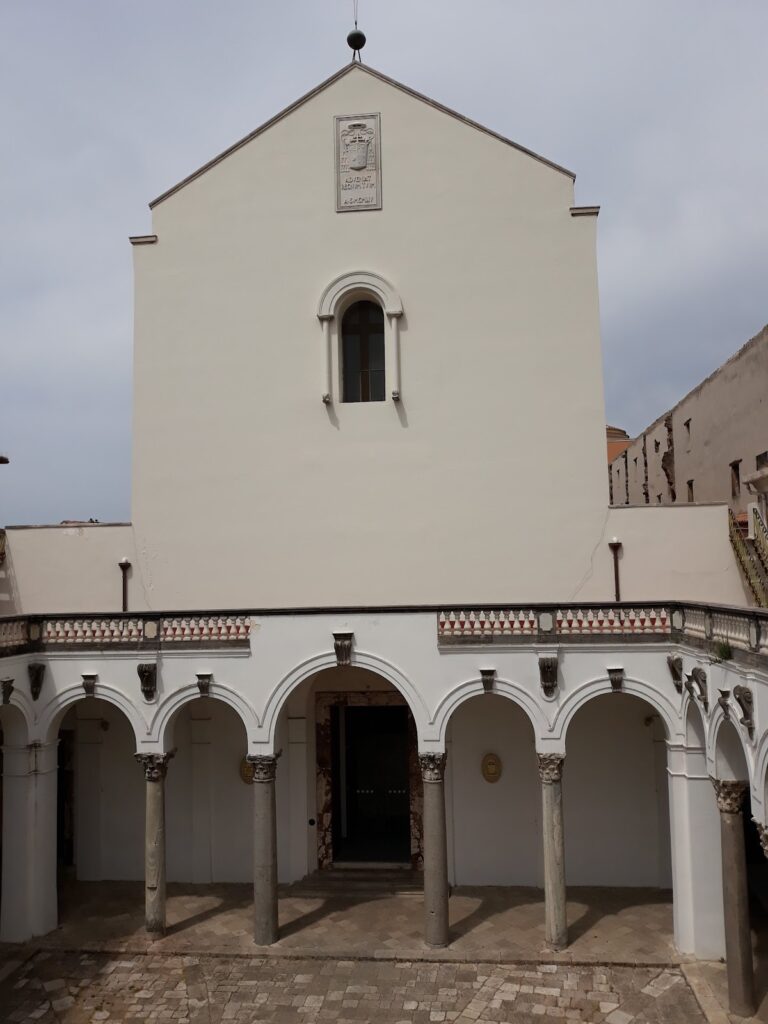
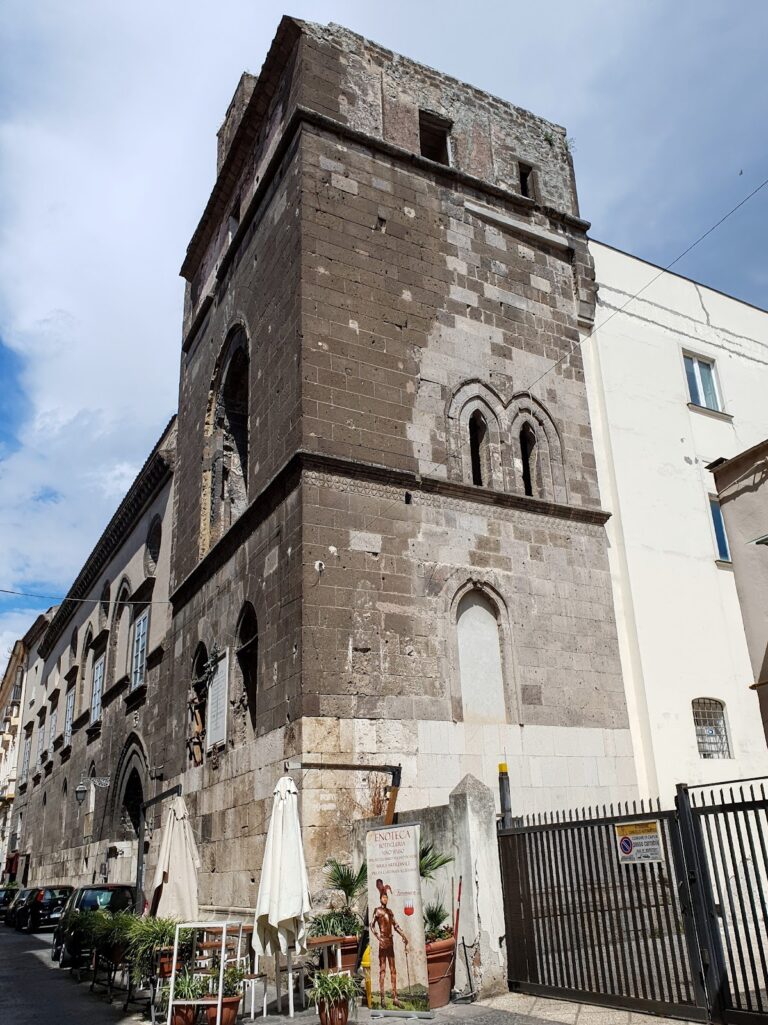
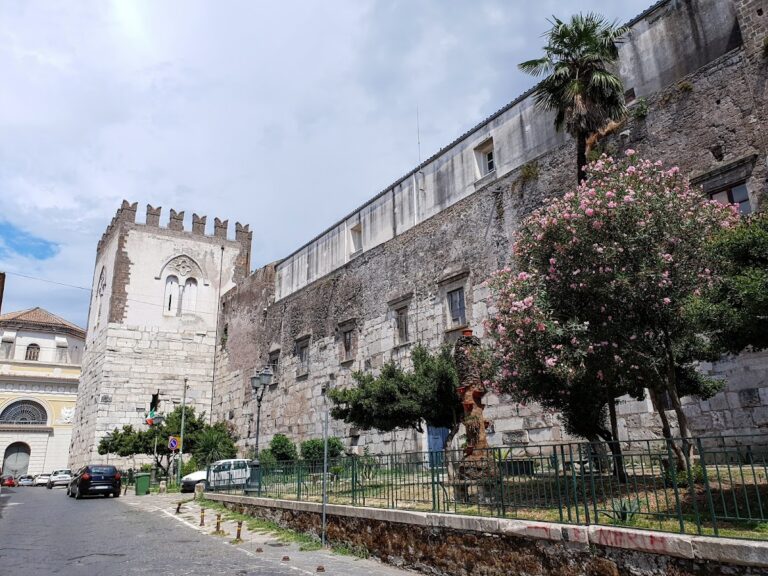
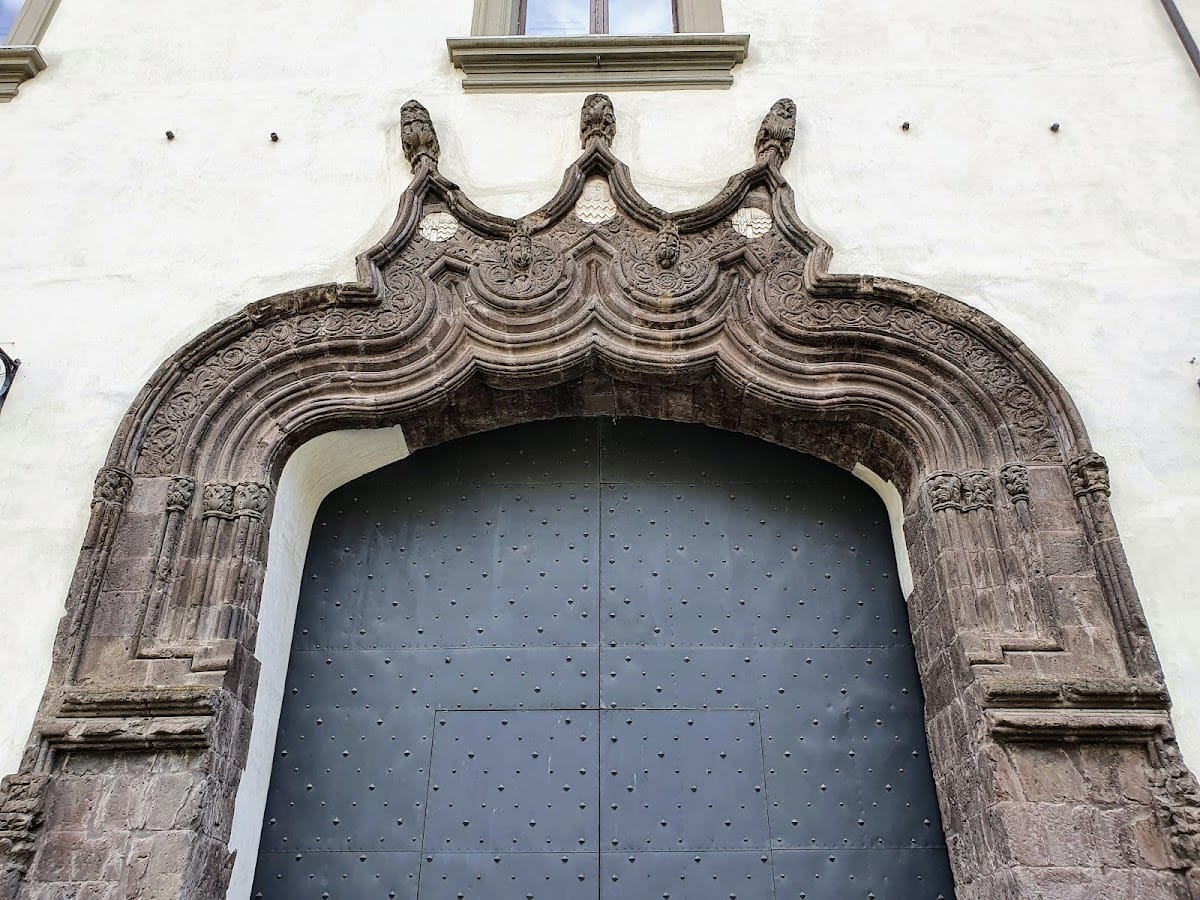
Palazzo Antignano probably originated in the ninth century, during the foundation of the Lombard city. It was the residence of the Antignano family, which rose to prominence under Alfonso V of Aragon, the fifteenth-century king whose rule coincided with the family’s advancement in Capua. Francesco Antignano probably rebuilt and enlarged the palace in the mid-fifteenth century with royal approval, giving it the late Gothic form that remains central to the museum.
In the early nineteenth century, the palace housed the administrative offices of the newly created Province of Terra di Lavoro. In later centuries it belonged to the Di Capua dukes of San Cipriano before becoming the headquarters of Museo Campano. The building’s present form is largely fifteenth-century, although it incorporates older reused material, including Lombard capitals and columns. Its history therefore links the museum to the medieval foundation of Capua, the Aragonese period, and the administrative history of the modern province.
Remains
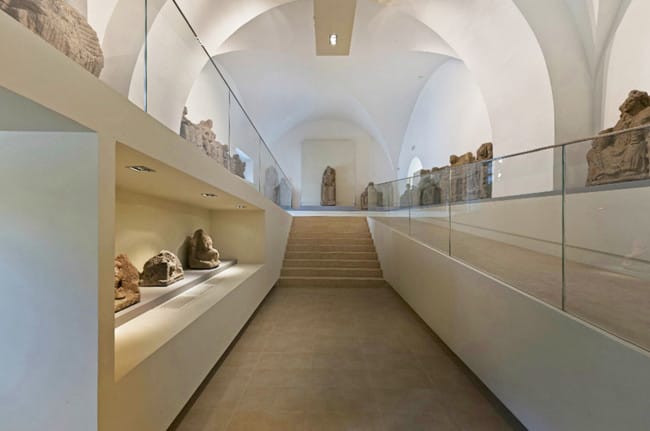
The museum occupies Palazzo Antignano at 68 Via Roma and incorporates part of the former Monastery of the Conception. Its displays are arranged through 32 rooms, two courtyards, and a garden. The main sequence moves from pre-Roman and Roman archaeology to medieval and later Capuan history, while the picture gallery and library form additional sections. The building itself combines a late Gothic or Catalan-Moorish portal, a monumental open staircase, Renaissance-style windows, and older architectural material reused in later construction.
Palazzo Antignano and the historic fabric
Palace entrance and reused elements
Palazzo Antignano has a late Gothic or Catalan-Moorish entrance portal, a monumental open staircase, and windows in the Renaissance style. Its construction incorporates Lombard capitals and columns, showing the reuse of earlier architectural material within the fifteenth-century palace. The renovation also absorbed the Lombard church of San Lorenzo ad Crucem, deconsecrated in 1594. Elements of the church survive near the arch spanning Via Duomo.
Courtyards and garden
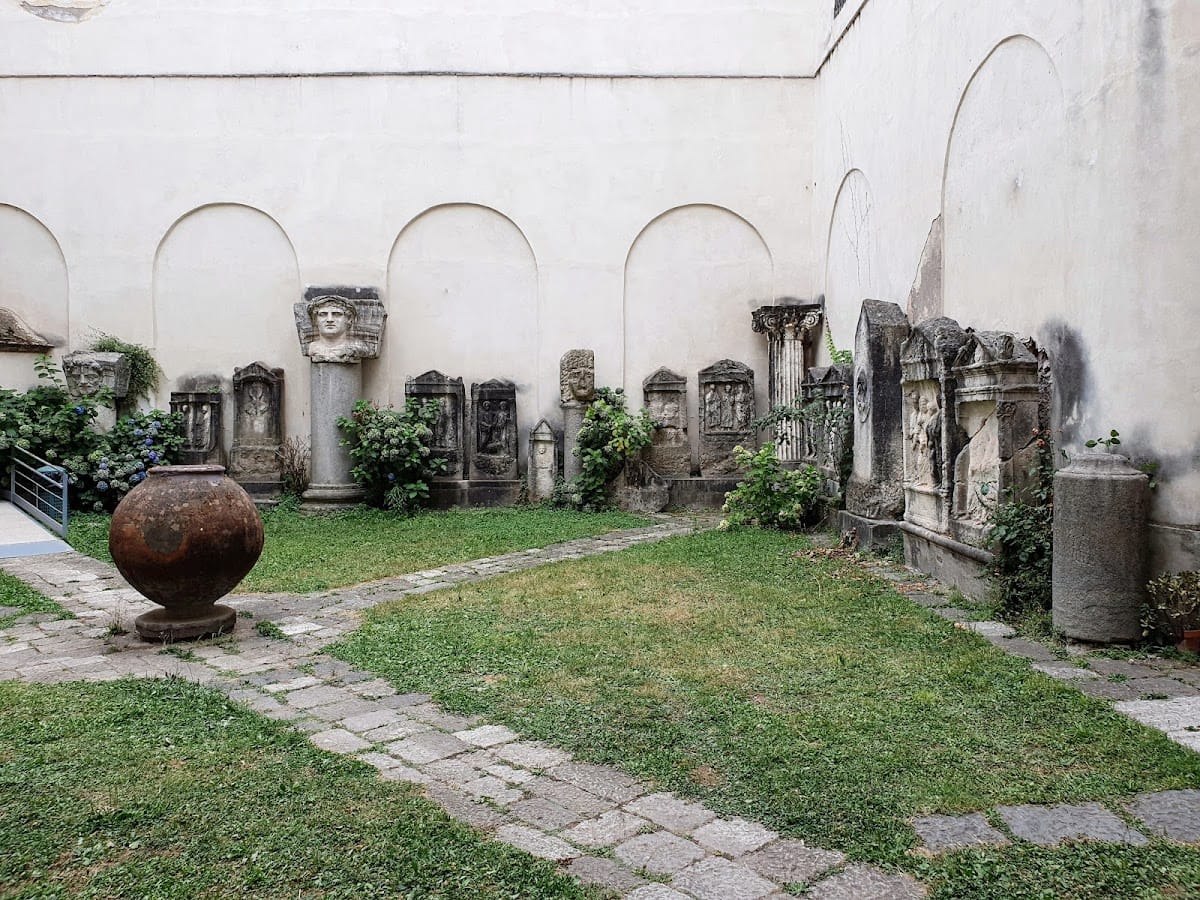
The two courtyards and the garden form part of the museum’s physical arrangement. The first courtyard displays Roman Republican and Imperial funerary stelae, capitals, and reliefs along its walls. Among these pieces is the keystone of an arch from the Campanian Amphitheatre, bearing a protome, or bust-like representation, of the god Volturnus. The courtyards connect the architectural setting of the palace with stone objects recovered from Capua and its surrounding territory.
Inscriptions and Roman stone monuments
Lapidarium
Room I contains the lapidarium, a substantial collection of stone inscriptions from Campania Felix. The stones preserve evidence of the region’s Roman communities and include material catalogued through the work associated with Theodor Mommsen. The first courtyard extends this stone display with funerary stelae, capitals, and reliefs arranged against the walls.
Amphitheatre inscription
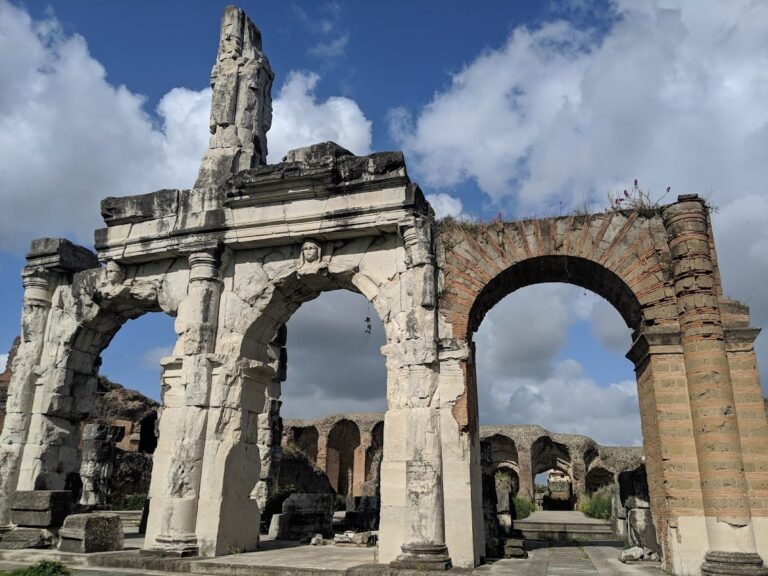
The second courtyard and Room II contain additional funerary stelae and a dedicatory inscription concerning the restoration of the Campanian Amphitheatre. The inscription records that the work was promoted by Emperor Hadrian and commemorated by the colony of Capua. Found in 1726, it retains the reconstruction proposed by Alessio Simmaco Mazzocchi in 1727.
Sarcophagi
Rooms III and IV contain Imperial and Late Antique sarcophagi. Late Antiquity refers broadly to the later Roman Empire and the transition to the early medieval world, from approximately the third to the eighth centuries AD. These stone coffins extend the Roman funerary sequence represented elsewhere by the stelae and inscriptions.
Sanctuaries and votive collections
Matres Matutae
Rooms V through IX hold more than 160 Matres Matutae, the museum’s defining pre-Roman collection. Archaeological excavations at the sanctuary site produced more than 150 tuff statues of seated women holding one or more infants, together with architectural and votive terracottas. The figures are associated with Mater Matuta, an Italic goddess traditionally connected with dawn and birth, and with offerings made for the health of women and children.
The collection originated at Petrara, now in the municipality of Curti. Agricultural work in 1845 revealed an altar with inscriptions in Oscan, the language of an ancient Italic people of Campania, along with tuff statues. Excavations between 1873 and 1887 exposed the remains of a large sanctuary. The finds indicate continuous use of the sanctuary from the sixth to the first century BC. Room V contains several structural elements recovered from the Temple of Mater Matuta, while Rooms VI through IX arrange the mother figures according to aesthetic criteria.
Fondo Patturelli material
The museum also preserves substantial material from the Fondo Patturelli, an archaeological locality associated with a sanctuary and finds near ancient Capua. Its holdings include votive figurines and architectural elements. Part of this material was damaged or lost during the bombing of 1943, together with other archaeological groups from the region.
Diana at Sant’Angelo in Formis
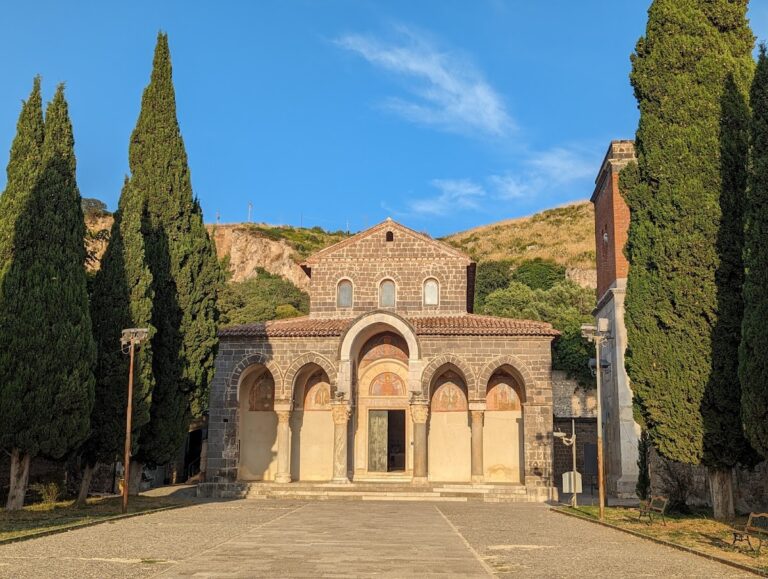
Room X contains marble and limestone sculptures, frescoes, and mosaics dating from the first century BC to the second century AD. The group includes a statue of Diana the Huntress and mosaics from the small settlement beside the Temple of Diana Tifatina at Sant’Angelo in Formis. Much of the stucco and part of the mosaic and fresco material from the sanctuary area were damaged or lost during the wartime destruction of Palazzo Antignano.
Pottery, bronzes, coins, and terracottas
Pottery
The pottery collection contains vessels of different types and periods from areas associated with Oscan-Campanian culture and other cultures active in the region. Room XI contains Corinthian vases from the seventh century BC. Rooms XII and XV contain Greek and Italiote vases dating from the sixth to the third century BC. Italiote describes the Greek-influenced cultures of southern Italy.
Bronze objects
Room XIII divides its bronze objects into ornamental bronzes, fibulae, rings, and bracelets; utilitarian objects such as keys, mirrors, and belts; and figurative bronzes and statuettes. The arrangement brings together personal ornaments, practical objects, and small representations in a single display of bronze-working traditions from the region.
Coins and medals
Rooms XX and XXI contain coins and medals ranging from Magna Graecia and the Roman Republican period through the Lombard and Bourbon periods, the Papal States, and the Risorgimento. Magna Graecia was the ancient Greek colonial region of southern Italy, while the Risorgimento was the nineteenth-century movement that led to Italian unification. A separate coin case extends from the sixth century BC to the nineteenth century AD.
Terracottas and early objects
The terracotta collection consists largely of sixth- and fifth-century BC material associated with the Italiote culture of Campania. Room XVI contains large votive statues from sanctuaries of ancient Capua, Room XVII contains votive heads and busts, and Room XVIII presents human figures of different sizes and subjects. Room XIX contains terracottas depicting non-human subjects, Neolithic and Eneolithic stone artefacts, Egyptian statuettes, and objects in bone and ivory.
Architectural terracottas
Rooms XXII and XXIII contain architectural terracottas, including antefixes, which are ornamental elements placed at the ends or edges of ancient roof tiles, decorated semicircular roof tiles, and rectangular ornamental slabs used to protect beams. These pieces preserve details of the decoration and construction of ancient buildings and sanctuaries.
Medieval and later Capua
Lombard and medieval architecture
Room XXIV contains architectural elements produced between the tenth and thirteenth centuries, many of them formerly belonging to Capuan churches and public buildings. They relate to Lombard Capua, which became the capital of an autonomous principality after the Lombards established kingdoms and principalities in Italy during the early medieval period.
Frederick II and Porta Roma
Room XXV contains pre-Roman marble elements reused as building material during the Lombard period. Room XXVI contains sculptures from the period of Frederick II of Swabia, the medieval emperor of the Holy Roman Empire and ruler of the Kingdom of Sicily. Among the remains are statues and other fragments from the monumental Porta Roma in Capua, constructed between 1234 and 1240. The museum also preserves the body of a thirteenth-century statue of Frederick II that formerly stood on a city gate of Capua; its head is now in Berlin.
Renaissance sculpture
Room XXVII contains Renaissance funerary sculptures and monuments, including the tombstone of Rinaldo Fieramosca, the father of Ettore Fieramosca. The objects continue the museum’s presentation of Capuan history through memorial sculpture and architectural remains.
Paintings and polychrome sculpture
Room XXVIII contains paintings produced between the thirteenth and eighteenth centuries and two polychrome sculptures, a thirteenth-century Crucifix and a sixteenth-century Virgin of the Annunciation. The collection also includes the polyptych of the Cross by Cristoforo Scacco, dating to around 1500. The picture gallery further includes works by Bartolomeo Vivarini, Giacinto Brandi, Giuseppe Marullo, and especially Francesco Liani.
Inscriptions, coats of arms, and sculpture
Room XXIX functions as the museum auditorium and contains the coats of arms of Capuan families together with marble inscriptions. Room XXX contains Lombard, Angevin, and Aragonese inscriptions. Room XXXI holds sculptures from the sixteenth, seventeenth, and eighteenth centuries, while Room XXXII contains Capuan coats of arms and the arms of dynasties of the Kingdom of the Two Sicilies.