Byzantine Sites: Explore Mosaic Churches, Fortified Cities and Imperial Buildings
Explore more than 600 Byzantine sites, including mosaic churches, monasteries, fortified cities, burial chapels, bridges and imperial residences. Religious buildings form the largest group in the collection, followed by fortifications and urban sites. Examples from Italy and the Balkans to North Africa and the eastern Mediterranean preserve domed interiors, gates, cisterns and patterned brick-and-stone façades.
Primary Function: All
Type: All
Country: All
Popularity: All
Rating: All
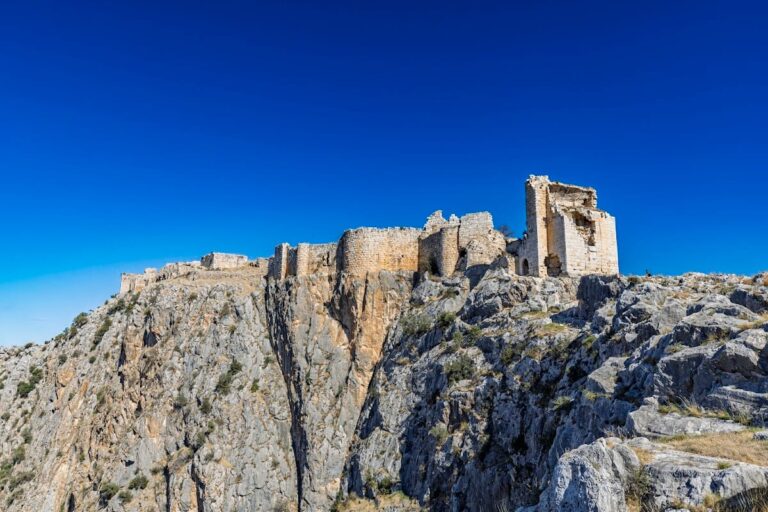
Anavarza Ruins preserve the remains of Anazarbus, a major city of ancient Cilicia that became a Roman provincial capital, an Armenian royal center,…
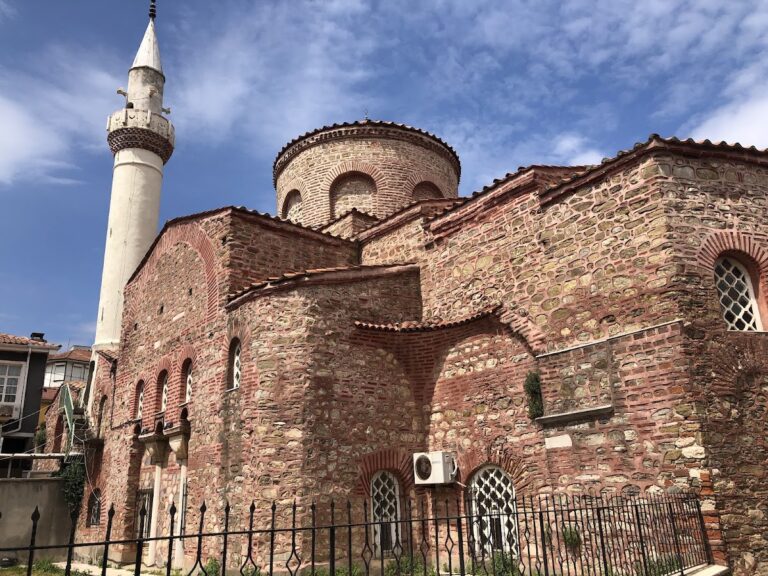
Fatih Mosque in Tirilye, Bursa Province, is a Byzantine cross-in-square church later converted into a mosque, preserving evidence of the region’s…
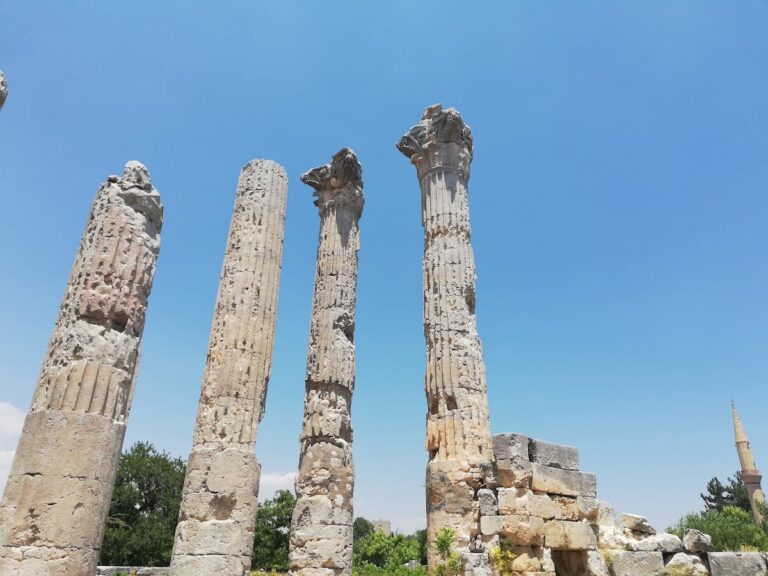
Olba was an ancient city in Cilicia Aspera and later Isauria, known for its Zeus temple, Roman infrastructure, Christian cathedral, and surviving…
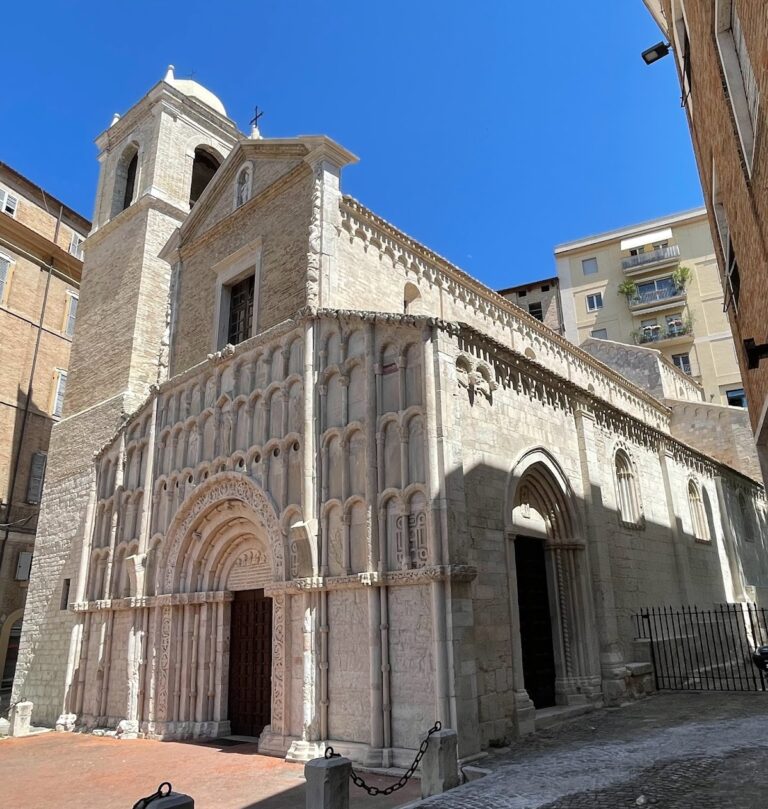
Santa Maria della Piazza is an 11th- and 12th-century Romanesque church in Ancona, built above an earlier Palaeo-Christian basilica and retaining…
Castle of Sant'Aniceto is an eleventh-century Byzantine stronghold in Calabria that protected Reggio and regional goods before becoming the center of…
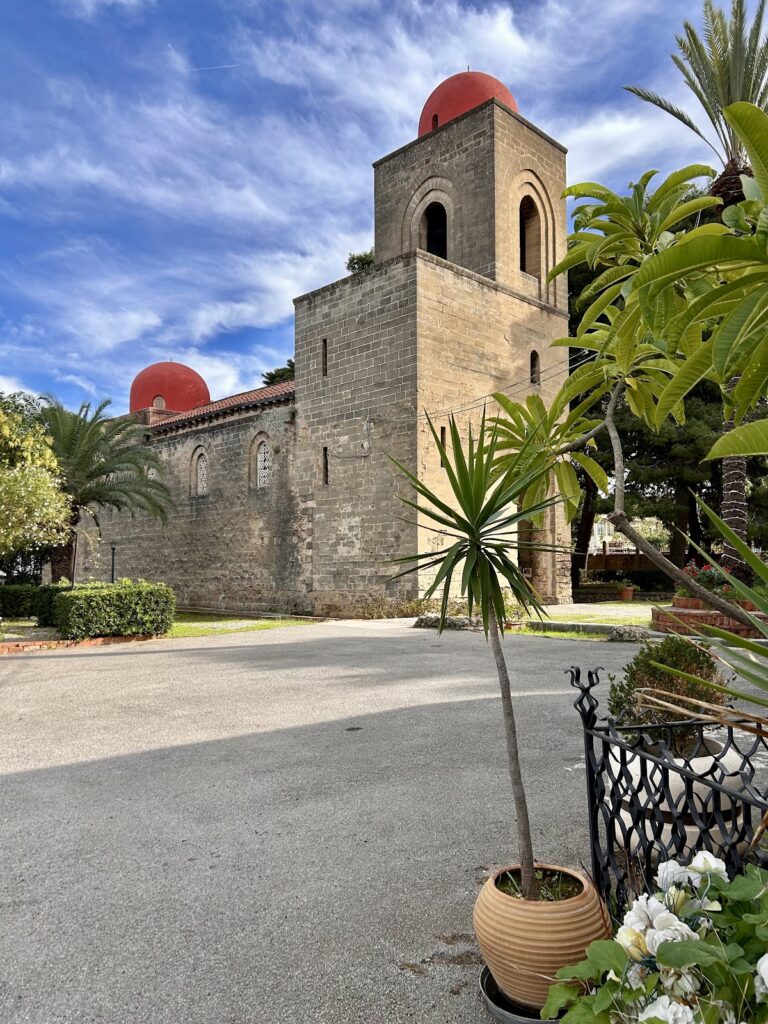
San Giovanni dei Lebbrosi is a medieval Norman church in Palermo associated with a leper hospital, a former fortress, and successive religious and…
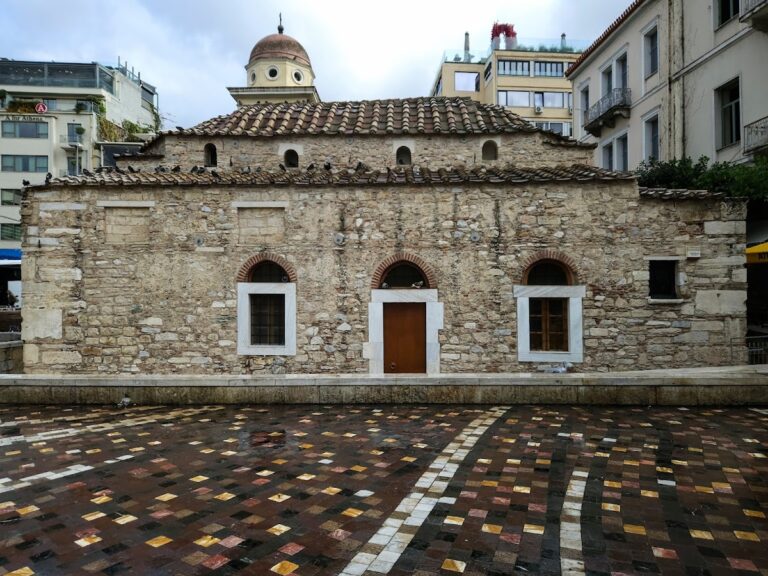
Pantanassa Church in central Athens is an Eastern Orthodox Byzantine church whose history extends from uncertain early origins through its role as…
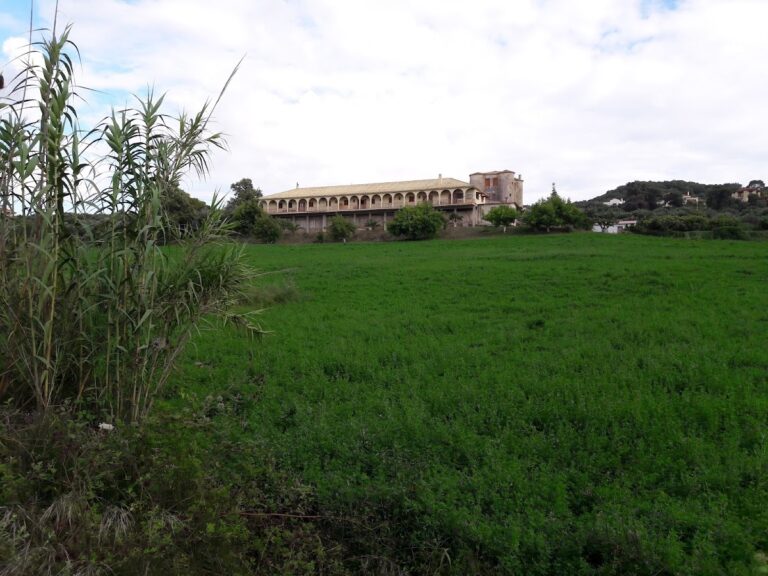
The Monastery of Skafidia is an Orthodox monastery beside the Ionian Sea, founded or built around the tenth century and enclosed by a medieval…
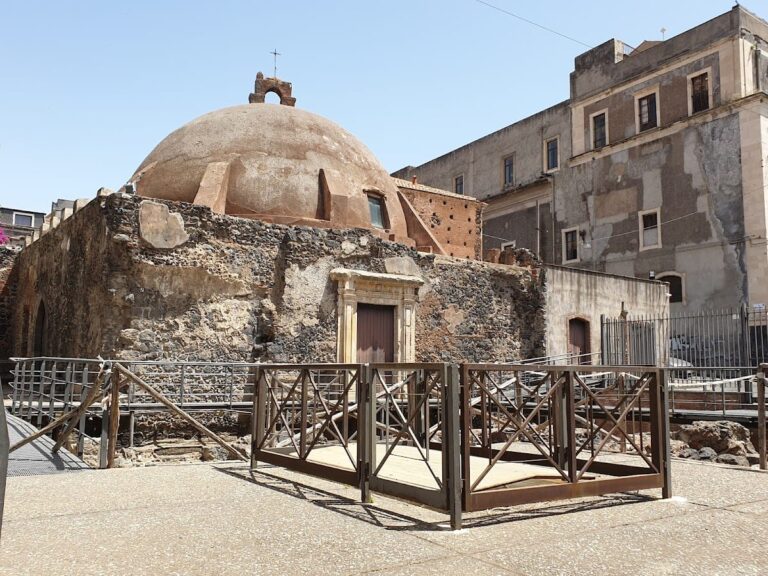
Terme della Rotonda in Catania preserves the remains of a Roman bath complex later converted into the Byzantine church of Santa Maria della Rotonda.…
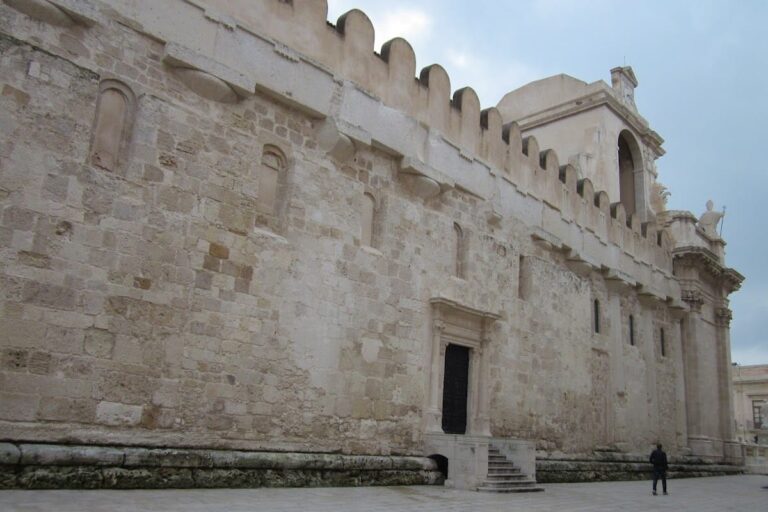
Built in the fifth century BC, the Temple of Athena in Syracuse was later incorporated into the city’s cathedral, preserving parts of its ancient…
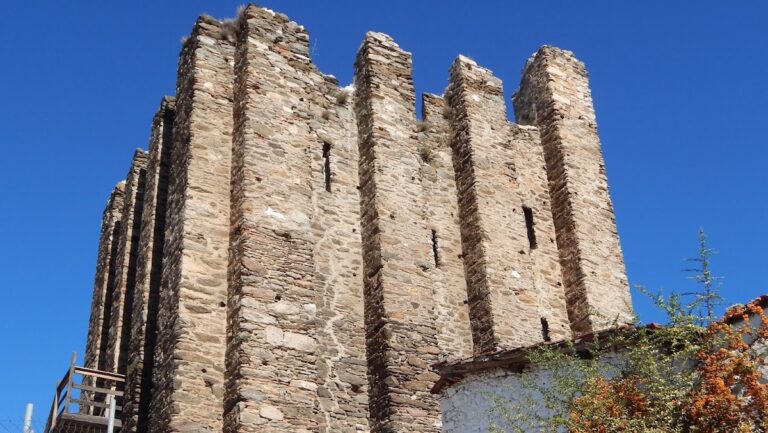
Galatista Tower is a preserved medieval defensive structure in Galatista, Greece. Built in the thirteenth or fourteenth century, it served as a…

The Archaeological Museum of Chalkida presents the archaeological and industrial history of Euboea and Skyros, from the Paleolithic period through…
For details on how to use the maps, which sites are included, how popularity and ratings are determined, and how sites are classified, see the help page.
On this page7 sections
Basilicas and mosaic interiors
At Sant’Apollinare in Classe, near Ravenna in Italy, a long nave leads between marble columns towards the sixth-century apse mosaic. Saint Apollinaris stands with raised hands in a green landscape among sheep, beneath a jewelled cross set against a star-filled blue field. The image occupies the curved surface above the sanctuary, with its figures and symbols arranged to be seen from the church below. The cylindrical bell tower is a later addition.
The Euphrasian Basilica at Poreč in Croatia has a different apse composition. Mary and the Christ Child are enthroned between angels and accompanying figures, including Bishop Euphrasius carrying a model of the church. The sixth-century donor appears within the sacred scene. Marble, carved capitals and inlaid wall panels extend the decoration below the mosaics, while the later medieval canopy over the altar belongs to another building campaign.
Monasteries, domed churches and crypts
At Hosios Loukas in Greece, two adjoining churches preserve different arrangements of domed space. The smaller Church of the Panagia has a central dome supported by four columns. The larger eleventh-century principal church opens beneath a broader dome, with coloured marble on the lower walls and gold-ground mosaics above.
A vaulted crypt beneath the larger church contains the tomb associated with Saint Luke, the monastery’s founder, and painted scenes including the Entombment and the Descent into Hades. Its position follows the slope of the ground. The lower funerary chapel and the upper church formed connected spaces for burial, commemoration and worship.
Cemeteries and funerary chapels
The Necropolis of El-Bagawat in Egypt’s Kharga Oasis preserves rows of mud-brick funerary chapels. Many take the form of a square chamber roofed by a dome, with arches carrying the transition above the corner supports. Other chapels use barrel vaults or have entrance courts.
The buildings marked burials and provided places for commemorative gatherings. Their clustered domes give the cemetery the outline of a small settlement, although most structures served individual or family tombs. A few interiors retain biblical paintings; the standing brick architecture survives much more widely than the painted decoration.
Fortified cities, churches and water storage
At Ammaedara, modern Haïdra in Tunisia, a large Byzantine citadel was inserted into an older Roman town after the sixth-century reconquest. Its towered perimeter enclosed a more compact defended area. A church within the citadel preserves an aisled plan and a raised sanctuary, placing religious and military buildings inside the same enclosure.
At Sergiopolis, ancient Resafa, in Syria, high walls and elaborate gateways enclosed a pilgrimage city dedicated to Saint Sergius. The defences were only part of its support system. Large underground cisterns, roofed with brick vaults, stored seasonal rainfall brought from a nearby watercourse through channels. Their scale reflects the difficulty of sustaining a substantial settlement in this dry setting.
At Umm ar-Rasas in Jordan, a Roman military enclosure developed into a settlement with churches, houses and narrow lanes during the Byzantine period. A tall tower beyond the town is conventionally interpreted as a place of retreat for an ascetic monk, with a small upper chamber above its largely solid shaft.
Christian building continued after Byzantine government ended. The extensive mosaic floor of the Church of Saint Stephen dates to AD 785 and depicts named cities as well as hunting and fishing scenes. It belongs to the site’s early Islamic period, preserving a later continuation of the Christian mosaic tradition rather than an imperial Byzantine commission.
Bridges and river crossings
The Sangarius Bridge in Turkey preserves a long sequence of limestone arches built under Justinian. Wide principal arches crossed the river channel, while smaller openings at the ends allowed floodwater to pass through. The surviving arches now span a much smaller watercourse than the river crossing for which the bridge was designed.
Imperial residences and palace façades
In Istanbul, the Palace of the Porphyrogenitus, also known as Tekfur Sarayı, preserves a rare substantial example of late Byzantine residential architecture. Rows of windows, a ground-floor arcade and patterned brick-and-stone masonry articulate its three-storey façade beside the land walls. Modern restoration has replaced missing floors and roofing, so the enclosed building combines surviving medieval walls with reconstructed elements.
Explore the collection
Explore sites on the map or in the grid. Map icons reflect each site’s primary function, helping you identify different kinds of places at a glance. Narrow the results by country, primary function, site type or era, with additional filters for popularity and rating. Select a map marker to view the site’s details and open its article, or open the article from its grid entry.