Byzantine Sites in Albania: Explore Domed Churches, Monasteries and Hilltop Defences
Byzantine sites in Albania include domed churches, monastic buildings and fortifications overlooking valleys and the coast. Some churches preserve decorated brickwork and painted interiors; others show their design most clearly through the arrangement of apses, arches and dome supports. Hilltop strongholds add defensive circuits that were rebuilt by Byzantine and later rulers.
The collection includes buildings from different centuries of the Byzantine world and its regional successors. Later porches, bell towers, paintings and repairs remain part of many sites, but they can be distinguished from the medieval structures around which they developed.
Primary Function: All
Type: All
Popularity: All
Rating: All
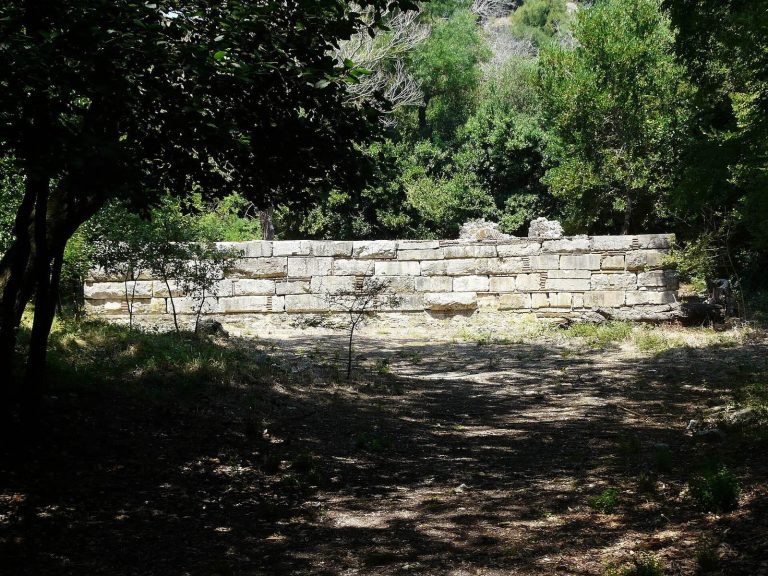
Butrint National Archaeological Park preserves the remains of a city shaped by Chaonian, Greek, Roman, Byzantine, Angevin, Venetian, and Ottoman…
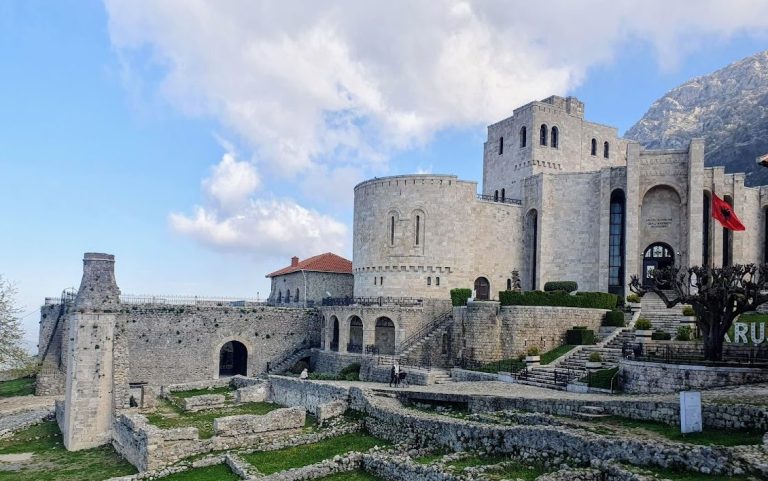
Krujë Fortress in Albania developed from an early settlement into a medieval stronghold associated with Skanderbeg and the League of Lezhë. Its…
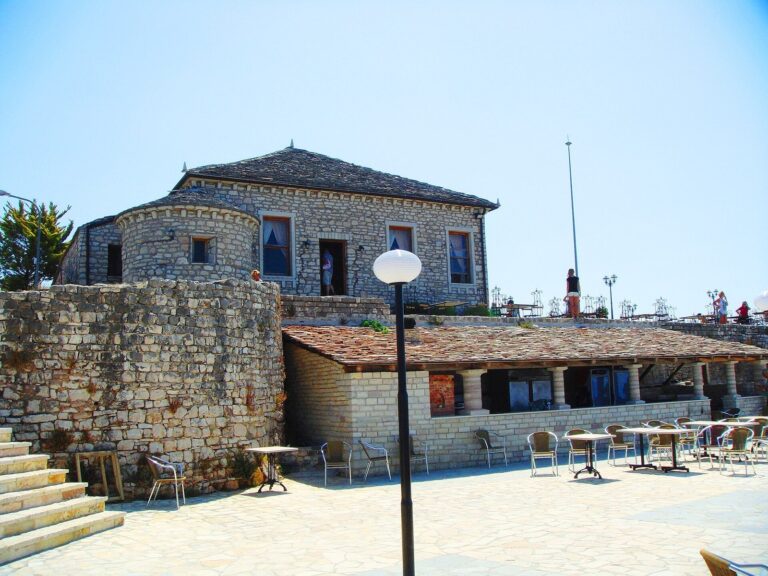
Lëkurësi Fortress is an Ottoman-era stronghold above Sarandë, Albania, built in the late eighteenth century and later involved in regional military…
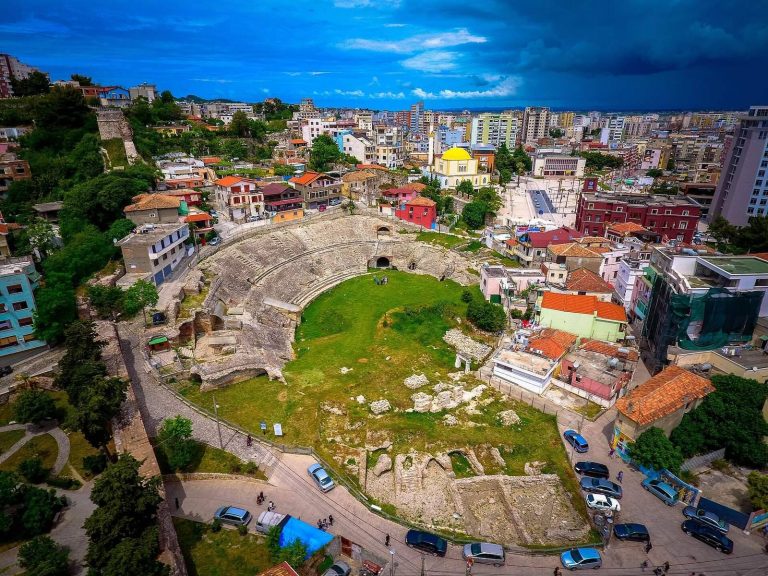
Durrës Amphitheatre is a large Roman arena built in the second century AD. Its ruins preserve evidence of gladiatorial performances, later Christian…
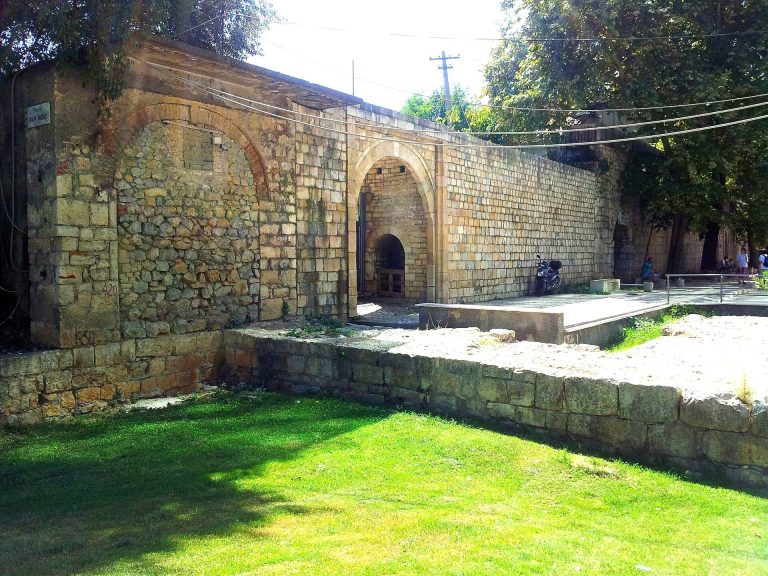
Tirana Castle preserves the remains of a Byzantine-era fortress that occupied the crossing of Tirana’s principal roads and later became involved in…
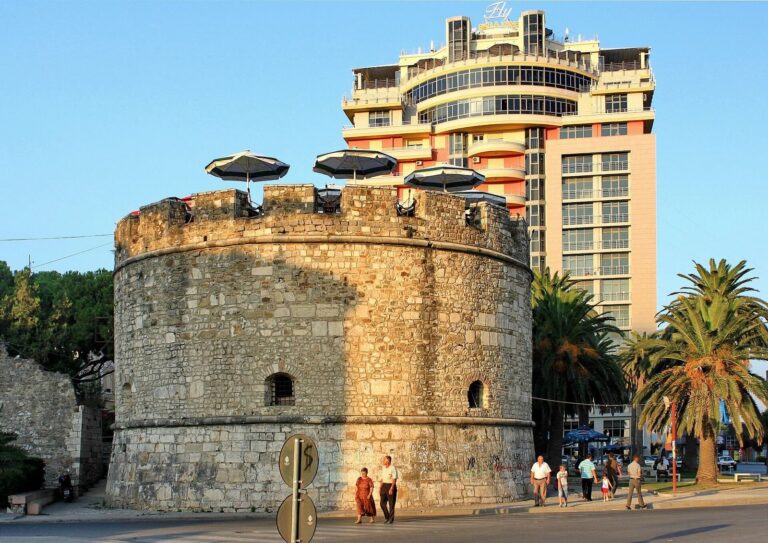
Durrës Castle is the fortified historic core of Durrës, shaped by Byzantine, Venetian, and Ottoman defenses and by the city’s strategic position on…
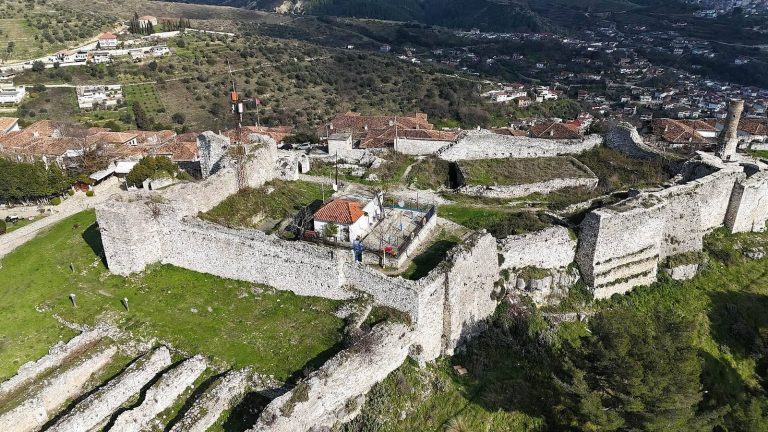
Berat Old Town and castle preserve a continuously inhabited fortified centre whose history extends from an Illyrian settlement and ancient Antipatrea…
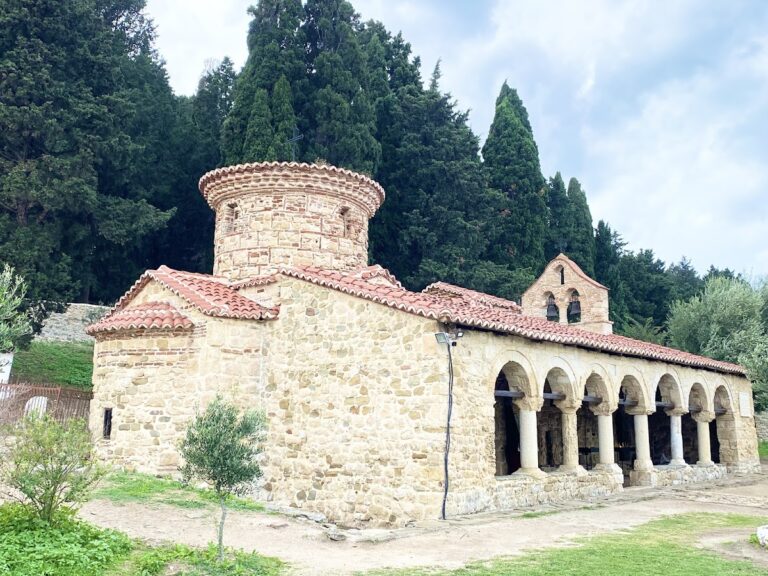
St. Mary's Monastery on Zvërnec Island preserves a Byzantine church, associated traditions, a historic cemetery, and evidence of changing religious…
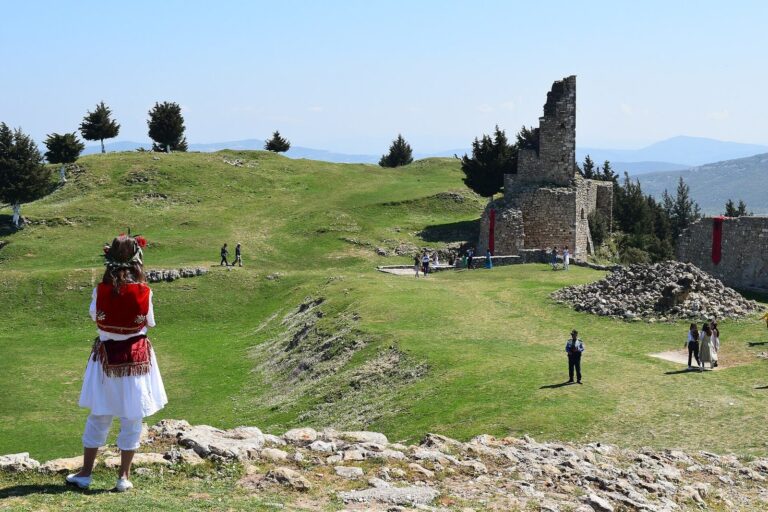
Kanina Fortress near Vlorë preserves fortification phases from antiquity through the Byzantine, Venetian, and Ottoman periods, with surviving walls,…
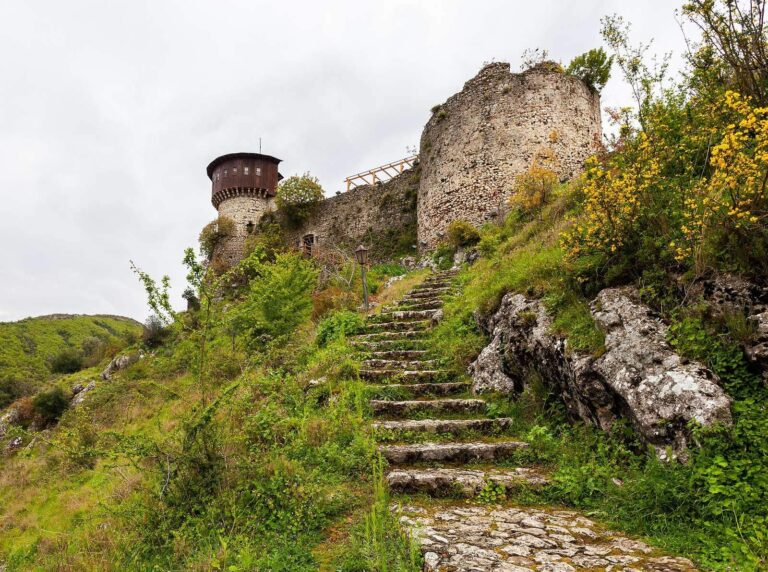
Petrelë Fortress is a medieval stronghold southeast of Tirana whose origins reach back to the Byzantine reign of Justinian I. Its layered walls,…
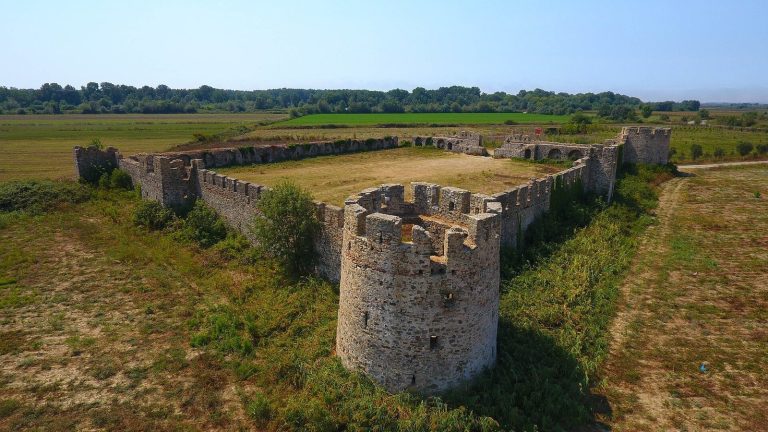
Bashtovë Fortress controlled movement along the lower Shkumbin River and supported coastal trade in central Albania. Its origins remain debated…
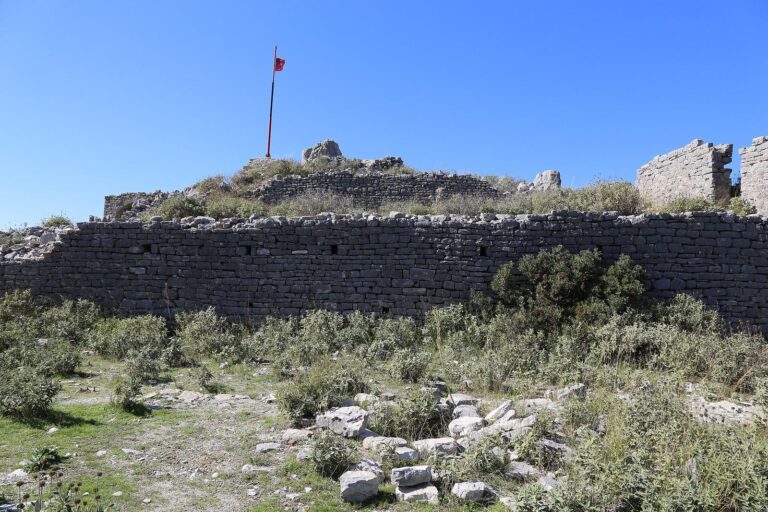
Borsh Fortress, also known as Sopot Fortress, occupies an ancient fortified hill above Borsh on Albania’s Ionian coast. Its remains reflect Bronze…
For details on how to use the maps, which sites are included, how popularity and ratings are determined, and how sites are classified, see the help page.
On this page6 sections
Labovë e Kryqit: a dome raised above the church
The Church of the Dormition at Labovë e Kryqit has an unusually tall dome drum rising above a compact body of aisles and entrance spaces. Arches connect the main interior with the surrounding areas, while the outer walls combine stone with patterned brickwork. The height of the drum gives the central space a different emphasis from the lower vaulted rooms around it.
The church has a traditional association with Justinian, but the date of the present medieval building is debated. It should not simply be described as an intact sixth-century church. Later work includes an eighteenth-century outer porch and bell tower, while surviving paintings in the sanctuary belong to the thirteenth century and subsequent phases.
Saint Nicholas at Mesopotam: apses and carved creatures
Saint Nicholas’ Monastery Church at Mesopotam preserves an unusual double-apse arrangement within a substantial masonry building. Surviving sections of the enclosing wall also recall the wider monastery around the church.
Carved stones include a lion and serpent-like creatures with looping or knotted tails. These reliefs add a distinctive sculptural element to the exterior, alongside reused masonry. Explanations of the double apse differ, so its form can be described more confidently than the suggestion that it necessarily served two Christian rites. Restoration has also changed the building, whose surviving fabric combines medieval construction with later intervention.
Marmiroi: a small church with vaulted cross arms
Near Orikum, Marmiroi Church has a cross-shaped plan with a central dome raised on a cylindrical drum. Vaulted arms extend from the centre, and the eastern arm ends in a rounded apse. The ruined entrance hall and adjoining walls preserve traces of a larger arrangement around the compact church.
Much of the building uses roughly worked local stone, with dressed blocks reused from the ancient settlement of Oricum. Only fragments of its painted interior remain. Modern restoration reconstructed parts of the building, making the distinction between the preserved medieval design and later rebuilding relevant to its present appearance.
Two domed churches on Berat’s castle hill
Holy Trinity Church stands within Berat’s castle enclosure. Stone blocks framed by brick courses create a patterned exterior, while a dome rises over the cross-in-square interior. Two columns carry reused capitals, and fragments of fourteenth-century paintings survive inside. An inscription naming the governor Andronikos Palaiologos connects the church with the city’s early fourteenth-century Byzantine administration.
Saint Michael’s Church occupies a much tighter position on the rocky slope below the castle walls. Its small cruciform interior supports a dome without freestanding internal columns. Stone-and-brick walls follow the compact plan, with an entrance hall at the west. The site shows how a domed church could be fitted onto a restricted ledge outside the main fortified quarter.
Kanina: towers from successive defensive campaigns
Kanina Fortress, above Vlorë, encloses a broad hilltop within a circuit interrupted by towers of several shapes. An internal wall separates the highest part of the site from the lower enclosure. Gates and towers controlled movement between these defended areas and the approaches from outside.
The fortress includes a Byzantine rebuilding phase traditionally associated with Justinian, followed by medieval and Ottoman alterations. Small triangular and semicircular towers belong to earlier work, while later additions changed the circuit and its entrances. The surviving differences in masonry and tower plans record those successive campaigns; the entire enclosure was not constructed at one date.
Explore the collection
Explore sites on the map or in the grid. Map icons reflect each site’s primary function, helping you identify different kinds of places at a glance. Narrow the results by primary function, site type or era, with additional filters for popularity and rating. Select a map marker to view the site’s details and open its article, or open the article from its grid entry.