Historic Sites in Montenegro: Explore Roman Cities, Walled Towns and Monasteries
Explore historic sites in Montenegro, including Roman urban remains, coastal town walls, medieval churches and monasteries. The collection also contains Ottoman religious buildings. The examples below range from excavated streets and public buildings near Podgorica to fortified Adriatic settlements, island churches and a domed mosque in the northern town of Pljevlja.
Primary Function: All
Type: All
Civilization: All
Popularity: All
Rating: All
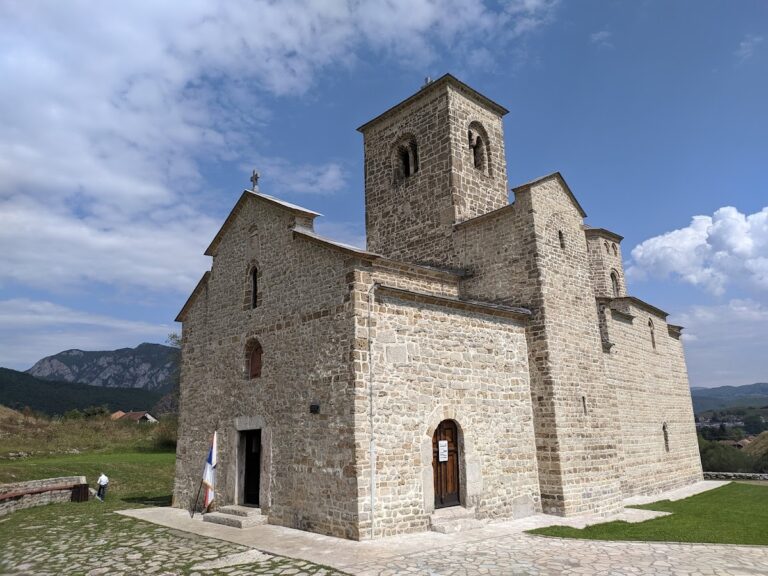
Đurđevi Stupovi is a medieval Serbian Orthodox monastery in Berane, Montenegro. Founded by Stefan Prvoslav, it became the seat of the Budimlja…
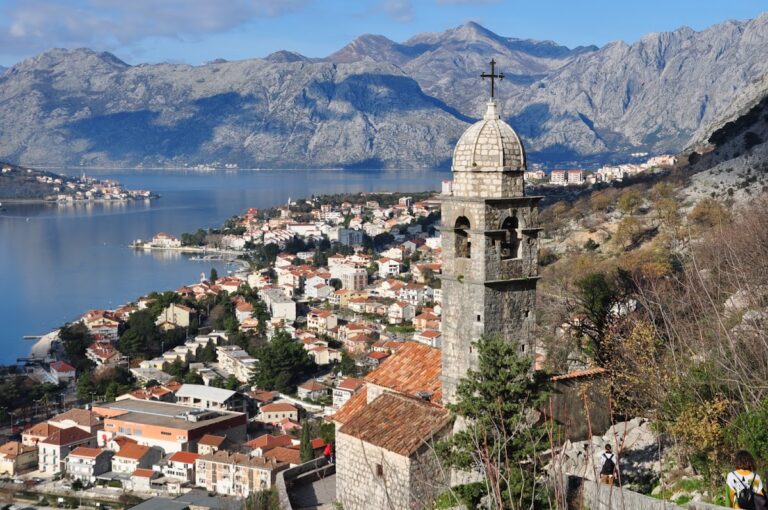
The Church of Our Lady of Remedy is a 1518 Roman Catholic church on the slope of St. John Mountain above Kotor’s Old Town, built above a…
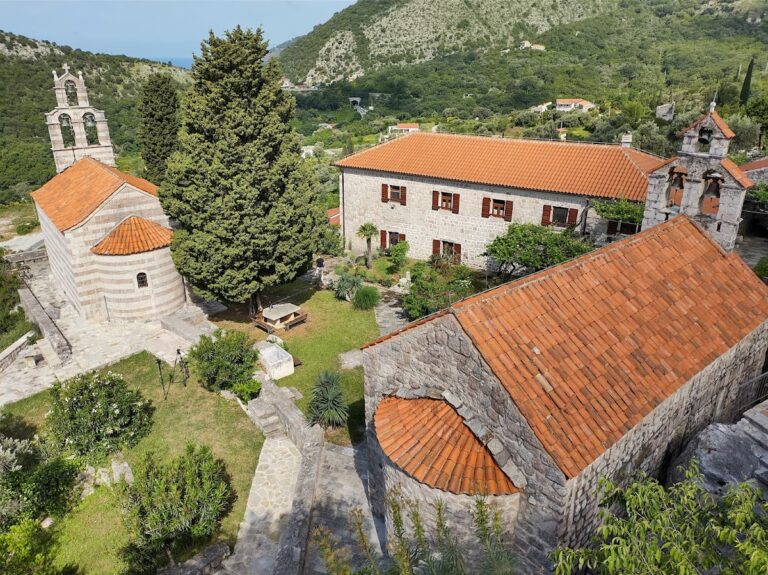
Gradište Monastery near Petrovac preserves a long history of Orthodox worship, royal patronage, repeated destruction, and renewal. Its three churches…
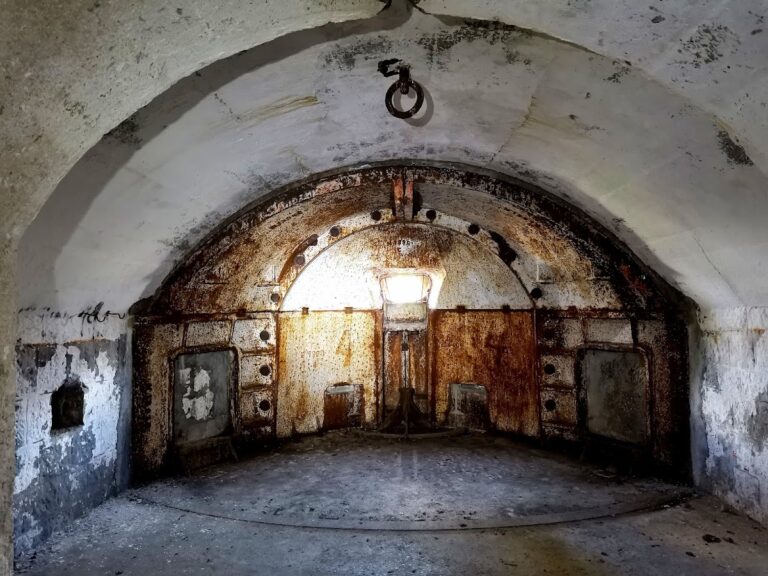
Vrmac Fortress, built between 1894 and 1897 in Montenegro, formed a central part of the Austro-Hungarian defensive system around the Bay of Kotor and…
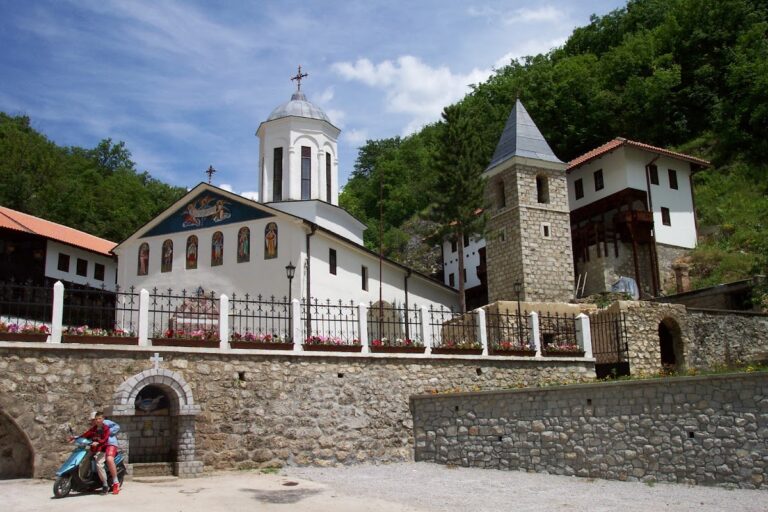
Holy Trinity Monastery near Pljevlja in Montenegro is a medieval Serbian Orthodox complex known for its educational tradition, manuscript production,…
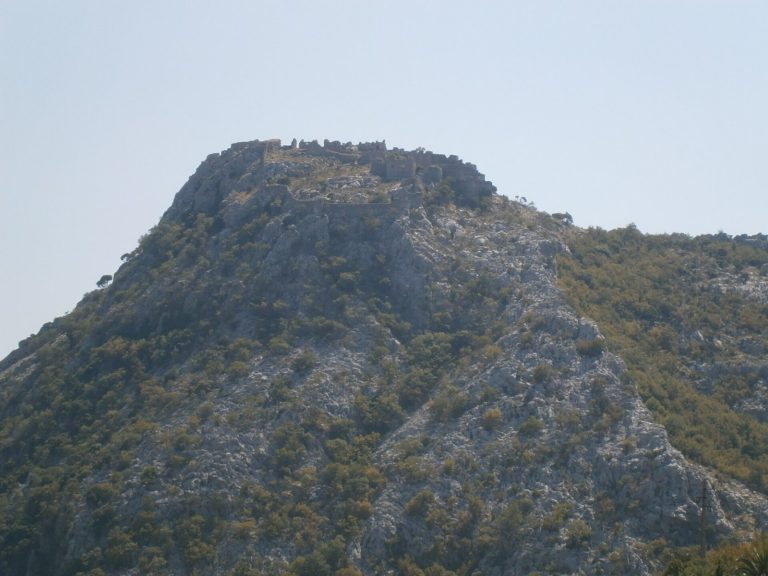
Haj-Nehaj is a Venetian fortress near Sutomore, shaped by Venetian, Ottoman, Montenegrin, and Austro-Hungarian control. Its ruins preserve defensive…
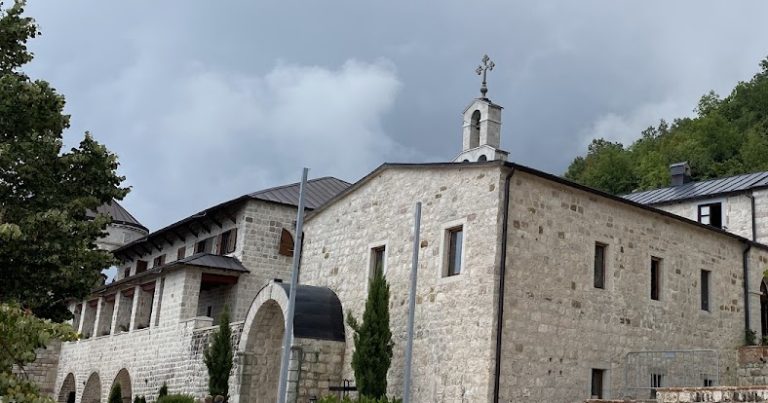
Stanjevići Monastery, near Pobori in Montenegro, developed from a medieval noble residence into an important Orthodox, political, and educational…
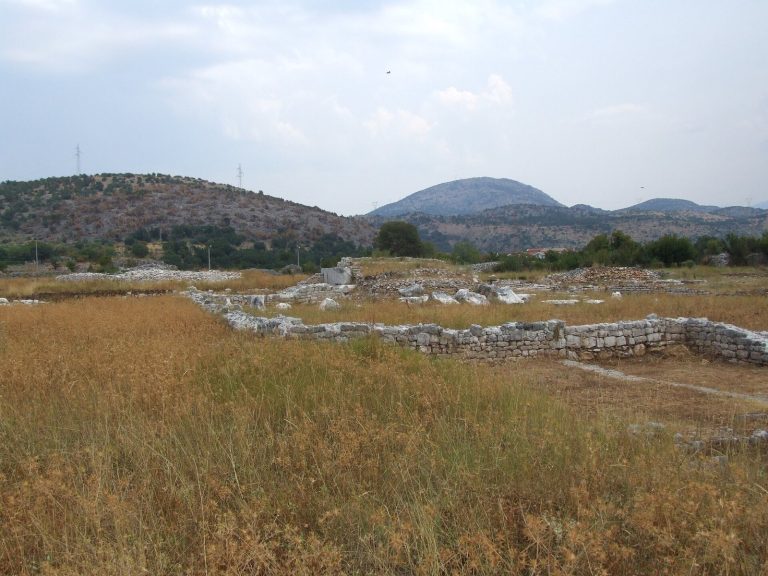
Ancient Doclea was a Roman urban center near Podgorica that developed from the early 1st century CE into the capital of Praevalitana, later becoming…
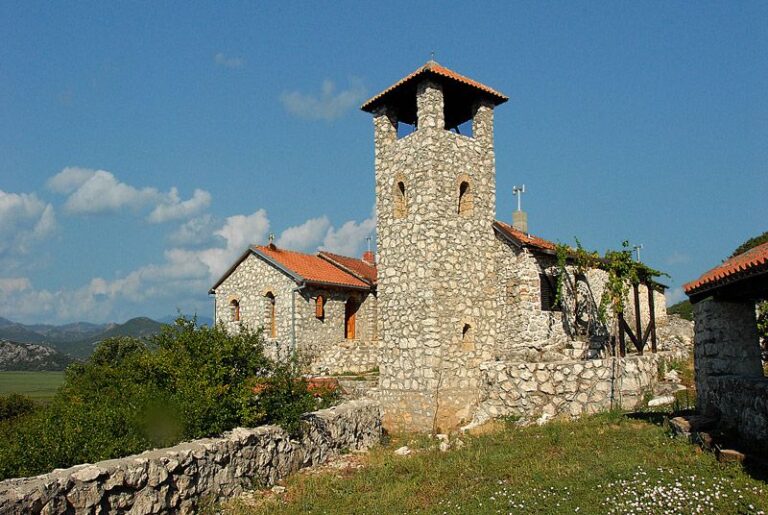
Kom Monastery is a fifteenth-century Serbian Orthodox foundation on an island in Skadar Lake, associated with the Crnojević family, the Zetan…
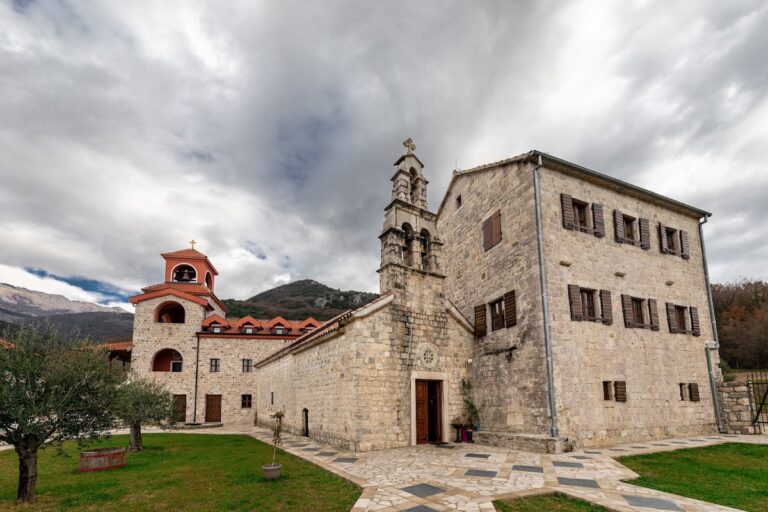
Podlastva Monastery in Lastva Grbaljska developed from a medieval Serbian Orthodox foundation into a religious, cultural, and political center of the…
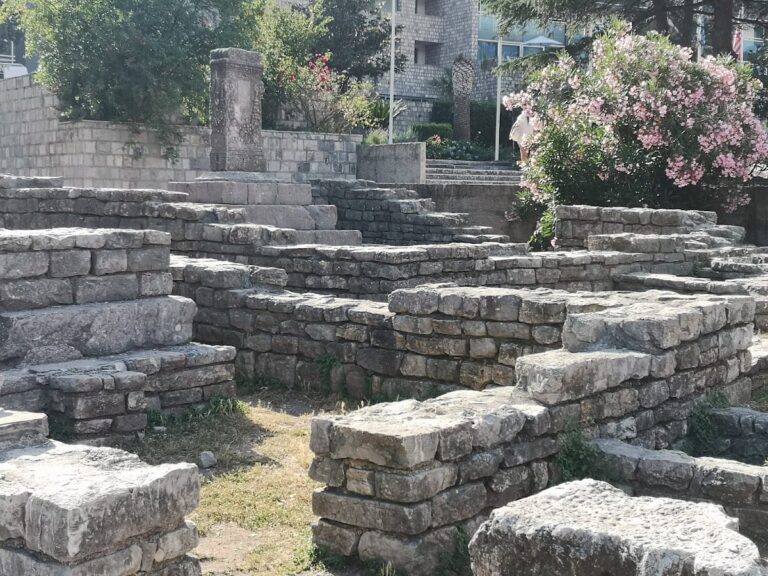
The Budva Necropolis offers insight into the burial customs and cultural changes from the Hellenistic through early Byzantine periods in Montenegro.
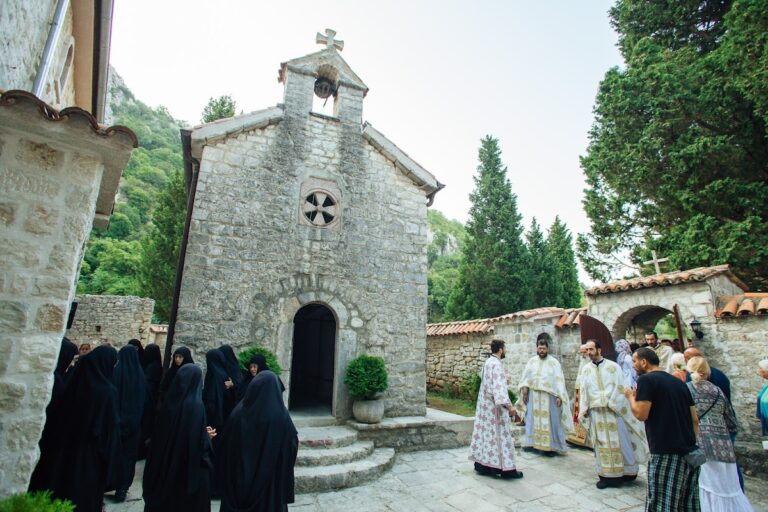
Duljevo Monastery near Budva preserves a medieval Serbian Orthodox foundation, layered frescoes, and a history shaped by monastic links, destruction,…
For details on how to use the maps, which sites are included, how popularity and ratings are determined, and how sites are classified, see the help page.
On this page6 sections
Roman streets and bath buildings at Doclea
Ancient Doclea occupies ground protected by rivers near modern Podgorica. The Roman city developed from the first century AD, with an irregular outer boundary adapted to the terrain and a more regular arrangement of streets inside. Sections of its walls and towers remain around the settlement.
The bath buildings contained hot- and cold-water rooms, changing areas and a palaestra, or exercise court. Excavated room divisions and traces of mosaic floors preserve parts of that arrangement. These facilities stood within a town also equipped with colonnaded public spaces and large residences, connecting communal bathing and exercise with the surrounding urban streets.
Budva’s walled old town
The Stari Grad of Budva is enclosed by stone defences built largely under Venetian rule in the fifteenth century. Its walls form a horseshoe around the historic centre, with projecting towers and openings through which defenders could cover the approaches.
The citadel strengthens the southern side of the enclosure. Towers, bastions, walls and stairways connect its different defensive levels above the coast. Within the perimeter, churches, small squares and closely spaced buildings occupy a compact urban area. The town walls and citadel belong to the same defensive system, enclosing an inhabited settlement as well as its fortified strongpoint.
Saint Luke’s medieval church in Kotor
The Church of Saint Luke in Kotor has a foundation inscription dated 1195 on its western façade. Its compact stone body contains a single nave, an eastern apse and a dome rising on a circular base. A later bell gable crowns the front, while the eighteenth-century Chapel of Saint Spyridon extends the building along its northern side.
Small fragments of painting survive from around the turn of the twelfth and thirteenth centuries on the south wall. They sit within an interior furnished and altered over later centuries. The church’s modest dimensions make the additions particularly clear: the medieval core, side chapel and later fittings occupy a tightly contained building.
Monastery churches on the coast and Lake Skadar
Savina Monastery, near Herceg Novi, contains two adjoining churches dedicated to the Dormition. The smaller church has a single nave, a semicircular apse and paintings from several periods, including fifteenth-century work associated with the Kotor painter Lovro Dobričević. The larger church was built between 1777 and 1799, with a prominent western bell tower, a rose window and a dome above the nave.
Their difference in scale also appears inside. The Small Church retains successive layers of wall painting and fittings assembled over time, while the Great Church accommodates a tall Baroque iconostasis, a screen of icons separating the sanctuary from the nave. The complex’s visible buildings include substantial later construction alongside the older painted church.
At Reževići Monastery, south of Budva, the old Dormition church has a vaulted interior and a bell gable with a single opening. Early seventeenth-century frescoes survive within it. The larger Church of the Holy Trinity has a cruciform plan; its construction began in 1770 and continued into the early nineteenth century. The two churches preserve different arrangements of enclosed space within the same monastic complex.
Beška Monastery stands on an island in Lake Skadar. Its late fourteenth-century Church of Saint George has a dome and three rounded arms forming a trefoil plan. The smaller Annunciation church was commissioned by Jelena Balšić, whose name and the date 1438 appear in an inscription above the entrance. Stone carving decorates its western façade, and her tomb lies in the southern chapel. Patronage and burial are thus recorded in both the building’s inscription and its internal arrangement.
Husein-paša’s domed mosque in Pljevlja
Husein-paša’s Mosque dates from the late sixteenth century. A broad dome covers its square stone prayer hall, while three smaller domes roof the entrance porch, supported by four marble columns. The minaret rises beside the main building.
Windows arranged in several levels light the interior. Painted floral ornament and Quranic inscriptions cover parts of the prayer hall and porch, with geometric decoration around the mihrab, the niche indicating the direction of prayer. The central dome and lower porch domes give the exterior a stepped profile, corresponding to the principal room and its sheltered entrance.
Explore the collection
Use the map or grid to find sites by primary function, site type, civilization and era, with additional filters for popularity and rating. Map icons indicate primary functions. Select a marker for details and a link to its article, or open the article from its grid entry.