Duljevo Monastery: A Fourteenth-Century Serbian Orthodox Monastery in Montenegro


Site at a Glance
- Rating
- 4.6
- Popularity
- Very Low
- Country
- Montenegro
- Primary era
- Medieval
- External website
- Open
- Eras represented
- Medieval, Modern
- Civilizations
- Serbian
- Site type
- Religious
- Remains
- Monastery
On this page14 sections
History
Duljevo Monastery is a Serbian Orthodox monastery in Montenegro, near Budva, founded in the mid-fourteenth century under the Nemanjić dynasty. Dedicated to Saint Stephen the Protomartyr, it belongs to the Montenegrin–Littoral Metropolis of the Serbian Orthodox Church and stands in the Paštrovići region near Kuljače, about 470 metres above sea level.
Nemanjić foundation and monastic role
The monastery’s foundation is associated with either Serbian King Stefan Uroš III Dečanski or his son, Emperor Stefan Dušan. A local foundation tradition attributes it to Dušan, who is said to have established Duljevo in gratitude after soldiers were healed by water from the nearby Saint Sava Spring. The Nemanjić dynasty was the medieval Serbian ruling house that supported the establishment of major Serbian Orthodox institutions.
Duljevo served as a metochion, a dependent monastic estate administered by a larger monastery, belonging to Visoki Dečani. It also formed a link between Dečani and Mount Athos, the major centre of Eastern Orthodox monasticism known as the Holy Mountain. Monks from Dečani received the tonsure at Duljevo before transferring to their monastery.
Its first written mention dates from 1677, when representatives of the Paštrovići families, who acted as the monastery’s patrons, gathered there to elect an abbot. Duljevo was also mentioned in a Russian anthology from 1706 that was sent to the Montenegrin metropolitan Danilo in 1715. Serbian Patriarch Arsenije III Čarnojević, who came from Paštrovići, studied at Duljevo, completed his novitiate, and took his monastic vows there during the seventeenth century.
Persecution, destruction, and rebuilding
During the Ottoman period, Duljevo sheltered monks fleeing persecution. In 1699, the Herzegovinian bishop Savatije Ljubibratić sent several monks from Savina Monastery to the community.
The monastery was destroyed during the campaign of Mahmud Pasha Bušatlija in 1785, when Ottoman Albanian forces burned it. Reconstruction followed in 1786, with the participation of Egor Stroganov, a Russian novice from the nearby Praskvica Monastery. Stroganov also paved a stone path from Duljevo to the sea. The route became the shortest way to Cetinje, and the monastery supplied food to travellers who used it.
Abbot Gavrilo Kuljač opposed union with Austria and was repeatedly arrested and physically attacked while travelling outside Paštrovići. He kept large flocks of sheep and gave milk, cheese, and bread freely to travellers and poor people using the route toward the Holy Mountain. A mulberry tree connected with these distributions still grows at the monastery.
During the First World War, Austro-Hungarian forces looted Duljevo and removed its large bell, which had been known for its distinctive sound. The monastery was renewed in 1924 through the work of the young monk Boris Kajenegra. Many of its monks came from Paštrovići, including Father Danijel Kajenegro, who died in 1820 and was regarded as a second founder.
Wartime loss and modern revival
The Second World War brought further violence. Fascist forces looted the monastery in June 1941, while a partisan detachment established its headquarters within the monastery grounds. In 1942, the protosyncellus Varnava Bučin, born in 1896, was killed near Duljevo after receiving forty-six knife wounds. Two nuns, Saint Gordana and Saint Stojanka, also suffered martyrdom.
After the death of Archimandrite Dionisije Miković in 1942, Duljevo ceased to function as a monastery. Miković was both a church writer and a historian of the monastery. The 1979 earthquake then caused the church’s narthex, or entrance vestibule, to collapse and exposed medieval frescoes, including portraits of two Nemanjić rulers.
Duljevo was revived during the early 1990s. Boris Kajenegra is associated with its renewal, while Father Dimitrije Lakić cared for the monastery until 1992. Father Sava Komatović and, subsequently, Protosyncellus Sava Avramović continued the revival and activity until 2002. Since that year, Duljevo has been a women’s monastery under Abbess Angelina Trifunović. The nuns practise icon painting, wood carving, embroidery, church sewing, and the preparation of remedies from medicinal plants.
Remains
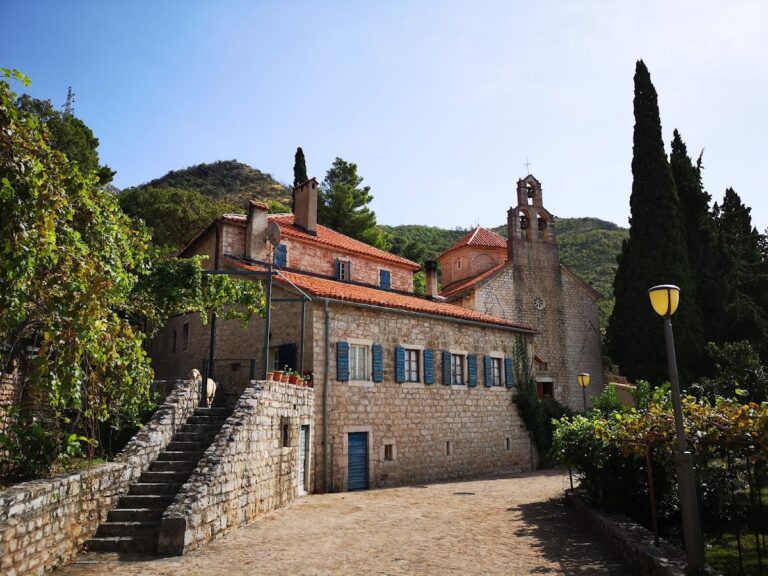
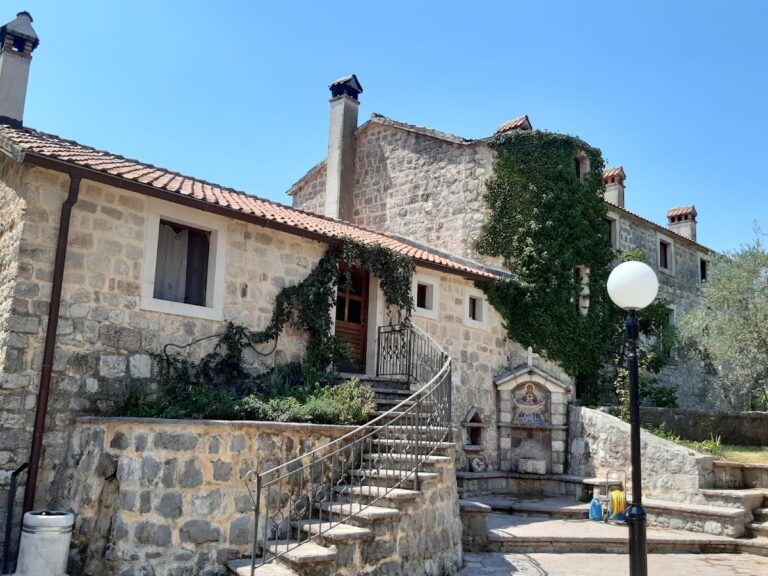
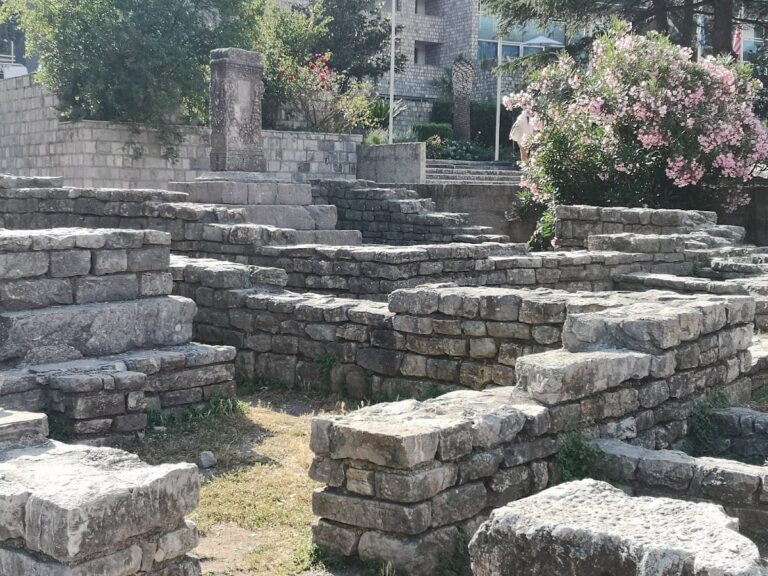
The monastery complex lies in a mountainous setting in a ravine beneath a hill, on the foothills of Paštrovo Mountain above the Budva coastal area. Its surviving elements include the Church of Saint Stephen the Archdeacon and Protomartyr, a square residential building, a guesthouse, and remains of other structures from earlier centuries. The complex combines the modest scale of a single-nave church with surviving evidence of successive rebuilding and monastic use.
Church of Saint Stephen
Structure and construction
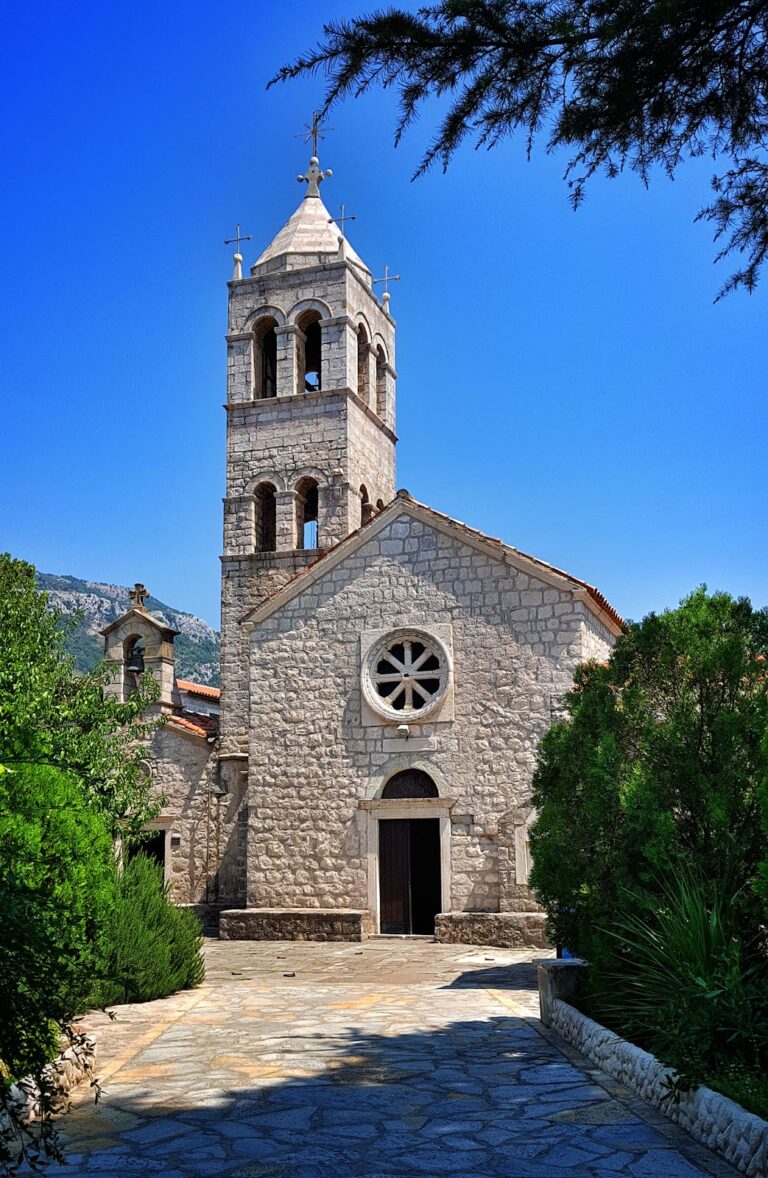
The church is a rectangular single-nave building measuring approximately 14.5 by 4.5 metres. Regularly dressed stone forms its walls, while a deep semicircular apse, the eastern end of the sanctuary, projects from the main body. On the west, an elongated narthex is attached to the church and ends in a semicircular porch.
The older part of the building is covered by a Gothic vault, while the main section has a semicircular vault. The outside of the older portion is plastered, and traces of lost additions remain visible on both the northern and southern sides. A belfry rises above the western facade. That facade also contains a cross-shaped rose window set inside a moulded rectangle. An inscription attributes its execution in 1924 to the craftsman Andrija Kuljač.
Interior features and burials
Stone slabs pave the church floor, beneath which graves are located. Surviving tombstones commemorate Egor Stroganov and Archimandrite Dionisije Miković. The ambo, a raised platform used for readings or preaching in an Orthodox church, is made from red and white stone arranged in a rosette pattern.
Medieval frescoes
Founder portraits
The 1979 earthquake revealed a medieval fresco programme preserved in two layers. In the south-western part of the church, the founder composition occupies the area above the founder’s grave. Saint Stephen appears on the southern side of the south-western pier, while King Stefan Uroš III Dečanski and the young King Stefan Dušan are painted on the western part of the south wall.
Saint Stephen wears a deacon’s vestment and holds a censer, turning toward the two royal founders. The portraits in the Church of Saint Stephen date approximately to 1340. Their placement connects the painted decoration with the monastery’s Nemanjić foundation tradition.
Other painted cycles
The sanctuary contains images of bishops and the Great Martyrs George and Demetrius. The nave includes hierarchs and warrior saints, while the upper zones carry a cycle of the Great Feasts, the principal celebrations of the Eastern Orthodox liturgical year. The paintings combine Byzantine and Western artistic traditions and were probably made by members of one workshop, possibly from Kotor.
Monastic buildings and sacred surroundings
Residential building and guesthouse
The monastic residential building is square and has narrow windows resembling loopholes. A newer two-storey section is attached to it. Together with the guesthouse and the remains of earlier buildings, it forms the built framework around the church.
Spring, oak, and hermitages
Near the monastery is the Saint Sava Spring, known as Savina Voda. Tradition connects it with the healing of Stefan Dušan’s soldiers, and its water is still regarded as beneficial to sick people, particularly those suffering from stomach ailments.
An oak near Duljevo is traditionally associated with Saint Sava, the medieval Serbian Orthodox monk and church leader who became the first archbishop of the autocephalous Serbian Church. He is said to have rested beneath the tree. Two hermitages directly above the monastery are likewise connected by tradition with Saint Sava’s stay before his final journey to Mount Athos.
Nearby sites