Phoenician Sites: Explore Coastal Cities, Sanctuaries and Punic Settlements
Phoenician and Carthaginian sites in this collection extend from the Levant and Cyprus to North Africa, Sicily, Sardinia and the Iberian Peninsula. Their remains include fortified coastal settlements, temple precincts, ship sheds and houses with underground water storage. Western examples also include Punic cities, where communities developed from the wider Phoenician world and maintained close connections with Carthage.
These places often contain much earlier or later buildings. The examples below concentrate on the Phoenician and Punic settlement phases, while explaining where Bronze Age foundations or Roman rebuilding form part of the same archaeological site.
Primary Function: All
Type: All
Civilization: All
Country: All
Popularity: All
Rating: All

The National Archaeological Museum in Cagliari traces its origins to an archaeological and natural history cabinet established in 1800. Its…

The National Museum of Bardo in Tunis occupies part of the former Bardo palace complex and presents Tunisia’s history from prehistoric times through…

The Regional Archaeological Museum Antonio Salinas in Palermo traces its origins to 1814 and preserves archaeological material from Sicily and…

Founded in 1882 to protect Cyprus’s antiquities, the Cyprus Museum preserves archaeological material from the Neolithic period through Roman rule and…
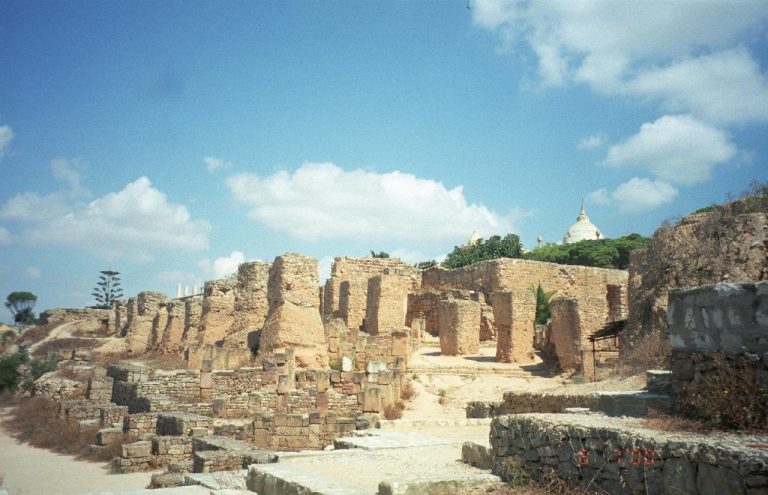
Byrsa was the hill, citadel, and central sacred area of ancient Carthage. Its Punic remains lie beneath a Roman monumental platform, later religious…
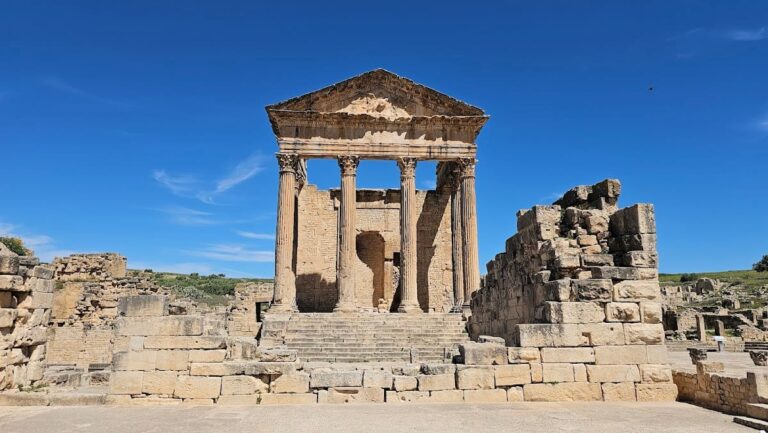
Dougga preserves the remains of a Libyco-Punic, Numidian, and Roman city whose inscriptions and monuments illuminate North African urban life across…

Leptis Magna preserves the urban remains of a Phoenician foundation that became a major Roman port, an imperial building centre, and a meeting point…

The Ruins of Ancient Carthage preserve evidence of a Phoenician commercial empire, a Roman colonial capital, a major center of Latin Christianity,…
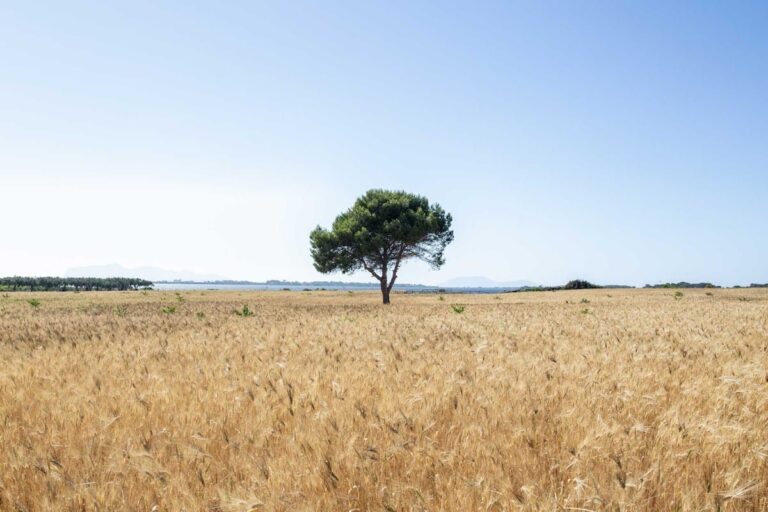
Mothia, also called Mozia, was a Phoenician and Punic port city on San Pantaleo Island in western Sicily. Its remains preserve fortifications,…
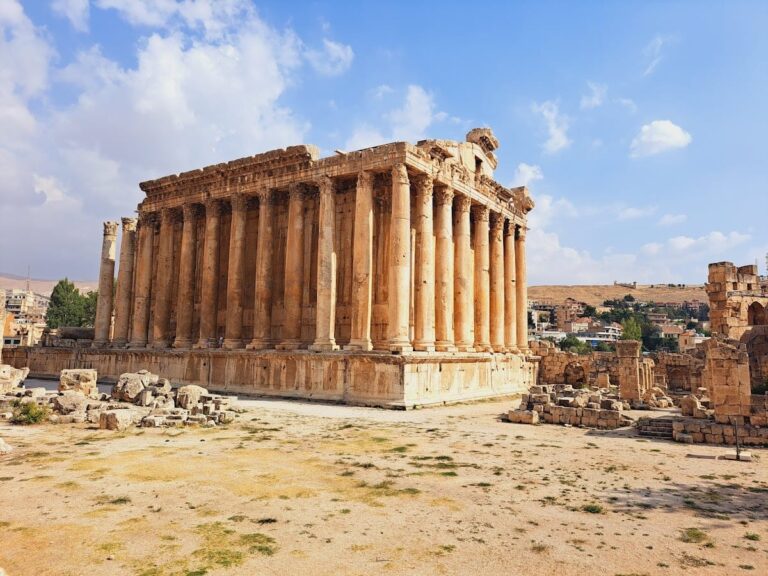
Baalbek Roman Ruins preserve a long-inhabited sanctuary shaped by Canaanite, Phoenician, Greek, Roman, Christian, Islamic, and medieval traditions.…
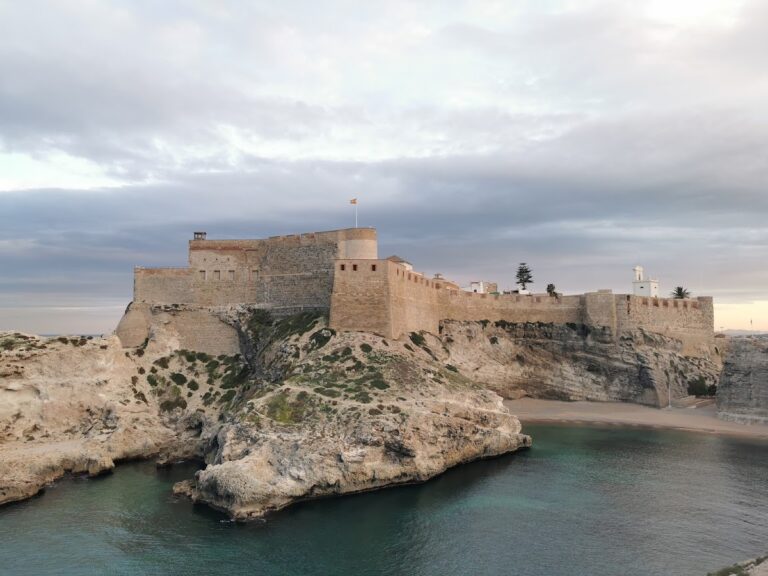
Melilla la Vieja is a fortified citadel on the site of ancient Rusadir, preserving Phoenician, Punic, Roman, Islamic, and Spanish historical layers…

Tyre preserves the remains of an ancient Phoenician port, its Roman and Byzantine urban districts, and the Al-Bass necropolis. The site reflects…
For details on how to use the maps, which sites are included, how popularity and ratings are determined, and how sites are classified, see the help page.
On this page6 sections
Harbours and ship sheds
At Kition, beneath parts of modern Larnaca in Cyprus, the Bamboula excavations preserve the layout of a military harbour beside the city’s sanctuaries. Parallel shipways were covered by long roofed sheds, allowing warships to be hauled out of the water for drying, repairs and storage. Six sheds have been recorded, with the excavated arrangements documenting the naval facilities of the city’s Phoenician rulers.
Temples, sacred pools and burial chambers
Motya, on an island off western Sicily, contains a rectangular basin long described as a small harbour. Excavators now interpret it as a sacred freshwater pool within a temple enclosure, separate from the island’s actual landing places and maritime defences. Elsewhere, stretches of the city walls and the North Gate preserve the successive strengthening of a compact island settlement.
At Tharros in Sardinia, the remains of a Punic temple were carved partly from the underlying rock. Semi-columns cut in relief along its sides gave the stone mass an architectural façade. Later Roman construction covered the earlier sanctuary, so it needs to be distinguished from the reconstructed columns that stand elsewhere among the ruins.
The southern cemetery contains another use of the local rock. Shafts descend to underground burial chambers, with narrow steps cut along the sides of some entrances. These tombs belong principally to the fifth through third centuries BC and preserve the arrangement of family burial spaces beyond the urban area.
Fortified settlements and metalworking premises
Cabezo Pequeño del Estaño, near Guardamar del Segura in Spain, preserves an early Phoenician settlement with unusually clear defensive arrangements. Parallel walls enclosed compartments within the fortification, creating a broad barrier with usable spaces between its faces. Towers and later buttresses reinforced the perimeter.
Inside, buildings and workshops document the settlement’s industrial activity. Furnaces and metalworking installations included facilities associated with the processing of silver-bearing material. The combination of fortified boundaries, storage spaces and workshop remains gives a detailed picture of a small coastal community involved in production and exchange.
Punic houses, streets and cisterns
On the Byrsa hill at Carthage, excavated Punic houses occupy a neighbourhood that predates the Roman rebuilding of the city. Streets divide residential blocks, while steps accommodate changes in the slope. Surviving rooms retain floors and underground cisterns, showing how water storage was incorporated into the houses.
These remains belong to the later Punic city destroyed in the second century BC. Subsequent Roman levelling and construction changed the hilltop but also buried parts of the earlier neighbourhood. The domestic spaces provide a different focus from Carthage’s extensive Roman baths and public buildings: here the principal features are houses, streets and the installations that supplied them.
Royal tombs and underground burial chambers
Byblos, on the Lebanese coast, preserves a long sequence of occupation before and during the Phoenician period. Its royal necropolis contains shafts cut down into bedrock, with burial chambers opening to the sides. Large stone sarcophagi were placed within these underground spaces.
The earliest tombs belong to the Middle Bronze Age, and the cemetery remained in use through later centuries. They establish the older royal and trading centre from which Phoenician Byblos developed. The much later Roman theatre and Crusader castle are separate additions to the same densely layered site.
Explore the collection
Explore sites on the map or in the grid. Map icons reflect each site’s primary function, helping you identify different kinds of places at a glance. Narrow the results by country, civilization, primary function, site type or era, with additional filters for popularity and rating. Select a map marker to view the site’s details and open its article, or open the article from its grid entry.