Khmer Sites: Explore Temple Mountains, Galleries and Sanctuaries
Khmer monuments include stepped temple mountains, broad complexes of galleries and shrines carved into natural rock. Their buildings survive in Cambodia and beyond, with brick, laterite and sandstone used in different combinations. This collection links those places with articles explaining their religious foundations, construction phases and conservation history.
Primary Function: All
Type: All
Country: All
Popularity: All
Rating: All
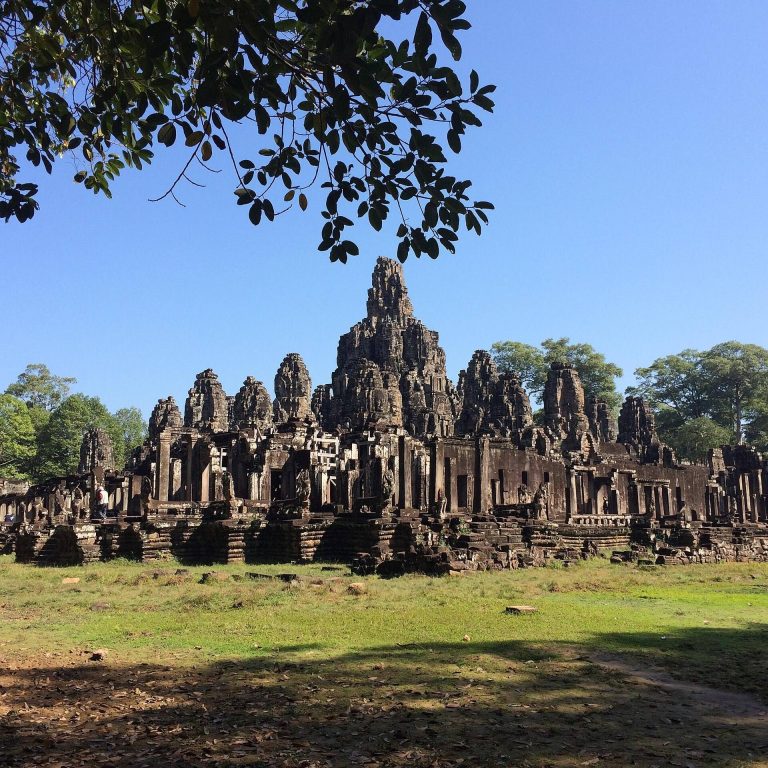
Bayon is the late twelfth- or early thirteenth-century Buddhist state temple at the centre of Angkor Thom in Cambodia, known for its face-bearing…
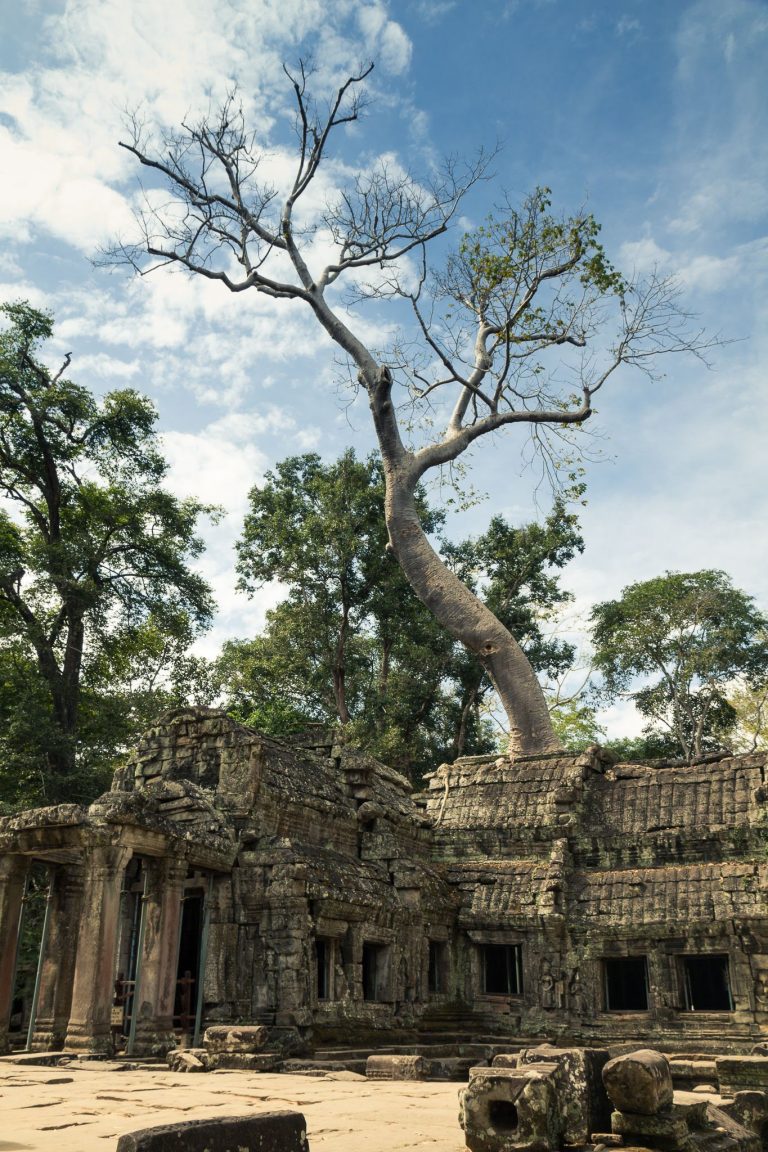
Ta Prohm, originally Rajavihara, was a major Mahayana Buddhist monastery founded by Jayavarman VII and consecrated in 1186. Its galleries, shrines,…
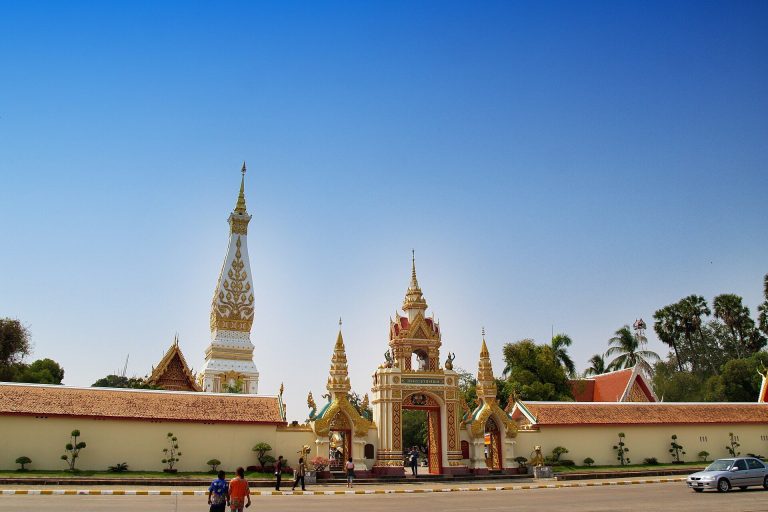
Wat Phra That Phanom is a major Theravada Buddhist shrine near the Lao border, centered on a stupa traditionally believed to contain a relic of the…
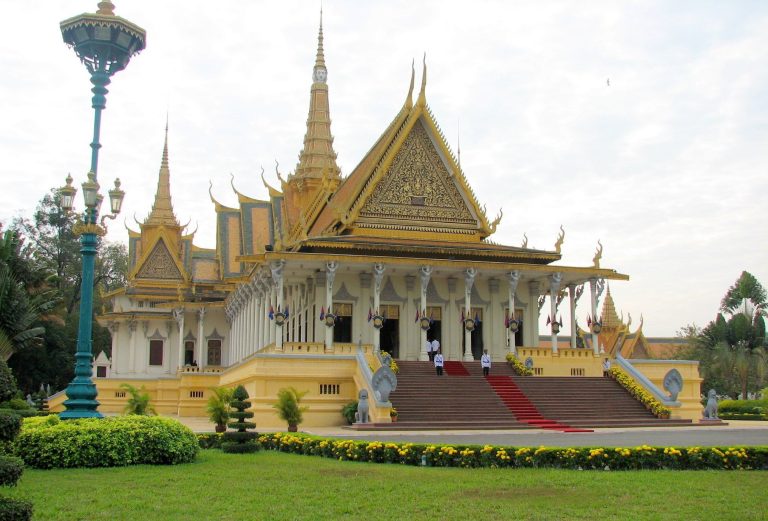
Phnom Penh’s Royal Palace has served as the Cambodian monarch’s official residence since the capital moved from Oudong in 1866. Its compounds…
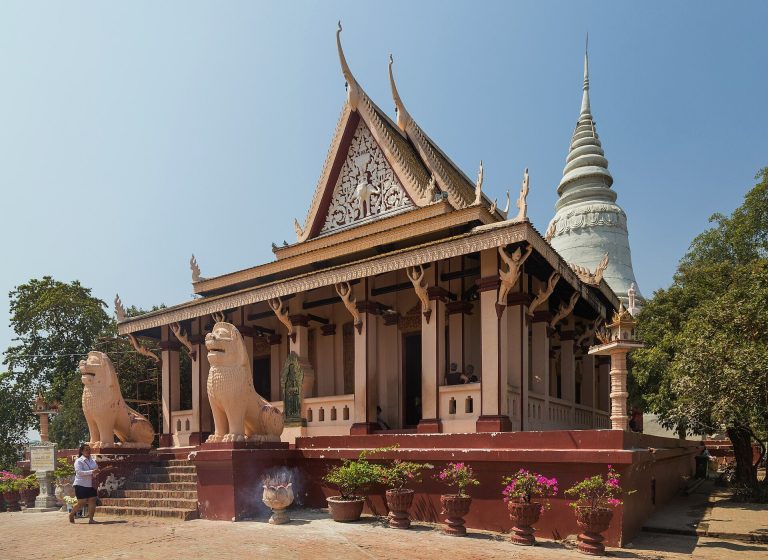
Wat Phnom is a Buddhist temple on an artificial hill in Phnom Penh, traditionally founded in the late fourteenth century and closely associated with…
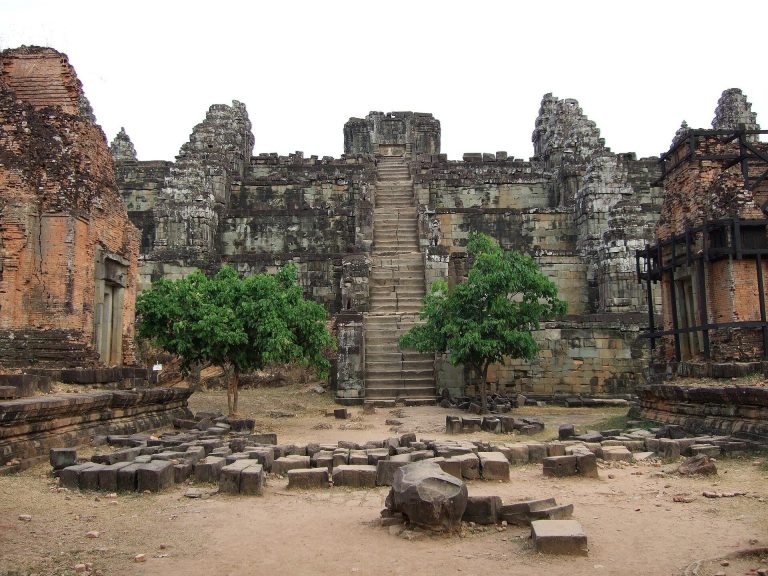
Phnom Bakheng is a ninth- to tenth-century Khmer temple mountain in Cambodia, built under King Yasovarman I as the central temple of Yasodharapura.…
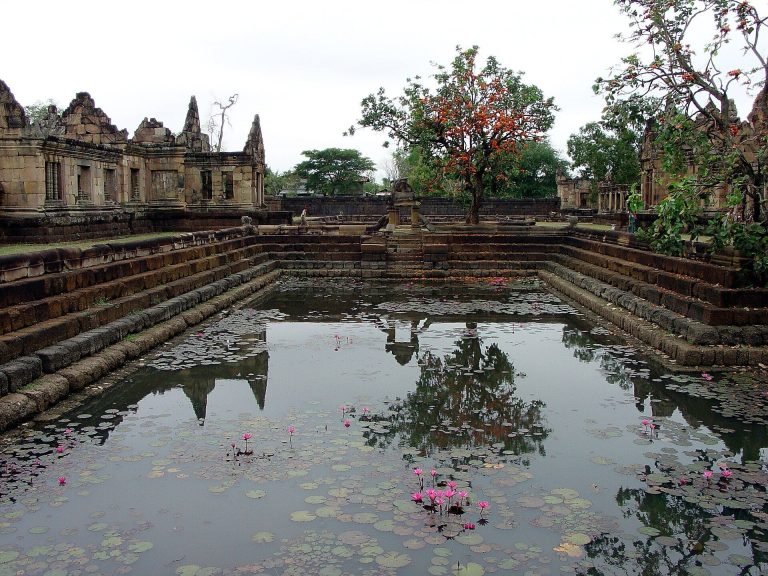
Prasat Muang Tam is an eleventh-century Khmer Hindu temple in Buri Ram Province, Thailand, known for its concentric plan, surrounding ponds, brick…
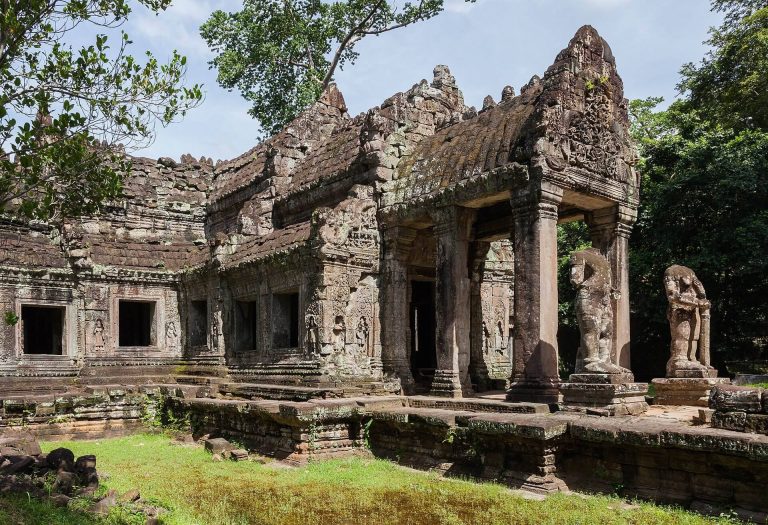
Preah Khan, built in 1191 by King Jayavarman VII at Angkor, served as a temple, city, administrative institution, and Buddhist educational center…
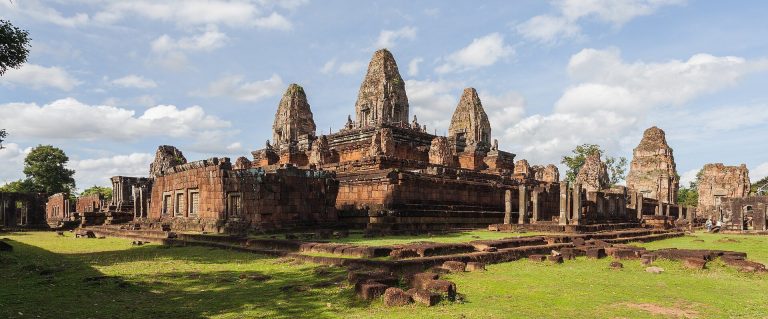
Pre Rup is a tenth-century Hindu temple mountain at Angkor, built by Rajendravarman II and dedicated to Shiva. Its brick, laterite, and sandstone…
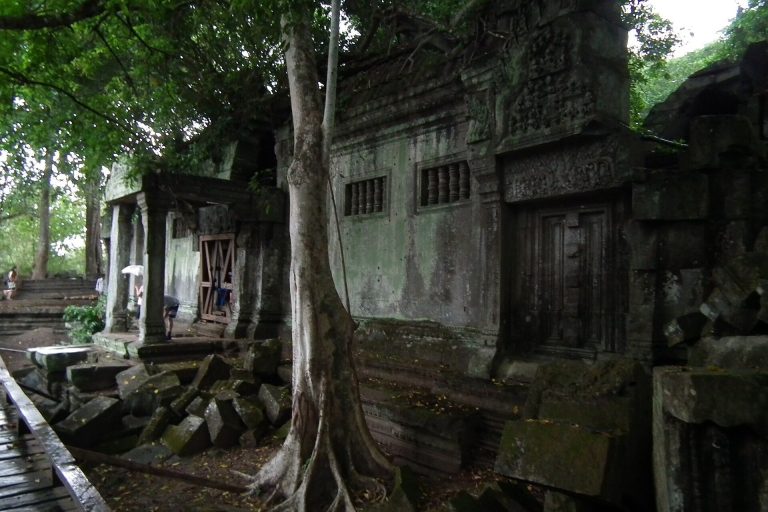
Beng Mealea is a ruined Khmer temple complex east of Angkor, built in the late eleventh or early twelfth century along an ancient royal road. Its…
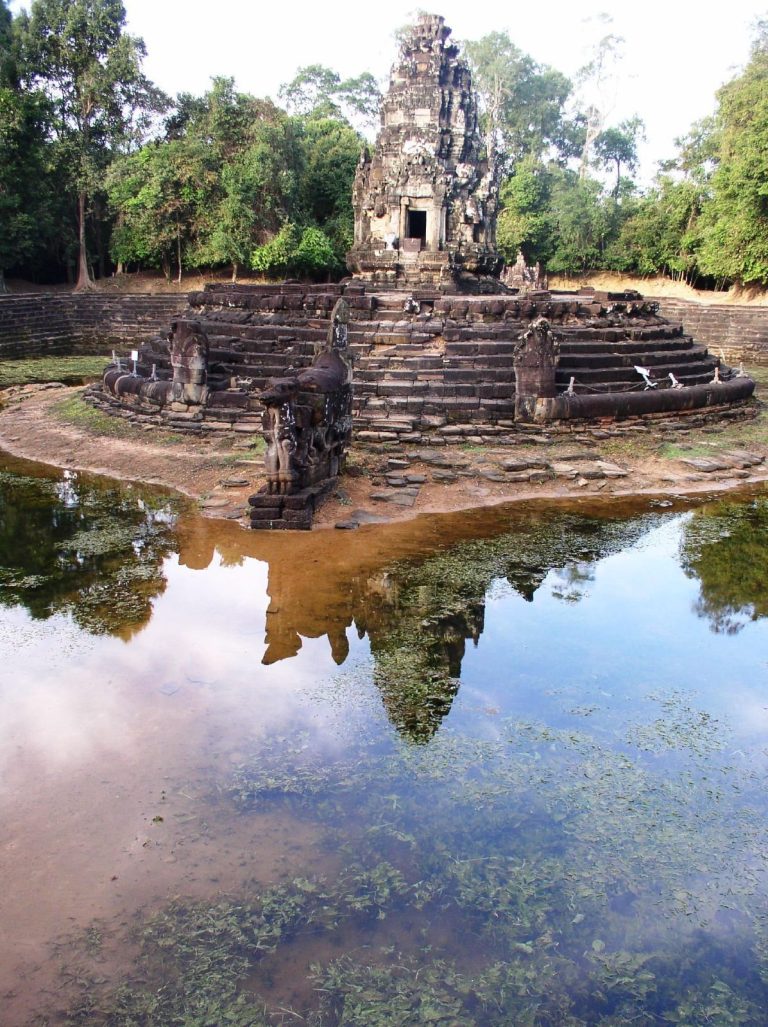
Neak Pean is a late twelfth-century Buddhist temple built by King Jayavarman VII on an artificial island in Cambodia’s northern baray, combining…
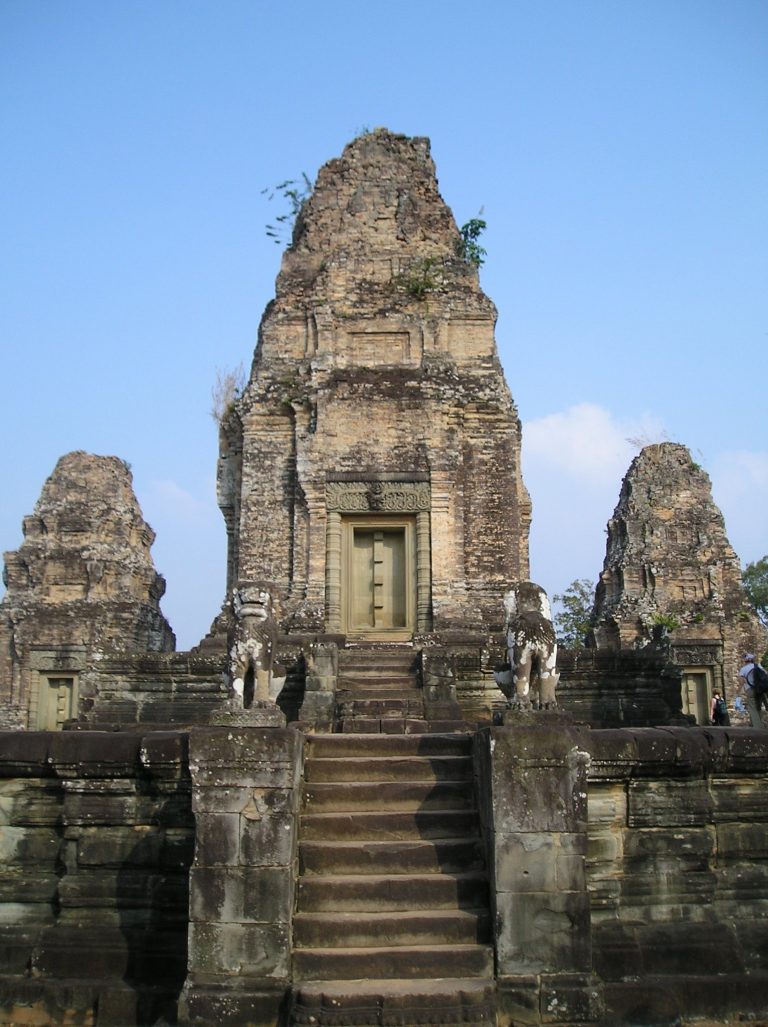
East Mebon is a tenth-century Hindu temple built on an artificial island in Cambodia’s East Baray during the reign of Rajendravarman II. Its towers,…
For details on how to use the maps, which sites are included, how popularity and ratings are determined, and how sites are classified, see the help page.
On this page6 sections
Temple mountains at Pre Rup and Baphuon
Pre Rup was dedicated to Shiva under Rajendravarman II in the tenth century. Its brick towers rise above a stepped platform faced with laterite and sandstone. Five towers occupy the summit, with one in the center and four at the corners. Enclosure walls, gateways and lower buildings organize the approach before the steep ascent to the upper shrines.
The larger Baphuon, built in the eleventh century, is approached by a long raised causeway carried on rows of columns. Its tiered mass was originally a Hindu temple mountain. A later reclining Buddha was formed across its western side during Buddhist adaptation. Extensive dismantling and reassembly have shaped its present appearance; the standing complex combines medieval masonry with major conservation work.
Bayon’s towers and narrative galleries
Bayon stands at the center of Angkor Thom, the capital developed by Jayavarman VII. Galleries and stairs cluster around an upper group of towers bearing large carved faces. Their identification remains debated, with interpretations involving the ruler and Buddhist imagery.
The relief galleries record more specific scenes: boats, fighting, markets, cooking and other activities appear across their walls. These carvings give the temple a substantial narrative surface as well as its distinctive towers. The tightly arranged passages and courts also differ from the broader approach and ascending terraces of earlier temple mountains.
Enclosures and corridors at Preah Khan
Preah Khan, founded in 1191, spreads across a comparatively level plan. Successive enclosures and galleries lead inward toward its shrines, while a moat and large outer wall define the complex. Garuda figures grasping serpents decorate the wall, and causeways connect the entrances with the surrounding landscape.
Its eastern approach faced an associated reservoir. This arrangement connected the temple with a larger system of water and movement around Angkor. Within the enclosure, repeated doorways, halls and courtyards form a sequence of spaces rather than a single ascent to a summit tower.
Brick shrines and ponds at Muang Tam
Prasat Muang Tam in Thailand preserves an eleventh-century Khmer Hindu temple. Five brick towers were arranged on a common platform, with sandstone used for carved lintels and door surrounds. Four ponds occupy the area between its inner and outer enclosures.
The central tower is largely lost, while the subsidiary towers have been restored. Their remaining brickwork and decorated stone elements allow the different materials to be compared directly. The ponds give the temple a distinctive internal layout and distinguish it from the raised temple mountains at Angkor.
Riverbed carvings at Kbal Spean
At Kbal Spean, reliefs occupy the sandstone bed and banks of a stream in the Kulen Hills. Rows of lingas, sacred forms associated with Shiva, accompany images including Vishnu reclining on the cosmic serpent. The religious work transformed an existing watercourse through carving rather than through the construction of a conventional temple building.
The carvings’ relationship with flowing water is central to the site. Their visibility varies with water levels, while the surviving reliefs place religious imagery directly within the stream’s course.
Explore Khmer remains
Use the country and building-type filters to compare temple groups and other places in the collection. Map markers and grid entries open articles explaining the original foundation, subsequent religious use and modern restoration of each site.