Baphuon: A Khmer Temple Mountain at Angkor
Site at a Glance
- Rating
- 4.7
- Popularity
- Medium
- Country
- Cambodia
- Primary era
- Medieval
- Eras represented
- Medieval
- Civilizations
- Ayutthaya, Khmer
- Site type
- Religious
- Remains
- Temple
On this page12 sections
History
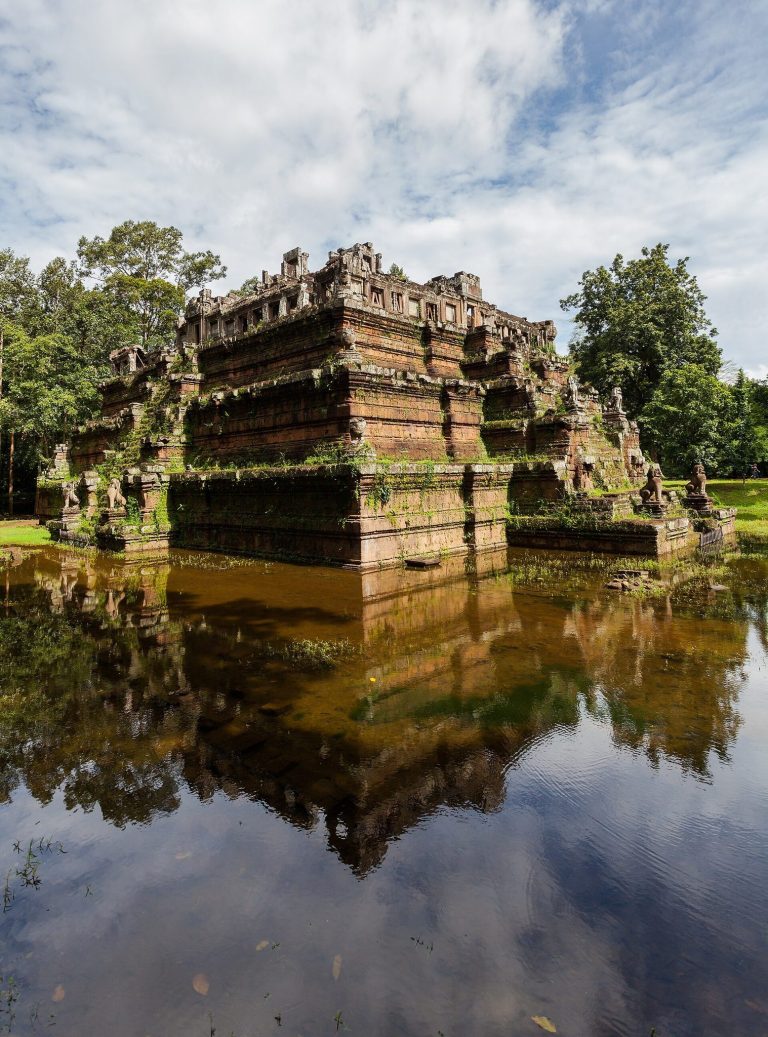
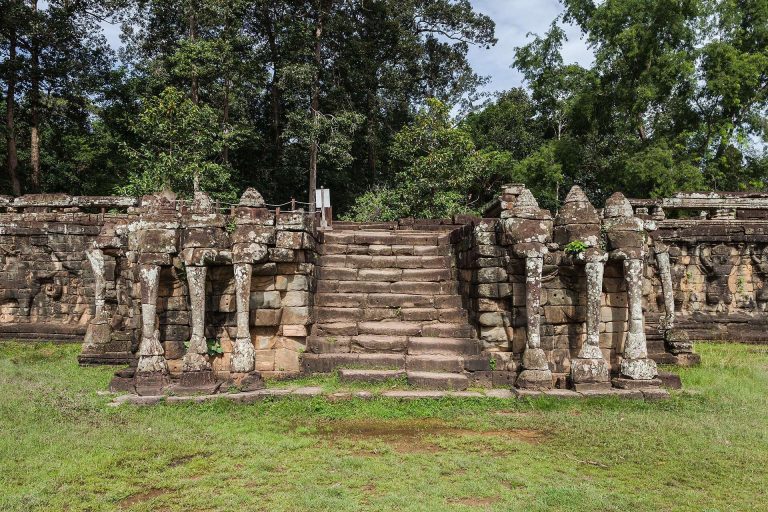
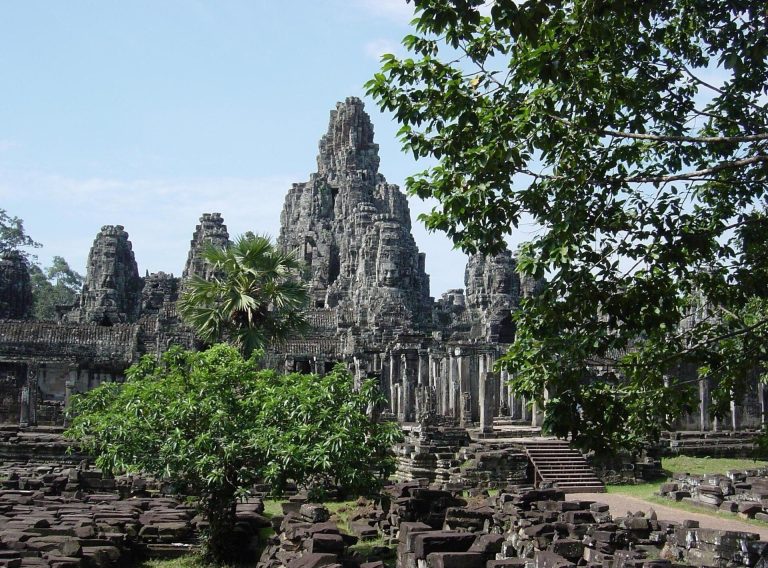
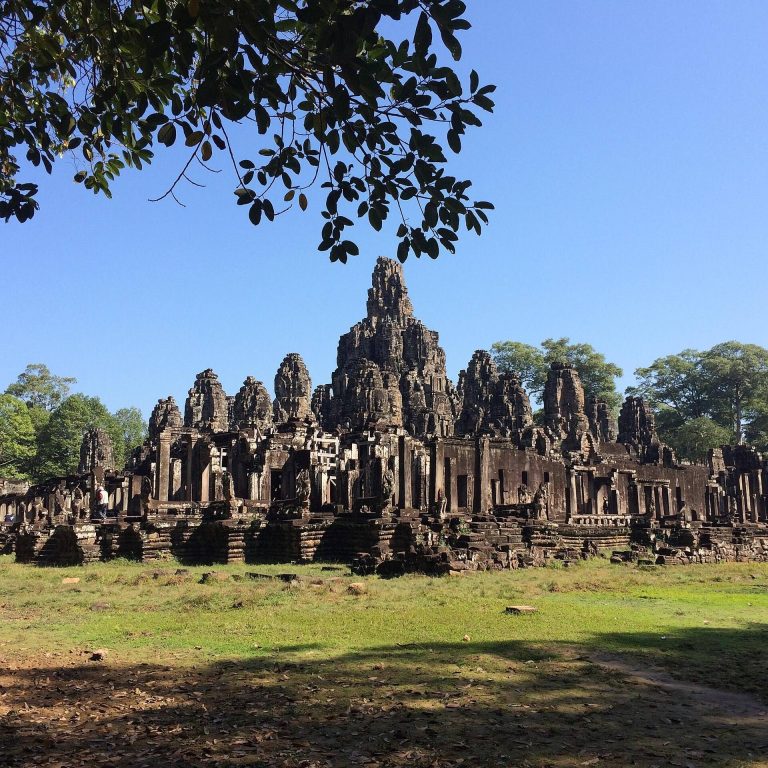
Baphuon is a Khmer temple in Angkor Archaeological Park, Cambodia, built as a temple mountain during the eleventh century. It stands in Angkor Thom, northwest of the Bayon and near the Terrace of the Elephants. Originally dedicated to Shiva, a major Hindu deity associated with transformation, it was later converted for Theravada Buddhist worship.
Construction and royal attribution
The temple was traditionally dated to around 1060 and associated with King Udayadityavarman II, who ruled from 1050 to 1066. More recent research has challenged this attribution. Direct AMS carbon-14 dating, a radiocarbon method that measures isotope concentrations in samples, was applied in 2015 to four iron cramps integrated into the structure. The results indicated an earlier construction date and led to the identification of Baphuon as the major temple associated with King Suryavarman I, who ruled from 1010 to 1050. The date of construction and the identity of its royal patron therefore remain contested.
Baphuon was conceived as a state temple and as a representation of Mount Meru, the sacred cosmic mountain at the center of Hindu and Buddhist cosmology. Its original name has been connected with Sanskrit expressions meaning “ornament of the three worlds” or “jewel of the three worlds.” An inscription also gives the name Hemadri, meaning “golden mountain,” while Baphuon is understood as a shortened vernacular form.
Later religious use
The Chinese envoy and writer Zhou Daguan, who visited Angkor in 1296 and 1297, described a “Tower of Bronze” and a “golden mountain” approached by a golden bridge. These descriptions are generally identified with Baphuon and its approach.
During a period of political and religious instability associated with the Ayutthayan occupation of Angkor around 1430 to 1440, the temple was modified for Theravada Buddhist use. AMS carbon-14 research dates this conversion to approximately a century earlier than the formerly conventional sixteenth-century date. Buddhist additions included a large reclining Buddha on the western side of the second level, while imagery of the Buddha entering nirvana was added alongside earlier Hindu carvings.
Collapse and restoration
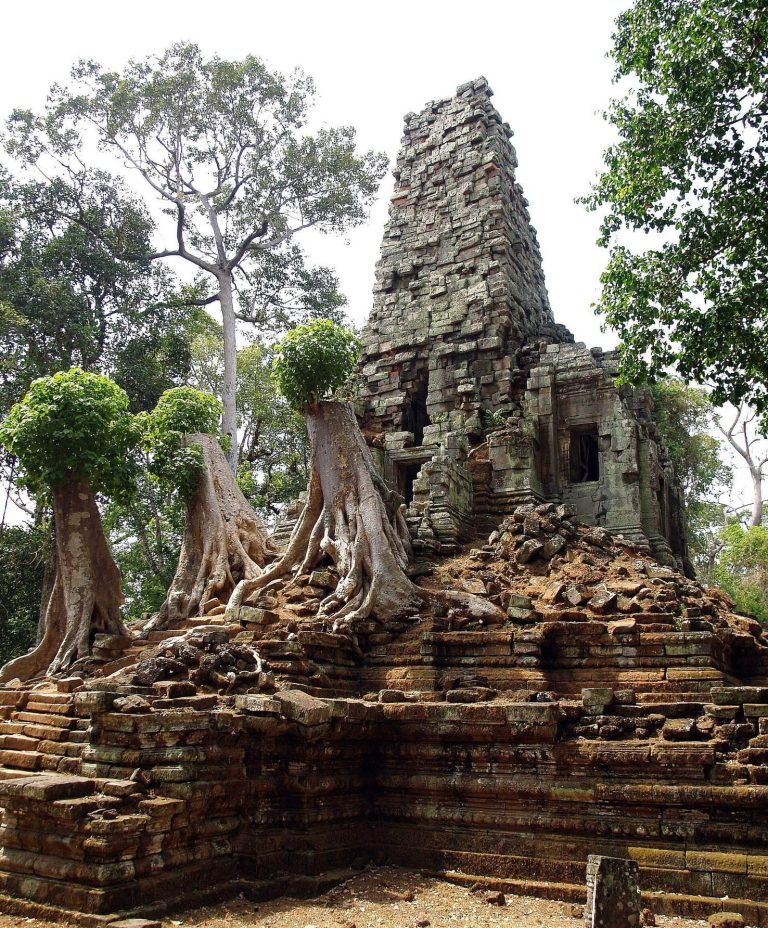
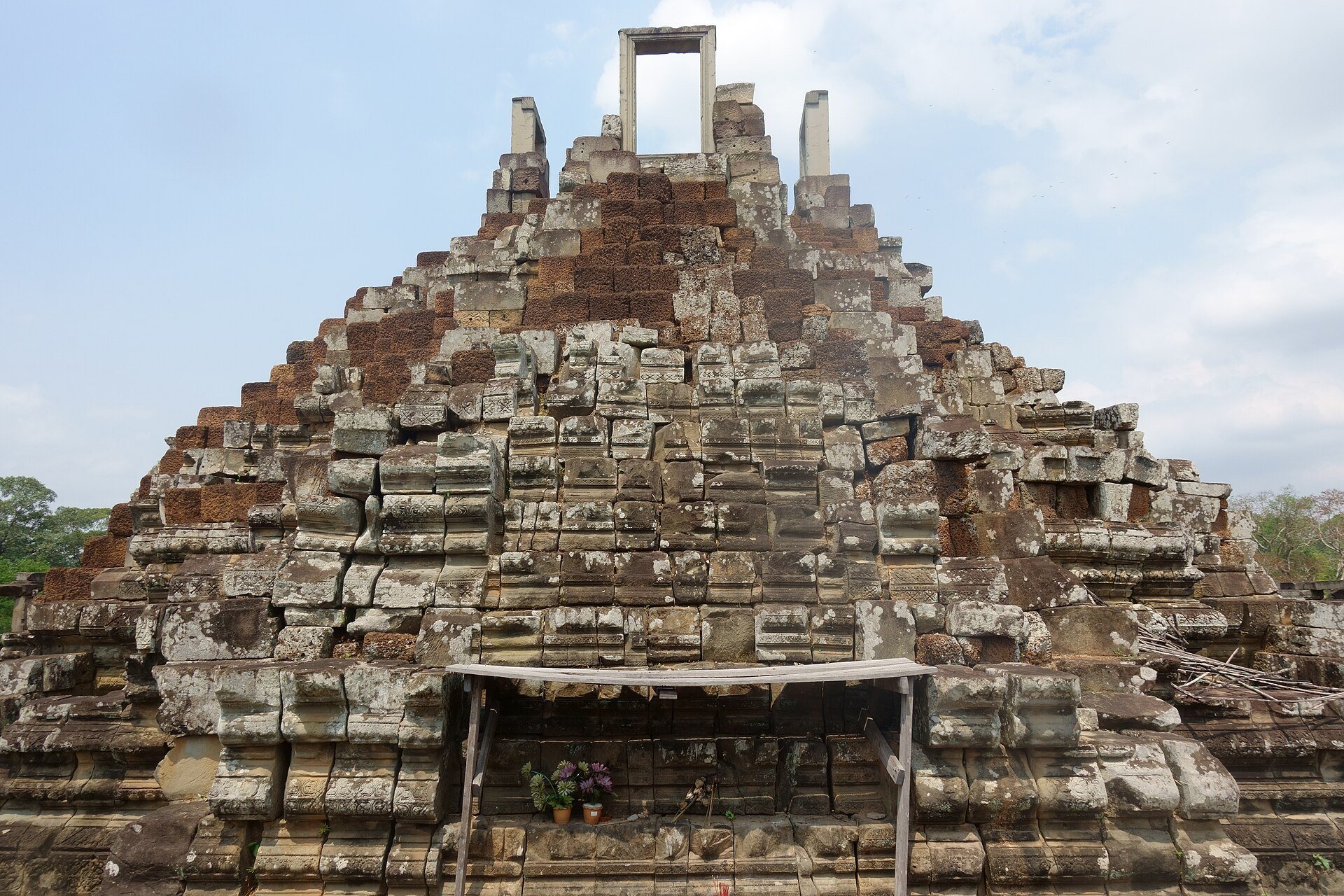
By the twentieth century, much of Baphuon had collapsed. A major restoration project began in 1960 under the École française d’Extrême-Orient, led in its earlier phase by archaeologist B. P. Groslier and architect Jacques Dumarcay. Civil war and the insecurity of the early 1970s suspended the work. Around 300,000 carefully labelled and numbered stone blocks had been arranged across about 10 hectares around the temple, but the plans identifying them were lost during the decade of conflict and the subsequent Khmer Rouge period.
A second restoration campaign resumed in the mid-1990s under EFEO architect Pascal Royère. The work continued for sixteen years and was completed in April 2011, bringing the total restoration effort to approximately fifty-one years. The temple was formally reopened on 3 July 2011 in the presence of King Norodom Sihamoni of Cambodia and French Prime Minister François Fillon.
The restoration used anastylosis, a conservation method that involves dismantling a ruined structure, reinforcing its components, and reassembling the original materials in their former positions. This work stabilized Baphuon while preserving evidence of its Hindu and Buddhist phases.
Remains
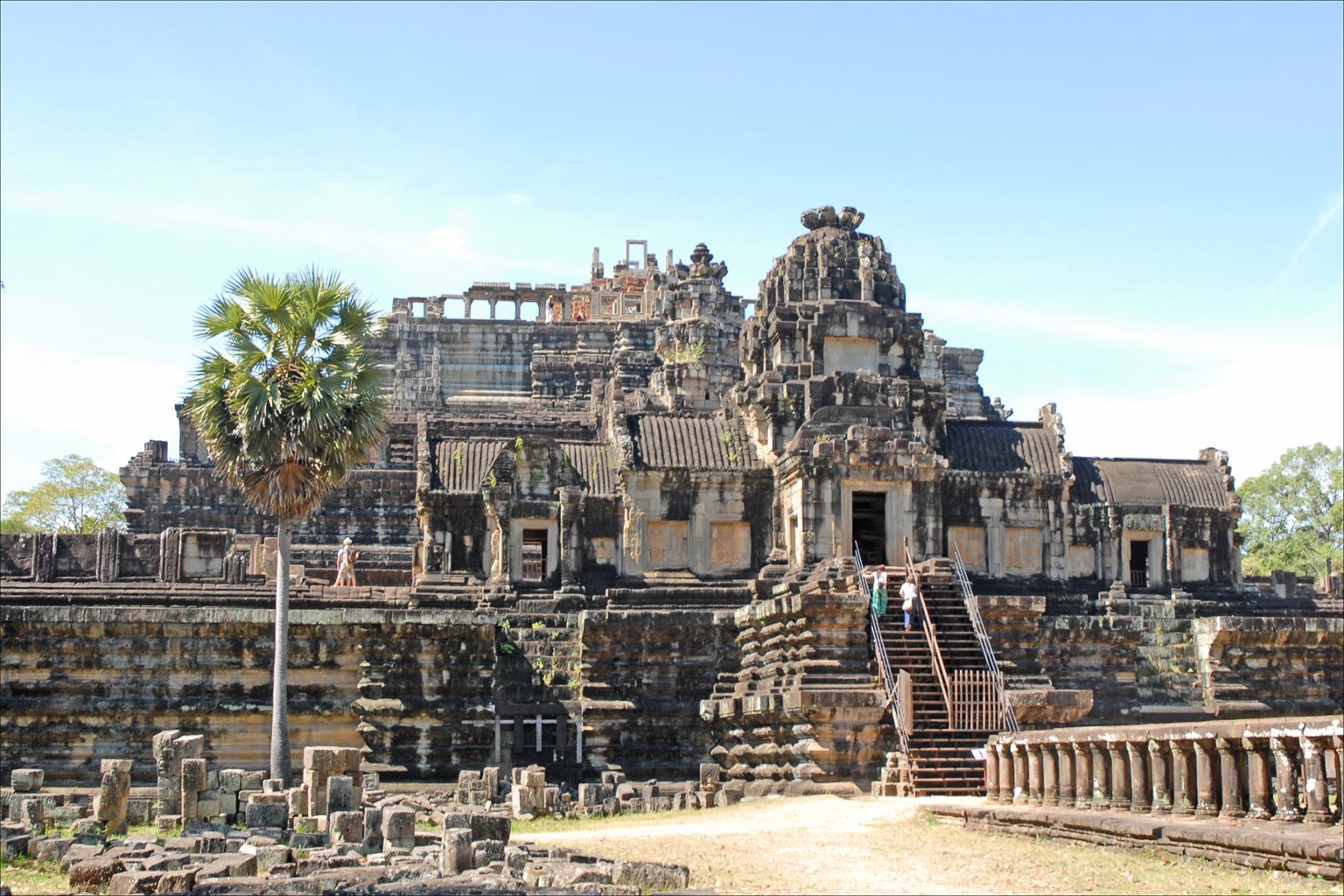
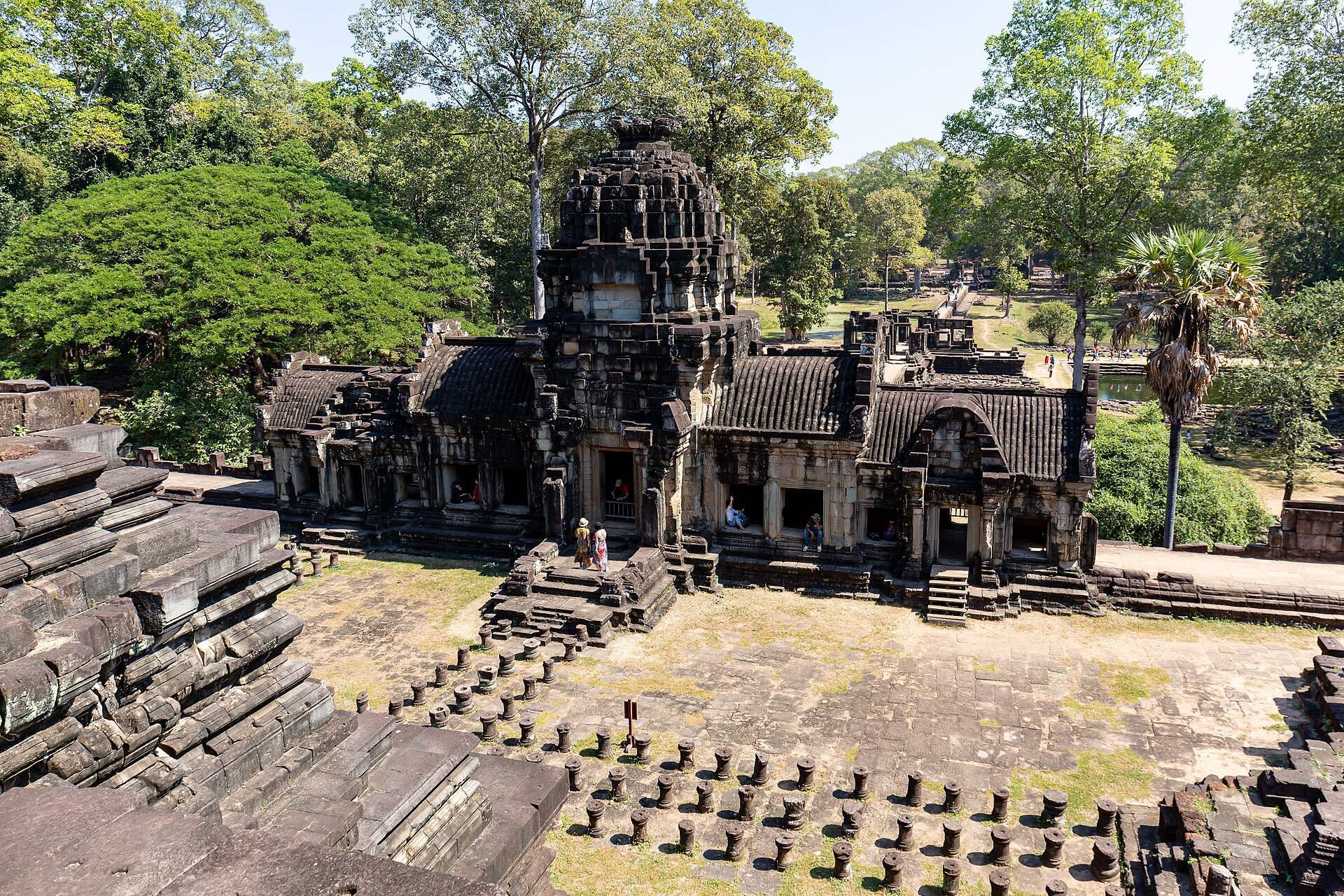
Baphuon is a temple mountain raised on an artificial hill and sand-filled ground. Its enclosure measures approximately 125 by 425 metres, while the temple base is about 120 metres from east to west and 100 metres from north to south. The structure rises approximately 34 metres without its tower and would have reached roughly 50 metres with the tower. Its immense scale contributed to structural instability, and substantial portions may have collapsed before the reclining Buddha was added.
Approach and water feature
Eastern causeway
An eastern causeway leads from the forecourt toward the temple base. The elevated route is approximately 200 metres long and 2.5 metres wide, supported by 547 evenly arranged columns. Its form represents a connection between the human and divine realms.
Ritual pond
A pond beside the causeway measures approximately 37 by 28 metres and has sandstone steps. It is understood to have served for ritual purification.
Temple structure and decoration
Tiered sandstone temple
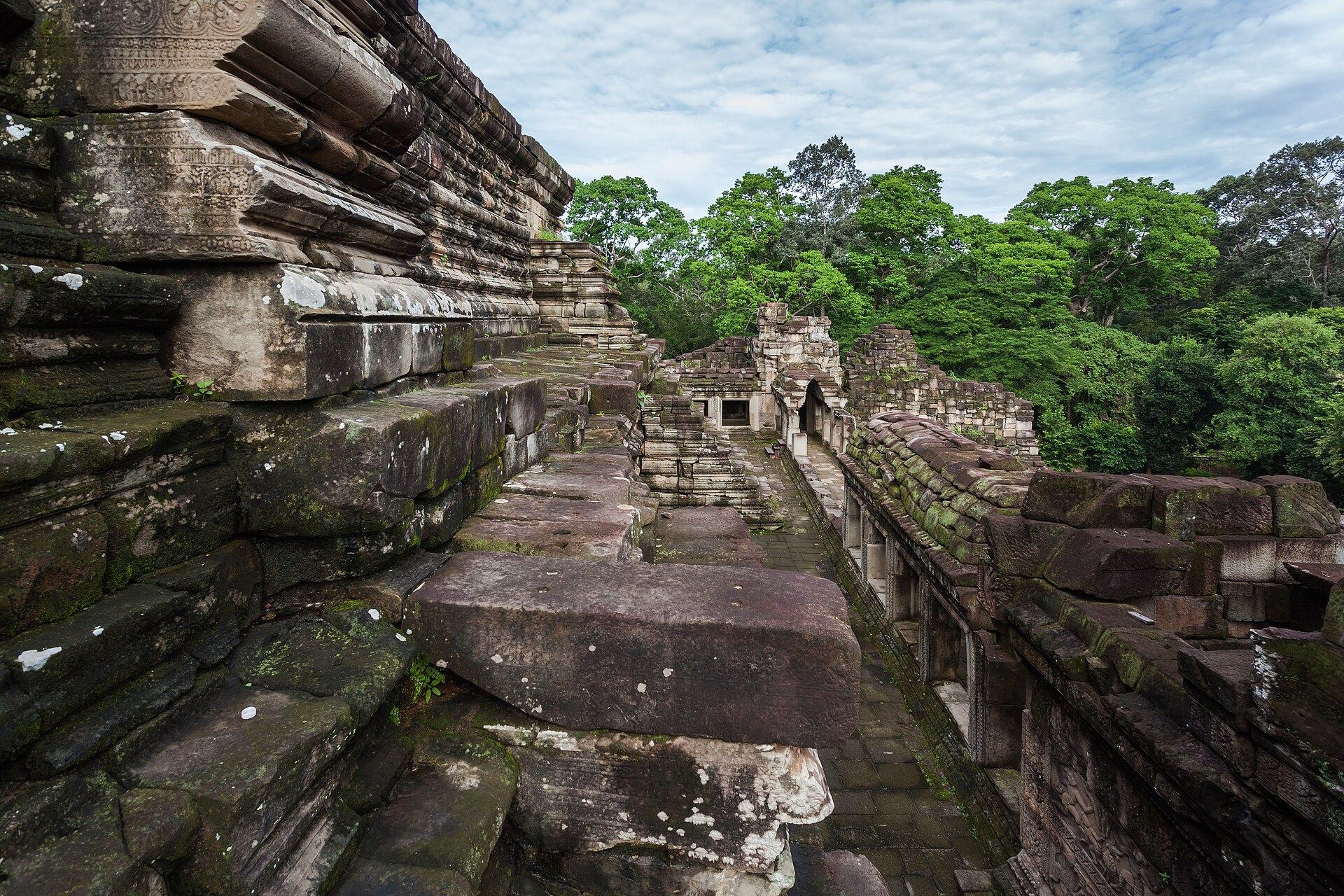
The main body has three tiers, while the complete pyramidal construction is also described as having five ascending levels. Decorated sandstone faces the tiers and contains numerous open windows and gateways, many of which are damaged. The exterior is built of sandstone, while the inner foundations use earth fill and laterite. Gopuras, or entrance structures, stood on all four sides, and five levels of steep sandstone stairways led upward.
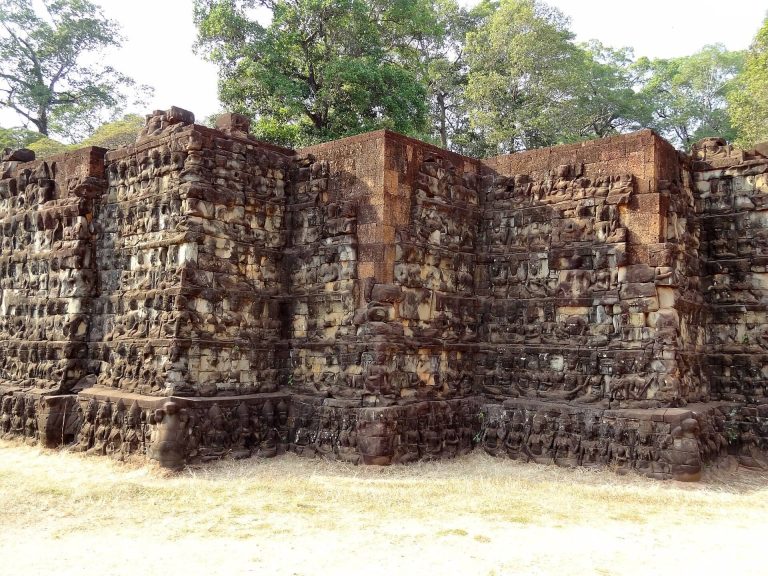
Baphuon is an archetype of the Baphuon architectural style, with intricate carving covering much of its available surface. Reliefs depict episodes from the Khmer Ramayana, sporting activities, and other decorative subjects. A large relief shows a soldier carrying a sword and shield.
Reclining Buddha
A reclining Buddha was constructed on the western side of the second level during the temple’s Buddhist phase. The image measures approximately 9 metres high and 70 metres long. Its construction probably required the removal of an approximately 8-metre-high tower above it, which explains the tower’s present absence.
Central tower and surviving fabric
The central tower may originally have been made of gilded wood and has not survived. The temple’s surviving and reconstructed fabric therefore combines sandstone, laterite, earth, damaged remains, and restored elements. Together, the Ramayana reliefs and Buddhist imagery preserve material evidence of Baphuon’s successive Hindu and Theravada Buddhist uses.