Georgian Historic Sites: Explore Caucasian Churches, Monasteries and Fortresses
Explore Georgian historic sites through churches, monasteries and fortresses in the Caucasus and neighbouring regions. The current collection covers buildings outside modern Georgia, particularly in northeastern Turkey and Armenia, with additional examples elsewhere. Their Georgian connections include religious foundations, inscriptions, patronage and identifiable architectural phases.
Large basilicas and domed churches preserve different building traditions, while monastic remains include painted interiors, enclosure walls and residential spaces. Some sites also have Armenian, Ingush or other local histories. The examples below retain those distinctions and describe the particular structures that survive.
Primary Function: All
Type: All
Country: All
Popularity: All
Rating: All
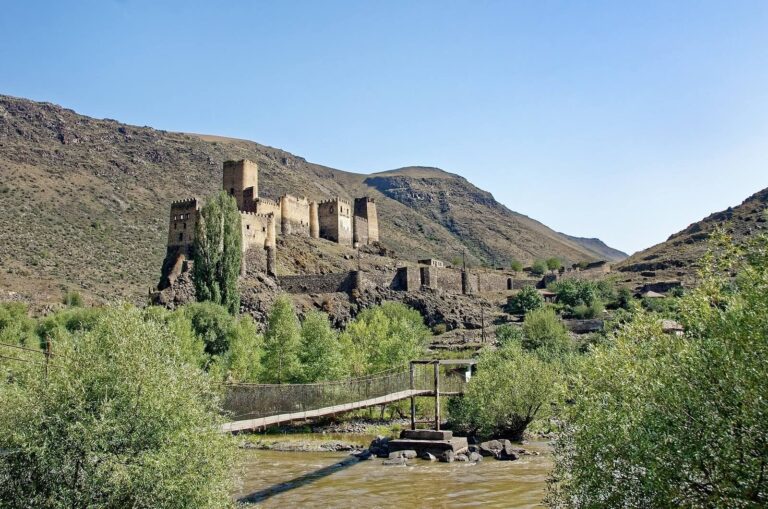
Khertvisi grew into a regional center and fortress before passing through Georgian, Ottoman, and Russian control. Its surviving defenses, churches,…
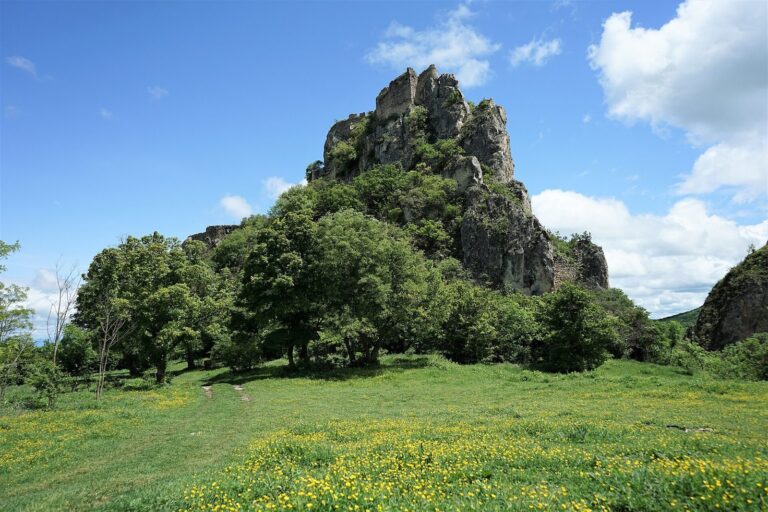
Khornabuji Castle controlled the Iori and Alazani valleys and served as a regional center across successive Georgian, Persian, Arab, and Mongol…
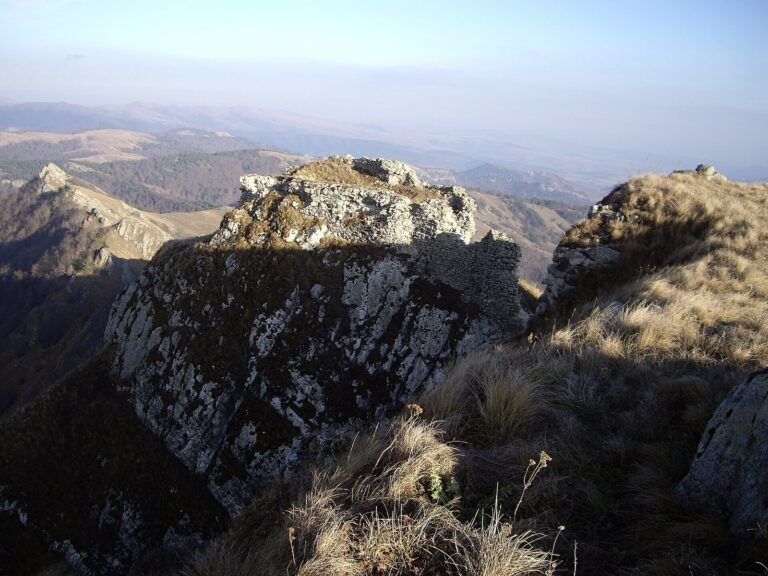
Founded in the late ninth century, Kldekari Fortress became the center of the Kldekari duchy and a base of Baghvashi power, amid repeated conflicts…
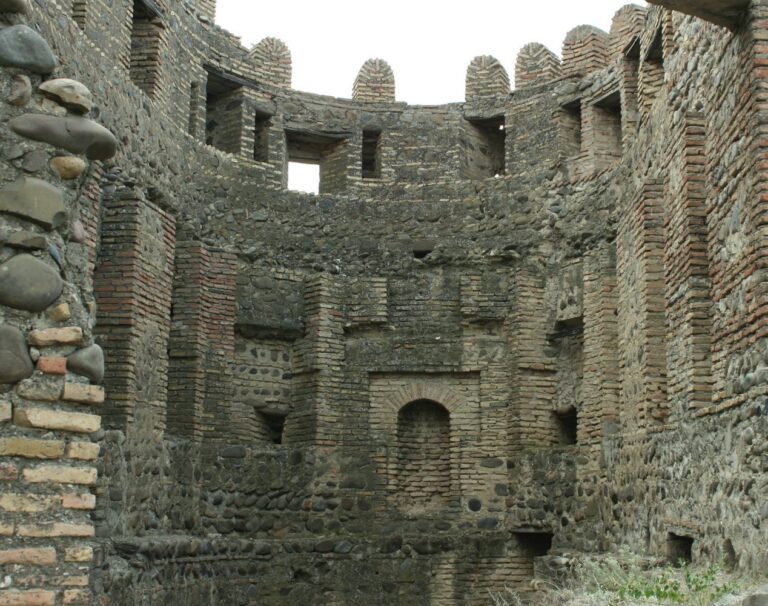
Built by Bagrat of Mukhrani in 1511–1514, Ksani Fortress guarded the meeting of the Ksani and Mtkvari rivers and became a residence of the…
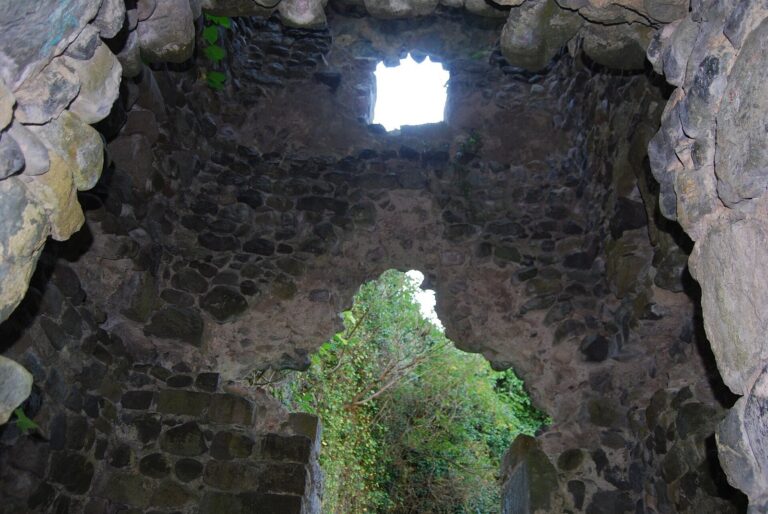
Likhauri Fortress served as both a defensive position and a residence in Guria. Its history includes Ottoman captures, resistance to Russian rule,…
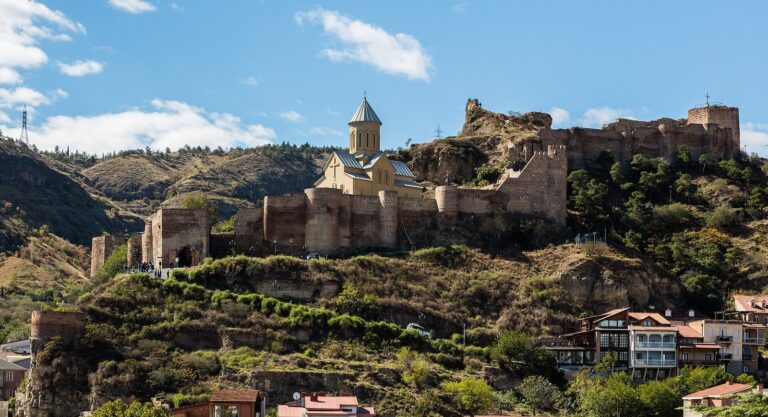
Narikala is a fortress in Tbilisi whose origins reach back to the fourth century. Its long history includes Persian control, medieval expansion,…
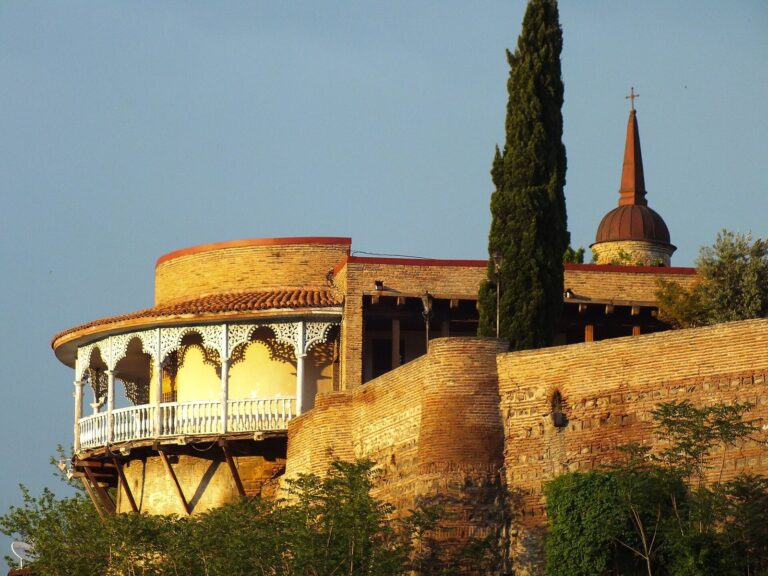
Commissioned in 1776 for Queen Darejan Dadiani, the palace became a centre of royal opposition before serving religious and public uses. Its restored…
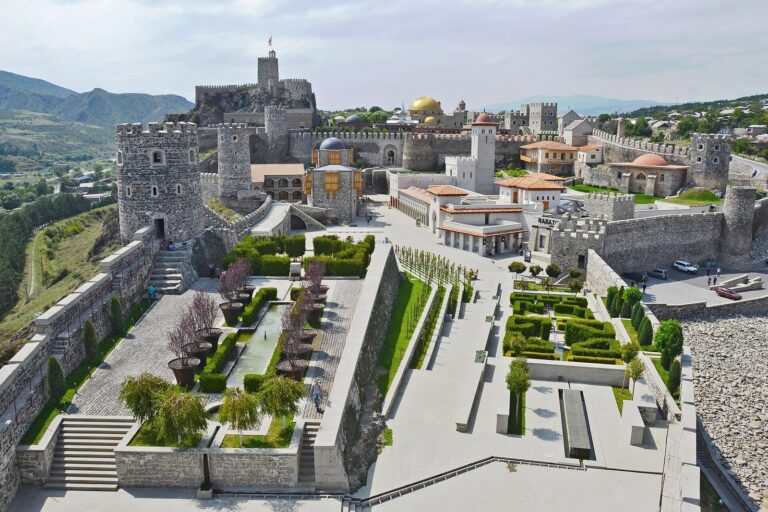
Rabati Castle grew from the medieval fortress of Lomsia into a Jaqeli stronghold, the center of Samtskhe, and an Ottoman frontier fortress. Its…
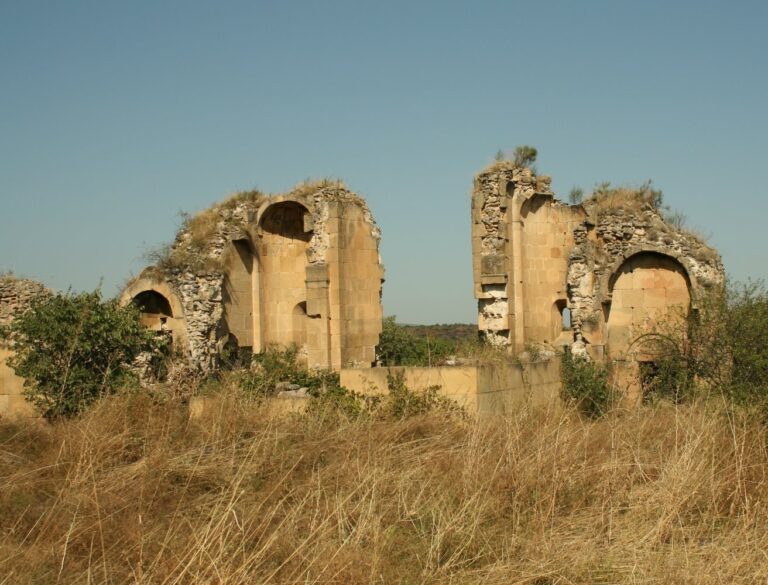
Samshvilde grew from an administrative center of ancient Kartli into a contested medieval stronghold. Its ruins preserve a layered history of…
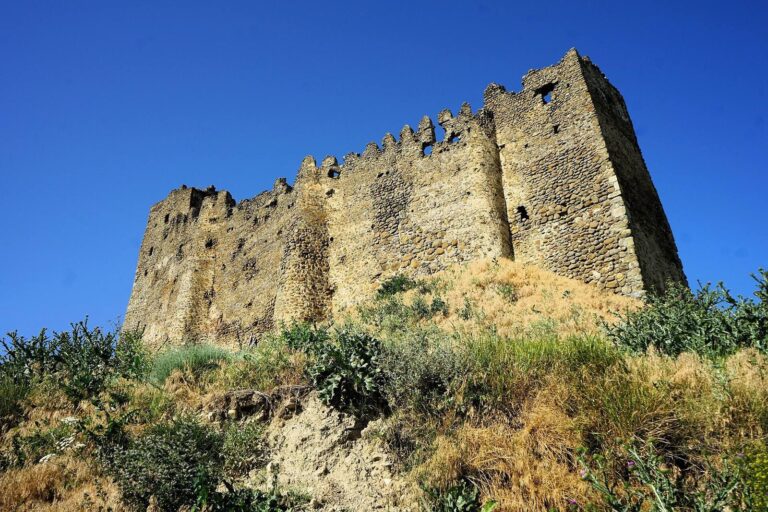
Built in the fourteenth century, Skhvilo Castle served first as a residence and later as a stronghold of the Amilakhvari family. Its surviving…
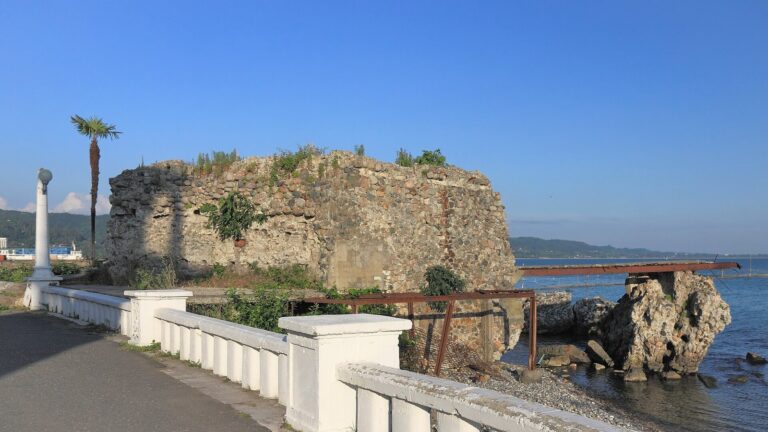
Built by the Romans as Sebastopolis, Sukhumi Fortress developed into a trading center before serving Byzantine, princely, Russian, Ottoman, and…
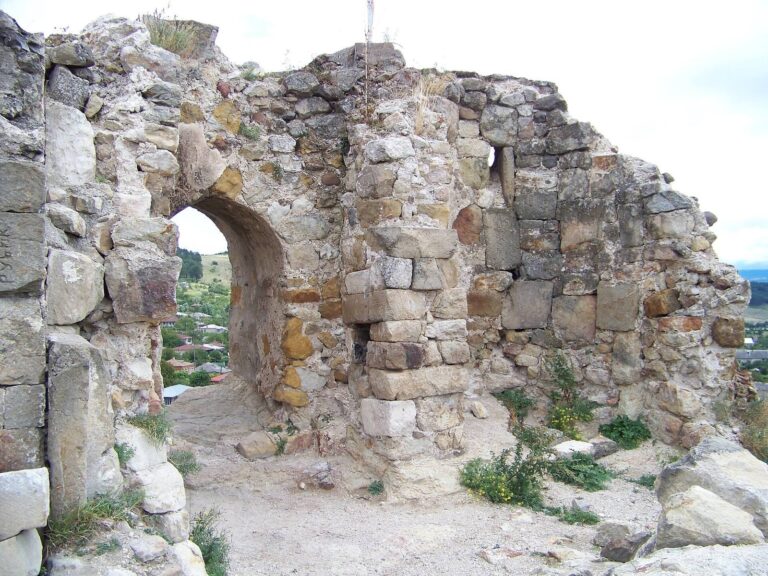
Surami Fortress guarded routes through the Likhi passes and Borjomi valley. Its history reflects centuries of military conflict and changing control,…
For details on how to use the maps, which sites are included, how popularity and ratings are determined, and how sites are classified, see the help page.
On this page6 sections
Basilicas and domed churches in Tao
Parkhali, in present-day northeastern Turkey, preserves a large three-aisled basilica. Four pairs of substantial piers carry arches separating the central nave from its lower side aisles. Barrel vaults cover all three, and transverse arches reinforce the long interior.
The higher central nave ends in an eastern apse, with subsidiary chambers alongside. A western gallery adds another level within the church. Restoration has repaired the building and revealed further inscriptions, while the basilica’s principal arrangement remains clear.
Khakhuli Monastery uses a different form: a cross-domed church with an elongated western arm divided into three aisles. Sandstone blocks face the building, and piers support the arches and vaults within. Surviving enclosure walls and an arched gatehouse also preserve part of the monastic boundary around the church.
Royal imagery and reused interiors at Doliskana
Doliskana stands on a mountainside in the historic region of Klarjeti, now in Turkey. Its central domed space opens into four arms, with a particularly long western arm. An eastern apse and flanking chambers complete the main arrangement.
A relief showing King Sumbat with a model of the church, together with inscriptions, records royal patronage. The church later served as a mosque, when a wooden floor divided its interior into an upper prayer space and lower storage area. Those inserted structures were subsequently removed. Continued use preserved much of the main church while also changing its interior and roof.
Painted monastic ruins at Kobayr
Kobayr Monastery occupies terraces above the Debed gorge in Armenia. Churches, a bell tower-mausoleum, refectory and other buildings were fitted against steep rock. Dressed basalt masonry forms the principal walls, with the natural rock incorporated into floors, foundations and drainage.
The monastery has an Armenian foundation and a later Armenian-Chalcedonian phase associated with the Zakaryans. Georgian inscriptions and decorative connections belong to that later history. Surviving frescoes, conserved within partly ruined churches, provide evidence of the religious community alongside the building inscriptions. Its inclusion does not make the entire complex exclusively Georgian.
A basilica in the Assin Gorge
Tkhaba-Yerdy Church in Ingushetia preserves a tall rectangular body with an eastern apse. Projecting piers and high internal arches divide the elongated space. Carved reliefs appear on the building, many reused from earlier contexts.
The church has connections with medieval Georgian religious and architectural traditions, followed by rebuilding shaped by local Ingush practices. Its surviving form therefore belongs to several periods. The stone walls, arches and reused carvings provide a more precise basis for exploring those connections than assigning the whole monument to one foundation date.
Church remains within Oltu Castle
Oltu Castle retains its inner enclosure above the town in northeastern Turkey. A southern gate provides access, and two substantial towers stand along the northern side. The outer walls have largely disappeared.
Within the courtyard are the remains of a domed Georgian church with six apses. An inscription records its dedication to Saint George. The church supplies the specific Georgian architectural connection within a fortress used and altered by several powers. One northern tower was later converted into a domed mausoleum, adding another function to the surviving defensive complex.
Explore the collection
Explore sites on the map or in the grid. Map icons reflect each site’s primary function, helping you identify different kinds of places at a glance. Refine the results by country, primary function, site type and era. Popularity and rating filters provide further refinements. Select a map marker to view the site’s details and open its article, or open the article from its grid entry.