Kldekari Fortress: A Medieval Georgian Stronghold
Site at a Glance
- Country
- Georgia
- Primary era
- Medieval
- Eras represented
- Medieval
- Civilizations
- Georgian
- Site type
- Military
- Remains
- Castle
On this page7 sections
History
Foundation and royal campaigns
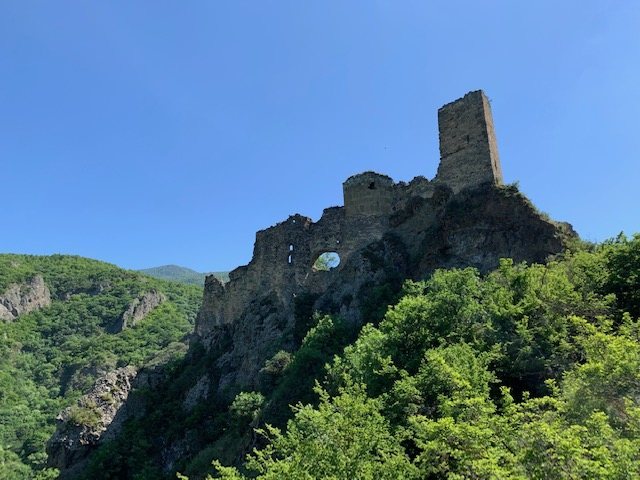
Kldekari Fortress is a medieval stronghold on the Trialeti Range in Georgia, built around 870–880 as the Baghvashi family established its power in the region. After Liparit I Baghvashi moved from Argveti to Trialeti, the fortress became the center of the Kldekari duchy, a medieval Georgian territorial lordship, and a base of family authority for roughly two centuries.
Georgian kings seized Kldekari several times as the Baghvashi grew more influential. In 989, Rati I, duke of Kldekari, resisted Bagrat III, who was working to unite Georgia. David III, ruler of Tao, had supported Rati but later permitted Bagrat to act against him. Bagrat approached the fortress unexpectedly in winter. Rati surrendered without a fight, bringing his son Liparit and pleading for their lives. Bagrat took the stronghold, and Rati withdrew to Argveti.
Baghvashi power in the eleventh century
In the early eleventh century, Liparit Baghvashi supported the Georgian king Bagrat IV, but the two later became opponents in a conflict that included the Battle of Sasireti, an eleventh-century battle in Georgia. In 1028, when Byzantine emperor Constantine VIII sent commander Parakimanos with a large army to conquer Georgia, Liparit resisted the force at Kldekari and compelled it to retreat.
By the late 1050s, Liparit had extended his influence across much of eastern Georgia, taken responsibility for raising the young prince George, and crowned him king at the church of Ruisi. Other nobles challenged his dominance. Sula Kalmakheli and his allies captured Liparit and his son Ivan and brought them before the king. The royal army could not take Kldekari until the king promised that both prisoners would be released unharmed. The garrison then surrendered. The king stationed troops at the fortress, forced Liparit to become a monk, and granted Ivan Argveti.
Ivan later regained Kldekari, although how he did so is unclear. In the 1070s, he joined a revolt against the newly enthroned George II. The king defeated the rebels but granted them rewards, including Samshvilde to Ivan. Ivan nonetheless rebelled against him several more times.
Later medieval control
Kldekari and the surrounding territory, held by Liparit, initially remained loyal to David the Builder, a Georgian king whose reign strengthened and expanded the kingdom. In 1094, David captured Liparit, kept him prisoner for two years, then expelled him to Greece. Around the turn of the twelfth century, the Kldekari duchy was abolished, and the fortress temporarily lost some of its former strength. In the early twelfth century, David granted Kldekari to Tevdore, a niece of the royal adviser George of Chqondidi, who held the fortress and Trialeti.
In 1177, King George III defeated a rebellion led by his nephew Demna and supported by many nobles, with the Orbeliani family as its principal backing. Demna was blinded at Kldekari. In the mid-thirteenth century, regional ruler Torghva Pankeli rebelled against King David Ulu and repeatedly refused the king’s summons. Khornabujel brought him to the royal court at Tabakhmela under an oath of safe conduct, but court official Jikur betrayed and seized him. Torghva was sent to Kldekari and thrown from a cliff.
By the late feudal period, the Kldekari duchy had ceased to exist, and the fortress appeared only rarely in historical records. Since 2015, its territory has been part of the Samshvilde and Kldekari Museum Reserve, based in Tsalka.
Remains
Fortification and approach
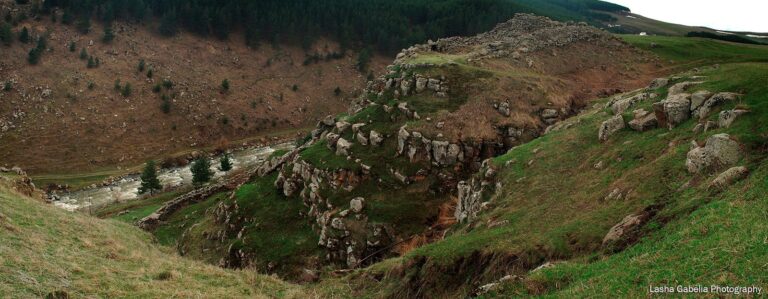
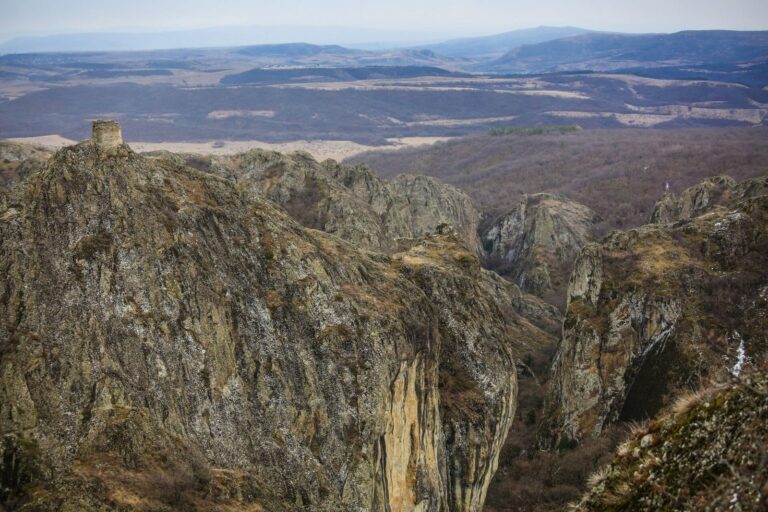
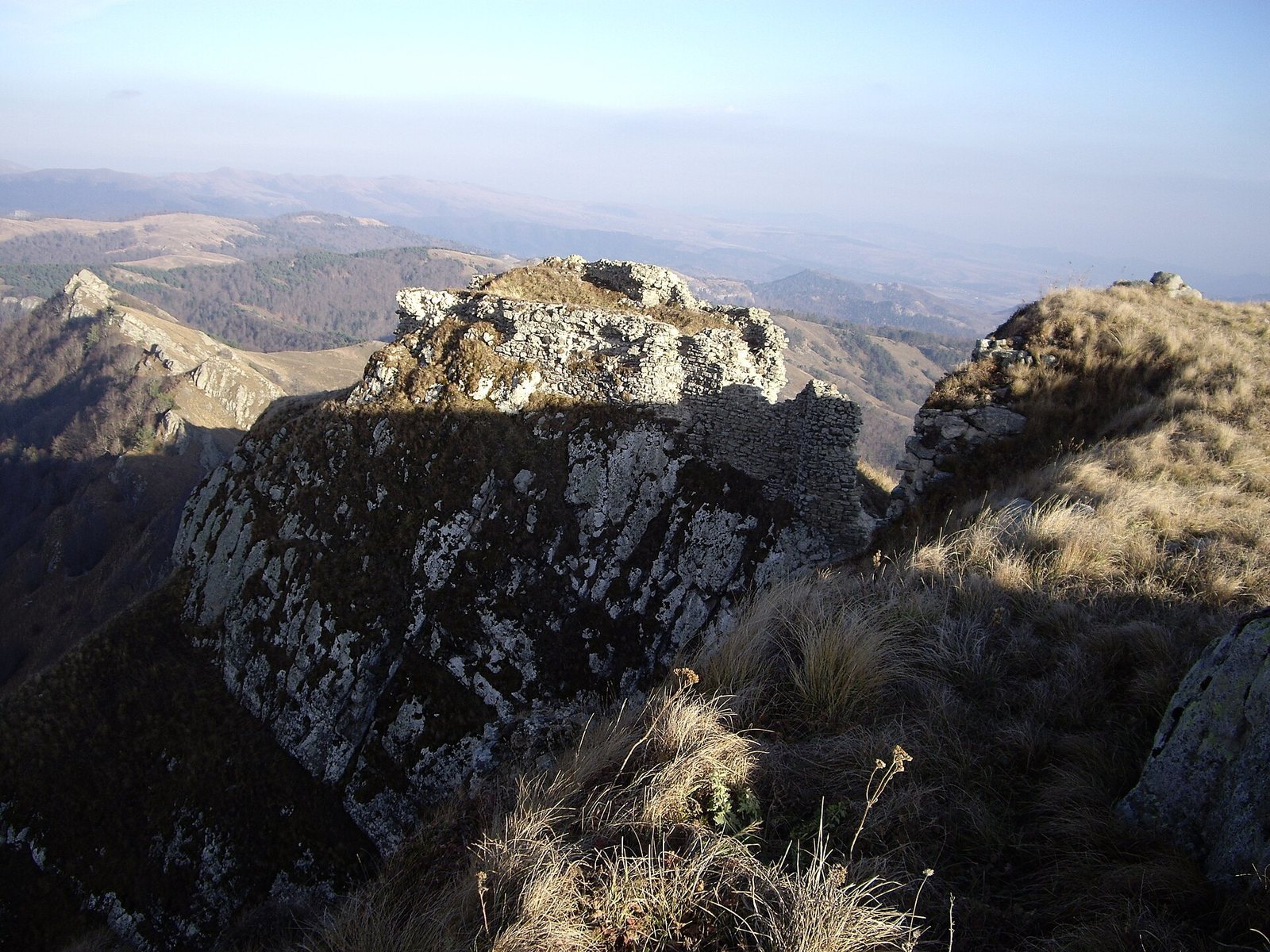
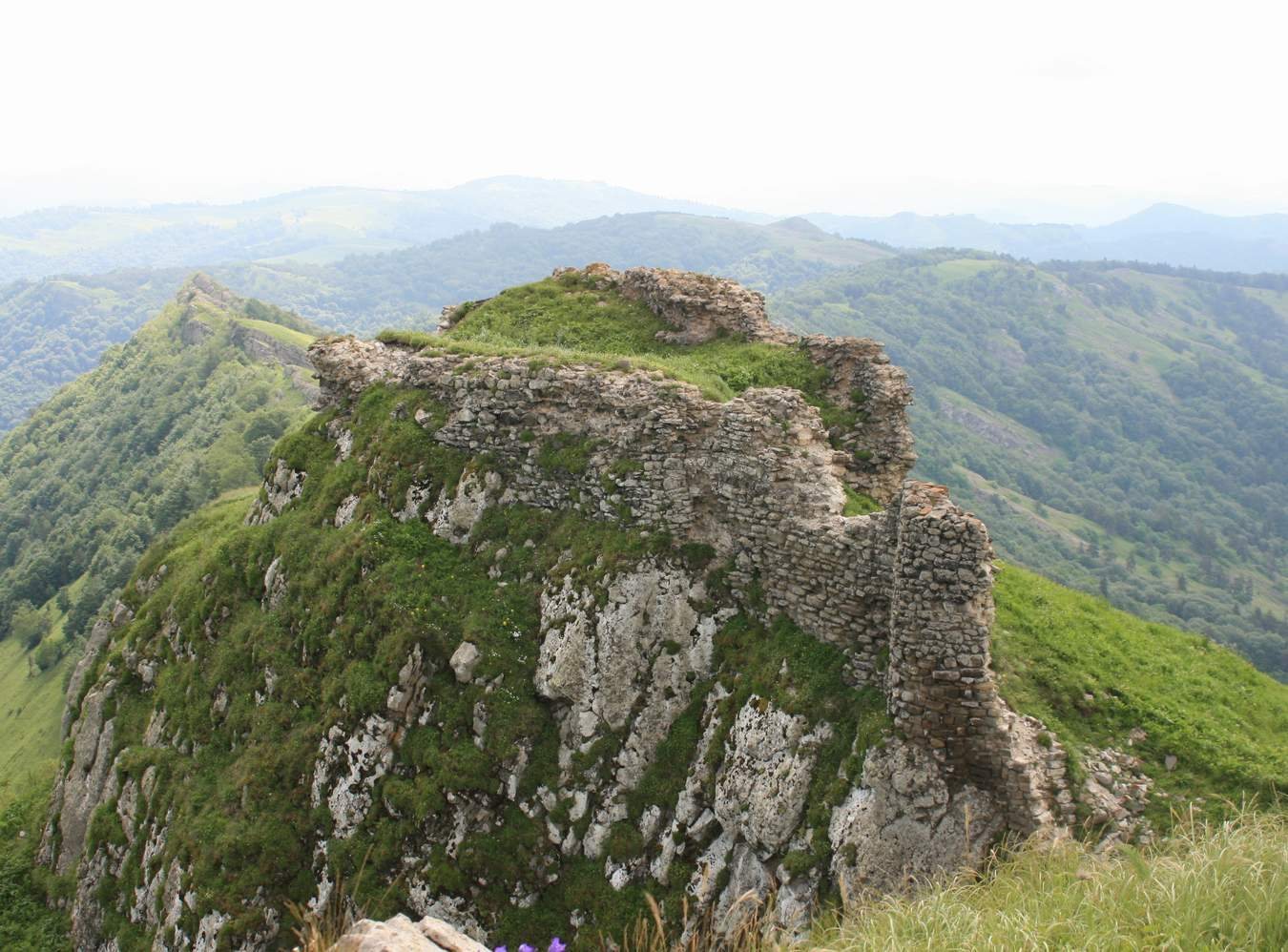
The fortress is divided into two parts along a rocky ridge. The approach runs northward along the ridge slope, passes through a narrow cleft in the rock, and reaches the fortress from the east. Two impost blocks, projecting blocks that support an arch, stand at the entrance. A narrow path leads onward to the larger section. The first part is heavily damaged, especially to the south, where the defensive wall is ruined, and erosion has exposed archaeological layers. In the larger section, the main defensive walls remain at foundation level. A section of wall and impost blocks set on the rock rises 3–4 metres.
Landscape and historic routes
Kldekari stands on the Ardzhevani ridge, along the watershed of the Trialeti Range, near Beshtasheni in Tsalka and Manglisi in Tetritskaro Municipality. From this rocky summit, the site overlooks the southern areas around Tsalka and Manglisi, the northern valleys of the Tana and Tedzami rivers, and Algeti National Park. The name Kldekari means “rock door,” referring to the cleft that forms a passage through the ridge. This was a historic crossroads: a caravan track cut through the rock connected Manglisi and Trialeti, while routes from Byzantium and Armenia toward Kartli also crossed the area.