Historic Sites in France: Explore Castles, Châteaux and Ancient Monuments
Explore more than 3,000 historic sites across France, including fortified towns, Roman amphitheatres, medieval abbeys and Renaissance châteaux. Use the map and grid to explore a region, browse a building type or find places near your chosen destination.
Castles, palaces and historic residences account for much of the collection. Alongside them are cathedrals, churches, theatres, aqueducts and burial monuments. The examples below introduce several of these building types through their surviving walls, rooms and structures, from prehistoric passage tombs in Brittany to royal residences in the Loire Valley.
Primary Function: All
Type: All
Civilization: All
Popularity: All
Rating: All
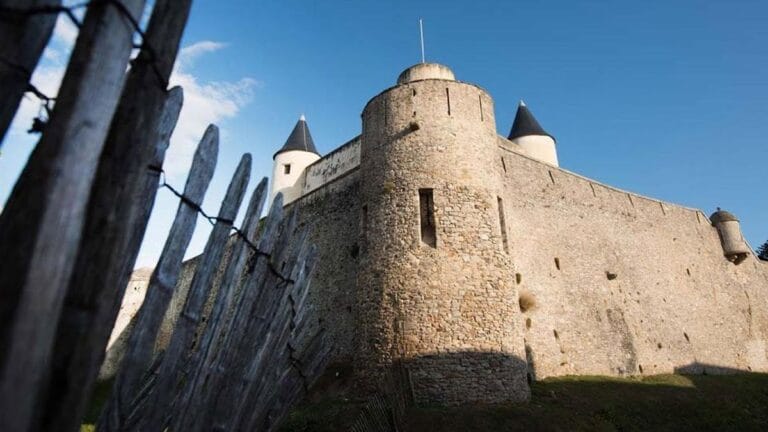
Château de Noirmoutier is a fortified castle on Noirmoutier Island, developed from a ninth-century stronghold into a medieval stone castle and later…

Château de Tiffauges developed from a twelfth-century fortress into a large border stronghold, later associated with Gilles de Rais and transformed…
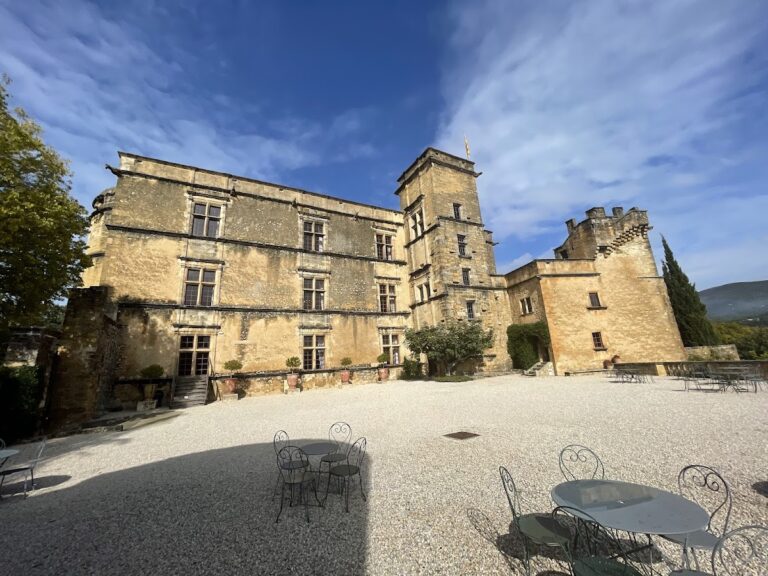
Château de Lourmarin combines the remains of a twelfth-century fortress with a Renaissance wing designed by Sebastiano Serlio. Restored in the…
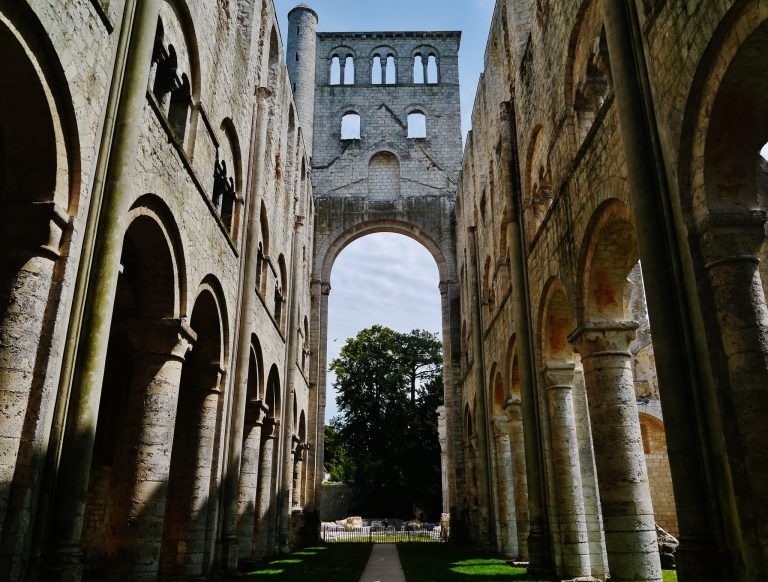
Founded in the seventh century on royal land, Jumièges became a major centre of monastic learning, worship, and administration before Viking attacks,…
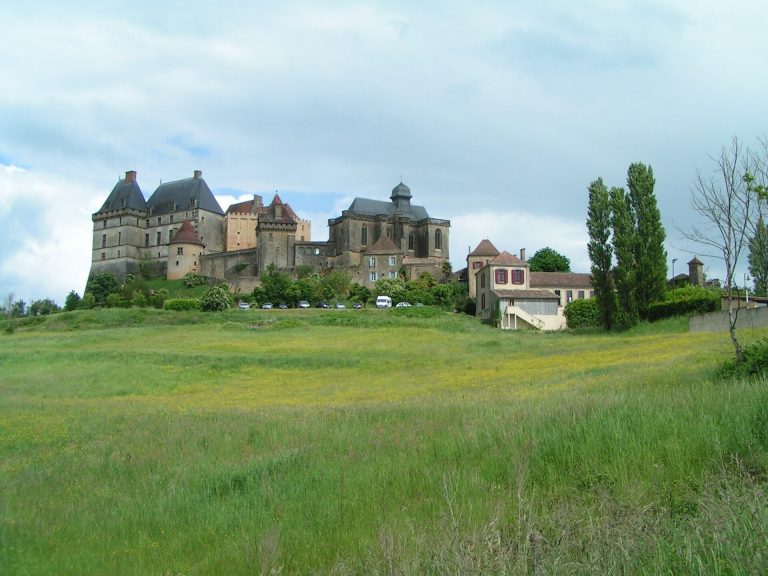
Castle of Biron in Dordogne developed from an early medieval stronghold into a fortified residence of the Gontaut-Biron family, combining medieval…
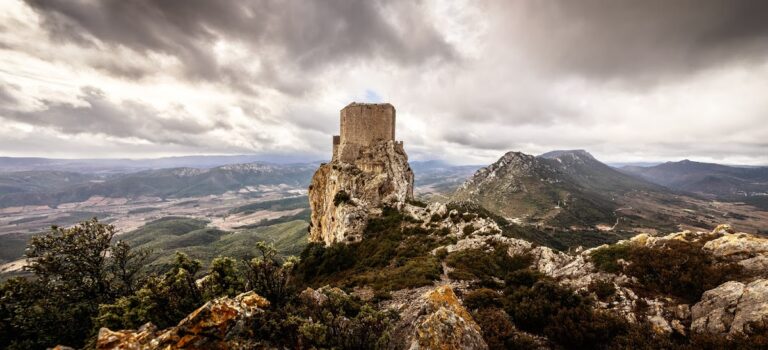
Château de Quéribus is a former medieval fortress above Cucugnan, associated with the Cathars and later incorporated into the French royal defense…
Founded by Louis VI in the twelfth century, the Royal Abbey of Montmartre was a Benedictine nunnery, landholder, judicial lordship, and pilgrimage…
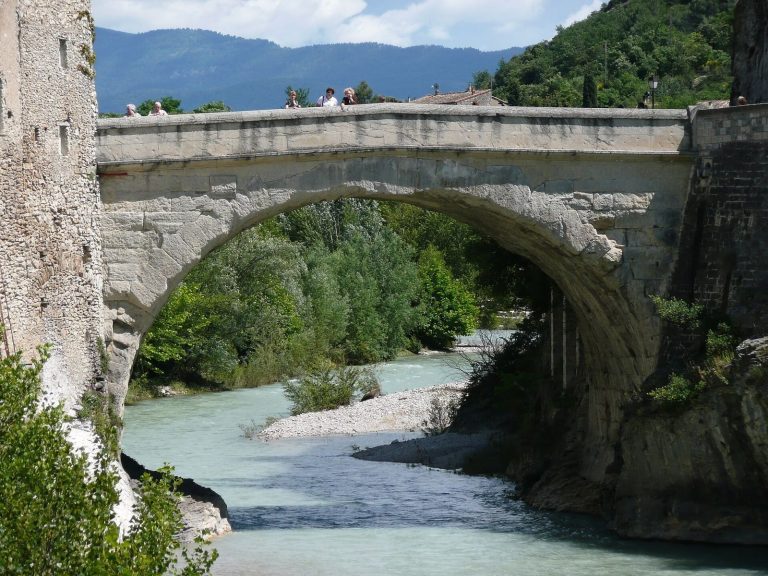
The Roman Bridge at Vaison-la-Romaine is a 1st-century stone road bridge that still crosses the Ouvèze. Its single arch, later repairs, and continued…
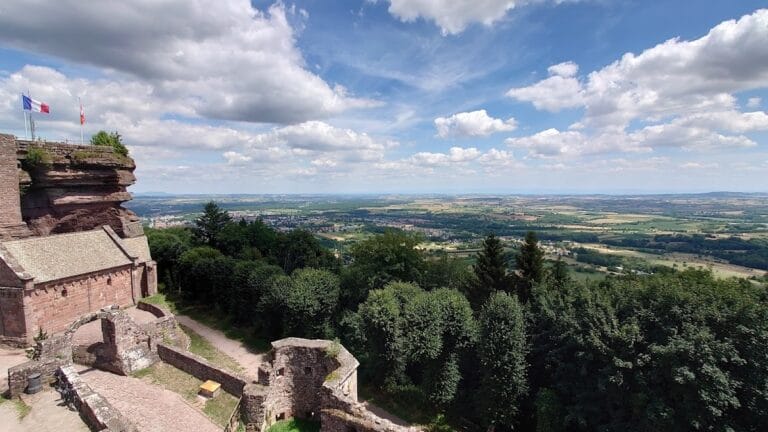
Hohbarr Castle, also known as Haut-Barr, is a medieval rock castle near Saverne associated with the bishops of Strasbourg. Its ruins occupy three…
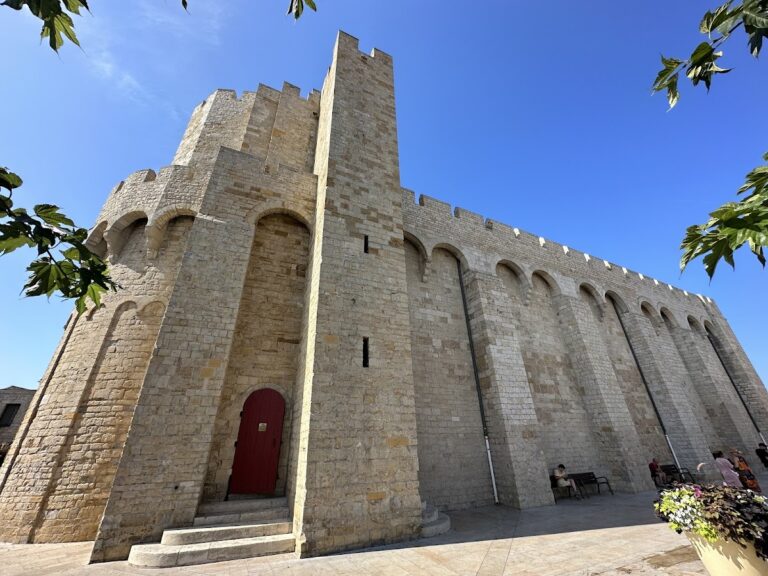
The Church of the Saintes Maries de la Mer is a fortified Romanesque pilgrimage church whose history combines medieval defense, the cult of the Three…
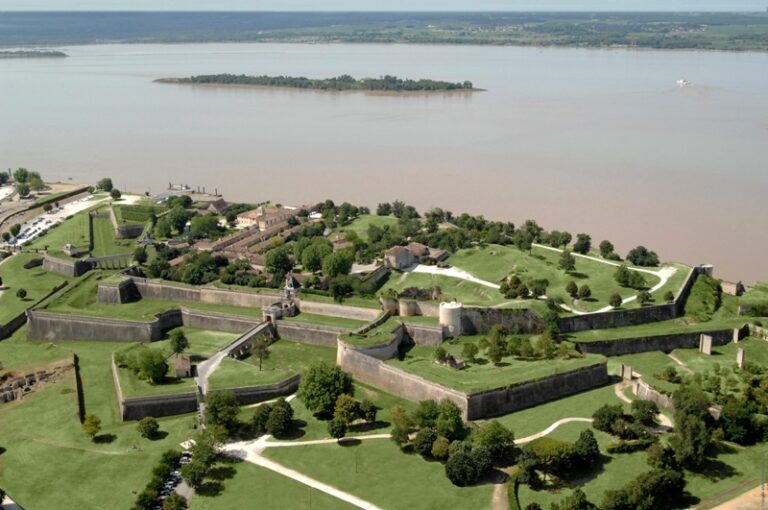
The Citadel of Blaye is a major seventeenth-century fortress overlooking the Gironde estuary. Its defences incorporate medieval remains and reflect…
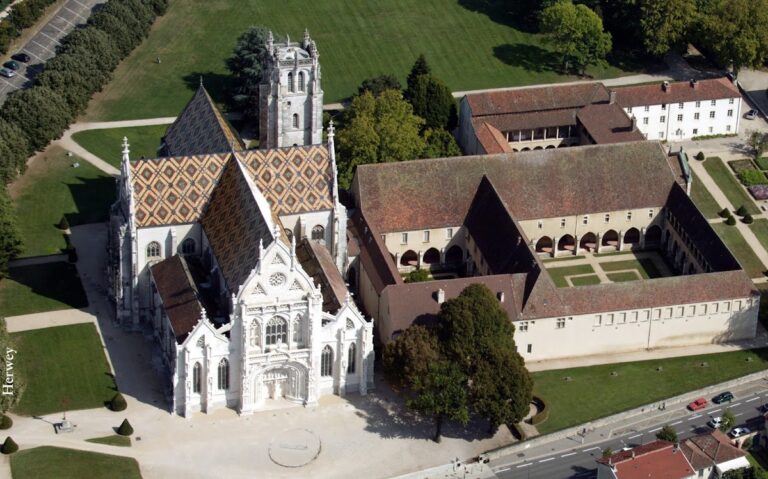
The Royal Monastery of Brou in Bourg-en-Bresse preserves a sixteenth-century church, monastic complex, and three monumental tombs commissioned by…
For details on how to use the maps, which sites are included, how popularity and ratings are determined, and how sites are classified, see the help page.
On this page6 sections
Castles and fortified towns
France’s defensive sites include individual castles, citadels and fortified towns with successive wall circuits. Towers, gates and passages show how builders protected entrances and adapted their defences to the ground.
The Citadel of Carcassonne preserves two circuits of defensive walls, with towers and a passage between the enclosures. The eastern approaches required stronger defences than the steep slope towards the Aude. The outer walls created an additional line of defence around the older enclosure, exposing attackers who crossed the space between them.
Gateways, towers and walls were developed over successive periods. Parts of the inner circuit preserve Gallo-Roman construction, while the outer enclosure chiefly belongs to medieval expansion. Nineteenth-century restoration substantially shaped the skyline seen today, so the present roofs and towers should not all be understood as unchanged medieval work.
Châteaux and palaces
Residential châteaux range from buildings that retain a castle-like outline to palaces arranged around apartments, galleries and formal courts. Their plans reveal how defensive forms could be adapted for royal and noble households.
Château de Chambord was begun for Francis I in 1519 as a hunting residence. Its central square block has circular corner towers, with corridors leading towards a central staircase. Wings and an enclosing court extended the original design.
The roof contains a dense arrangement of chimneys, dormers, turrets and lanterns. Although the château borrows the towers and enclosure of a fortress, its many apartments and elaborate roof architecture belong to a Renaissance royal residence.
Château de Chenonceau extends over the River Cher. A bridge commissioned under Diane de Poitiers connected the château with the opposite bank; Catherine de Médicis subsequently added the long gallery above it.
The gallery measures about 60 metres and is lit by eighteen windows. Its position over the river distinguishes Chenonceau from residences organised entirely around courtyards on land: the crossing itself became an enclosed room.
Cathedrals, churches and abbeys
Religious buildings include large urban cathedrals, parish churches and monastic complexes. Some preserve tall, extensively glazed interiors; others retain the rooms and sheltered walks used by a resident community.
Much of Chartres Cathedral was rebuilt after the fire of 1194, while the earlier western towers, Royal Portal and crypt survived. Rib vaults and flying buttresses support the high nave and allow large windows in the upper walls. Around the choir, two aisles provide access to the surrounding chapels.
The Abbey of Fontenay in Burgundy preserves a monastic complex whose principal buildings were constructed in the twelfth century for a Cistercian community. The church, cloister, dormitory and chapter house retain the arrangement of spaces used for worship, sleep and communal meetings.
The church has massive piers, pointed barrel vaults and restrained carved decoration. Its relatively small windows and broad areas of masonry create a different interior from Chartres, while the adjoining cloister connects it with the other monastic buildings.
Roman theatres and amphitheatres
The collection includes Roman performance buildings with surviving seating, entrances and stage or arena structures. Amphitheatres enclosed an arena, while theatres arranged their audience opposite a stage. Later uses sometimes altered these buildings without destroying their main structural form.
At the Amphitheatre of Nîmes, two levels of exterior arcades surround an elliptical arena. Seating was divided into sections, with vaulted galleries and stairs distributing spectators through the building. Projecting stone fittings near the top supported the masts of an awning over the audience.
After its use for Roman spectacles ended, blocked arcades and additional defences turned it into a stronghold and settlement. Its substantial outer walls therefore served both the original arena and the community that later occupied it. The building is about 133 metres long, with the exterior rising approximately 21 metres.
Prehistoric tombs and burial chambers
Stone chambers, entrance passages and covering cairns survive at prehistoric burial sites in France.
At Barnenez in Brittany, two adjoining stone cairns cover eleven passage tombs. Built during the fifth millennium BC, the monument occupies a promontory overlooking the Morlaix estuary.
The restored cairn is approximately 75 metres long. Its darker eastern part and lighter western extension record separate building phases, while the entrances open along the southern side. The stone mass encloses chambers and access passages rather than a single open hall.
Explore the collection
Explore sites on the map or in the grid. Map icons indicate each site’s primary function, helping you identify different kinds of places at a glance. Narrow the results by primary function, site type, civilization or era, with additional filters for popularity and rating. Select a map marker to view the site’s details and open its article, or open the article from its grid entry.