Burg Balduinseck: A Medieval Castle Ruin in Buch, Germany
Visitor Information
Google Rating: 4.6
Popularity: Low
Country: Germany
Civilization: Medieval European
Site type: Military
Remains: Castle
History
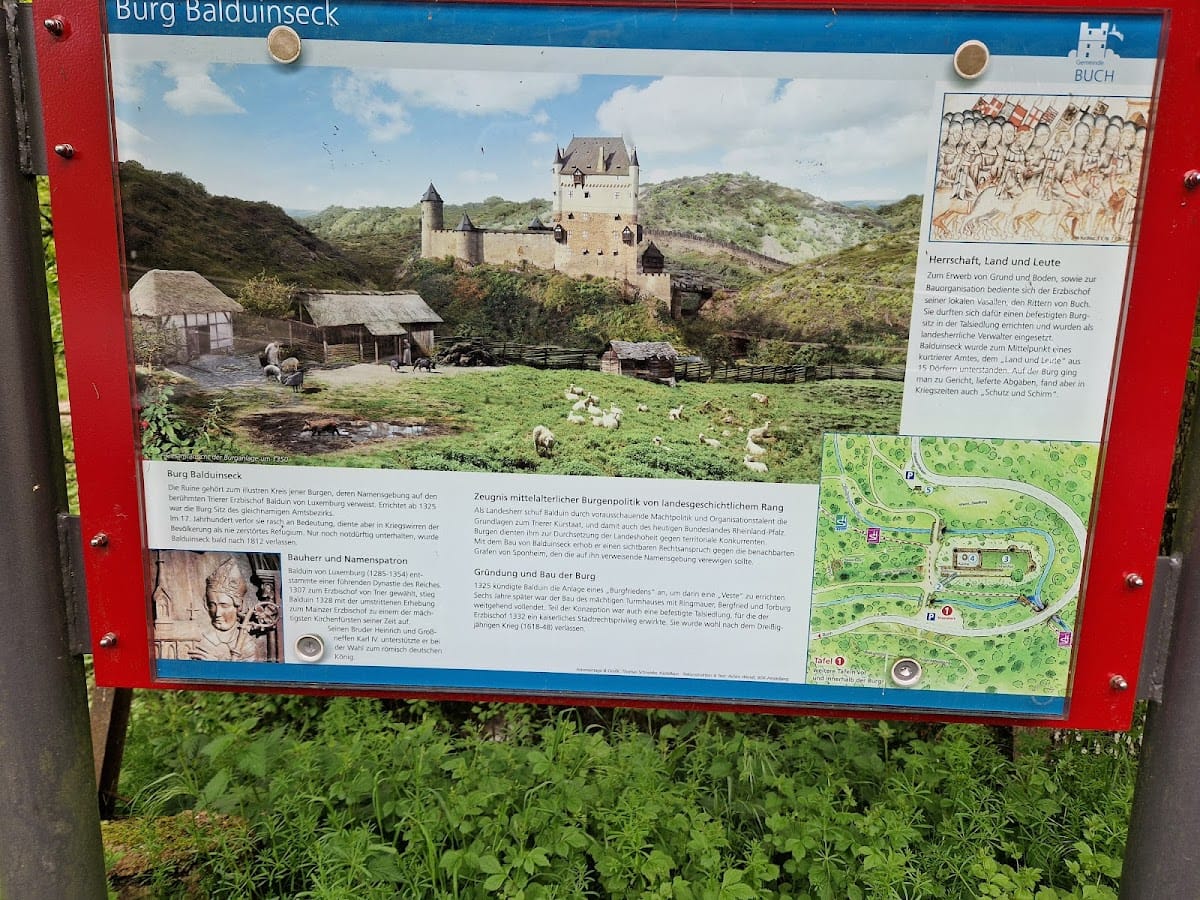
Burg Balduinseck is a medieval castle ruin located in the municipality of Buch, Germany, constructed by the medieval Germanic civilization under ecclesiastical authority. The fortress was established in 1325 following an agreement when Archbishop Balduin of Trier obtained the rights from Richard and Wirich von Buch, local knights, to create a Burgfrieden, or castle jurisdiction, and build a stronghold. This authorization allowed for construction that concluded by 1331 despite interruptions.
During its earliest decades, Burg Balduinseck played a strategic role as a territorial bastion amid the regional power struggles in the Hunsrück area. It stood as a counterpoint to the nearby Kastellaun Castle, which belonged to the County of Sponheim. The castle embodied Archbishop Balduin’s expansion efforts to secure and extend his influence throughout the Hunsrück. Throughout the Middle Ages, it served as the administrative center of the Trier Amt—a district named after the castle—that managed sixteen surrounding communities, highlighting its importance in regional governance.
By the sixteenth century, however, the castle’s administrative functions were transferred to the town of Zell, marking a significant decline in its political and military relevance. Although control and stewardship of Burg Balduinseck shifted several times, it consistently remained within the domain of the Electorate of Trier. Historical records from 1711 depict the castle as already neglected, and by 1780 it was noted as dilapidated. Importantly, no documented military actions resulted in its destruction, suggesting that its decline was due to neglect rather than warfare.
In the twenty-first century, the site required urgent conservation due to structural weaknesses caused by long-term damage. Between 2009 and 2014, a major restoration was undertaken to stabilize the ruins and prevent collapse. Burg Balduinseck’s history is closely linked to two other castles of the Electorate of Trier—Baldenau and Rauschenburg—forming a trio that symbolized Archbishop Balduin’s territorial ambitions. These sites are connected by a historic route known as the Balduinsweg, which links the Hunsrück region with the Rhine River.
Remains
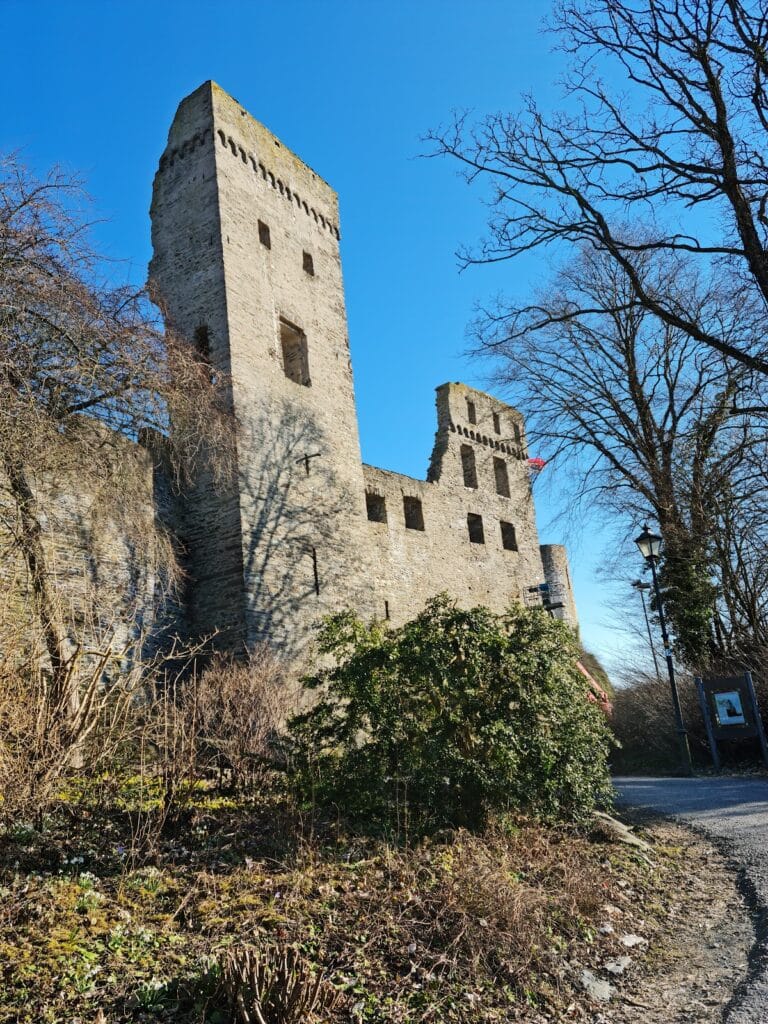
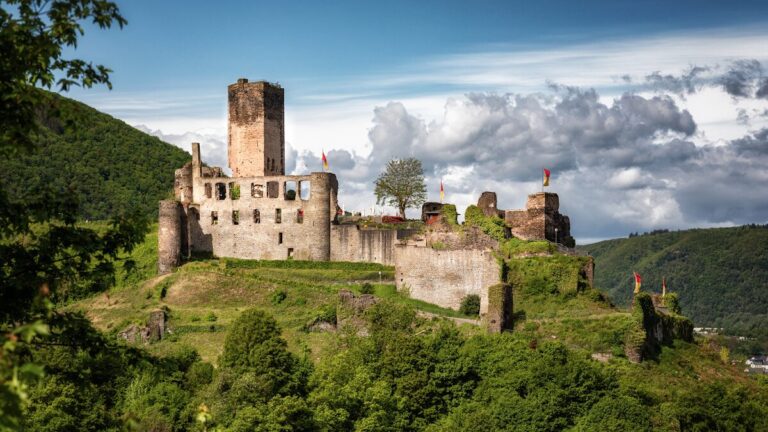
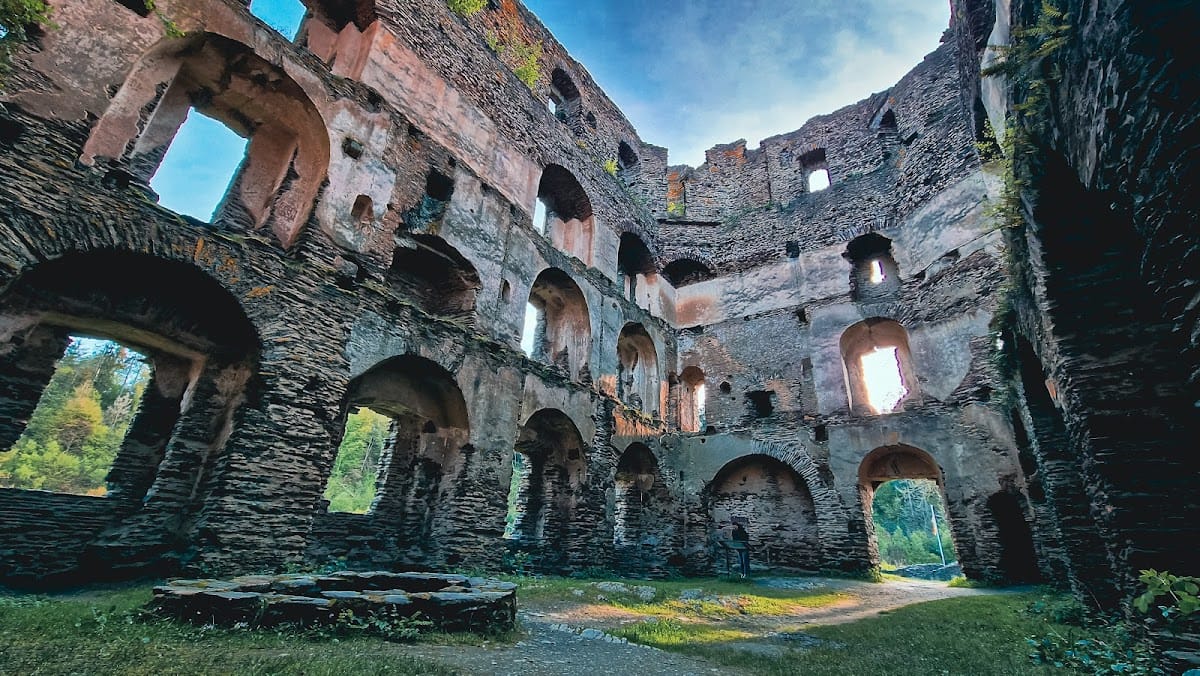
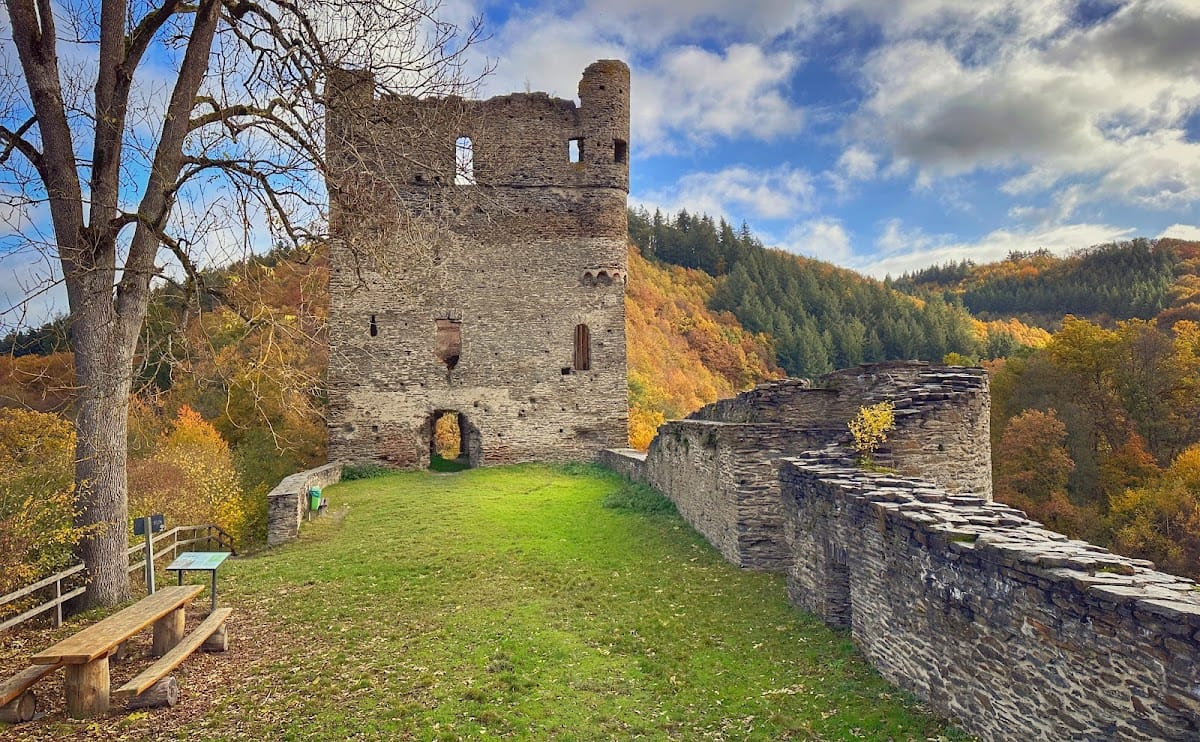
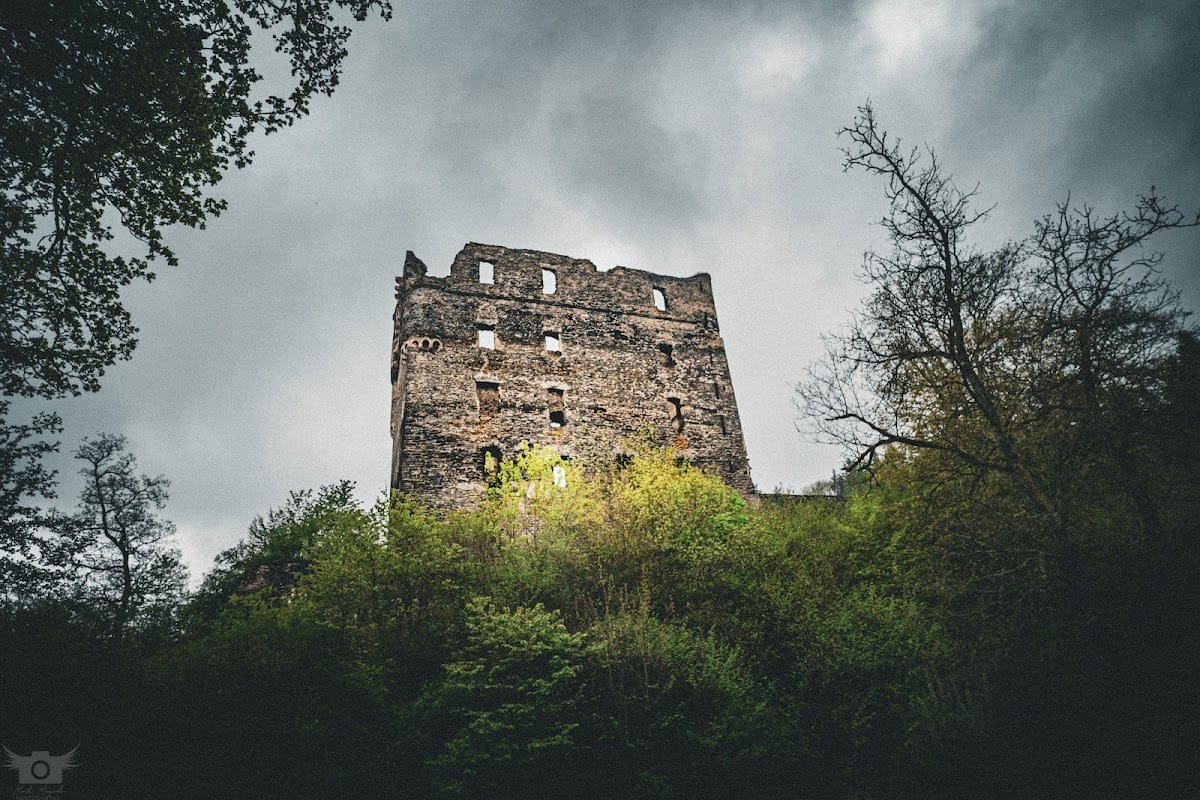
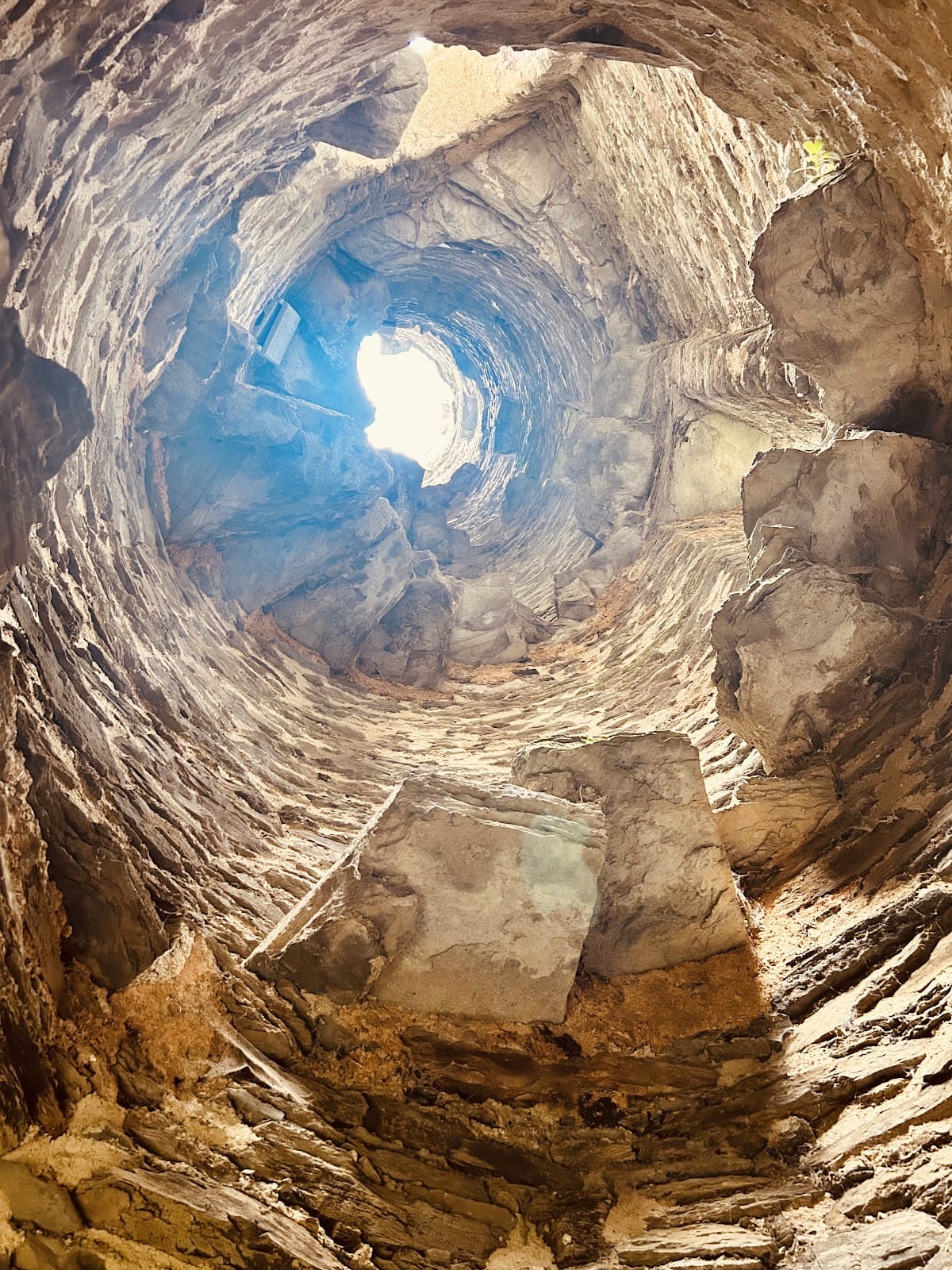
The ruins of Burg Balduinseck stretch roughly 55 meters from east to west and reach about 20 meters in width, built atop a narrow rocky spur enhancing its defensive position. The most striking remnant is a four-story residential tower, or Wohnturm, which rises about 18 meters high. Constructed with thick external walls measuring up to 2.5 meters, this tower’s sturdy design reflects its defensive and residential functions. Its ground plan extends approximately 22.7 by 14.4 meters, giving a sense of the tower’s substantial size. The main entrance lies on the west side, just inside which a spiral staircase ascends through all four floors, now partially preserved.
Throughout the first three floors of the residential tower, nine chimneys are present, indicative of heating facilities originally installed. The uppermost level notably lacks chimneys, suggesting this floor was reserved for storage and military defense rather than habitation. A large, central fireplace dominates the ground floor’s east wall, in front of which remains of a well can still be seen, revealing a vital water source within the tower itself.
Inside the tower, visible wall niches indicate places where cupboards or storage units once stood, accompanied by traces of white plaster on the walls. Exterior walls bear a distinct white stripe between the third and fourth floors, marking the location of former plasterwork. After a fire in 1425, the castle’s interior underwent remodeling. Open fireplaces were replaced with closed tiled stoves that could be heated without smoke, improving living conditions in the lower floors. In contrast, the upper floors remained unheated and functioned as storage or defensive spaces.
One of the castle’s unusual features is the placement of the residential tower behind a neck ditch—the defensive trench separating the castle from its approach on the most vulnerable side. This layout differs from typical medieval castle designs, where the main tower would sit forward of such defenses. This architectural choice also appears in other castles built under Archbishop Balduin of Trier, suggesting a distinctive regional style or strategic preference.
Additional stone remnants include a round tower situated west of the main residential building, the remains of a ring wall surrounding the castle complex, and a round shell tower facing the courtyard on the southern perimeter. The original access to the castle comprised a neck ditch and a bridgehead, elements still traceable in the ruins. To the east of the main tower, vestiges of a secondary ditch and foundations of an advanced tower remain discernible, hinting at layered defensive works.
Over the centuries, deterioration of the foundations caused structural shifting and visible cracks in various parts of the ruins. This ongoing instability was the primary motivation for recent conservation efforts designed to secure the site and preserve what remains of this historically significant fortress.
Nearby sites