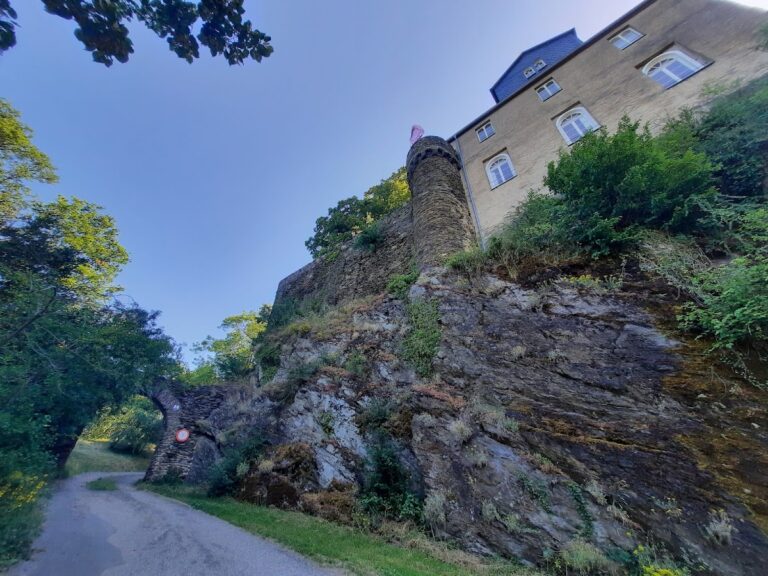
Burg Braunshorn: A Medieval Motte Castle in Germany
Site at a Glance
- Rating
- 3
- Popularity
- Very Low
- Country
- Germany
- Primary era
- Medieval
- Eras represented
- Medieval
- Civilizations
- Holy Roman Empire
- Site type
- Military
- Remains
- Castle
On this page6 sections
History
Burg Braunshorn is a former medieval motte castle in Germany, traditionally regarded as the ancestral seat of the Freiherren von Braunshorn, members of the lower nobility who held the rank of baron or free lord. Its construction cannot be dated securely, but it is generally placed in the second half of the eleventh century, around 1090. The first recorded member of the family was Gundolph, mentioned in 1098.
The Braunshorn family and the Counts Palatine
The family moved its seat to Beilstein on the Moselle in 1268. Five years later, Johann I von Braunshorn and Gerhard von Wildenberg sold the castle to Count Palatine Ludwig. Through this purchase, Ludwig gained a base during his conflict with the Electorate of Trier, an ecclesiastical principality governed by an archbishop who also held the rank of imperial elector.
In 1314, Ludwig the Bavarian, a ruler of the Holy Roman Empire, pledged Burg Braunshorn to King John of Bohemia and Archbishop Baldwin of Trier. The arrangement helped cover expenses associated with Ludwig’s royal election. After Baldwin’s death, the former Braunshorn family seat returned to the Counts Palatine and remained in their possession.
Decline and later documentation
The date when the castle was abandoned is unknown. Its foundations were still visible in 1787, while by 1857 the remains had become barely recognizable. British aerial reconnaissance in the 1940s also documented the site, preserving evidence of the earthwork’s continued archaeological interest.
Remains
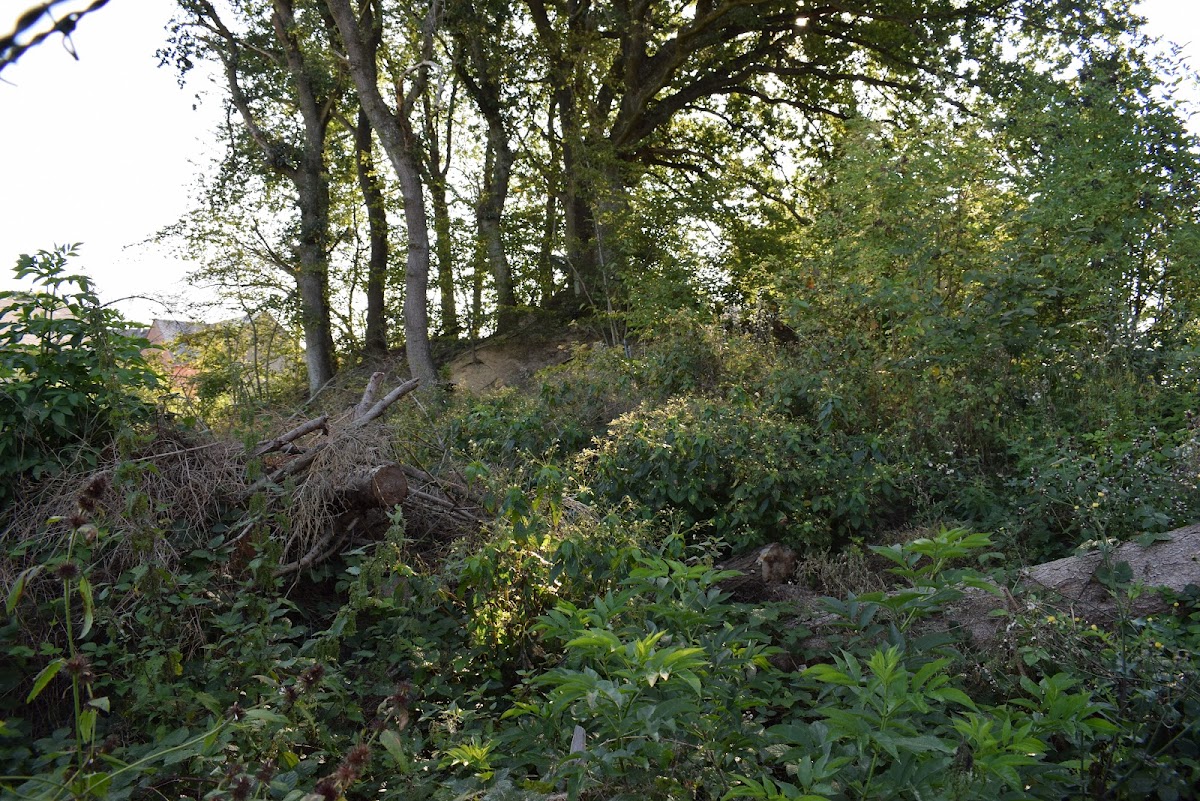
Burg Braunshorn survives as a lowland motte, a castle centered on a raised artificial or modified mound, within the built-up area of Braunshorn. The earthwork stands at about 472 metres above sea level and forms a roughly rectangular mound approximately 20 metres in diameter and between 3.4 and 4 metres high. A low bank, around 1.5 metres high, partly surrounds it, although the date of this addition is uncertain.
The mound and defensive earthworks
A tower-like building probably stood on the mound. Its position in swampy terrain may have made approach difficult, while a bank carrying a palisade and a water-filled ditch probably provided additional protection. The original arrangement and the relationship of associated buildings to the mound remain uncertain. A house constructed beside the earthwork in the mid-twentieth century incorporated part of the mound into its structure, and the mound was probably partly removed as a result.
Pottery evidence
Two pottery sherds collected near the mound in 1936 are preserved in the Rheinisches Landesmuseum Bonn. One wall sherd has an internal glaze and was identified as modern. The other is a yellow earthenware fragment with temper visible on its surface. It may represent Pingsdorf ware, a medieval Rhineland pottery tradition usually recognized by yellowish clay and reddish painted decoration, but the fragment lacks that characteristic painting, leaving its possible eleventh- or twelfth-century date uncertain.