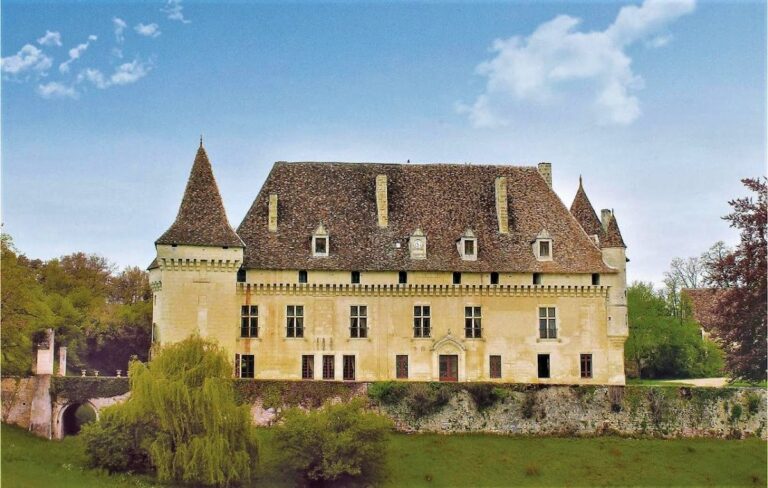
Château de Tiregand: An Historic Estate in Creysse, France


Site at a Glance
- Rating
- 4.7
- Popularity
- Low
- Country
- France
- Primary era
- Modern
- External website
- Open
- Eras represented
- Medieval, Early Modern, Modern
- Civilizations
- English, French
- Site type
- Domestic
- Remains
- Castle
On this page14 sections
History
Château de Tiregand is a château estate in Creysse, France, whose present residences were built and enlarged during the eighteenth and nineteenth centuries. The estate developed from an earlier castle traditionally believed to have been established in the thirteenth century by Edward Tyrgan, identified as the illegitimate son of Henry III, the king of England who reigned from 1216 to 1272.
Medieval origins and the sixteenth century
The original castle is traditionally associated with Edward Tyrgan. Its history later became connected with the religious conflicts that shaped sixteenth-century France. In 1575, Huguenots, French Protestants associated especially with the Reformed tradition, brought the relics of Saint Front of Périgueux to the château after taking them from Périgueux. The relics, associated with the Christian patron saint of that city, were subsequently thrown into the Dordogne River.
The eighteenth-century château
The present château began with an eighteenth-century building initiative led by Jean Charles d’Augeard, a président à mortier at the Parlement of Bordeaux. This was a senior judicial office in the high court of the French monarchy under the ancien régime. The earlier Vieux Castel, also called the Château Vieux, was later converted into a wine cellar, giving the older part of the estate a continuing role within its wine-producing complex.
Nineteenth-century expansion and family ownership
Count Alexandre César de La Panouse purchased the château in 1826. He had served as a deputy for Paris from 1822 to 1827 and died at the estate in 1836. His son, César Armand Anatole de La Panouse, commissioned the eastern residence, extending the château with a larger nineteenth-century building.
Through the marriage of Cécile de La Panouse, the family’s last heiress, to Hubert de Boutray in 1918, the château passed into the de Boutray family. It later entered the Saint-Exupéry family through another marriage. In 2022, the Guyot family purchased the château, its adjoining outbuildings, the dog-training and equestrian clubs, and approximately 40 hectares of land. The Saint-Exupéry family retained the remainder of the estate, which exceeds 400 hectares and includes 42 hectares of Pécharmant vineyard.
Château de Tiregand is a private property. The château, its outbuildings, park, terraces, moats, and rotunda were inscribed as historic monuments on 20 December 2002 under monument number PA24000040. In France, a historic-monument designation recognizes buildings, sites, or structures for their historical or architectural importance.
Remains
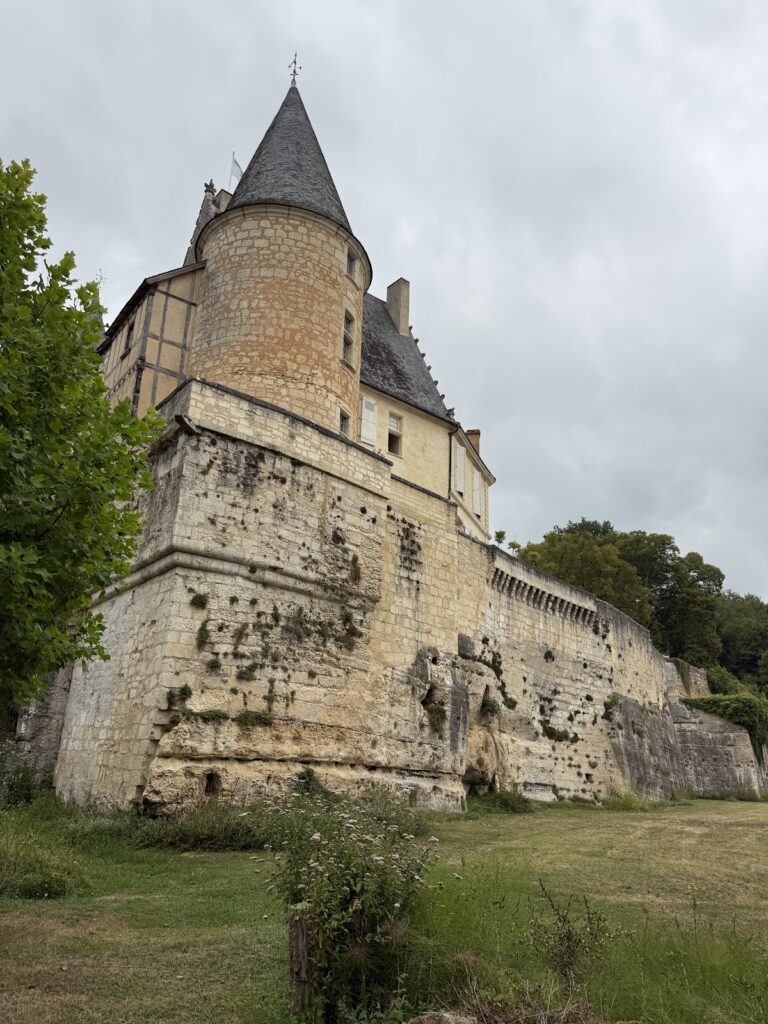
The estate covers 406 hectares and occupies elevated ground overlooking the Dordogne valley from a height of approximately 40 metres. Its surviving layout combines two residences arranged longitudinally, attached service buildings, terraces, parkland, a partly surviving dry moat, a rotunda, an eighteenth-century folly, and the older wine-cellar complex.
The château residences
Western residence
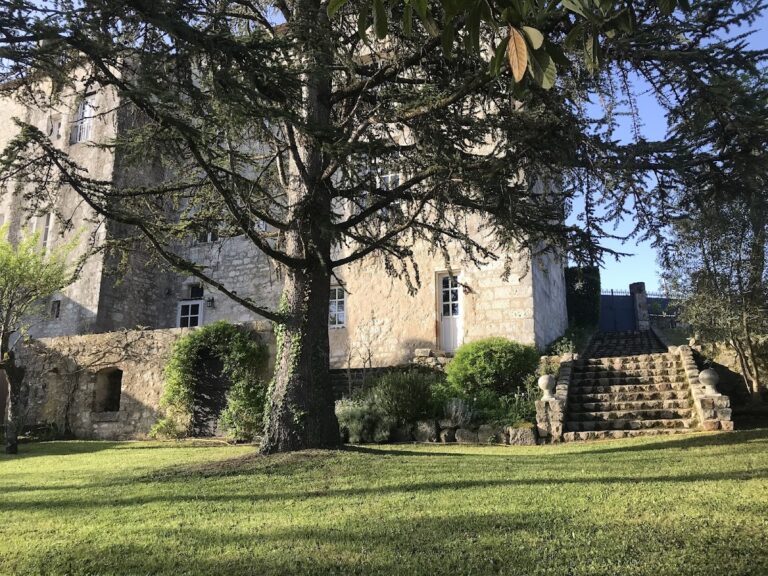
The older western residence dates from the eighteenth century. It forms one half of the juxtaposed residential complex and is linked to the later eastern building through the western pavilion, which provides the transition between the two residences.
Eastern residence
The newer and larger eastern residence belongs to the nineteenth-century expansion commissioned by César Armand Anatole de La Panouse. Two imposing pavilions frame the building. Its decoration includes the La Panouse family coat of arms and medallions bearing the family’s intertwined initials, “LP.”
Service buildings and wine complex
Stables and outbuildings
The stables and other outbuildings are attached to the north and northeast sides of the eastern residence. They form part of the built estate surrounding the principal residential buildings.
Vieux Castel wine cellars
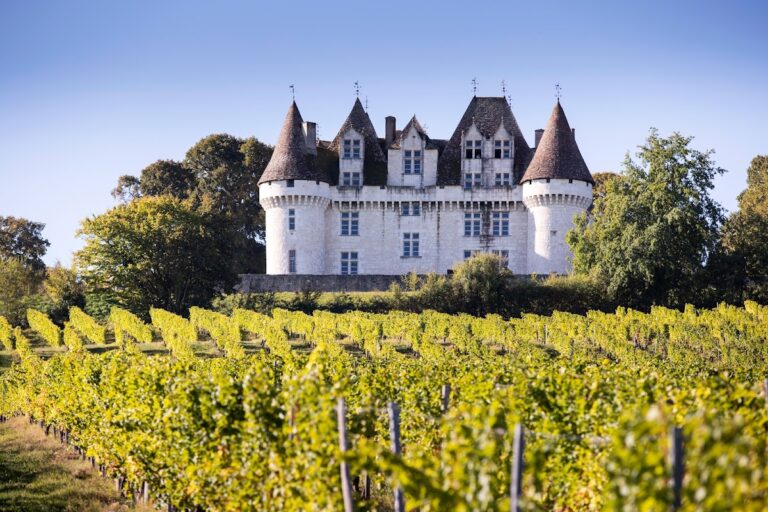
The Vieux Castel, also known as the Château Vieux, contains the wine cellars. This earlier structure was converted for that purpose after the construction of the eighteenth-century château. The estate includes a 43-hectare vineyard producing Pécharmant wine.
Park and ornamental features
Moat and terraces
Part of the moat survives around the château, although it is now dry. Terraces and the park form part of the protected estate, which occupies the elevated setting above the Dordogne valley.
Rotunda and folly
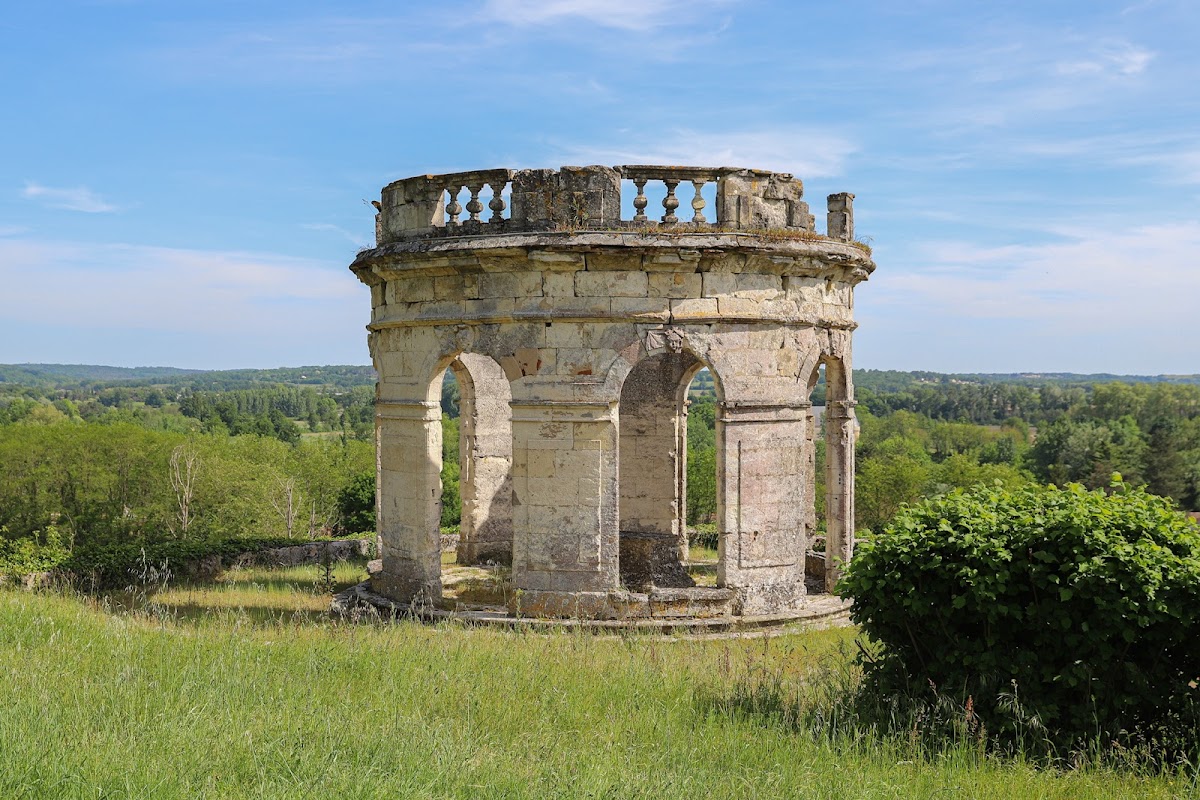
The grounds include a rotunda and an eighteenth-century folly, an ornamental structure designed as a picturesque feature of an estate. These elements belong to the wider arrangement of parkland and architectural features surrounding the château.
Nearby sites