Historic Sites in Cambodia: Explore Temples, Royal Terraces and Palaces
Cambodia’s historic sites include the great temple complexes of Angkor, smaller carved sanctuaries and royal buildings from later centuries. Their scale varies from compact enclosures to monuments laid out across extensive moats and terraces. The collection explains how these places served Hindu and Buddhist worship, royal ceremony and residence, and identifies what survives of each building.
Primary Function: All
Type: All
Civilization: All
Popularity: All
Rating: All
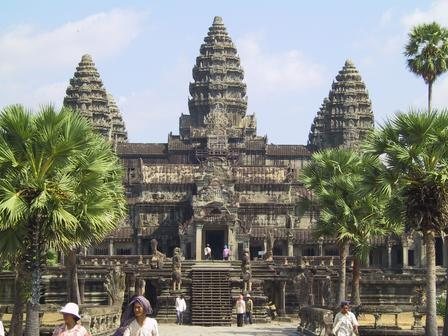
Angkor Wat is a twelfth-century Khmer temple complex in Cambodia, built for King Suryavarman II as a state temple dedicated to Vishnu and later…
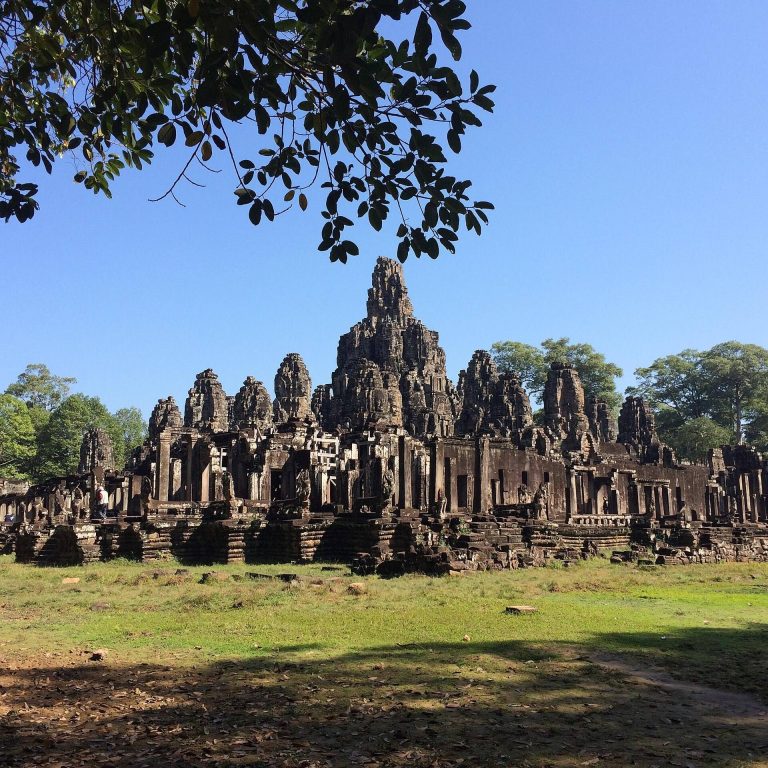
Bayon is the late twelfth- or early thirteenth-century Buddhist state temple at the centre of Angkor Thom in Cambodia, known for its face-bearing…
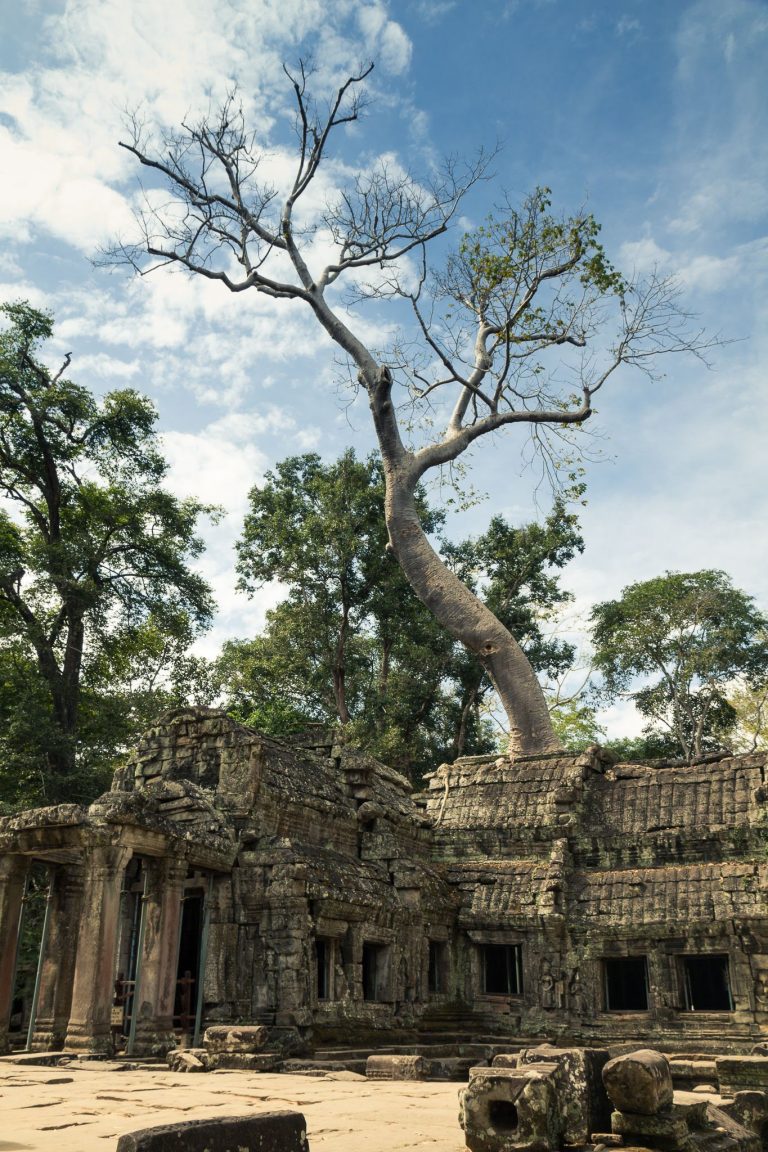
Ta Prohm, originally Rajavihara, was a major Mahayana Buddhist monastery founded by Jayavarman VII and consecrated in 1186. Its galleries, shrines,…
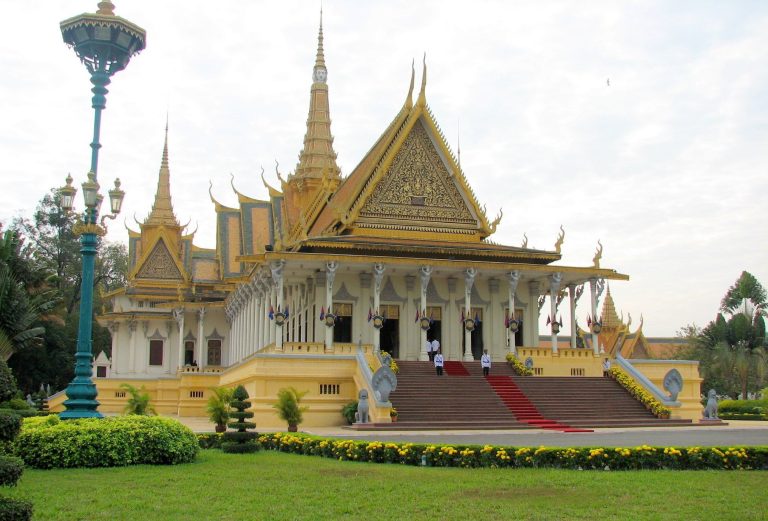
Phnom Penh’s Royal Palace has served as the Cambodian monarch’s official residence since the capital moved from Oudong in 1866. Its compounds…
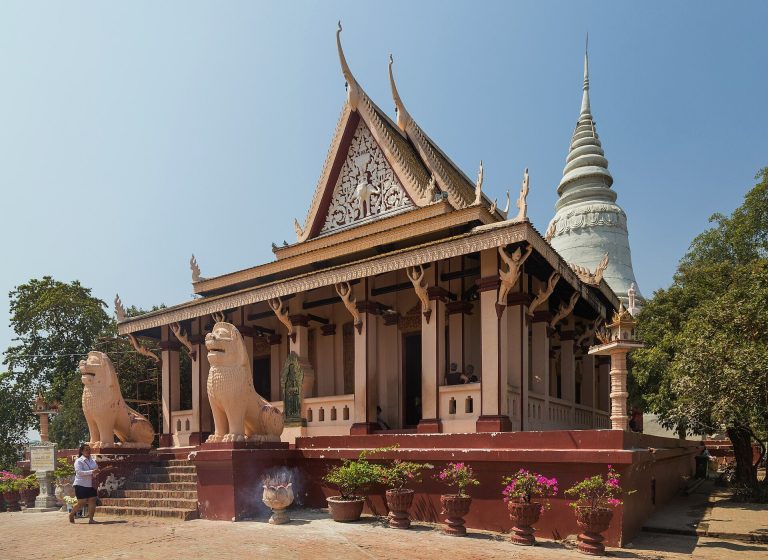
Wat Phnom is a Buddhist temple on an artificial hill in Phnom Penh, traditionally founded in the late fourteenth century and closely associated with…
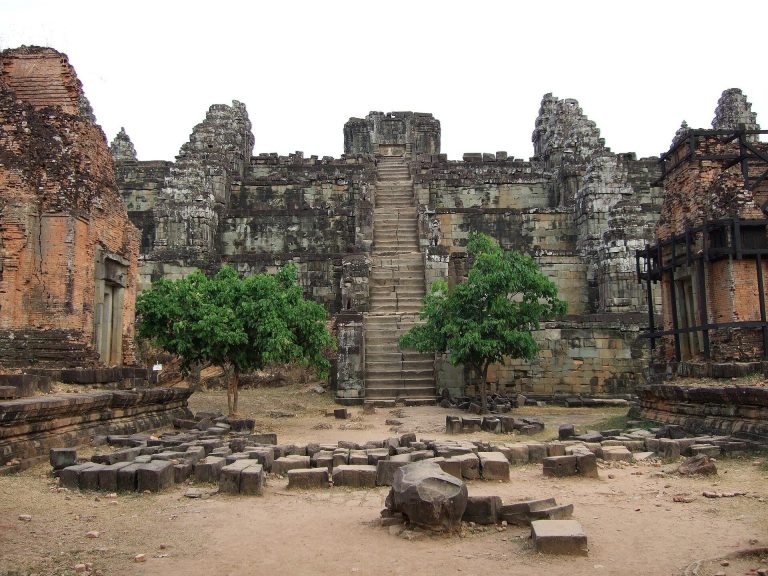
Phnom Bakheng is a ninth- to tenth-century Khmer temple mountain in Cambodia, built under King Yasovarman I as the central temple of Yasodharapura.…
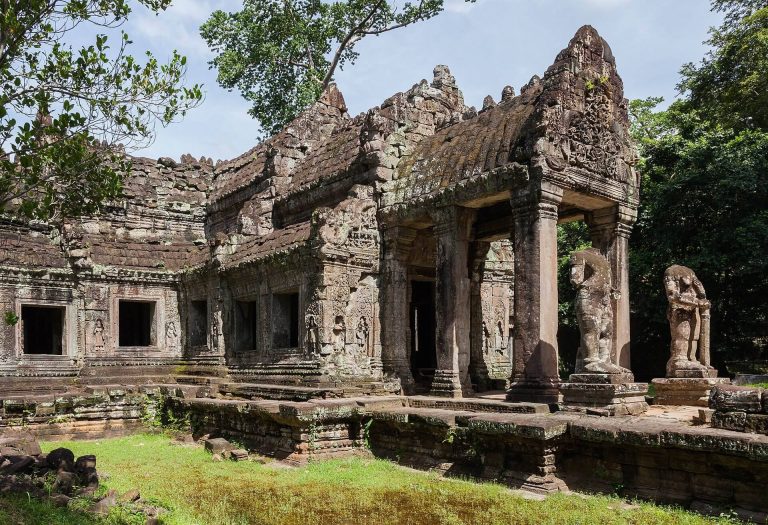
Preah Khan, built in 1191 by King Jayavarman VII at Angkor, served as a temple, city, administrative institution, and Buddhist educational center…
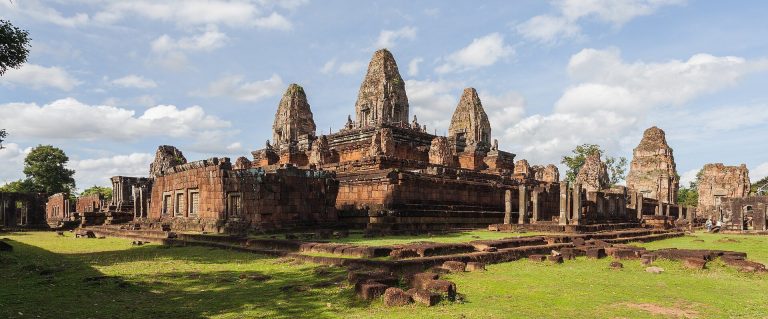
Pre Rup is a tenth-century Hindu temple mountain at Angkor, built by Rajendravarman II and dedicated to Shiva. Its brick, laterite, and sandstone…
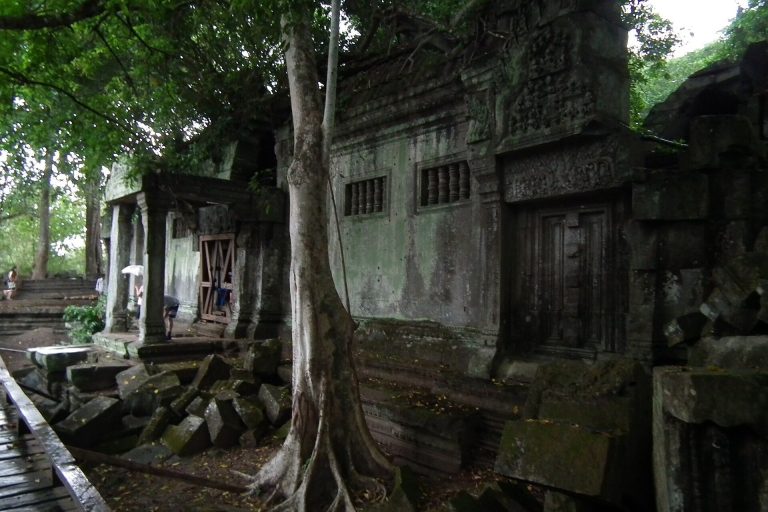
Beng Mealea is a ruined Khmer temple complex east of Angkor, built in the late eleventh or early twelfth century along an ancient royal road. Its…
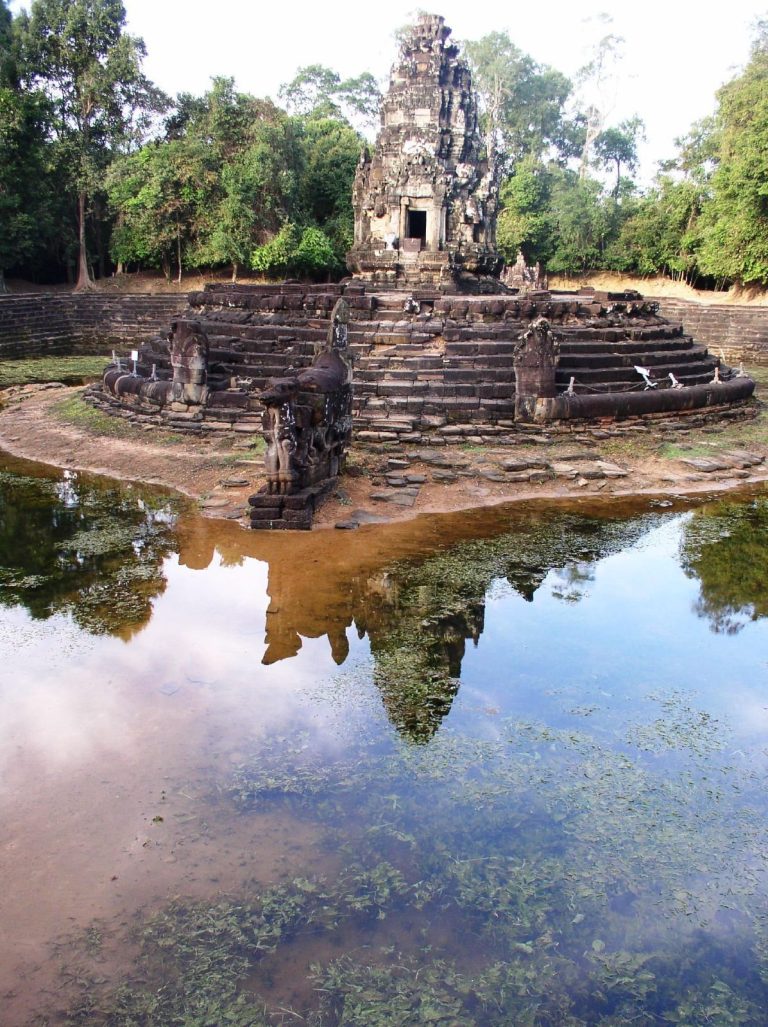
Neak Pean is a late twelfth-century Buddhist temple built by King Jayavarman VII on an artificial island in Cambodia’s northern baray, combining…
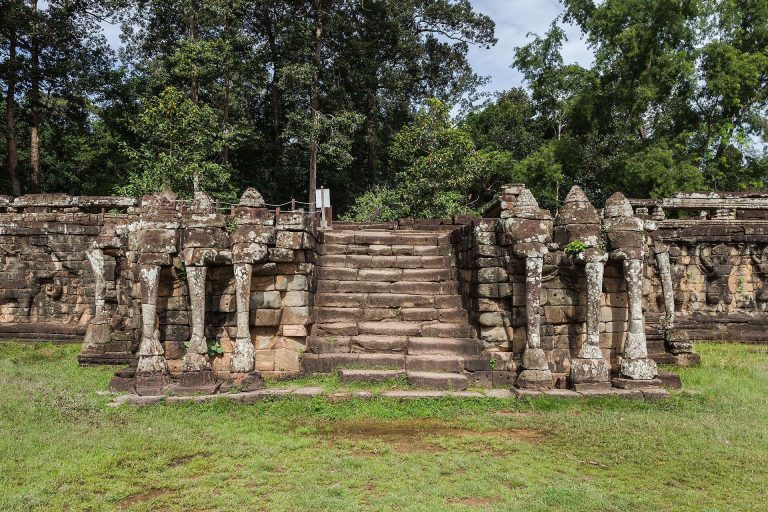
The Terrace of the Elephants is a late twelfth-century ceremonial structure in Angkor Thom, built and altered under Jayavarman VII. Its carved…
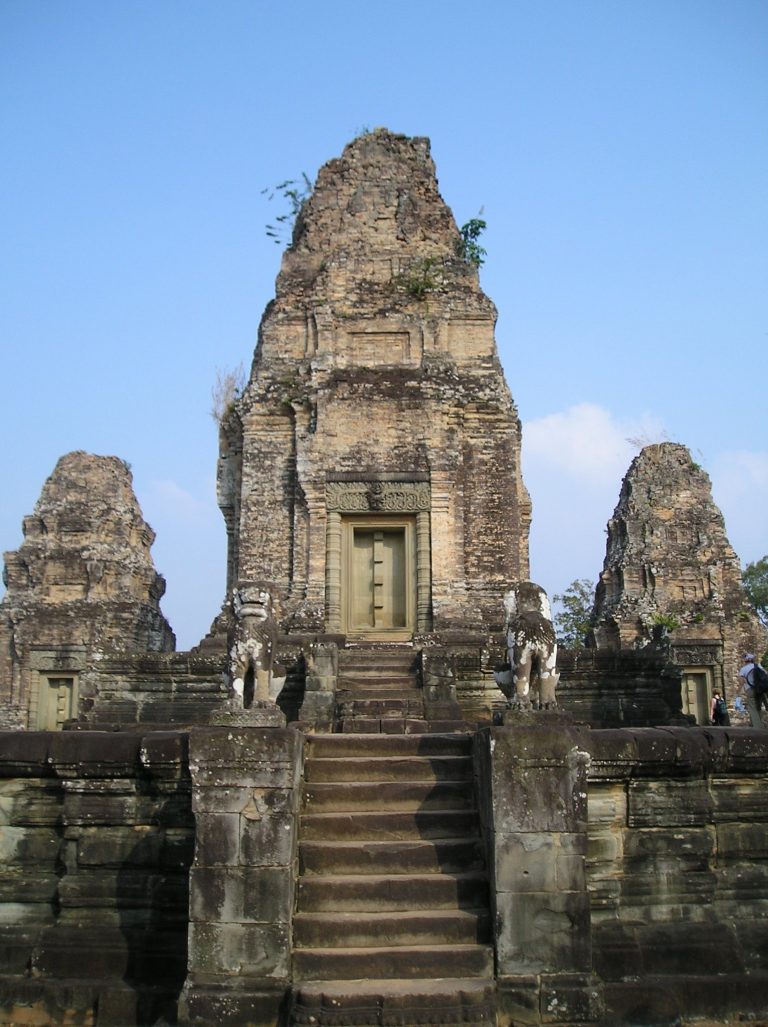
East Mebon is a tenth-century Hindu temple built on an artificial island in Cambodia’s East Baray during the reign of Rajendravarman II. Its towers,…
For details on how to use the maps, which sites are included, how popularity and ratings are determined, and how sites are classified, see the help page.
On this page4 sections
Angkor Wat: towers, galleries and a moat
Angkor Wat was built in the early twelfth century under Suryavarman II. Its plan combines a temple mountain with successive galleries: three elevated levels rise toward a group of five towers, with the central tower standing above the others. The surrounding moat and long approach separate the monument from the landscape beyond its enclosure.
The galleries also create space for extensive narrative reliefs. Their carved scenes and the ascending arrangement of the building belong to a temple originally dedicated to Vishnu, subsequently used for Buddhist worship. The monument’s religious history therefore extends beyond the reign in which its principal structure was built.
Banteay Srei: a compact sandstone sanctuary
Banteay Srei, consecrated in the tenth century, offers a different scale of Khmer temple architecture. Its patron was the court scholar Yajnavaraha rather than a king. A sequence of enclosures and gateways leads toward a small group of sanctuaries, whose pink sandstone preserves exceptionally elaborate carving.
Door surrounds, lintels and pediments concentrate the decoration around the entrances. The buildings’ modest dimensions bring these details closer to view than the upper sculpture of a large temple mountain. The site article distinguishes the foundation of the sanctuary from later conservation and reassembly of its stonework.
Monasteries and enclosed temple courts
Ta Prohm was founded by Jayavarman VII in 1186 as a Buddhist monastery and centre of learning. Its galleries and courts spread across a predominantly level plan. They contained the facilities of a large religious establishment, rather than simply providing an approach to a single elevated tower.
Tree roots now pass over and through parts of the masonry. They belong to the site’s later history, while the surviving gates, corridors and enclosed spaces explain the monastery’s original organization. Conservation has stabilized parts of the complex without removing every sign of that overgrowth.
At Beng Mealea, sandstone galleries, gateways and a surrounding moat preserve the outline of another substantial temple. Much of its stonework has collapsed. Its plan and architectural details are used to place it broadly in the twelfth century; a precise foundation date is not established by a surviving dedicatory inscription.
Royal terraces and later palace compounds
The Terrace of the Elephants formed a long raised frontage before the royal palace at Angkor Thom. Projecting platforms and stairways organized access, while carved elephants and other figures decorated the facing. The stone terrace survives more fully than the timber structures that once stood above it, so the present monument preserves the base of a larger ceremonial setting.
Cambodia’s later royal architecture is represented by the Royal Palace in Phnom Penh. Established after the capital moved there in the nineteenth century, it developed through successive building campaigns. Its separate compounds accommodated state ceremony, royal residence and religious buildings. The present Throne Hall belongs to an early twentieth-century rebuilding, rather than the palace’s first foundation.
Use the map to locate the sites and open their individual articles for the chronology, surviving features and reconstruction history of each complex.