Castles in Turkey: Explore Rock Citadels, Harbour Towers and Ottoman Palaces
Castles in Turkey include ancient rock citadels, extensive town walls, Seljuk harbour defences and Ottoman forts built beside narrow waterways. The wider collection also contains palaces and residences. Their settings and structures vary considerably: carved rock chambers, basalt wall circuits, a clover-shaped fortress and separate palace pavilions all appear among the linked examples.
Primary Function: All
Type: All
Civilization: All
Popularity: All
Rating: All
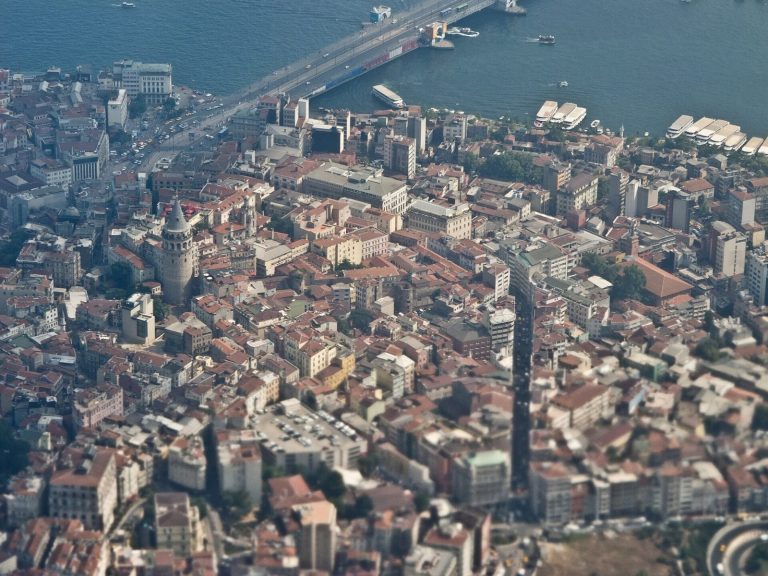
Galata Tower is a fourteenth-century Genoese fortification in Istanbul that later served Ottoman military, prison, fire-watch, communications, and…
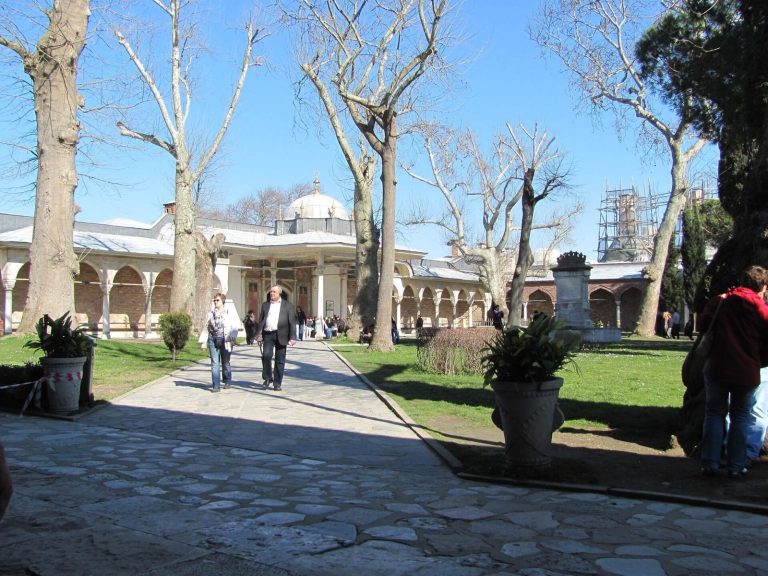
Topkapı Palace was the principal residence, court, and administrative center of the Ottoman sultans from the fifteenth century until the court moved…
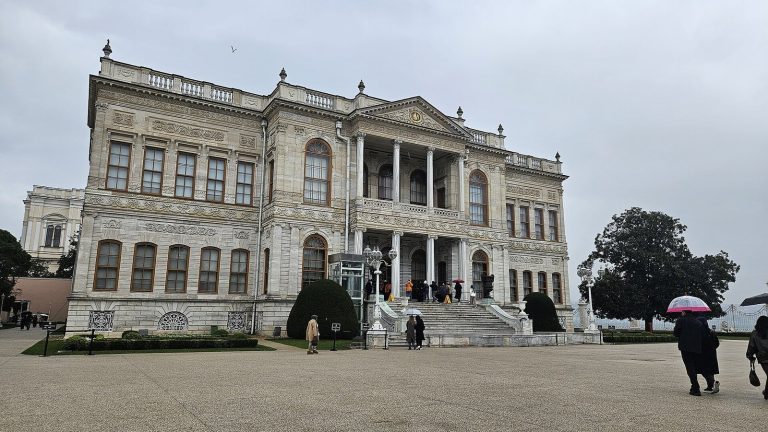
Dolmabahçe Palace on Istanbul’s Bosporus shore was the principal administrative center of the Ottoman sultanate from 1856 to 1922 and later became…
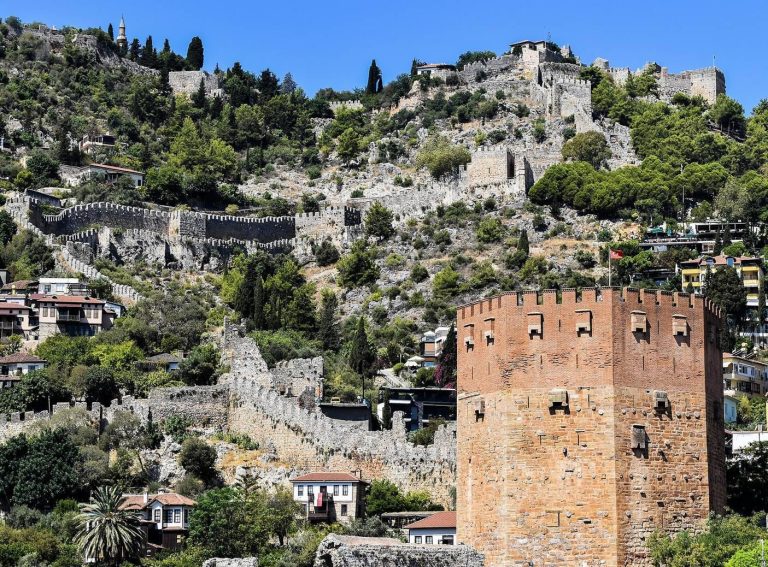
Alanya Castle occupies a fortified Mediterranean peninsula whose defenses developed from the Hellenistic and Roman periods into a major Seljuk…
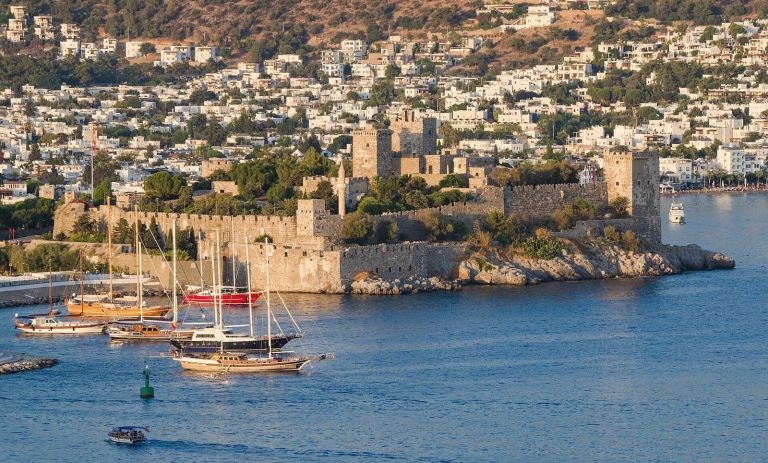
Bodrum Castle was built by the Knights Hospitaller from 1402 onward and became an Ottoman fortress before housing the Bodrum Museum of Underwater…
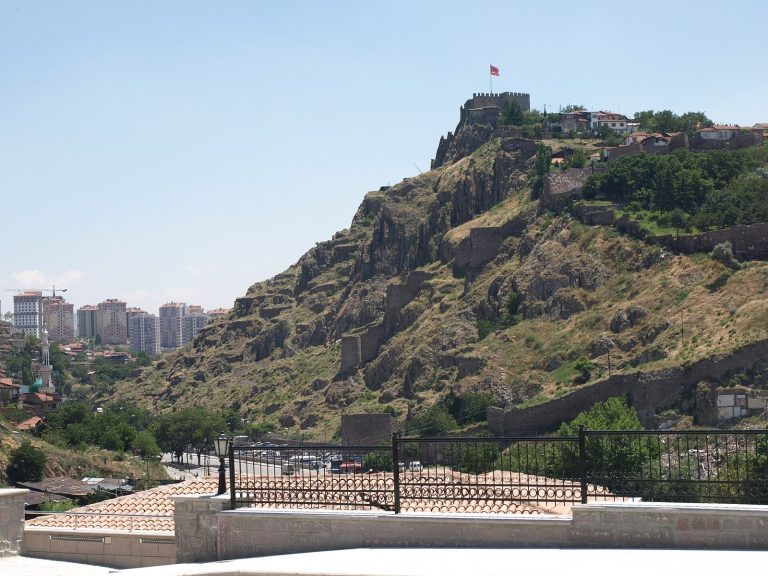
Ankara Castle is a long-used fortress whose surviving inner and outer defenses preserve layers of Roman, Byzantine, Seljuk, Ottoman, and modern…

Gaziantep Castle developed from an earlier elevated military installation into a Roman and Eastern Roman fortress, later repaired by successive…
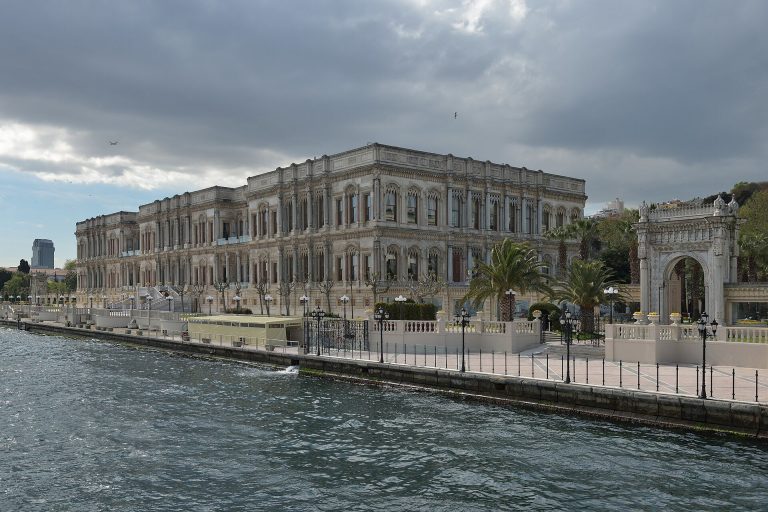
Çırağan Palace is a former Ottoman waterfront palace on the Bosporus whose history spans eighteenth-century court celebrations, nineteenth-century…
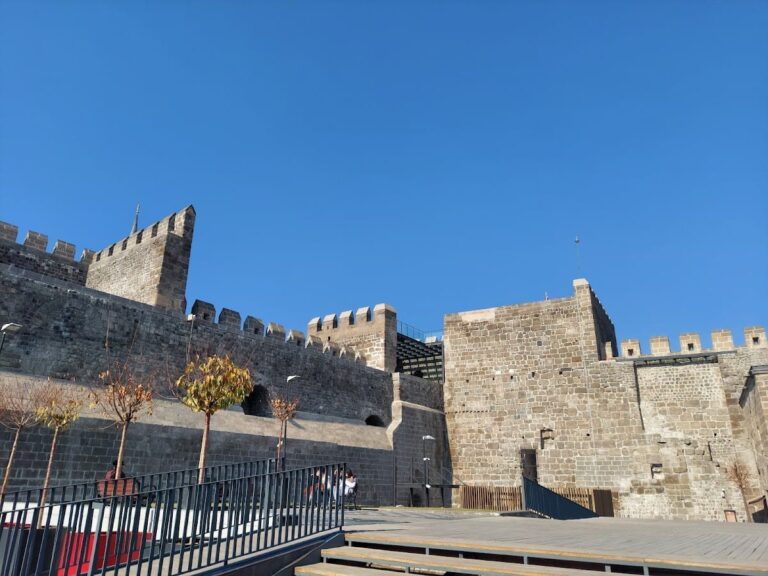
Kayseri Castle developed through Roman, Byzantine, Seljuq, Dulkadirid, Karamanid, and Ottoman phases. Its inner castle, fragmentary outer defenses,…

Marmaris Castle is a stone fortress with ancient associations, rebuilt by Sultan Suleiman I before the Ottoman campaign against Rhodes. Since 1991,…
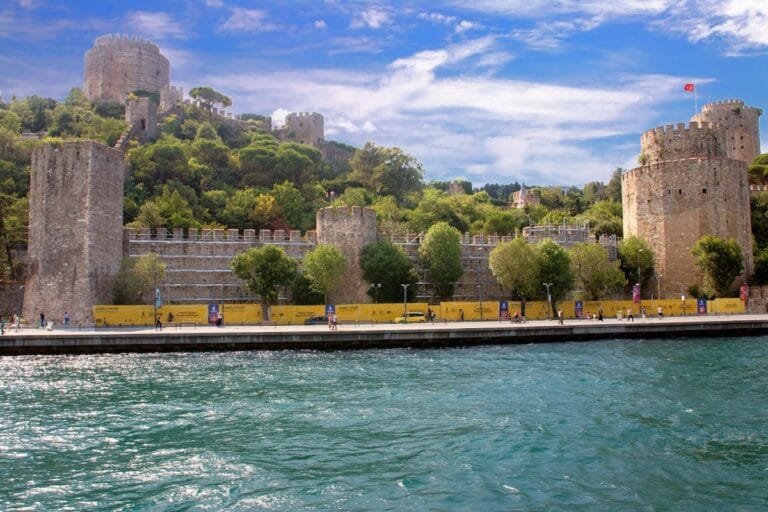
Rumelihisarı is a 15th-century Ottoman fortress built at the narrowest point of the Bosphorus to restrict maritime aid to Constantinople during the…

Built in 1508 after Venetian attacks, Çeşme Castle guarded the coast, witnessed the 1770 Battle of Çeşme, and now houses the Çeşme Archaeological…
For details on how to use the maps, which sites are included, how popularity and ratings are determined, and how sites are classified, see the help page.
On this page6 sections
Van Fortress: defensive masonry and inscriptions on the rock
Van Fortress occupies a long, steep outcrop above the remains of Tushpa, the Urartian capital. Its origins reach back to the first millennium BC, but successive occupants repaired and altered the fortifications. Lower wall sections use large unmortared stone blocks, with later materials and construction above them.
Rooms and installations were cut into the rock itself. A smoothed rock face also carries a trilingual inscription commissioned by the Achaemenid king Xerxes, written in Old Persian, Babylonian and Elamite. That inscription belongs to a later ruler than the original Urartian builders. The site combines substantial defensive remains with structures and texts carved directly into its natural foundation.
Diyarbakır: basalt walls around a historic city
Diyarbakır Fortress comprises an inner citadel and an extensive wall circuit around the old city. Black basalt forms much of the masonry. Towers vary in plan, with rounded and polygonal forms around many sections and more rectangular structures overlooking the Tigris valley.
Gateways organized movement into the settlement, while stairs beside tower entrances linked the interior to upper defensive levels. Inscriptions record building and repair across several periods. Conflict and the 2023 earthquakes damaged parts of the complex, so the long wall circuit includes repaired and affected sections as well as older standing fabric. Its scale is that of urban defence, enclosing streets and buildings beyond the inner stronghold.
Alanya Castle and the Red Tower: defences from summit to harbour
Alanya Castle rises across a rocky peninsula, with an inner citadel on its highest ground and walls descending towards the shore. Barracks and stores occupied spaces along the enclosure, while brick rainwater cisterns helped support the occupants during a siege.
At the harbour, Kızıl Kule, the Red Tower, formed a separate strongpoint protecting the port and shipyard. Completed for the Seljuk sultan Alaeddin Keykubad I in 1226, its octagonal body uses red brick prominently in the upper construction. It has undergone modern restoration. The connection between high citadel, descending walls and harbour tower explains how the defences covered both the peninsula and its maritime facilities.
Kilitbahir: a clover-shaped enclosure around a tall keep
Kilitbahir Castle has an unusual inner plan of three curved lobes surrounding an elongated triangular tower. Stone bridges connect the enclosing walls to this central structure. Further walls and a ditch add protection outside the inner fortress.
A southern extension introduced another tower and defensive enclosure under Suleiman the Magnificent. Gun openings in the seaward walls served the castle’s position on the Dardanelles. The curved inner walls, tall central tower and later artillery additions preserve several distinct parts of an Ottoman fortress rather than a conventional square courtyard plan.
Yıldız Palace: separate pavilions within controlled enclosures
Yıldız Palace in Istanbul occupies a hillside complex of residences, administrative buildings, workshops and gardens. Walls and guarded passages separated reception and official spaces from the sultan’s household and private grounds. Individual buildings carried different functions across the site.
The principal administrative residence combined formal reception rooms with service accommodation, while other pavilions and garden spaces served court life. Major restoration completed in 2024 renewed parts of the ensemble. Yıldız adds a later palace complex to the collection, organized through controlled courts and dispersed buildings rather than a single fortified tower or hall.
Explore the collection
Explore sites on the map or in the grid. Map icons reflect each site’s primary function, helping you identify different kinds of places at a glance. Narrow this collection by primary function, by a site type within the castle and residence group, or by civilization and era. Additional filters cover popularity and rating. Select a map marker to view the site’s details and open its article, or open the article from its grid entry.