Bodrum Castle: Hospitaller Fortress and Museum of Underwater Archaeology


Site at a Glance
- Rating
- 4.6
- Popularity
- Very High
- Country
- Turkey
- Primary era
- Medieval
- External website
- Open
- Eras represented
- Iron Age, Classical, Medieval, Early Modern, Modern
- Civilizations
- Ancient Greek, Crusader, Knights Hospitaller, Ottoman
- Site type
- Military
- Remains
- Castle
On this page18 sections
History
Bodrum Castle is a fortress in Türkiye, built from 1402 onward by the Knights Hospitaller during the late medieval period. Also called the Castle of St. Peter or Petronium, it occupied a promontory in Bodrum’s port and gave the Catholic military-religious order a mainland stronghold opposite Kos. The fortress also became a major refuge for Christians in Asia Minor.
Earlier fortifications and Hospitaller construction
Defensive activity on the promontory reaches back to the Doric period, around 1110 BC, when a fortification existed there. A small Seljuk castle stood on the site in the eleventh century. The same promontory is considered the probable location of the Palace of Mausolos, the fourth-century BC ruler of Caria, an ancient region of southwestern Anatolia. Charles Boileau Elliot identified it as the palace with complete certainty in his 1840 travel account.
Construction of the Hospitaller fortress began in 1404 under the supervision of the German knight and architect Heinrich Schlegelholt. A papal decree issued in 1409 promised the workers a place in Heaven. The first walls were finished in 1437, while the castle as a whole reached completion toward the end of the fifteenth century.
The fortress was organized as an international project. Each langue, a national or regional division of the Hospitaller Order, maintained its own tower and defended a designated section under a bailiff, the senior official responsible for that division. These groups also supplied the knights and soldiers needed to hold the castle.
Defense, refuge, and Ottoman conquest
For more than a century, St. Peter’s Castle was the Order’s second most important fortress. Ottoman attacks after the fall of Constantinople in 1453 and again in 1480, during the reign of Sultan Mehmed II, were repelled by the Knights. In 1482, Prince Cem Sultan, Mehmed’s son and the brother of Bayezid II, took refuge there after his failed revolt against his brother.
The growing power of cannon led the Hospitallers to strengthen the fortress in 1494. Grand Master Fabrizio del Carretto built a round bastion on the landward side, and Sir Thomas Docwra became Captain of the Castle in 1499. Philippe Villiers de L’Isle-Adam later ordered additional strengthening while the Order prepared for an attack by Sultan Suleiman.
In 1522, Suleiman the Magnificent attacked the Hospitaller headquarters on Rhodes with an army of approximately 200,000 soldiers. Rhodes fell in December, and the surrender terms required the Order to hand over its fortresses on Kos and St. Peter’s Castle. The Ottoman Empire took control of Bodrum Castle in 1523, and Ottoman rule continued for almost four centuries.
Ottoman and modern history
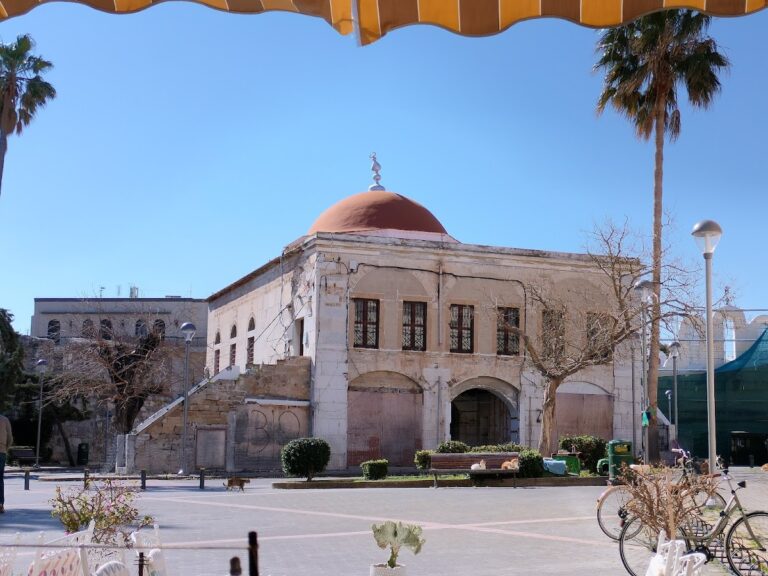
After the surrender, the chapel became a mosque and gained a minaret. Evliya Çelebi, who visited Bodrum in 1671, recorded the mosque as Süleymaniye Camii. A hamam, or public bath in the Ottoman tradition, was installed in the castle during the nineteenth century.
The fortress served as a Turkish Army base during the Greek Revolt of 1824 and became a prison in 1895. During World War I, a French warship bombarded it, destroying the minaret and damaging several towers. An Italian garrison occupied the castle after the war, then withdrew in 1921. The fortress stood empty for about forty years.
The castle’s ancient material was also removed and relocated during the nineteenth century. In 1846, Lord Canning received permission to take twelve marble reliefs showing Greeks fighting Amazons. Sir Charles Newton of the British Museum excavated the site in 1856 and removed several stone lions and a leopard. These sculptures and reliefs are now in the British Museum.
In 1962, the Turkish government decided to turn the castle into a museum for underwater discoveries from ancient shipwrecks in the Aegean Sea. The Bodrum Museum of Underwater Archaeology was established within the fortress, with much of its collection deriving from underwater excavations conducted by the Institute of Nautical Archaeology after 1960. The castle was added to Turkey’s UNESCO World Heritage Tentative List in 2016.
Remains
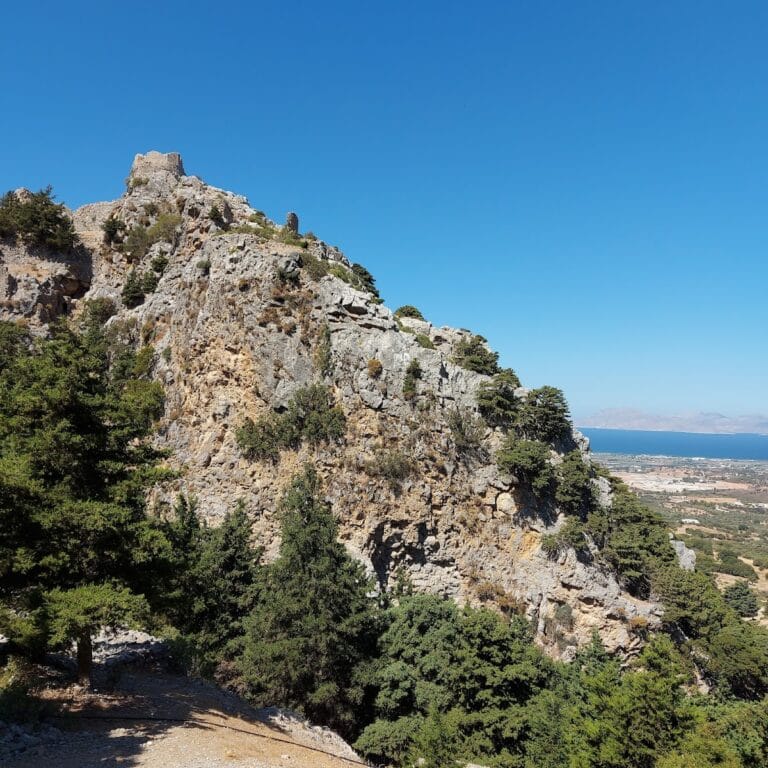
Bodrum Castle occupies a promontory in the port and is built from squared green volcanic stone, marble columns, and reliefs taken from the nearby Mausoleum of Halicarnassus. Four principal towers, seven gates, fortified walls, interior religious and service structures, and museum spaces organize the surviving complex.
Towers and defensive works
Principal towers
The four principal towers are known as the English, French, German, and Italian towers. Their names reflect the nations or langues of the Order that were responsible for their construction. The three-storey English Tower was completed in 1413. One doorway opens north toward the inner castle, while another reaches the western rampart. Both could be approached only by a drawbridge. A carved lion on the western façade gives the tower its alternative name, Lion Tower, and the coat of arms of King Henry IV of England appears above it.
Gates and heraldic decoration
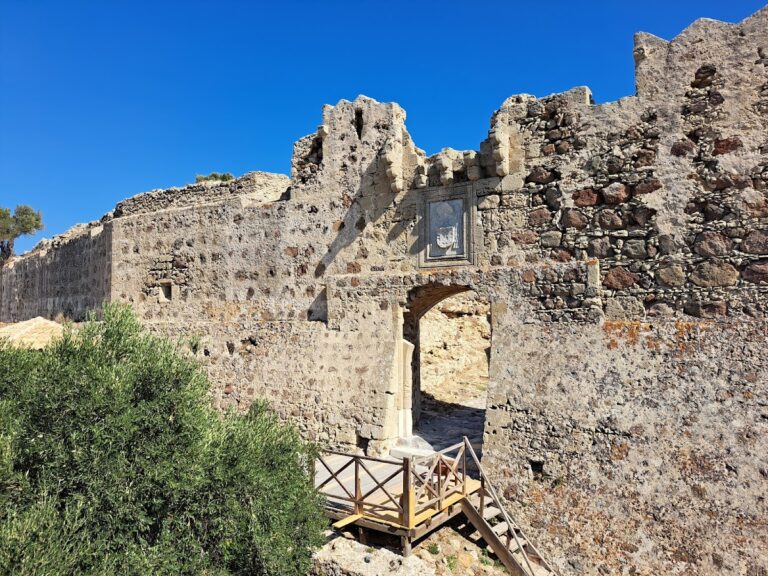
The approaches to the seven gates of the inner fortress turn repeatedly. This arrangement exposed attackers to arrows, stones, and heated projectiles while limiting their effective cover. Painted coats of arms and carved reliefs were placed above the gates and across the walls. Two hundred and forty-nine separate designs remain, representing grand masters, castle commanders, countries, knights, and religious figures.
Walls and bastion
The landward walls were thickened in 1494 to withstand cannon fire. The seaward walls remained thinner because the Order’s naval strength reduced the perceived danger of attack from the sea. A round bastion reinforced the landward side, adding to the fortress’s defenses during the period of expanding artillery use.
Chapel and water systems
Former chapel
The chapel was among the earliest interior structures completed, probably around 1406 or 1407. It contains a vaulted nave and an apse, the curved end of the sacred space. Spanish Knights of Malta rebuilt it in Gothic style in 1519 and 1520, and their names appear on two cornerstones of the façade. The former chapel now contains displays of Mycenaean vases and amphorae from the fourteenth to the twelfth centuries BC, along with Bronze Age finds dating from around 2500 BC.
Rainwater cisterns
Fourteen cisterns for collecting rainwater were excavated in the rock beneath the castle. The work was regarded as an exceptional achievement, and the family that completed the digging received an honorary title recognizing its skill.
Reused ancient sculpture
Between 1505 and 1507, surviving sculptures from the Mausoleum of Halicarnassus were incorporated into the fortress as decoration. They included twelve slabs depicting the Amazonomachy, the mythical battles between Amazons and Greeks, one block from the Centauromachy, the conflict between Centaurs and Lapiths, several standing lions, and one running leopard. By 1522, almost every remaining block of the mausoleum had been removed from its original location, and much of it had been reused as building material in the castle.
Museum collections and shipwreck finds
Exhibitions in the towers
The Italian Tower contains the Coin and Jewelry Hall, whose collection spans many centuries. Another exhibition room is devoted to the tomb of a Carian princess who died between 360 and 325 BC. The museum also holds amphorae, ancient glass, and objects made of bronze, clay, and iron. Its ancient-glass collection is described as one of the four largest ancient-glass collections in the world. Commercial amphorae illustrate the development of this large handled vessel and its varied uses for transporting liquids and other goods.
Underwater archaeology
The museum’s excavation program includes the Finike-Gelidonya shipwreck, excavated in 1958 and 1959 and described as Turkey’s first underwater excavation; the Byzantine Bodrum-Yassiada wreck, excavated from 1961 to 1964; the Serçe Limanı wreck, excavated in 1977; the Kaş-Uluburun wreck, excavated from 1982 to 1995; and the Tektaş Burnu Classical Greek wreck, excavated from 1999 to 2001. Other listed discoveries include Late Roman and Ottoman wrecks at Bodrum-Yassiada, the Şeytan Deresi wreck, and Hellenistic and other wrecks in the Marmaris-Serçe harbour area.
Finds from the Uluburun wreck include ten tons of Cypriot copper ingots, one ton of pure tin ingots, 150 glass ingots, manufactured goods, Mycenaean pottery, Egyptian seals including one bearing the name of Queen Nefertiti, and jewelry. The Bodrum-Yassiada Byzantine wreck is represented as a Roman merchant vessel carrying 900 amphorae, while the Serçe Limanı wreck produced a collection of Islamic glassware.
Ship reconstructions
Two ancient ship reconstructions are displayed in the museum. One represents the Fatımi ship, which sank in AD 1077, and the other is the large Uluburun ship from the fourteenth century BC. The displays also include a model of the seventh-century Byzantine Yassiada vessel, Egyptian jewelry from the Uluburun wreck, and amphorae from different parts of the Mediterranean.
Castle garden
A garden within the castle contains Mediterranean plants and trees, including myrtle and plane trees. Turquoise- and amber-coloured peacocks move among flowering trees and shrubs, while the towers provide views over the city and some neighboring bays.