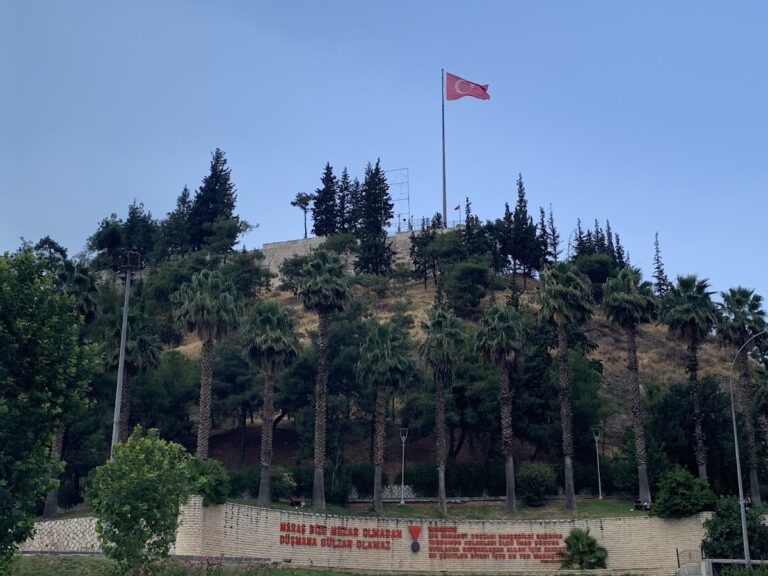
Gaziantep Castle: A Historic Fortress in Türkiye


Site at a Glance
- Rating
- 4.5
- Popularity
- High
- Country
- Turkey
- Primary era
- Classical
- Eras represented
- Classical, Medieval, Early Modern
- Civilizations
- Byzantine, Ottoman, Roman
- Site type
- Military
- Remains
- Castle
On this page11 sections
History
Gaziantep Castle is a historic fortress in Türkiye, traditionally associated with an early Hittite military observation post and developed into a major Roman stronghold during the second or third century AD. The hill may incorporate a Chalcolithic mound approximately 6,000 years old, although the date of the first fortress construction remains uncertain. Its position became closely connected with the historical urban fabric of Antep.
Early and Eastern Roman development
The Romans transformed the earlier military installation into a substantial fortress during the second or third century AD. Between 527 and 565, the Eastern Roman emperor Justinian I, who sponsored extensive military rebuilding across the empire, ordered major enlargement and reconstruction. Towers, galleries, and defensive walls were expanded, and the fortifications were extended westward, southward, and eastward to enclose the hill.
After the Byzantine period, the fortress continued to be repaired by the Mamluks, a military ruling dynasty based in Egypt and Syria, by the Dulkadirids, a Turkmen dynasty that controlled parts of southeastern Anatolia, and later by the Ottomans. Repair inscriptions were placed on the castle to record some of these interventions.
Seljuk, Crusader, and Mamluk phases
Seljuk forces restored the fortress after the defeat of the Byzantine emperor Romanos IV Diogenes at the Battle of Manzikert on 26 August 1071. This major conflict ended in a Byzantine defeat by the Seljuk Turks and helped expand Seljuk power across Anatolia.
During the Crusades, western knights administered Antep in 1098, and the castle later came under the influence of the Principality of Antioch. Around 1230, Christian crusaders captured the fortress to control trade along the Orontes River. Further repairs followed under the Mamluk sultan Qaytbay, who restored the castle in 1481.
Ottoman rebuilding and modern changes
Ottoman work during the sixteenth century included rebuilding the main gate, the bridge, and the towers on both sides of the entrance. An inscription attributes these works to Sultan Suleiman I, also known as Suleiman the Magnificent, in 1557.
In the 1940s, the castle was converted into a historical museum. Repeated restoration campaigns brought it to its present form through work completed around 2000 or in the early 2000s. The 6 February 2023 Kahramanmaraş earthquake then severely damaged the fortress. Sections of the southern and eastern bastions collapsed, and large parts of the structure were destroyed. Restoration work is ongoing.
Remains
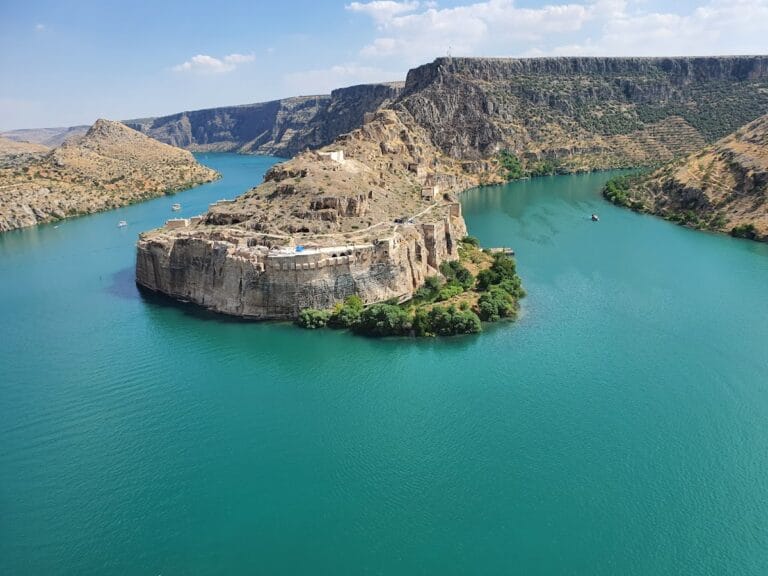
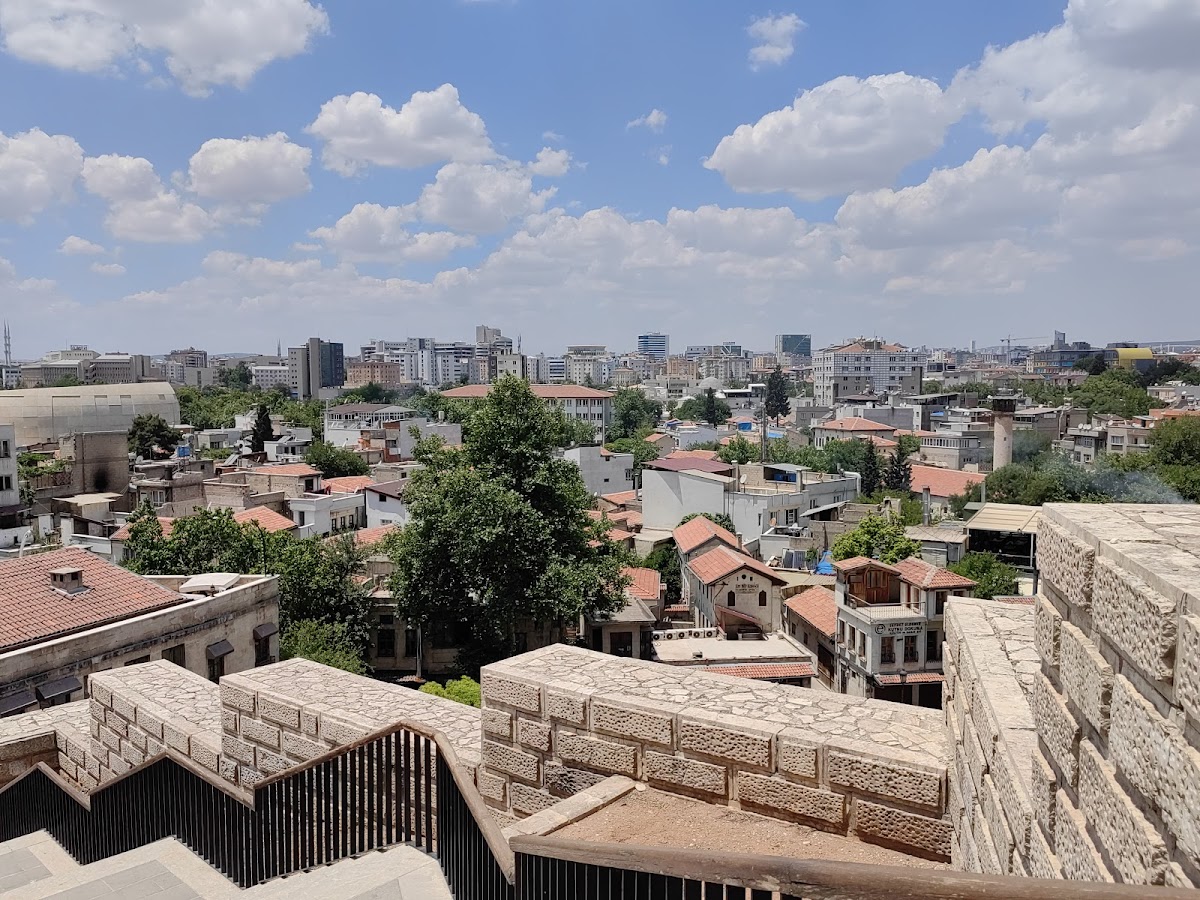
The fortress occupies a hill in central Gaziantep, south of the Alleben stream, rising approximately 25 metres above sea level. It stands partly on natural rock and partly on a mound. Its roughly circular but irregular plan contains inner and outer defensive enclosures, while the stone walls form a circuit of approximately 1,200 metres with twelve towers and bastions. A bastion is a projecting fortified structure that strengthens a wall and allows fire along its sides.
Outer defenses and entrances
Walls, towers, and moat
The fortifications are supported in places by vaulted and arched galleries connected to the towers. A moat surrounded the castle, measuring approximately 30 metres across and 10 metres deep. A bridge carried access across this defensive barrier. The outer walls and their projecting towers and bastions were particularly affected by the 2023 earthquake, with the southern and eastern sections left severely damaged.
Gates and access galleries
Entry through the monumental outer gate leads to two routes toward the inner levels and summit. One route reaches a second monumental gate covered with iron and then continues across a bridge to the inner castle. A 150-metre-long illuminated gallery runs toward this inner-castle gate. Regularly spaced loopholes, narrow openings used by defenders to observe or attack from behind cover, line the gallery, which also provides access to the towers.
Inner castle and museum
Medieval structures
Within the inner castle are the remains of a bathhouse and a mosque dating to the thirteenth century. These structures form part of the surviving architectural fabric inside the fortified enclosure.
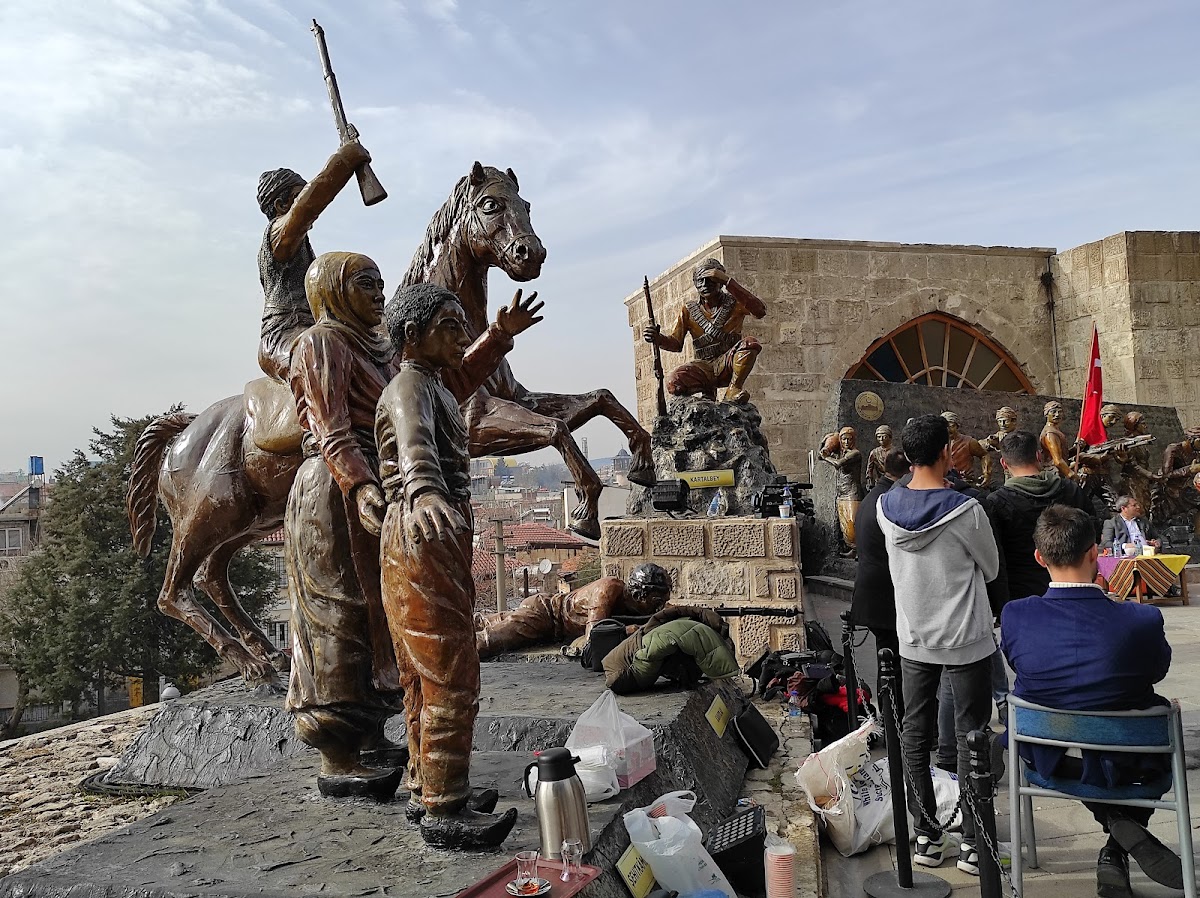
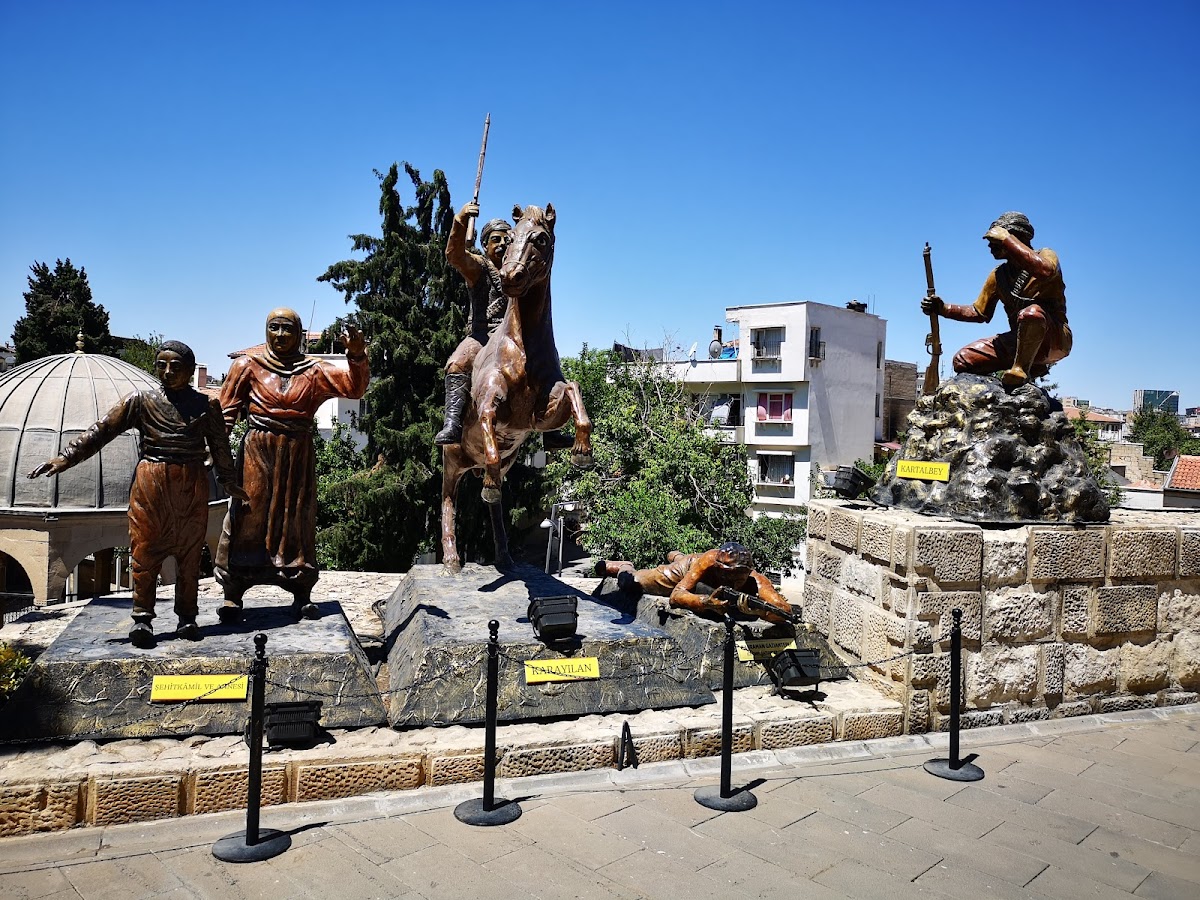
Gaziantep Defence and Heroism Panorama Museum
The castle currently contains the Gaziantep Defence and Heroism Panorama Museum. It presents the city’s defense against French forces after the collapse of the Ottoman Empire. A 45-minute documentary about Gaziantep’s defense is shown inside the castle, and the museum operates periodically.