Çırağan Palace: An Ottoman Waterfront Palace in Istanbul
Site at a Glance
- Rating
- 4.7
- Popularity
- High
- Country
- Turkey
- Primary era
- Modern
- External website
- Open
- Eras represented
- Modern
- Civilizations
- Ottoman
- Site type
- Domestic
- Remains
- Palace
On this page8 sections
History
Çırağan Palace is a former Ottoman waterfront palace in Istanbul, Türkiye, built between 1863 and 1871 in an architectural style influenced by North African Islamic buildings. Standing between Beşiktaş and Ortaköy on the European shore of the Bosporus, it developed from an earlier royal estate and became associated with several Ottoman sultans, parliamentary use, destruction by fire, and later restoration.
Gardens and the Tulip Era
The waterfront land between Beşiktaş and Ortaköy was known in the seventeenth century as the Kazancıoğlu Gardens. In the sixteenth century, the property had belonged to Admiral Kılıç Ali Pasha, and the gardens extended along the shore from Beşiktaş toward Ortaköy.
During the eighteenth-century Tulip Era, a period of Ottoman courtly luxury, garden culture, music, festivities, and patronage, Sultan Ahmed III gave the property to his grand vizier and son-in-law, Nevşehirli Damat Ibrahim Pasha. Ibrahim Pasha built the first waterfront residence there for his wife, Fatma Sultan, who was Ahmed III’s daughter. He also organized torchlit celebrations known as the Çırağan Festivities. The name Çırağan comes from a Persian word meaning “lights.”
Nineteenth-century rebuilding
The estate was rebuilt repeatedly during the nineteenth century. In 1834, Sultan Mahmud II ordered the existing waterfront residence demolished and commissioned a new palace. The surrounding school and mosque buildings were removed, while a nearby Mevlevi lodge, a religious institution of the Mevlevi Sufi order, was relocated to another waterfront residence.
Sultan Abdülmecid later demolished Mahmud II’s palace and planned a replacement in a Western style. Construction remained incomplete after his death and because of financial difficulties. The present palace was begun in 1863 and completed under Sultan Abdülaziz in 1871. The work was carried out by Sarkis Balyan and his partner Kirkor Narsisyan, with the Balyan family, a prominent Armenian-Ottoman family of architects and builders, identified as the project’s architectural and engineering firm. Under Abdülaziz, the planned Western approach gave way to an architectural language influenced by North African Islamic buildings.
Rare materials, including marble, porphyry, and mother-of-pearl, were brought from different parts of the world for the palace. The waterfront construction cost 400,000 Ottoman liras, while the total expenditure reached 2.5 million gold pieces. Abdülaziz last stayed at Çırağan in March 1876 before moving to Dolmabahçe Palace. Popular fears that the demolition of the Beşiktaş Mevlevi Lodge had brought bad luck became associated with his departure.
Sultans and parliamentary use
Abdülaziz’s nephew, Sultan Murad V, came to the throne on 30 May 1876. He was deposed on 31 August 1876 because of mental illness and transferred to the palace’s harem building, later used as Beşiktaş High School. Murad V died there in 1904. Çırağan Palace is also identified as the birthplace of Seniha Sultan, daughter of Sultan Abdülmecid I and sister of Sultan Abdülhamid II.
From 14 November 1909, the palace served as the Chamber of Deputies building. It also housed works from Abdülhamid II’s art collection, including works attributed to Rembrandt and Ivan Aivazovsky. On 19 January 1910, a fire that began near the heating flues in the upper part of the parliamentary hall and the attic destroyed the palace. Valuable antiques, Abdülhamid II’s private collection, and Murad V’s library were lost, leaving only the exterior walls.
Ruins, restoration, and later use
After the First World War, during the occupation of Istanbul, the ruins were used as the Bizo Barracks by a French engineering unit. In 1930, the garden became a football ground called Şeref Stadium after large trees were cut down. The ruins and park were transferred to the Istanbul municipality in 1946 and were later used as a building-material depot and sports ground.
Architectural studies for a proposed tourist hotel were later undertaken by Paul Bonatz and Sedat Hakkı Eldem. Digging for gold in 1946 damaged graves associated with Mevlevi dervishes in the palace basement. Restoration for hotel use began in 1987 through Japanese and Turkish construction firms. The hotel opened in 1990, and the historic palace section opened in 1992. The complex is now operated as the Çırağan Palace Kempinski hotel, and major renovation work, including complete renewal of the palace suites, was completed in 2006 and 2007. In June 2025, the palace served as the venue for peace negotiations connected with the Russo-Ukrainian War, replacing Dolmabahçe Palace as the Istanbul venue.
Remains
Waterfront setting and exterior
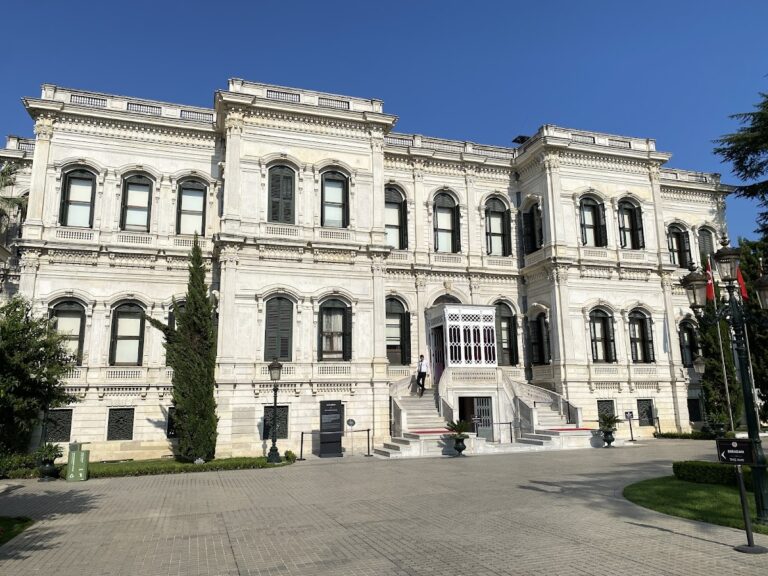
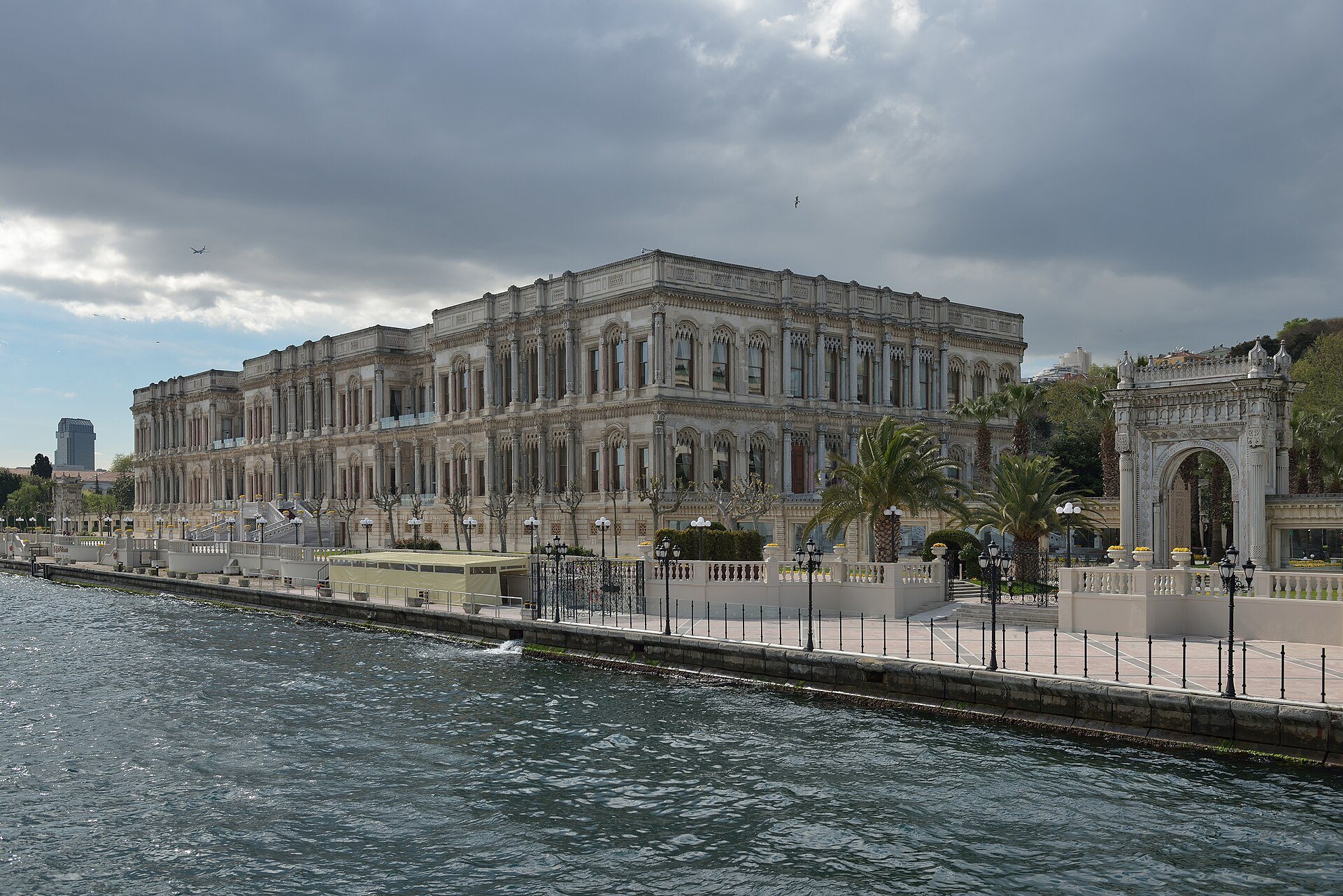
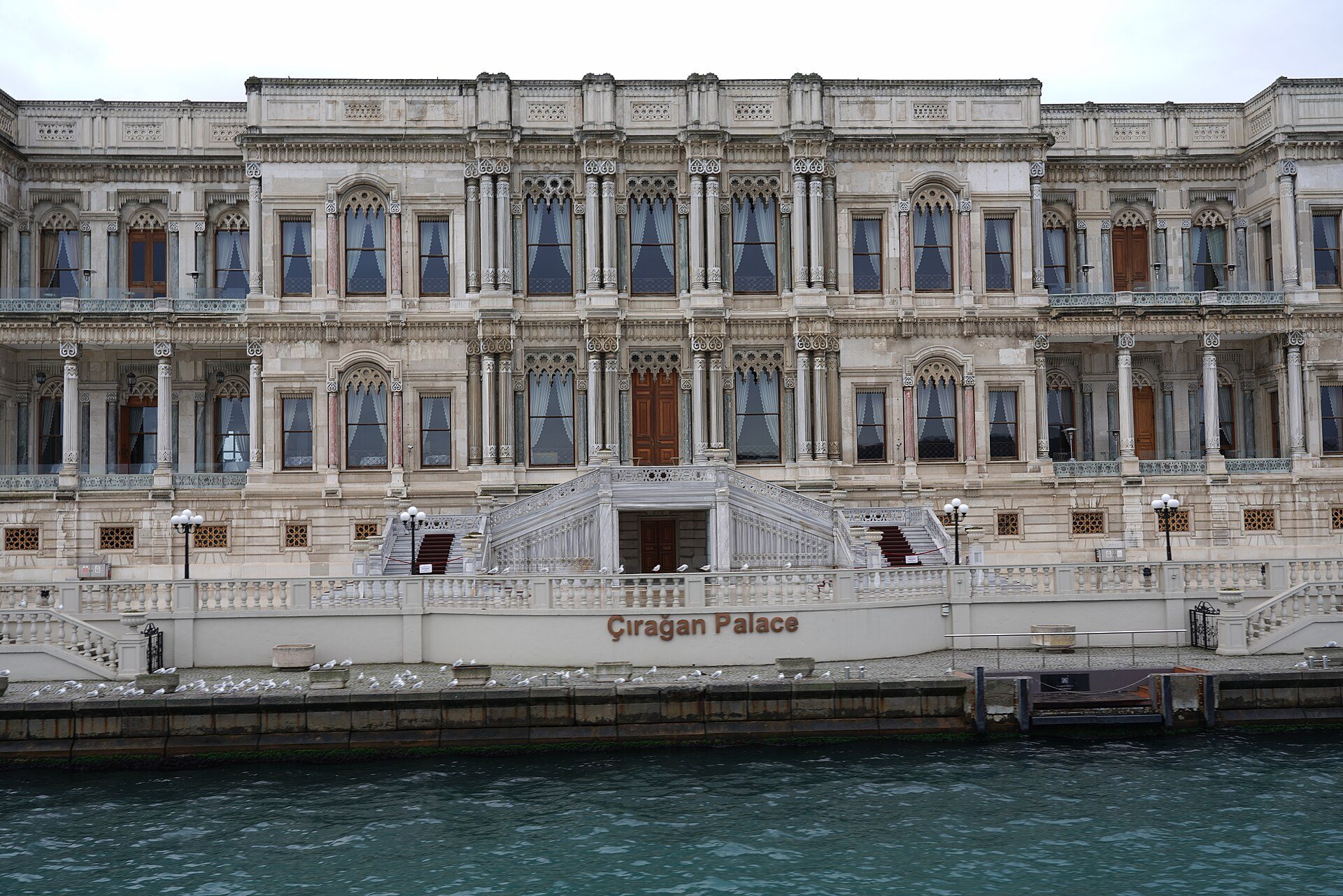
Çırağan Palace occupies a waterfront site directly on the Bosporus between Beşiktaş and Ortaköy, with Yıldız Park behind it. Çırağan Avenue passes beneath an arched upper passage that links the palace area with the rear hills and park. High walls enclose the landward side. Although timber appears to have been used extensively in the new palace, its principal foundations were built entirely of stone, and forty columns were erected to give the building a classical appearance.
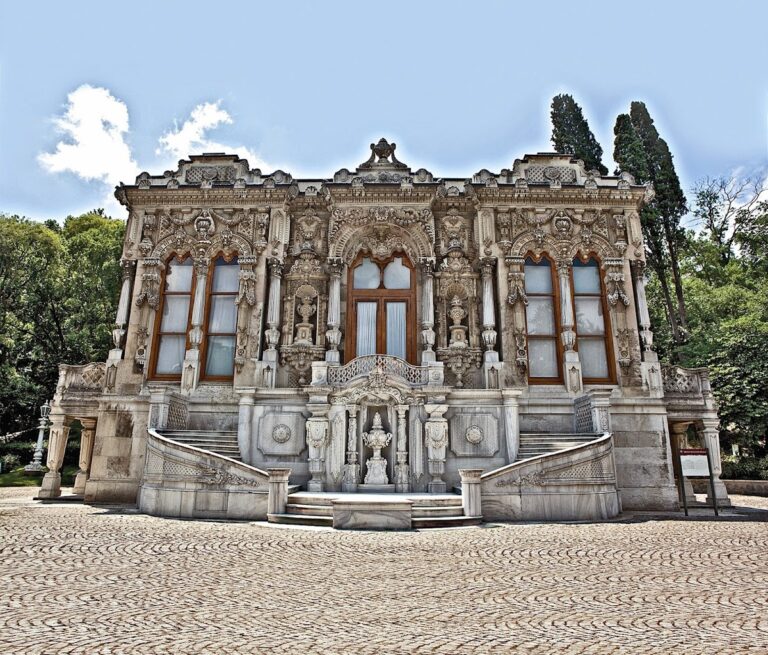
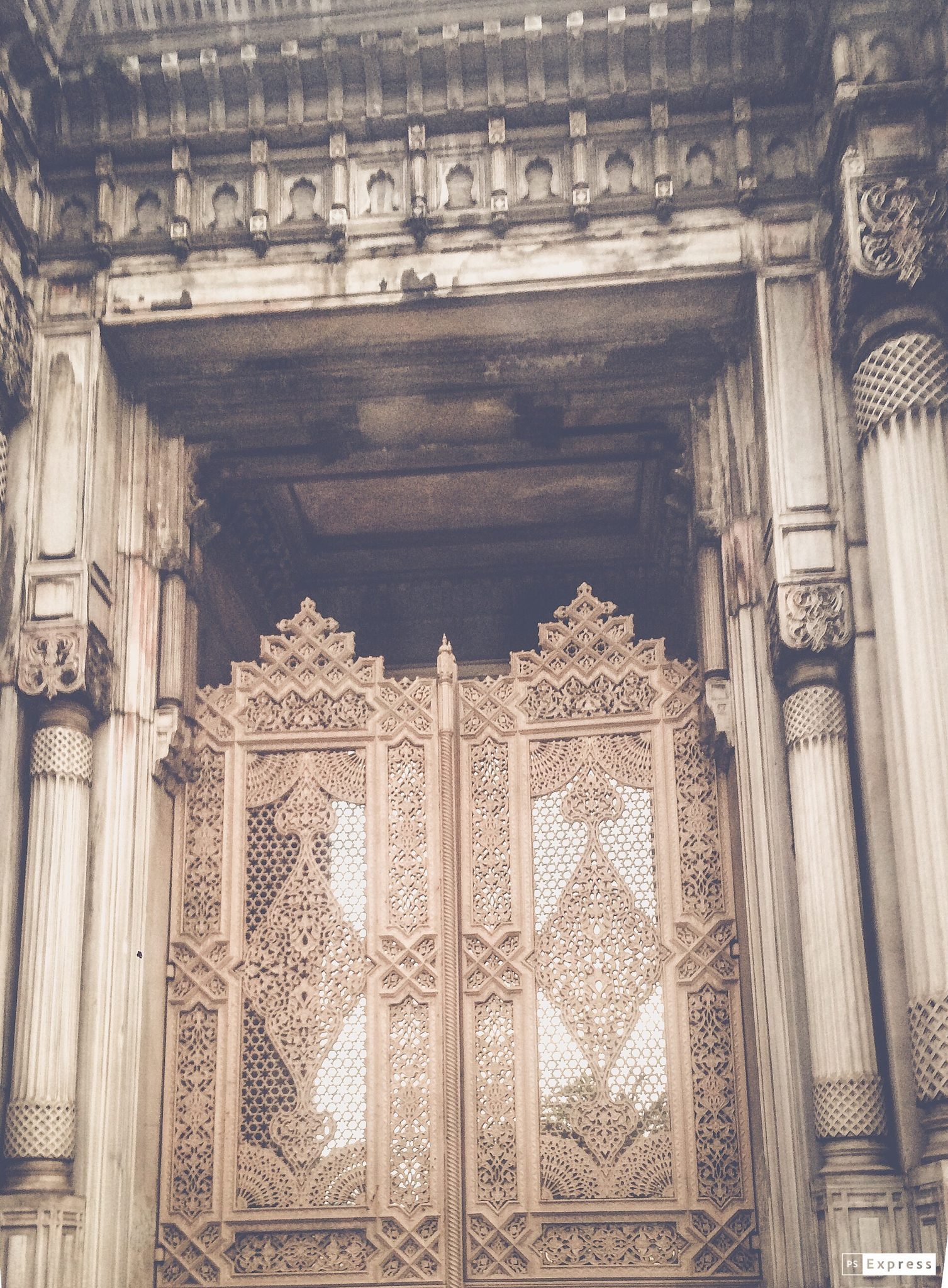
The completed palace adopted an architectural language influenced by North African Islamic buildings rather than the Western style first planned. Its façades are decorated with colored marble and include monumental doors. The present hotel complex and historic palace section occupy the site of the earlier waterfront residences and the successive palace buildings associated with the Kazancıoğlu Gardens.
Interiors and surviving decorative work
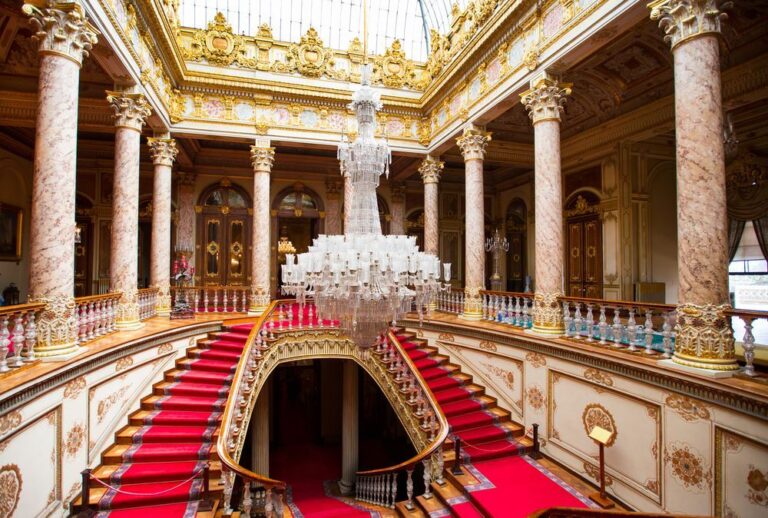
The palace rooms were decorated with rare carpets, while furniture received gilding and mother-of-pearl work. Marble and elaborate decorative craftsmanship were used throughout the interiors. The palace doors included exceptionally costly ornamented examples. One door, valued at 1,000 gold pieces and made by Vortik Kemhacıyan, was presented by Sultan Abdülhamid II to Kaiser Wilhelm II of Germany. Some palace doors are now displayed in a Berlin museum.
The 1910 fire consumed the palace’s antiques, Abdülhamid II’s private collection, and Murad V’s library, and severely damaged the building. Later restoration converted the complex into a luxury hotel while retaining the historic palace section.