Byzantine Sites in Greece: Explore Mosaic Monasteries, Domed Churches and Fortified Towns
Byzantine sites in Greece range from the early Christian basilicas of Philippi to medieval monasteries with gold-ground mosaics and late Byzantine towers guarding Thrace. Churches preserve varied solutions for supporting a dome: broad central spaces, compact four-column plans and elaborate systems of columns placed above one another. Monastic cisterns and fortified enclosures add the practical buildings around these decorated interiors.
The collection includes both extensive ruins and churches that retain their enclosed spaces. Later repairs and additions are common, but the surviving plans, masonry and decoration allow the main Byzantine phases to be identified.
Primary Function: All
Type: All
Popularity: All
Rating: All
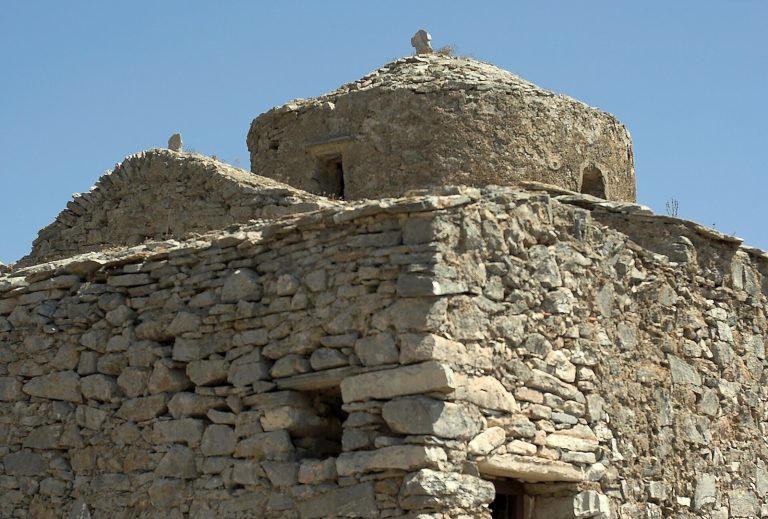
Agia Kyriaki church near Apeiranthos preserves ninth-century wall paintings associated with the Byzantine Iconoclast period, along with later…
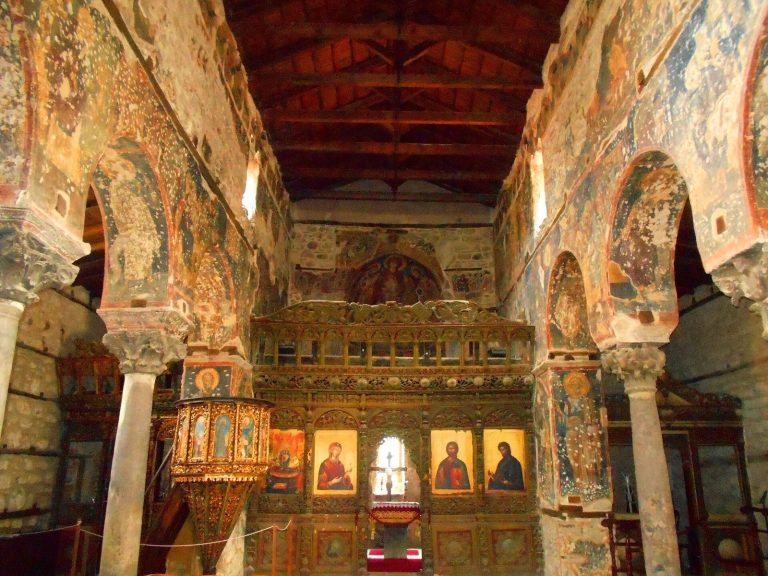
The Old Metropolitan Cathedral of Edessa is a fourteenth-century Byzantine and Eastern Orthodox church, known for its layered frescoes, reused…
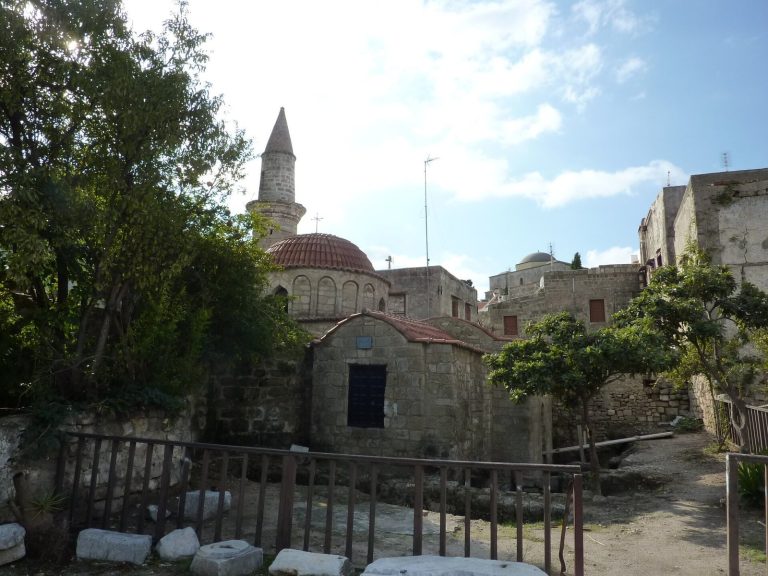
Hagios Spyridon is a medieval Byzantine church in the walled city of Rhodes, built over earlier Hellenistic and thirteenth-century remains and later…
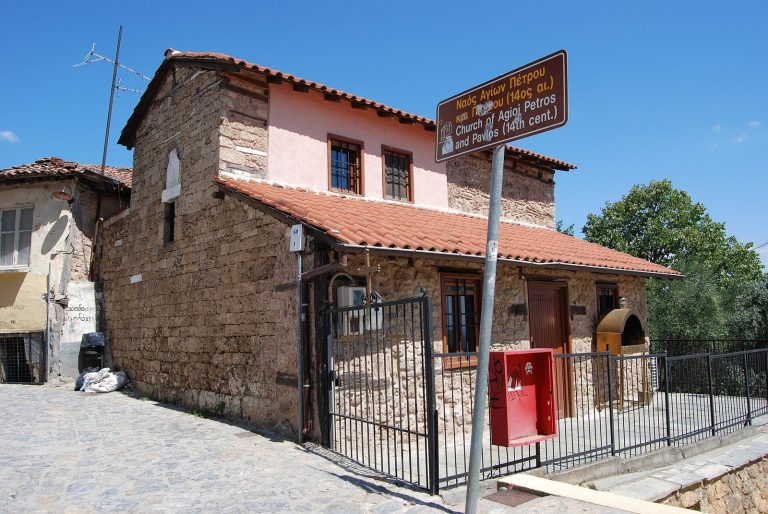
Sts. Peter and Paul Church is a fourteenth-century Orthodox church in Edessa, Greece, known for wall paintings dated 1375 to 1385 and its continuing…
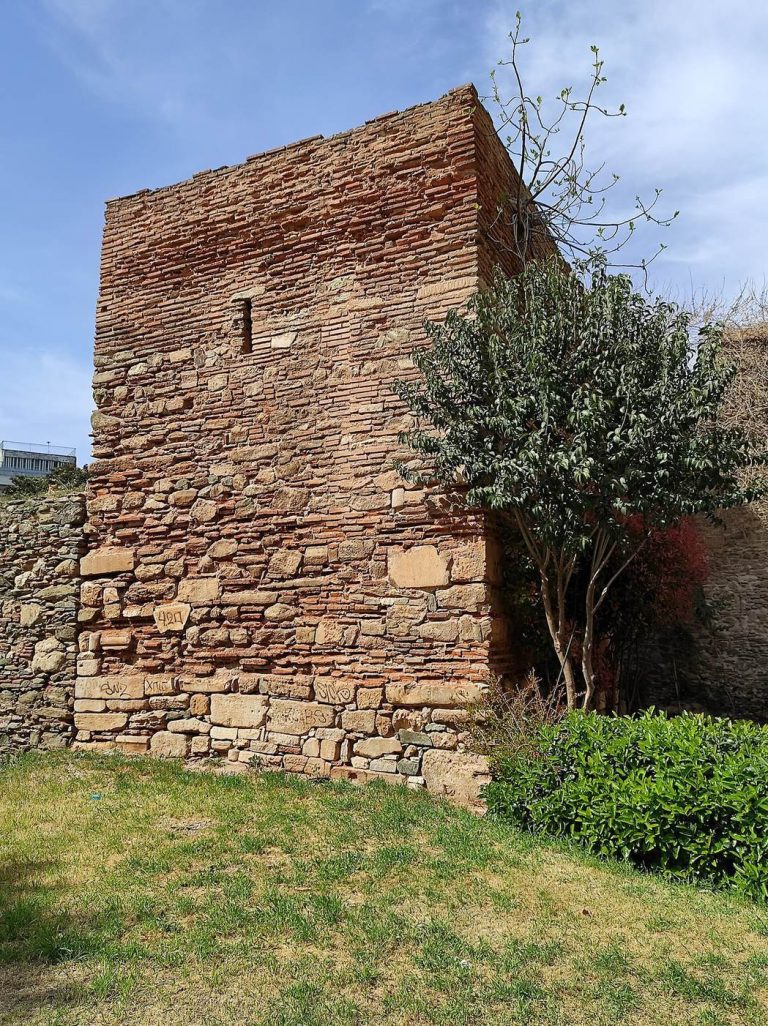
The Tower of Anaglifos is a Byzantine fortification tower on the southwestern edge of Thessaloniki, dated to a renovation in AD 862 and named for a…
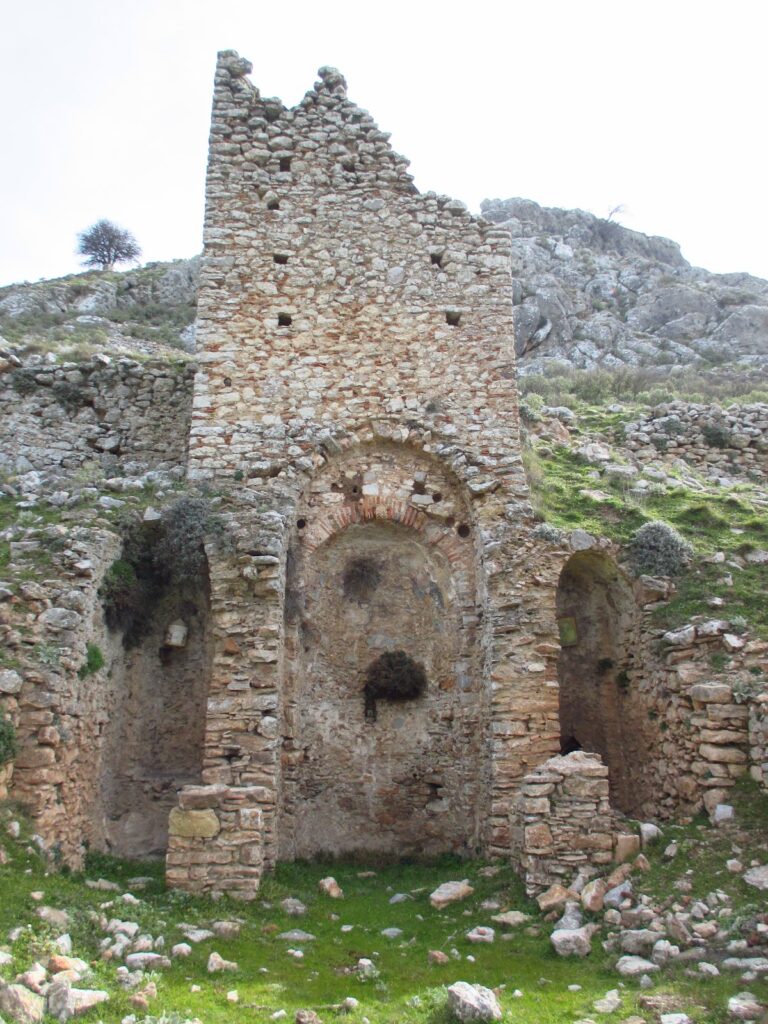
Mouchli Castle was a Byzantine town and fortress built in the 1290s in the Peloponnese. It controlled important routes, became a major political and…
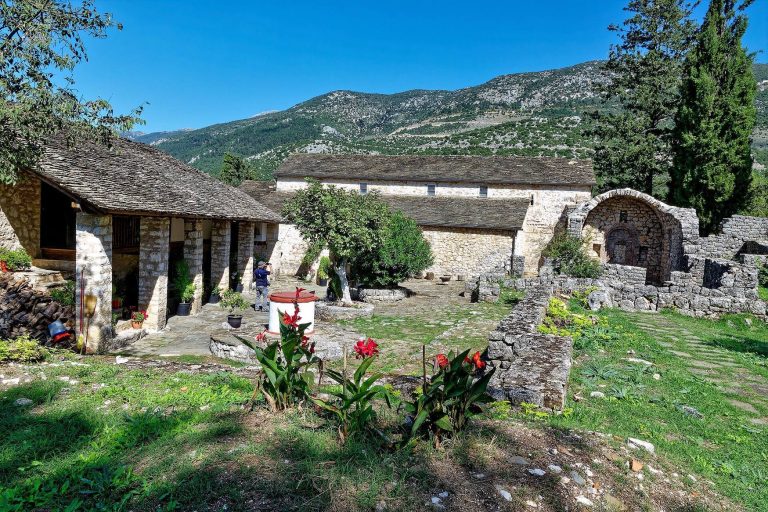
The Monastery of Agios Nikolaos Filanthopinon is a medieval Orthodox monastery on an island in Lake Ioannina, founded in 1292 and renewed with…
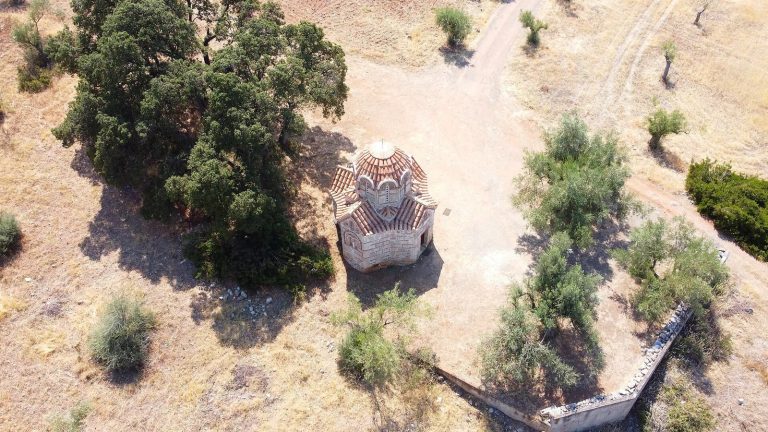
The Church of Agios Georgios in Anthedon is an early twelfth-century Byzantine church in Lukisia, Euboea, known for its domed tetraconch plan,…
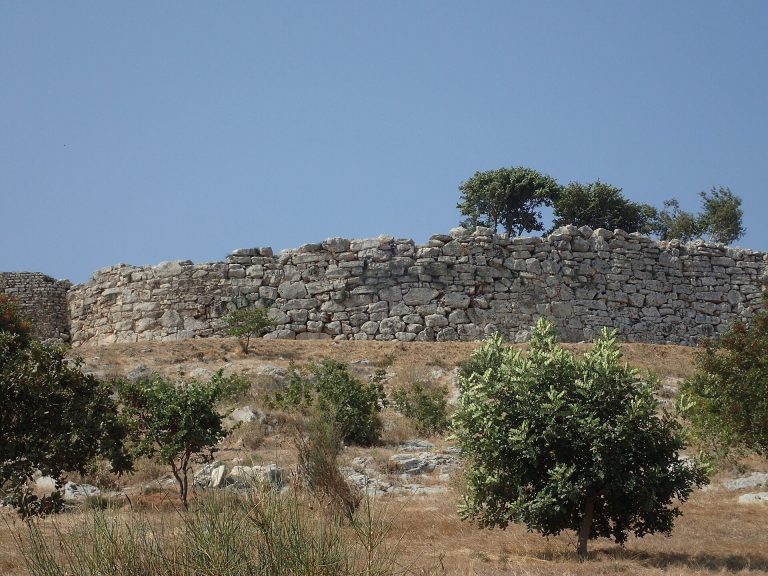
Teichus, ancient Teichos Dymaion, is a prehistoric settlement and fortress on Cape Araxos in northwestern Greece. Its history extends from the…
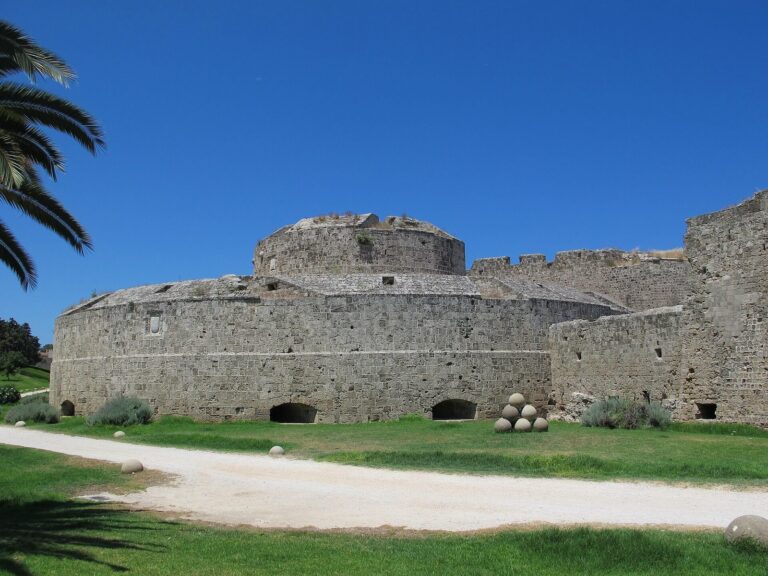
The fortifications of Rhodes preserve a defensive system developed from ancient walls into a major Hospitaller stronghold, adapted to cannon and…
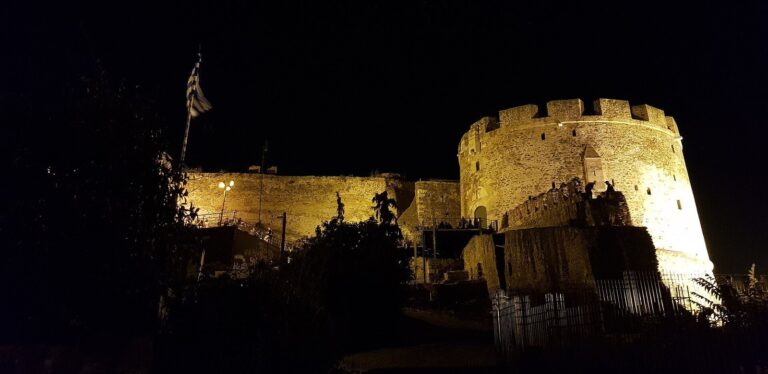
Built in successive phases from antiquity through the Ottoman period, Thessaloniki’s walls preserve a record of the city’s defenses, sieges,…
For details on how to use the maps, which sites are included, how popularity and ratings are determined, and how sites are classified, see the help page.
On this page6 sections
Daphni and Nea Moni: mosaics on curved surfaces
At Daphni Monastery, near Athens, the principal church has a broad dome over an open central space. Supports are arranged towards the perimeter, leaving fewer obstructions beneath the mosaic programme. Gold-ground scenes occupy the curved surfaces above, with episodes including the Crucifixion and the Descent into Hades. Decorative brickwork frames the exterior windows and the large drum.
Modern reconstruction and conservation have affected the dome and adjoining areas. The surviving mosaics retain their relationship with the church’s architecture, but the building’s present condition also reflects repeated repairs after structural damage and earthquakes.
At Nea Moni on Chios, the eleventh-century church uses a more compact domed arrangement, with supports attached to the walls. Surviving mosaics include scenes in the inner entrance hall as well as the main church. The original dome mosaic was lost, and major nineteenth-century destruction and rebuilding changed parts of the structure.
The monastery also preserves an early cistern with a roof divided into numerous small domed compartments. This water-storage building supported life within the enclosed complex, alongside the decorated spaces used for worship.
Parigoritissa: columns rising in successive tiers
The Church of the Parigoritissa in Arta has a tall, almost cubic exterior crowned by five domes. Inside, an unusual system of columns and projecting supports rises in stages towards the central dome. Reused columns stand above other supports near the walls, keeping much of the central floor open.
A mosaic of Christ Pantokrator survives in the dome, surrounded by celestial figures and prophets. Its elevated position makes the support system part of the experience of the image: the view rises through successive architectural levels. The church belongs to the late thirteenth-century setting of the Despotate of Epirus, while later wall paintings add further decorative phases.
Brickwork and painting in two urban churches
Panagia Chalkeon in Thessaloniki was founded in 1028. Its exterior uses projecting and recessed brickwork, arches and a continuous marble cornice to distinguish the upper and lower parts of the walls. A central dome and two smaller domes over the entrance hall express the internal arrangement from outside.
At Theotokos Kosmosoteira in Feres, the surviving church was the centre of a fortified monastery founded by Isaac Komnenos in the twelfth century. Its large central dome is accompanied by four smaller domes, and surviving frescoes include bishops, biblical figures and scenes from the life of Christ. Remains of towers recall the enclosure around the monastery. Later buttresses and reinforcement helped stabilise the church.
Philippi: basilicas replacing parts of the Roman town
At Philippi, the great piers of Basilica B stand above the remains of earlier public buildings. The sixth-century church replaced parts of the Roman market and exercise complex. Its intended domed form can be traced through the large supports, although the circumstances and timing of the dome’s collapse remain uncertain.
The nearby Octagon complex adds a different Christian plan, with an eight-sided central arrangement, a baptistery and rooms associated with the bishop’s establishment. Church construction closed or absorbed parts of the earlier street grid. These remains show how religious buildings reorganised the town, extending beyond the insertion of a single church into an unchanged Roman setting.
Pythio: two towers on the Thracian frontier
The Castle of Pythio preserves two prominent towers and sections of its enclosing walls. Ancillary rooms and water-storage spaces supported occupation within the defended site.
The fortress is associated with John VI Kantakouzenos and the fourteenth-century struggle for control of Thrace. Its standing towers provide a substantial example of late Byzantine military building at the end of the chronological range represented in the collection.
Explore the collection
Explore sites on the map or in the grid. Map icons reflect each site’s primary function, helping you identify different kinds of places at a glance. Narrow the results by primary function, site type or era, with additional filters for popularity and rating. Select a map marker to view the site’s details and open its article, or open the article from its grid entry.