Timurid Historic Sites: Explore Mosques, Madrasas, Mausoleums and an Observatory
Explore Timurid historic sites through tiled mosques, courtyard madrasas, domed mausoleums and astronomical remains. The collection is centred on Uzbekistan, with further sites in Iran, Afghanistan, Kazakhstan and neighbouring regions. Buildings associated with Timur and his successors range from large dynastic foundations to comparatively restrained burial monuments.
Tall portals and domes are prominent features, but the plans behind them differ. A religious school needed classrooms and residential chambers; a pilgrimage mausoleum could contain several communal spaces around a central hall. The surviving observatory at Samarkand preserves an entirely different use of monumental construction.
Primary Function: All
Type: All
Country: All
Popularity: All
Rating: All
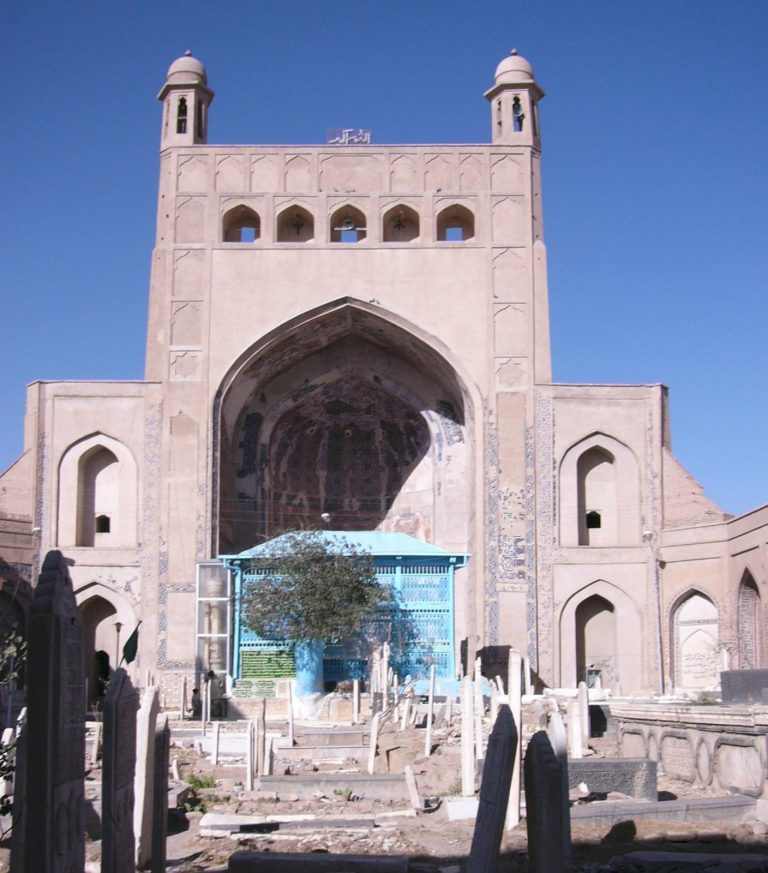
The Khwaja Abdullah Ansari Mausoleum near Herat is a Timurid funerary complex, shrine, and mosque commissioned by Shah Rukh in 1425 for the Sufi…
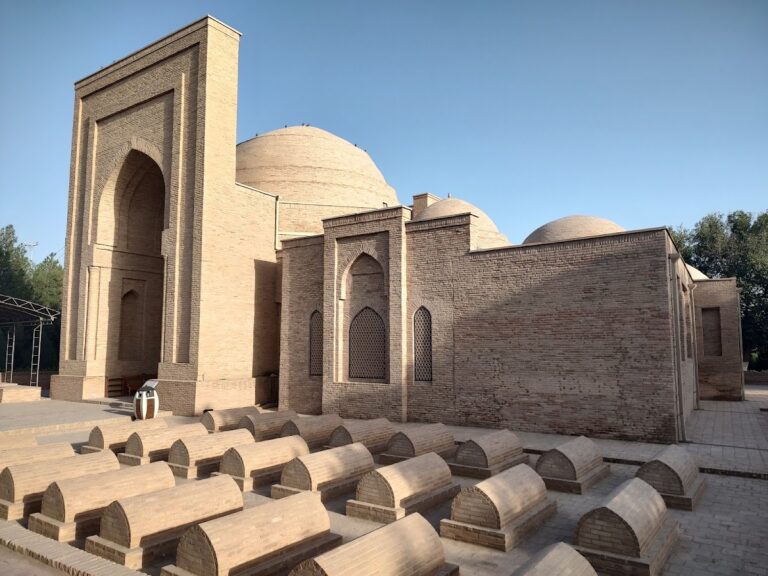
The Termizi Memorial Complex in Termez developed from a ninth-century retreat associated with Hakim Termizi into a religious and funerary ensemble…

Qasr-e Bahram in Semnan Province preserves a Sasanian-period palace tradition, Safavid rebuilding, and a historic water system serving its later role…
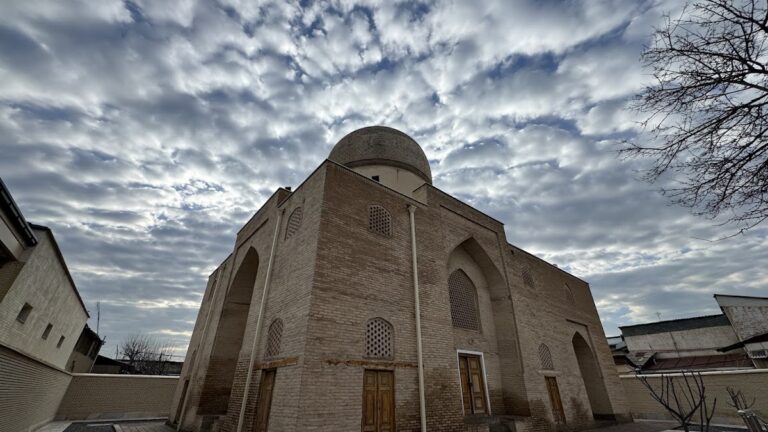
Aksaray Mausoleum is a fifteenth-century Timurid burial monument in Samarkand, closely related to Ishrat Khana and known for its richly gilded…
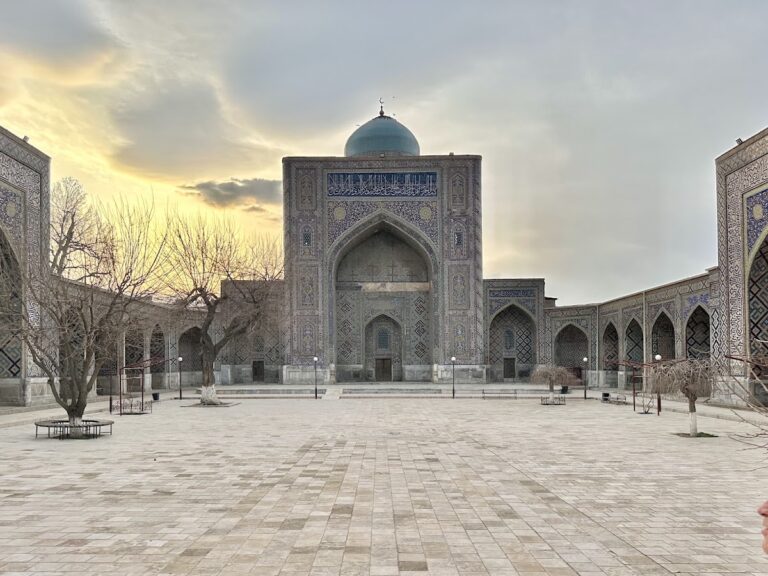
The Khoja Ahrar complex in Samarkand developed around the tomb of the Naqshbandi leader Khoja Ahrar Vali from the fifteenth to the twentieth century.…
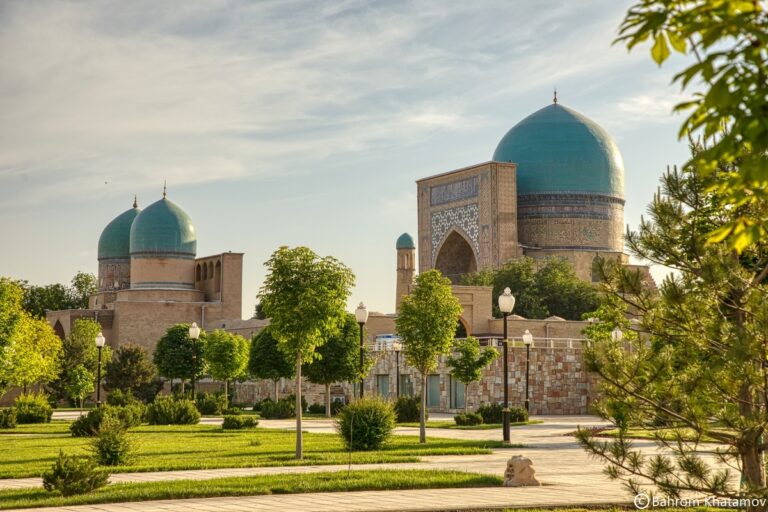
Built in 1434–1435 by Ulug Beg Mirzo for his father, Shah Rukh Mirzo, Kok Gumbaz Mosque is the principal monument of Shahrisabz’s Dorut Tilavat…
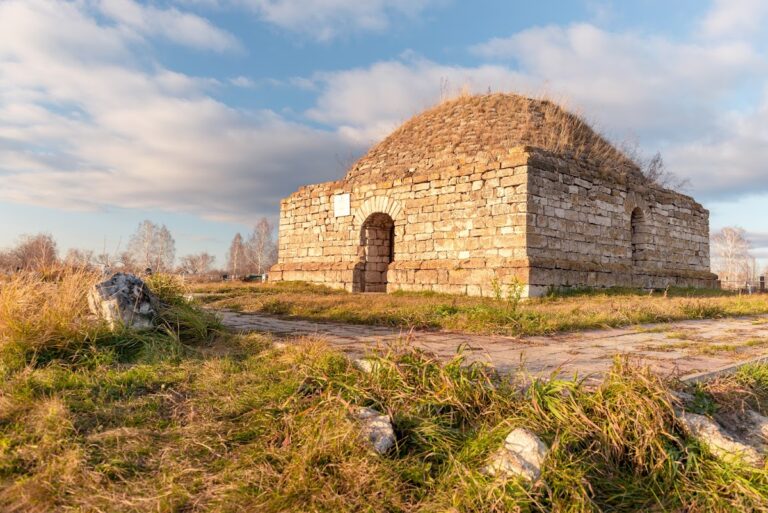
Khusein-bek Mausoleum near Chishmy preserves the burial place of Haji Khusein-bek, regarded as the first imam and Muslim spiritual leader of…
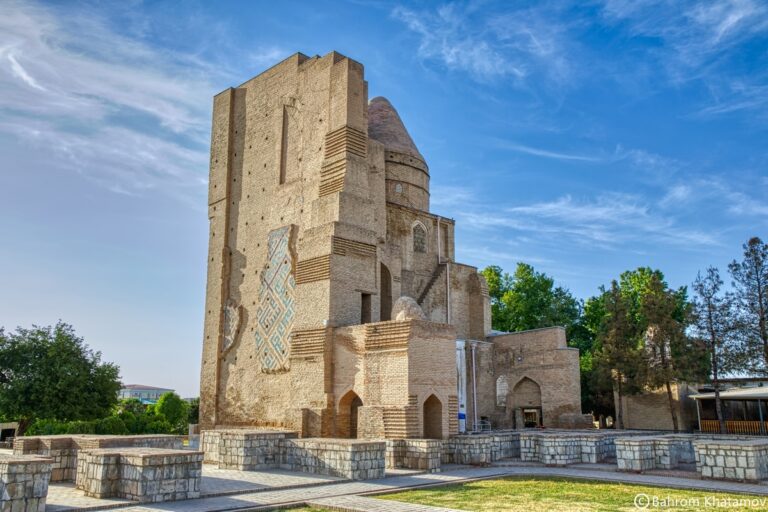
The Dorous Siadat complex in Shahrisabz was built under Amir Timur from 1379 and served as a major religious and funerary centre for the Timurid…
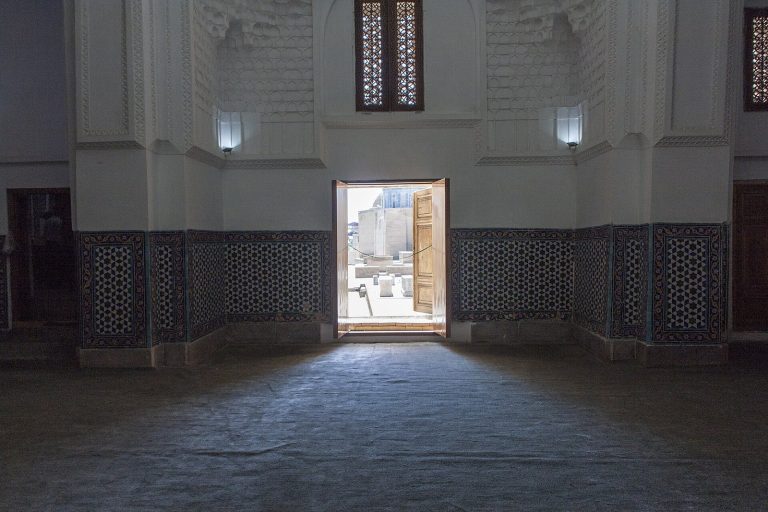
Mausoleum Qassim-ibn-Abbas forms part of Samarkand’s Shah-i-Zinda necropolis, a layered sacred complex developed from the Karakhanid period through…
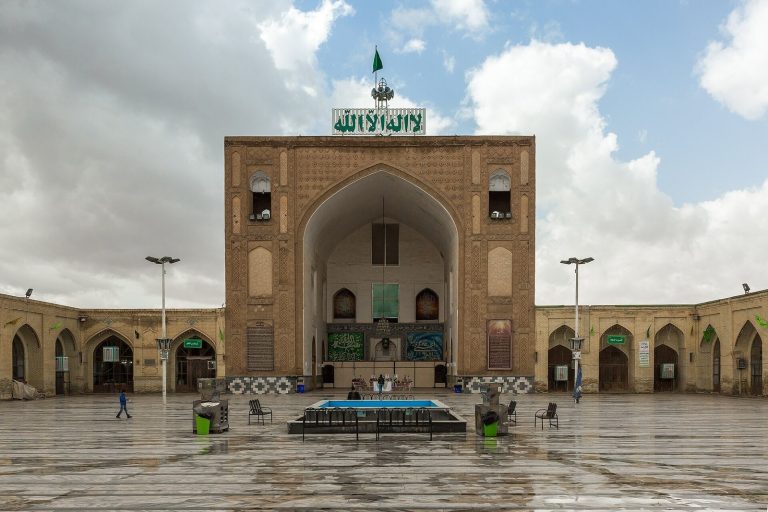
Jameh Mosque of Nishapur is a historic Shia congregational mosque founded under the Timurid dynasty and rebuilt during the Safavid and later periods.…
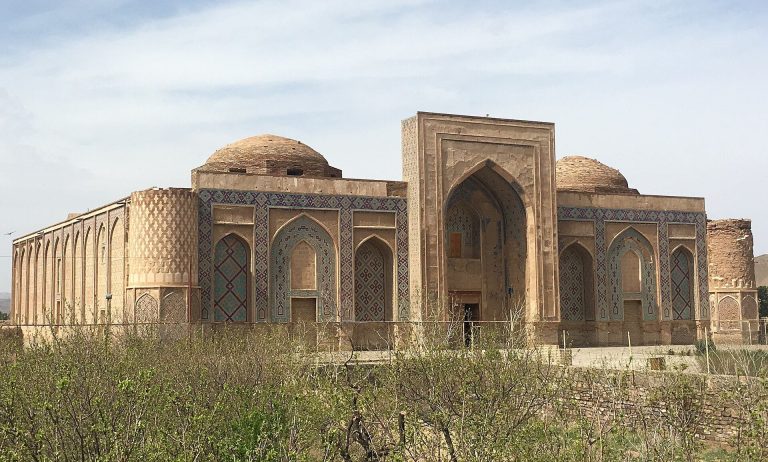
Ghiyasiyeh Madrasa, also known as Khargerd School, is a fifteenth-century Timurid educational complex in Khargerd, Iran, noted for its four-iwan…
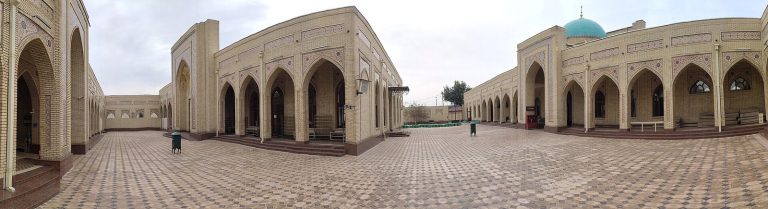
Suzuk ota Mosque in Tashkent was established during the period of Amir Timur over the grave of the Sufi figure Suzuk ota. Closed and industrially…
For details on how to use the maps, which sites are included, how popularity and ratings are determined, and how sites are classified, see the help page.
On this page5 sections
Courtyard mosques in Samarkand and Mashhad
Bibi-Khanym Mosque in Samarkand surrounds a large rectangular courtyard. A tall entrance portal faces the principal sanctuary, whose dome rises behind another high arched façade. Smaller domed buildings occupy the lateral sides, establishing strong axes across the open court.
The original galleries are largely lost, while the principal domed buildings and portal have undergone extensive modern reconstruction. The mosque retains an ambitious Timurid arrangement, but much of its present skyline and tile decoration reflects the recovery of a damaged ruin.
At Goharshad Mosque in Mashhad, Iran, four vaulted halls open towards a courtyard adjoining the Imam Reza shrine. Their unequal depths reflect the incorporation of pre-existing buildings. Goharshad’s foundation joined a major place of pilgrimage, with prayer halls and passages connecting the mosque to the surrounding complex.
Later repairs were substantial here too. The dome’s outer shell was rebuilt in the twentieth century, while successive campaigns renewed other parts of the mosque. Its Timurid layout and patronage are distinct from the dates of all its visible decoration.
Teaching rooms at Ghiyasiyeh Madrasa
Ghiyasiyeh Madrasa at Khargerd in Iran has two levels of rooms surrounding a four-iwan courtyard. Student chambers and classrooms occupy the ranges, while domed halls flank the entrance vestibule. One of those halls contains a prayer niche.
The portal combines geometric and floral tilework with inscriptions in white against blue and turquoise backgrounds. Portions of the decoration have been lost, exposing the underlying structure. The surviving entrance, court and room arrangement show how a residential school accommodated study and worship within a compact independent building.
Mausoleums of different scales
Rukhabad Mausoleum in Samarkand has a restrained fired-brick exterior. A cubic body rises through an octagonal transition to a single dome. Entrances on three sides give the façades a relatively even treatment, without the huge projecting portal associated with many other Timurid monuments.
The Mausoleum of Khoja Ahmed Yasawi in Turkestan, Kazakhstan, is a much larger religious complex. Its entrance leads into the Kazandyk, a central domed hall, with other rooms arranged around the main spaces. Thick brick construction and vaulted passages accommodate several functions within the same rectangular enclosure.
Both commemorate religious figures, but their spatial arrangements are markedly different. Rukhabad concentrates the burial monument beneath one dome; Yasawi’s complex includes a sequence of halls and subsidiary chambers. Modern conservation has also intervened below ground at Yasawi, replacing earlier foundations to stabilize the building.
Ulugh Beg’s astronomical instrument
The Ulugh Beg Observatory at Samarkand preserves the buried portion of an enormous astronomical instrument. Two marble-lined sides define its curved measuring arc, with brick stairways running alongside. The instrument was aligned north–south to measure celestial bodies as they crossed the meridian.
The circular building that once enclosed it has largely disappeared. Its foundations and the deep surviving arc establish the scale of the original installation without requiring a complete reconstructed observatory. This is a substantial scientific structure within a collection otherwise dominated by religious and funerary architecture.
Explore the collection
Explore sites on the map or in the grid. Map icons reflect each site’s primary function, helping you identify different kinds of places at a glance. Refine the results by country, primary function, site type and era. Popularity and rating filters provide further refinements. Select a map marker to view the site’s details and open its article, or open the article from its grid entry.