Torre de Cuadros: A Medieval Watchtower in Bedmar, Spain
Visitor Information
Google Rating: 4.5
Popularity: Very Low
Country: Spain
Civilization: Medieval European
Site type: Military
Remains: Castle
History
The Torre de Cuadros stands in the municipality of Bedmar, within modern Spain, as a remnant of a medieval defensive complex constructed by Castilian builders. It originated against the backdrop of the Reconquista, when Christian kingdoms advanced into territories formerly under Muslim rule.
Before the tower’s construction, the site likely held an earlier fortification dating back to Islamic times. Oral histories gathered in the late 20th century suggest the tower was built atop a Moorish structure, possibly the “castiello” mentioned in a document from 1260 issued during the reign of Alfonso X of Castile. This connection hints at a continuous military importance of the location through the 12th and 13th centuries. Moreover, historical toponyms referenced by the 14th-century historian al-Jatib may point to an even older settlement or fortification named “Qutrus,” a name possibly derived from the Latin word “Quattuor,” meaning “four.” This suggests a longstanding strategic presence predating Christian control.
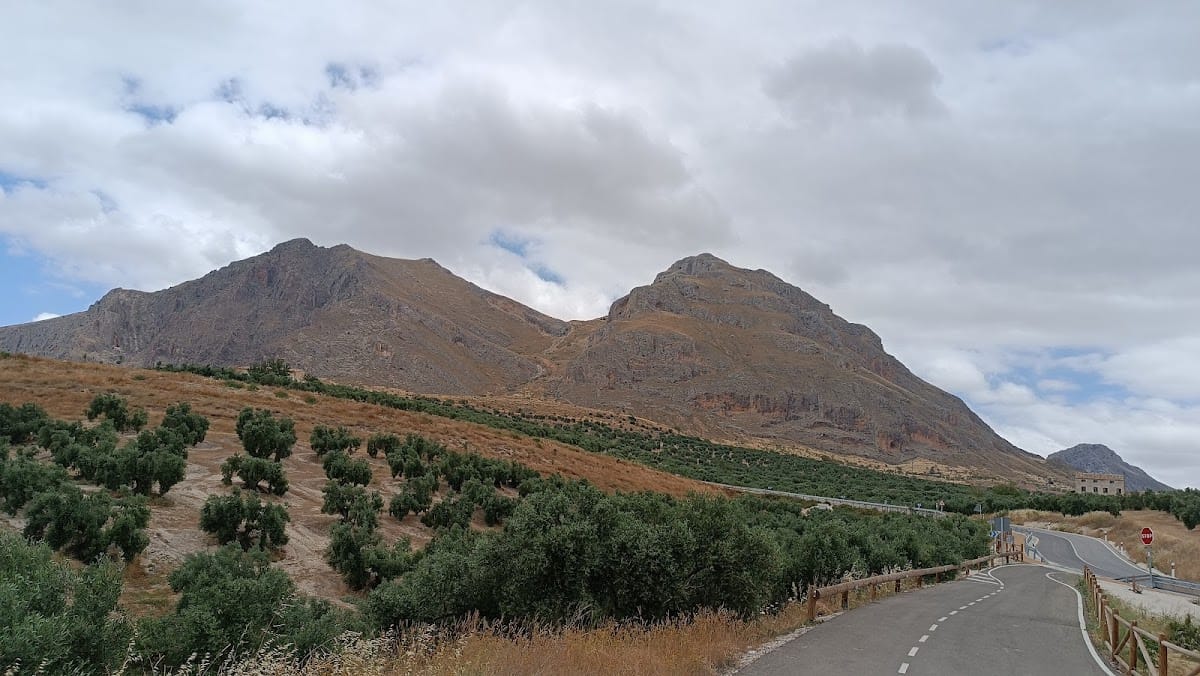
The existing tower likely dates from the early 14th century, constructed shortly after the Christian conquest to secure a vital passage through the Sierra to Cambil, situated between the Sierra Mágina and Almadén mountain peaks. This was a key route for controlling the region. The site’s importance is underscored by its mention in the 1310 Treaty of Algeciras, a significant accord in which Nasr, king of the Nasrid dynasty, conceded several strategic locations, including the Castillo de Cuadros along with Quesada, Bedmar, and Chunguín, to the Christian king Fernando IV. This transfer marked an important step in consolidating Christian power in the area.
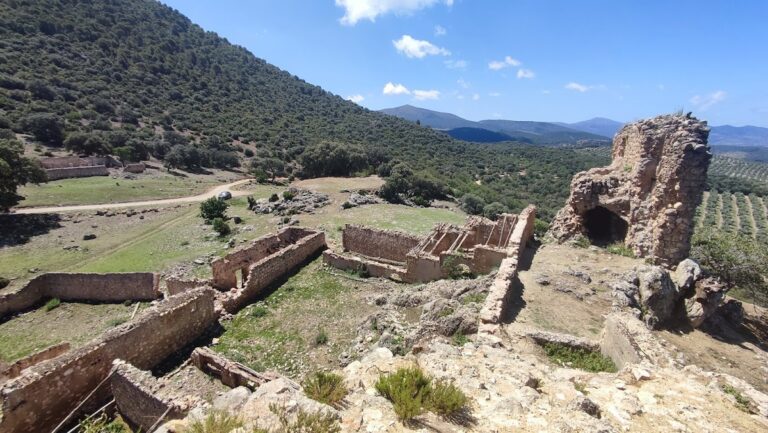
By the time of the late 16th century, the castle had largely vanished with only the Torre de Cuadros still standing, as recorded in the Relaciones—official royal surveys—commissioned under Philip II. The tower thus remained as a solitary vestige of the once more extensive medieval fortress complex, serving as a reminder of the region’s turbulent history of conquest and border defense.
Remains
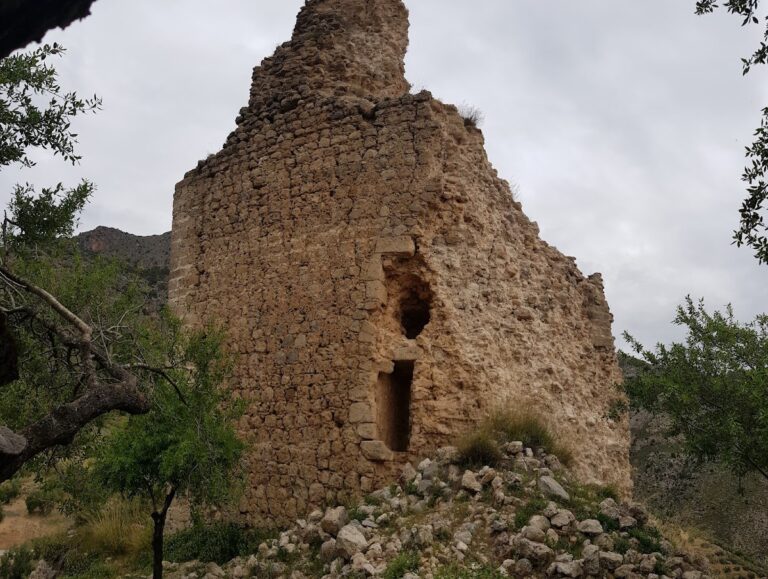
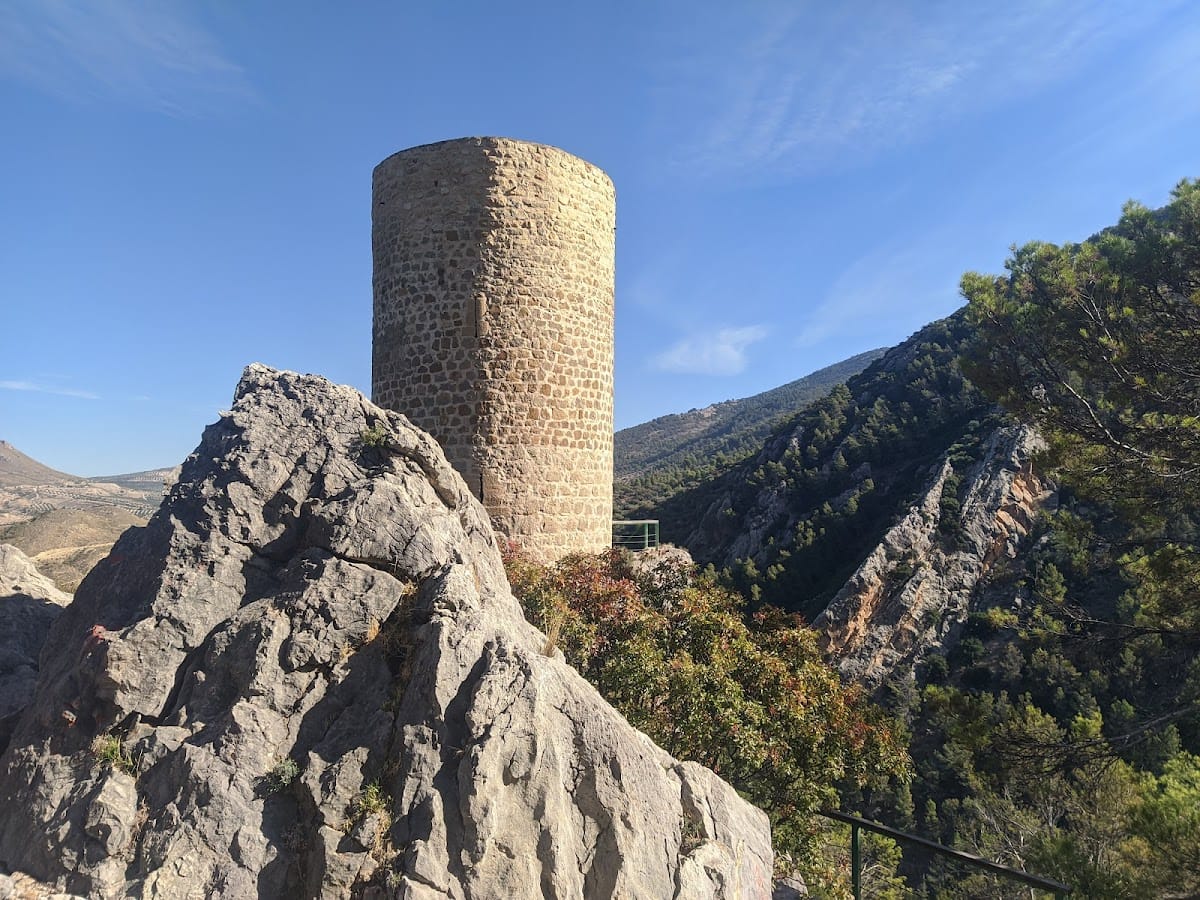
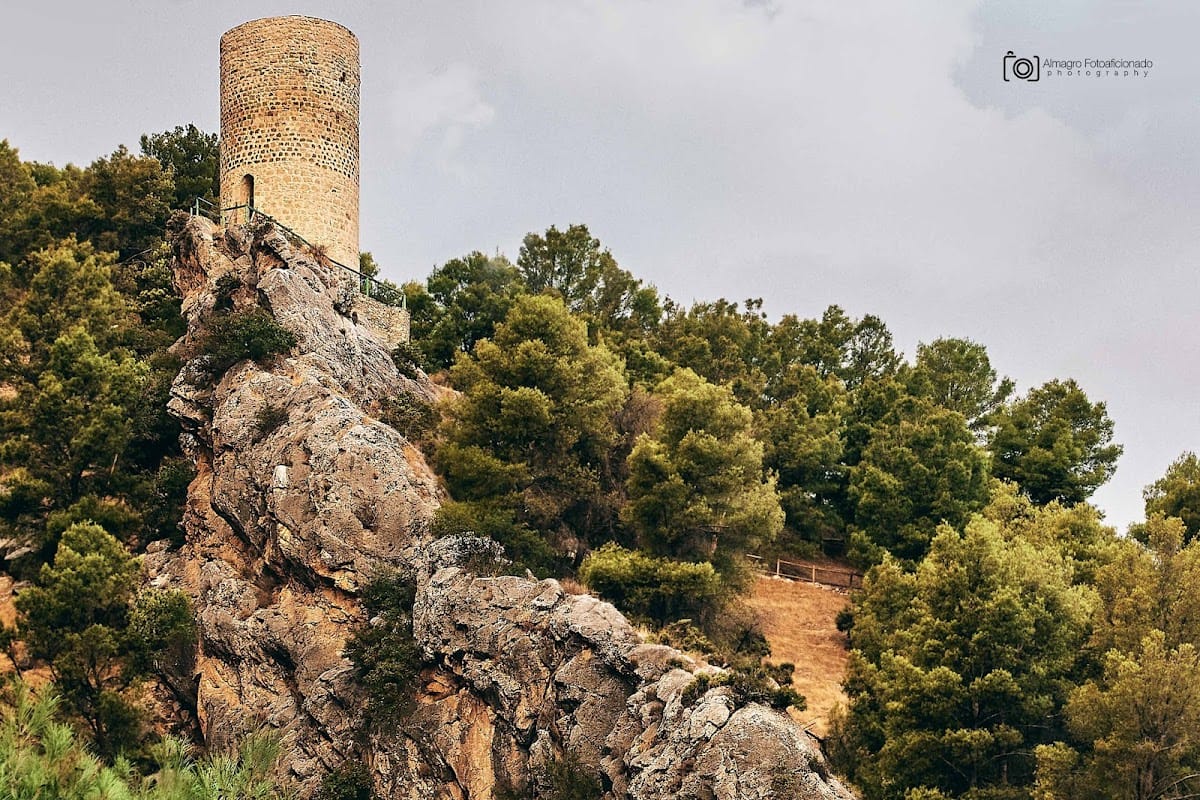
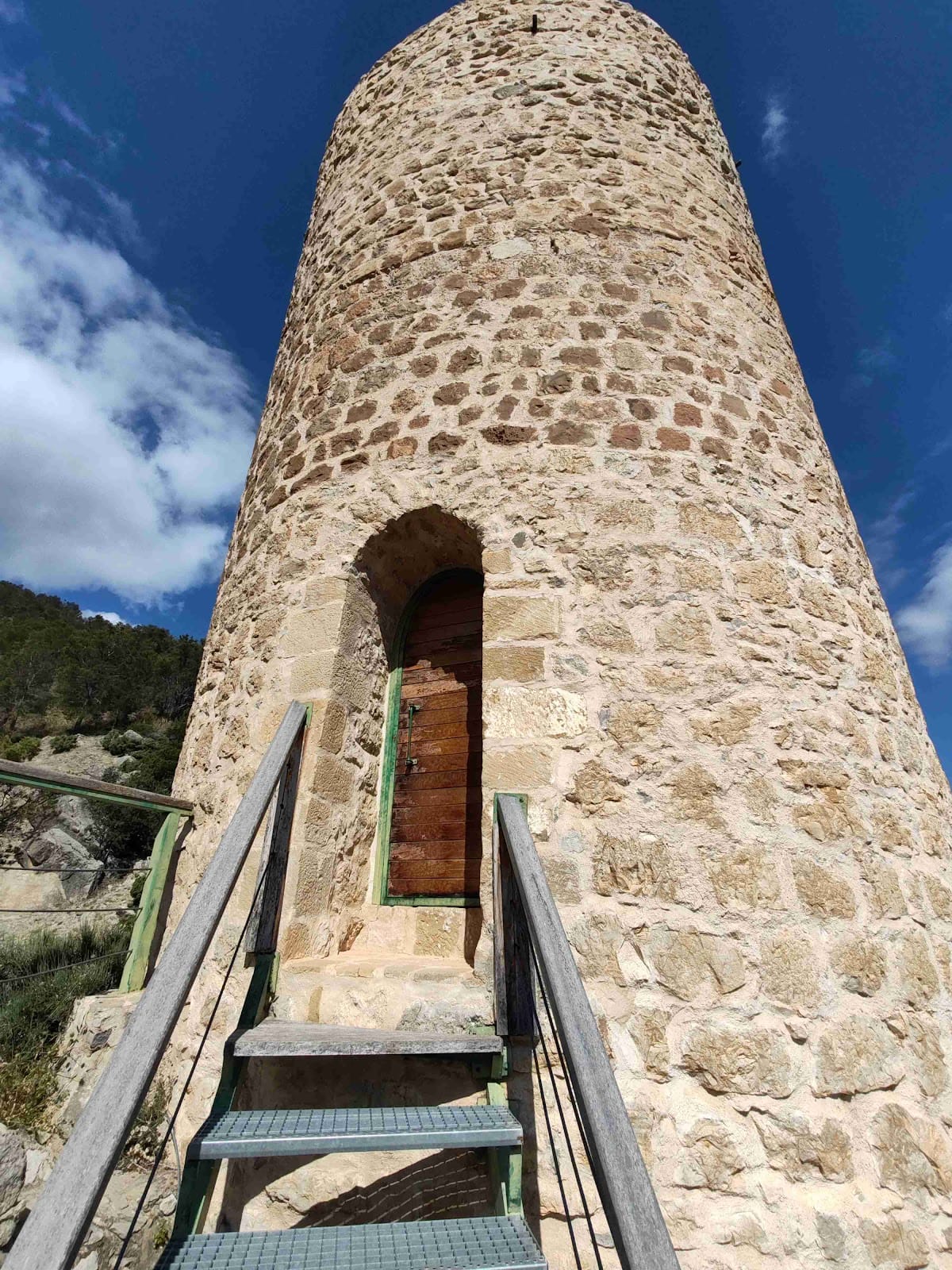
The Torre de Cuadros is a circular watchtower notable for its durable medieval construction and defensive design. Measuring approximately 6.37 meters across and rising to a height of about 12 meters, the tower’s walls are impressively thick at 1.6 meters to withstand attacks. Built after the 13th century, its primary function was to survey and guard critical mountain passes connecting Bedmar to surrounding settlements.
The tower’s walls feature three narrow slits, known as arrow slits, designed for archers to monitor and defend the approaches. These slits are recessed inward, providing space for defenders inside to aim while minimizing exposure. Surrounding the openings and framing the entrance and terrace access are finely cut stones called ashlar masonry, indicating careful craftsmanship. The rest of the tower is made of rubble masonry—irregular stones set in horizontal courses and tightly fitted together, demonstrating both strength and skilled building techniques.
Inside, the tower consists of three distinct levels. The ground floor forms a small chamber about 1.55 meters in height, likely utilized as storage or possibly a cistern for water, although no waterproofing traces survive. This chamber lacks windows or ventilation, emphasizing its basic, functional nature. The middle floor, accessible through the primary entrance, contains an arrow slit covered by a vaulted ceiling, offering light and defensive capabilities while providing structural support. The entryway itself is topped with a pointed vault, a typical medieval architectural feature.
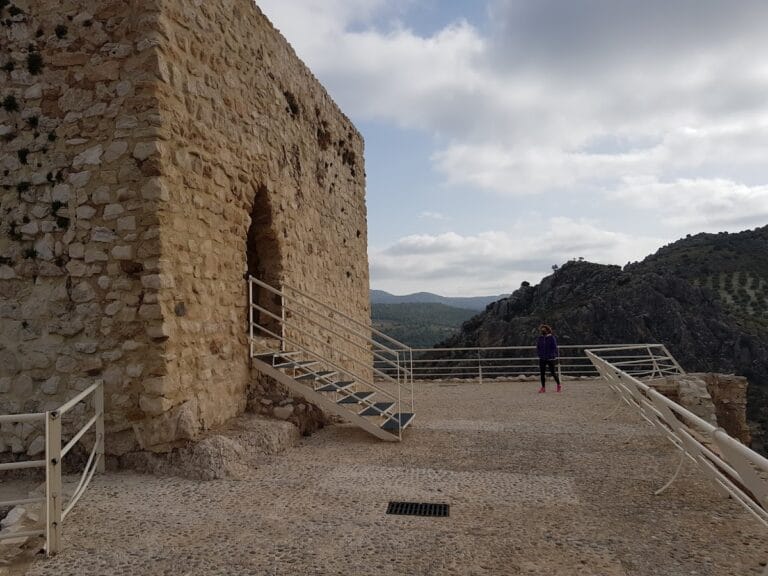
The uppermost floor was originally covered by a hemispherical dome that formed the roof over the terrace. Access to this terrace involved a wooden staircase combined with another set of stairs embedded within the thick walls, leading to an arched entrance topped by a semicircular arch. Another arrow slit aligned with the one below allows for observation and archery from this upper vantage point.
Outside the entrance on the southeastern side of the tower, the remains of a small platform measuring roughly seven square meters were discovered. This area was likely enclosed by a low protective wall or parapet and included an attached extension or niche approximately eight meters on each side. While restoration work and modifications to the surrounding terrain have altered or removed much of these remains, the platform indicates additional defensive or functional space directly adjacent to the tower.
Together, these archaeological features demonstrate the Torre de Cuadros’ role as a compact but well-planned fortification integral to controlling mountain passages during the late medieval period. Its combination of robust masonry, strategic apertures, and multi-level internal layout highlights its defensive purpose and connection to a broader frontier system established by Castilian forces.
Nearby sites