Jódar Castle (Castillo de Jódar): A Medieval Frontier Fortification in Spain


Site at a Glance
- Rating
- 4.3
- Popularity
- Low
- Country
- Spain
- Primary era
- Medieval
- External website
- Open
- Eras represented
- Medieval
- Civilizations
- Almohad, Almoravid, Crown of Castile, Umayyad
- Site type
- Military
- Remains
- Castle
On this page9 sections
History
Jódar Castle, or Castillo de Jódar, is a medieval fortification in Jódar, Spain, with an origin under the Muslim rulers of al-Andalus in the eighth century. Its development continued through the Almoravid and Almohad periods, successive North African Muslim dynasties that ruled parts of the Iberian Peninsula, while the castle retained a defensive role during the taifa period, when smaller Muslim kingdoms emerged after the fragmentation of the caliphate.
Sawdar and the medieval frontier
During these centuries, Jódar was known as Sawdar and reached its greatest development. In the thirteenth century, the Crown of Castile conquered the town. After the Pact of Jaén, a medieval agreement between Castile and the Nasrid Kingdom of Granada, the castle held a forward position on the frontier separating the two kingdoms until the fifteenth century. The Nasrids ruled Granada, the principal surviving Muslim kingdom in the Iberian Peninsula during the later Middle Ages.
Residence, decline, and reuse
The Lords of Carvajal later used the castle as a residence. In 1520, the town and castle were burned, after which they were reconstructed with stone taken from the nearby Iberian settlement of Xandulilla, also called Félix, beside the Jandulilla River. The reuse of this ancient material helped create a local tradition that attributed an Iberian origin to Jódar and its castle.
The castle was definitively abandoned in the eighteenth century and was subsequently put to practical uses as a warehouse or prison. French troops used it during the nineteenth century, and in 1847 the complex was described as almost ruined.
Modern restoration and interpretation
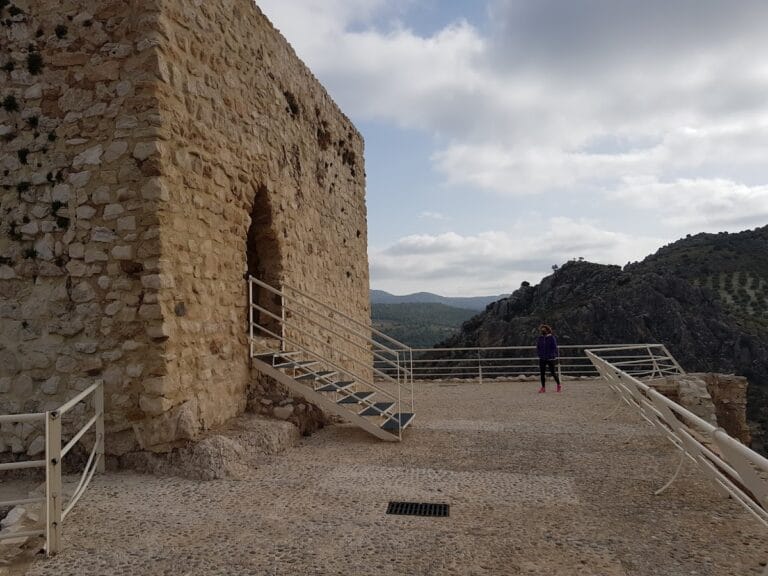
A restoration in 1983 drew severe criticism from the historian Tomás Quesada Quesada and from the Saudar Cultural Association, a local organization concerned with Jódar’s culture and heritage. Particular objection was made to a glass-and-metal staircase inserted into the facade. The staircase was removed in 2002. The North Tower was rehabilitated and converted for museum use in 2012, and since 2013 it has housed the Interpretation Centre of the History of Jódar. The castle has been protected as a Spanish Asset of Cultural Interest since 25 June 1985.
Remains
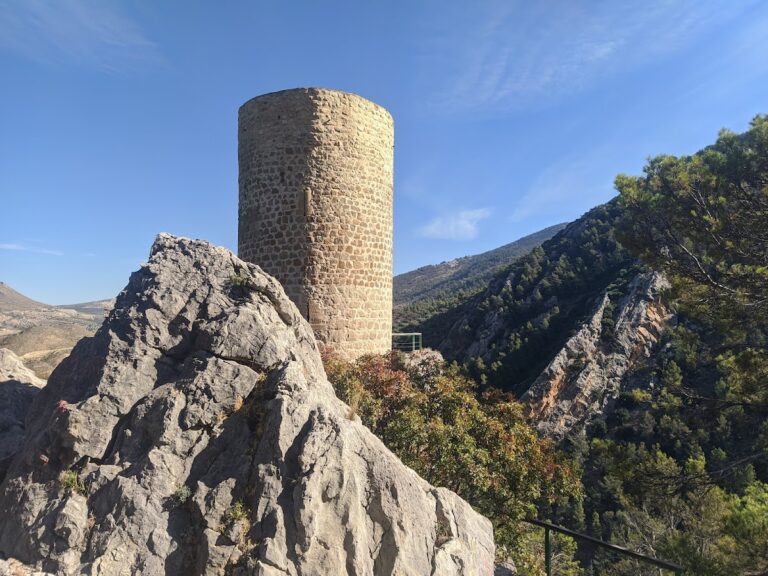
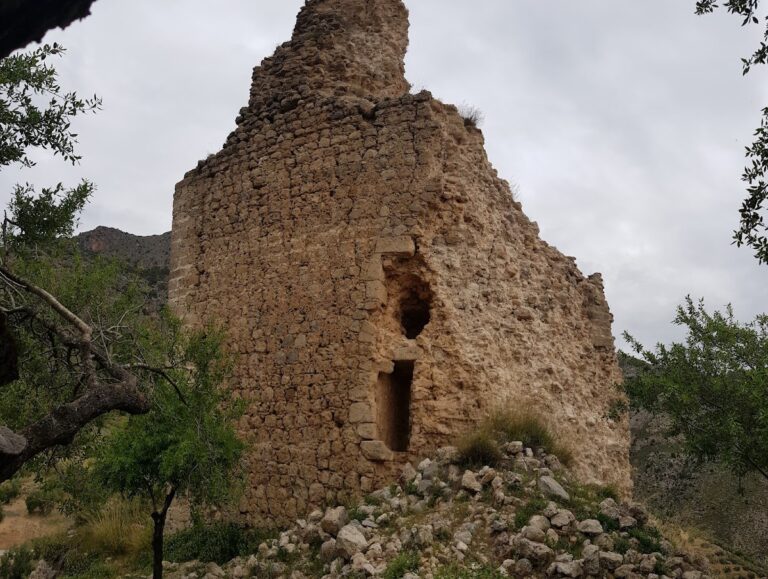
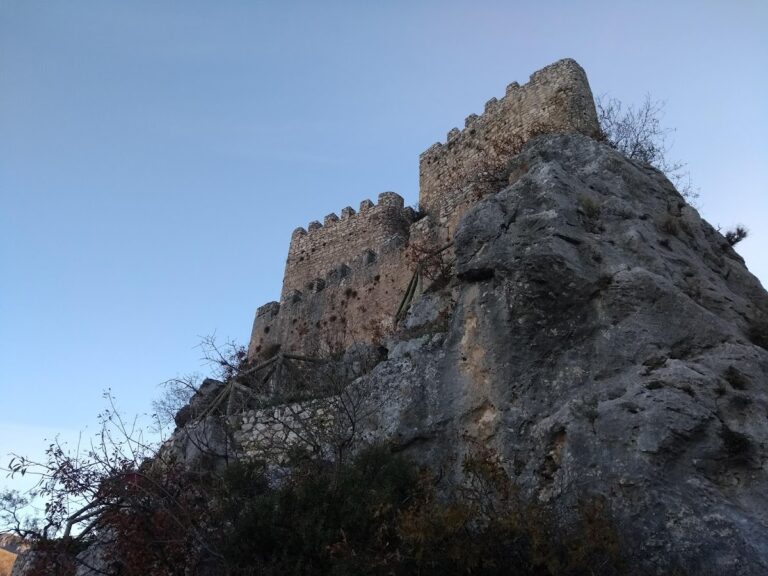
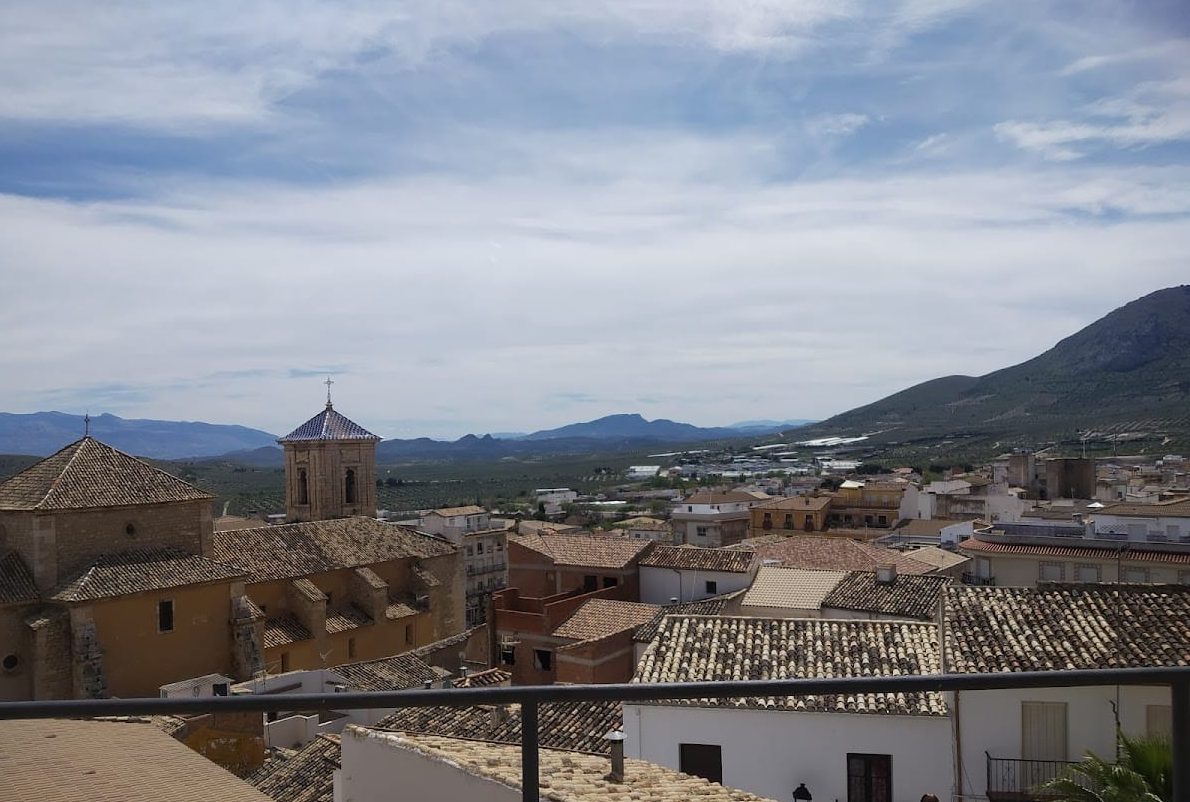
Jódar Castle stands within the urban area of Jódar on the slope of San Cristóbal Hill. Its surviving fabric brings together several historical phases, including Almoravid and Almohad construction and later Gothic modifications to the principal towers. The complex retains two keep towers, the strongest defensive towers of a medieval castle, as well as a small surviving section of the rammed-earth walls of the outer fortified enclosure, or alcazaba. A large-capacity cistern also formed part of the castle’s infrastructure.
Keep towers
North Tower
The North Tower measures 15.30 by 12.60 metres. It incorporates the castle’s successive medieval building phases and later Gothic changes to the keep towers. Rehabilitation converted the tower for museum use, and it now contains the Interpretation Centre of the History of Jódar.
South Tower
The South Tower measures 13.50 by 12.40 metres. Like the North Tower, it survives as a principal tower of the castle and contains evidence of the complex’s layered construction. The tower now houses the visitor centre of Sierra Mágina Natural Park.
Outer enclosure and water supply
A small section of the outer fortress survives as rammed-earth walling, made by compacting earth within temporary shuttering. The castle also included a large-capacity cistern, which formed part of its defensive infrastructure. Together, these remains show the combination of towers, enclosing defenses, and water storage within the fortified complex. Jódar Castle is considered, together with Castillo de La Guardia, one of the best-preserved castles in the area.
Nearby sites