Sárospatak Castle: A Renaissance Fortress and Historical Landmark in Hungary
Visitor Information
Google Rating: 4.6
Popularity: Medium
Official Website: www.rakoczimuzeum.hu
Country: Hungary
Civilization: Early Modern, Modern
Site type: Military
Remains: Castle
History
Sárospatak Castle is located in the town of Sárospatak in present-day Hungary. Constructed by Hungarian nobility, it stands as an important Renaissance fortress with a complex history spanning from the 16th to the 18th centuries.
The castle’s origins trace back to the aftermath of the Battle of Mohács in 1526, when Péter Perényi acquired the town and initiated the construction of a new bastioned fortress between 1534 and 1542. This replaced an earlier, ruined 15th-century castle belonging to the Pálóczi family. Perényi incorporated Renaissance design into the structure, notably adding a residential tower reflecting the architectural trends of the time. By 1563, Perényi Gábor had completed the palace wing and is believed to have added a distinctive pentagonal outer bastion known as the “párkány.”
In the decades that followed, Sárospatak Castle changed hands several times. The Szepes Chamber took ownership in 1567, followed by the Dobó family in 1573, the Bocskai family in 1605, and the Lorántffy family in 1608. From 1616 onward, the influential Rákóczi family became the castle’s owners, undertaking significant expansions during the first half of the 17th century. Between 1617 and 1656, they enlarged the fortress by adding upper floors, constructing new bastions, and creating the Lorántffy loggia, a notable architectural feature named after Lorántffy Zsuzsanna.
Throughout its history, Sárospatak Castle played a role in various military conflicts. It was involved in the Wesselényi conspiracy uprising in 1670, during which imperial forces and kuruc (anti-Habsburg rebel) troops occupied the site at different times. The castle sustained damage from sieges, with the outer fortifications partially destroyed in 1702. Later, from 1694, II. Rákóczi Ferenc, a leader of the Hungarian independence struggle, made the castle his residence and convened the historic Diet there in 1708 during the Rákóczi War of Independence.
After the defeat of the war, ownership transferred to Austrian-German nobility including the Trautsohn, Bretzenheim, and Windisch-Grätz families. In the 18th and 19th centuries, these new owners undertook extensive remodeling of the castle, altering its appearance and structure. Despite suffering neglect and decay following the uprising, thorough restoration efforts in the 19th century helped preserve the castle for future generations.
In the 18th century, on the initiative of II. Rákóczi Ferenc, a Trinitarian monastery was established near the castle, later called the “Temple of the Muses.” Completed in 1734, it was dissolved in 1783 and repurposed to serve the estate’s administrative needs. Throughout its history, Sárospatak Castle functioned not only as a noble residence but also as a military stronghold and a political center during one of Hungary’s most turbulent eras.
Remains
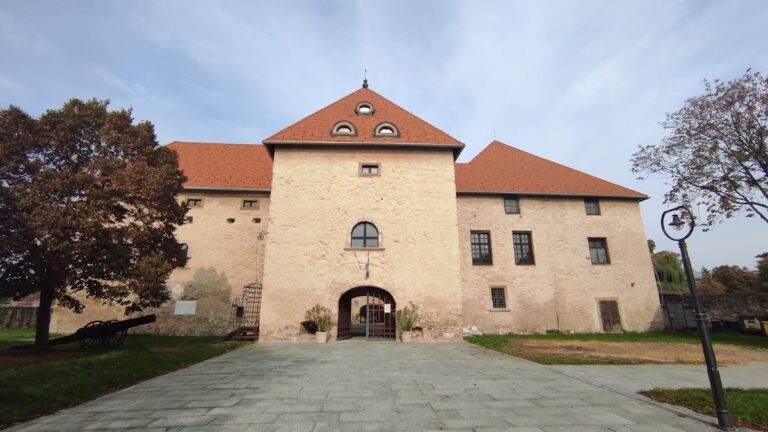
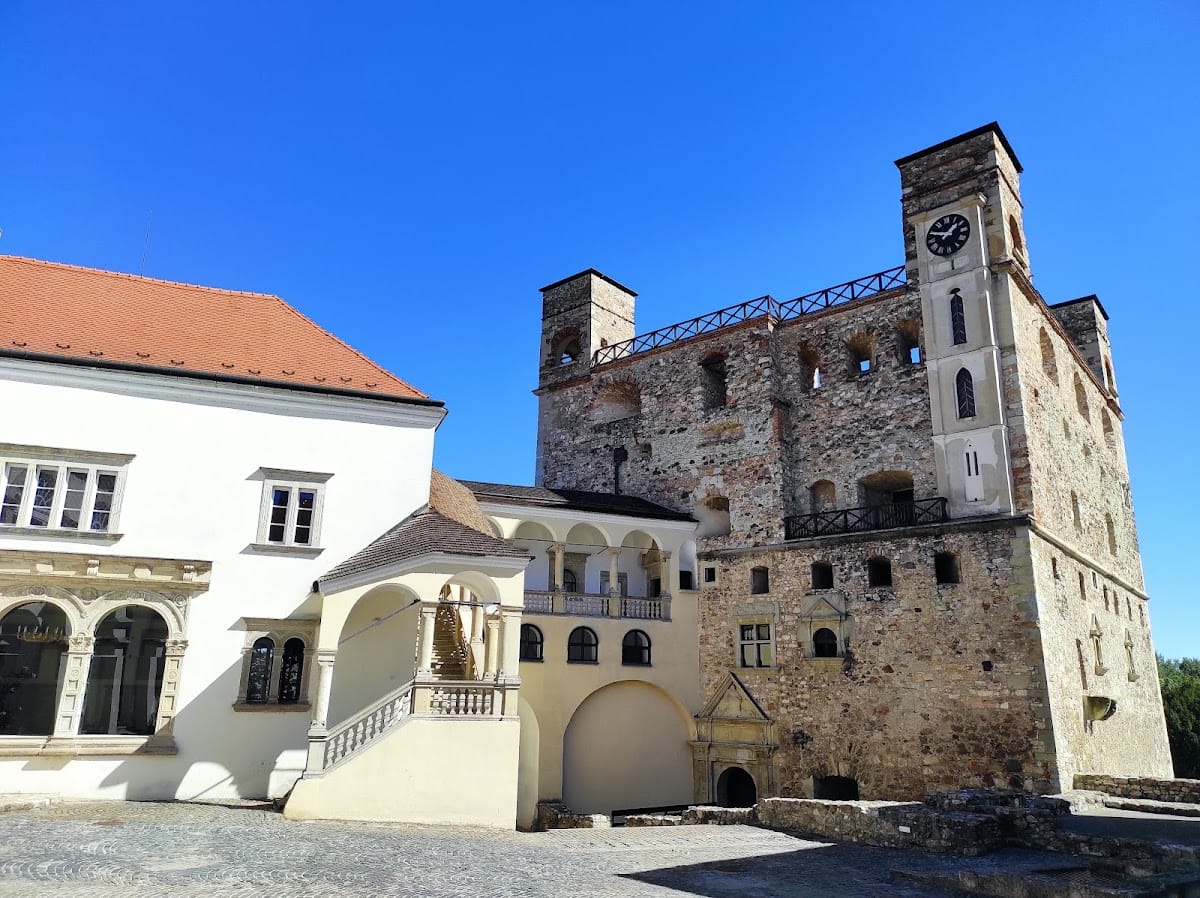
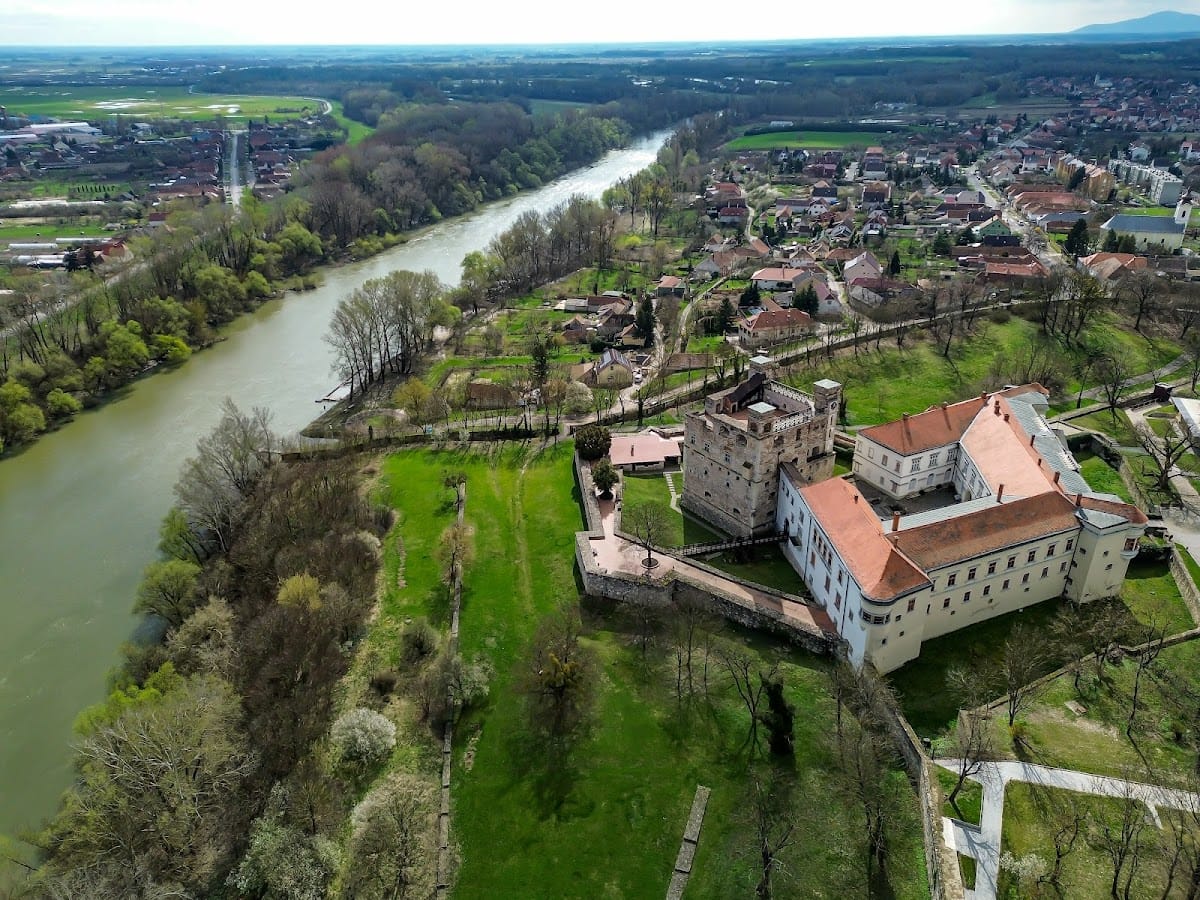
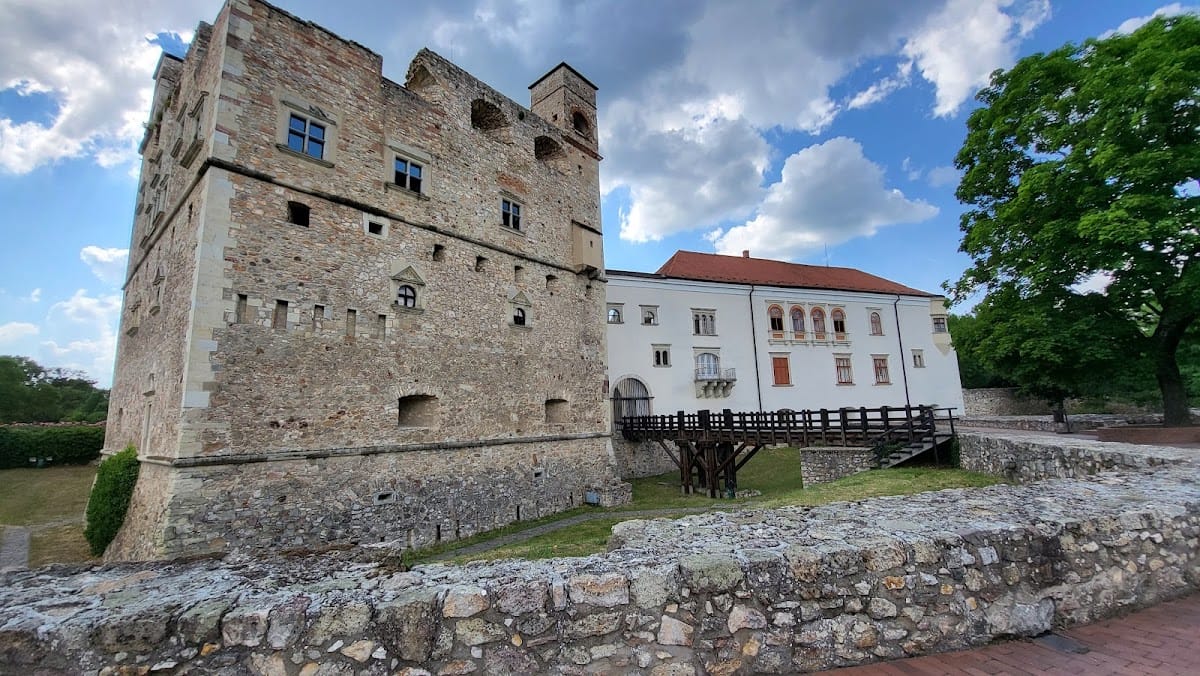
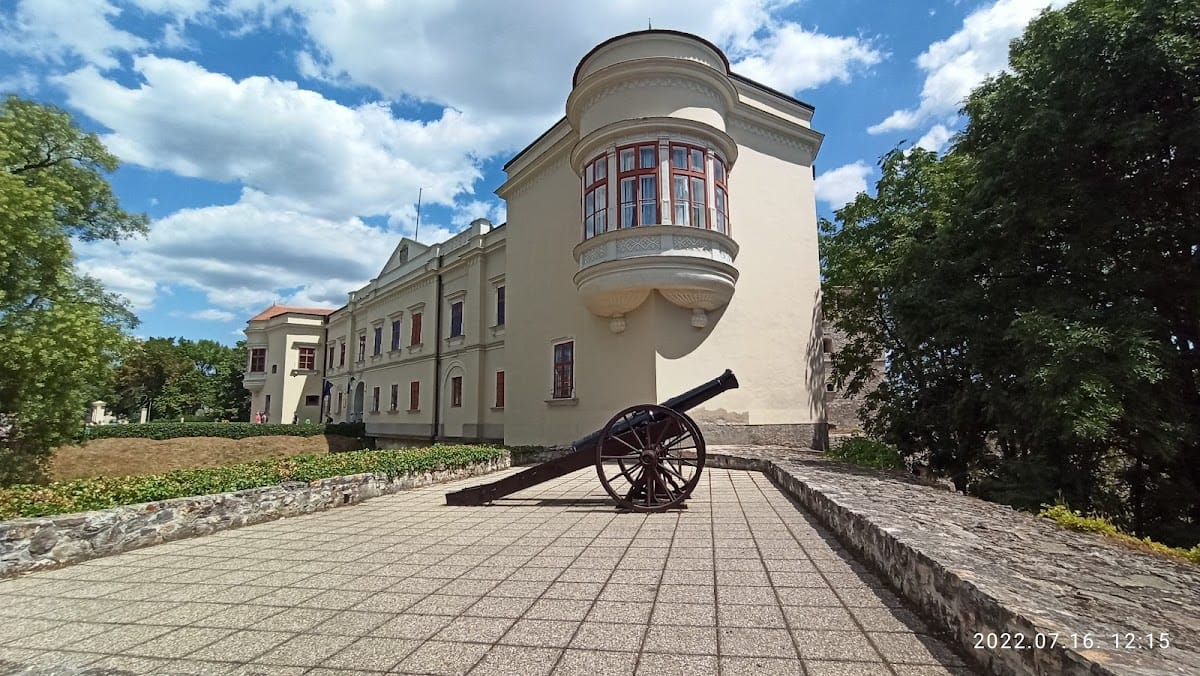
Sárospatak Castle is laid out around a nearly square core featuring a towering Renaissance residential keep known as the Red Tower. This five-story structure has sloping lower walls pierced by narrow openings called embrasures, designed for defense. Above its entrance, a richly decorated portal includes Renaissance carvings such as grotesque faces and an angel holding a four-part coat of arms. The tower originally housed practical spaces on its entrance level, including a kitchen, steward’s quarters, chancellery, treasury, and archive. Defensive corridors and firing slits are visible between the upper floors, illustrating the castle’s dual role as a residence and fortress.
Inside the tower, the fourth floor features a large hall known as the “old palace.” This room preserves Renaissance carved frames, bearing the Perényi family coat of arms, and fragments of 16th-century ornamental wall paintings. The ceiling was originally wooden and vaulted during the 17th century. Attached to the tower’s south side is the “bokályos ház,” once the audience chamber of I. Rákóczi György, linking residential and formal functions.
Surrounding the Red Tower to the southeast is the “párkány,” a notable pentagonal bastion dating from the 16th to 17th centuries, featuring casemates—vaulted chambers within the wall used for defense. The inner section of the castle, often called the inner ward, has a distinctive rhombus-shaped layout with protruding corner bastions and is separated from the nearby town by a moat. In the 19th century, vaulted arcades were added to courtyard facades, retaining Renaissance stylistic elements especially on the eastern wing’s ground floor.
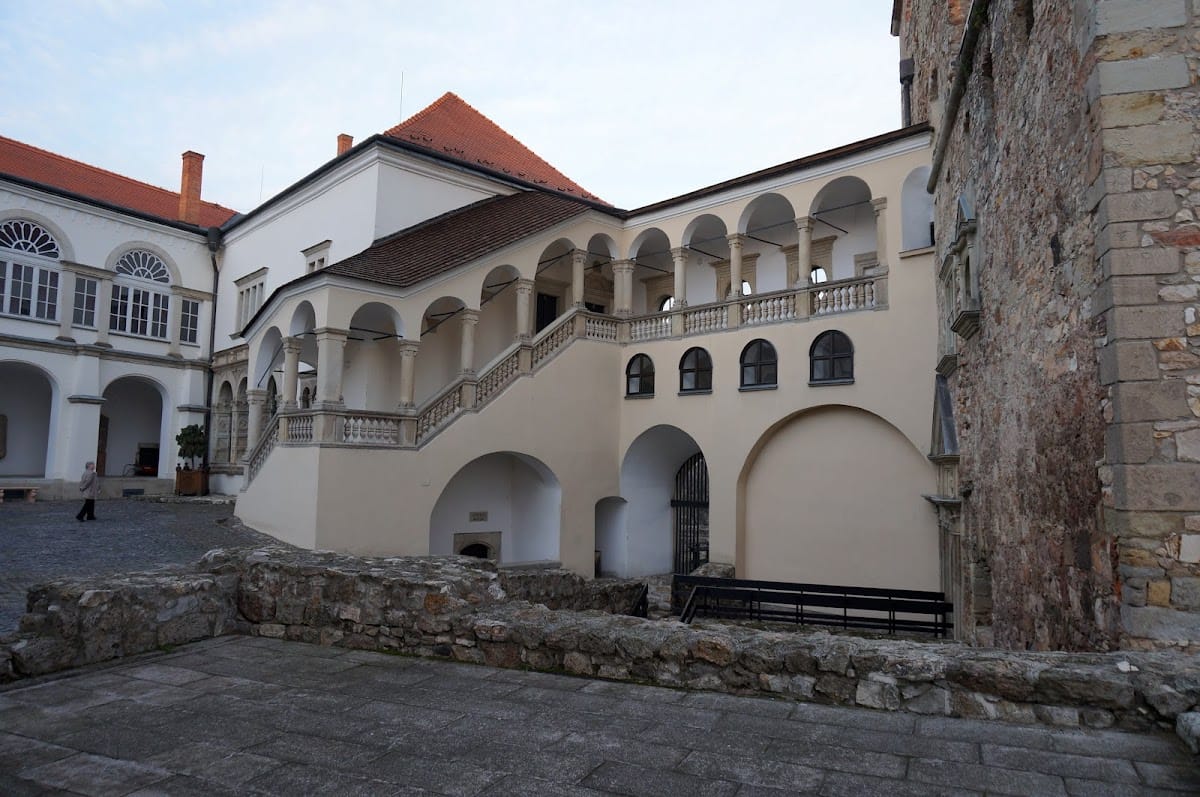
One of the courtyard’s most valued architectural features is a columned arcade staircase, accompanied by the Lorántffy loggia. This balcony connects the eastern wing to the Red Tower and honors Lorántffy Zsuzsanna’s contributions to the castle’s expansion. In the northeastern corner bastion, a 17th-century “Sub-Rosa balcony” features a round chamber with a vault bearing a painted keystone decorated with a stylized rose, symbolizing confidentiality. Exterior bastion corners carry later additions from the 19th century in the form of closed circular balconies.
Near the castle’s entrance remain the foundations of the former drawbridge gate and its supporting moat bridge pillars, offering insight into the original fortress defenses. The southern castle wall extends from the southern wing, including the ruined “Red Bastion” and a three-story casemated bastion built in 1647. Beneath this are foundations from an earlier 16th-century round bastion. The western castle wall is largely concealed today due to modern building development over the former moat, but remains of the “Lion Bastion,” constructed between about 1631 and 1647, can still be identified.
On the northern side, most city wall remains are scarce, aside from the fortified northern segment of the local Gothic church, which was integrated into the defenses. Notably, the church walls show signs of gates broken down by imperial troops during the 1670 uprising. The eastern city wall links directly to the palace and includes the “Water Gate,” distinguished by a semicircular main entrance for carriages and a smaller pedestrian gate. Archaeological excavations have uncovered the foundations of the outer bastion guarding this gate, illustrating the layered defensive design.
The castle complex blends Gothic structures with late Renaissance details, revealing Italian Renaissance influences through its arcades and window designs. Nearby, the Trinitarian monastery complex has a roughly U-shaped plan. Its southern wing contains the church, along with a bastion-like block housing a chapel and oratory. The cloister forms an L-shaped one-story structure with dining, kitchen, pantry, and cell rooms. Restoration works have preserved the monastery’s original volume, façade, and interior floor arrangement, preserving the historical character of this religious addition to the castle grounds.
Nearby sites