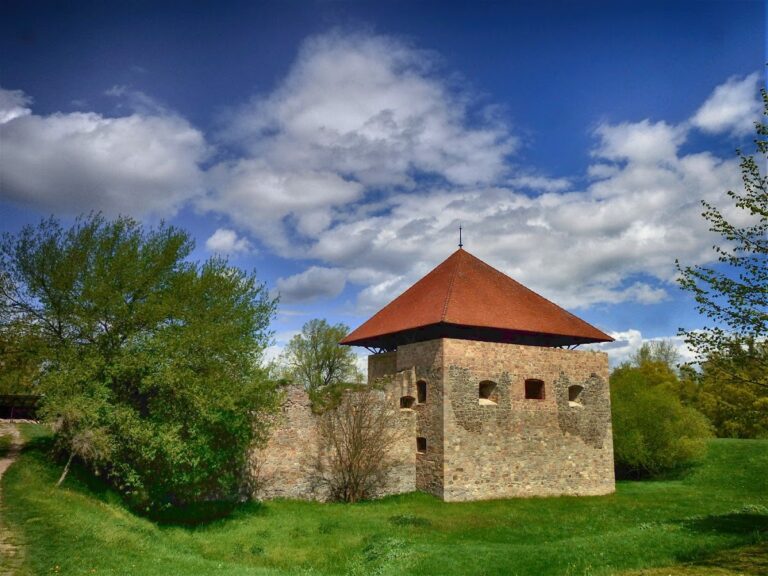
Szerencs Castle: A Renaissance Fortress and Residential Castle in Hungary


Site at a Glance
- Rating
- 4.5
- Popularity
- Medium
- Country
- Hungary
- Primary era
- Early Modern
- External website
- Open
- Eras represented
- Medieval, Early Modern
- Civilizations
- Habsburg, Hungarian
- Site type
- Domestic
- Remains
- Castle
On this page10 sections
History
Szerencs Castle in Hungary, located in Szerencs, developed from a Benedictine abbey into a sixteenth-century frontier fortress and was later remodelled as a Renaissance and Baroque residence. The site stands in an area known as the “Gateway to Hegyalja” and is described as the youngest castle in Borsod-Abaúj-Zemplén County.
Medieval Abbey and Market Town
In the thirteenth century, the area belonged to the Bogát–Radvány kindred, an extended noble lineage whose members held property and political influence. The kindred founded a Benedictine abbey, a monastery belonging to the Order of Saint Benedict, on a slightly raised site amid wetland terrain. The abbey was first mentioned in 1247.
By the late fifteenth century, Szerencs had become a flourishing market town in the possession of the Szapolyai noble family. Its later military development built upon the earlier religious foundation and the position of the settlement within the regional landscape.
Sixteenth-Century Fortification
In 1556, Ferenc Németi, captain of Tokaj Castle and a supporter of John II of Hungary, seized the Benedictine abbey by force. John II was the sixteenth-century king associated with the eastern Hungarian kingdom and the Transylvanian political sphere. Németi fortified the abbey and turned it into a base against Habsburg supporters, adherents of the monarchy that controlled much of Royal Hungary during the period when the Hungarian kingdom was divided among competing powers.
The castle phase began in 1556, although its wider development is associated with the late sixteenth century. Németi added an outer castle enclosed by a palisade, a defensive barrier made chiefly from upright wooden stakes. Lightly armed hussars, Hungarian light cavalry used in mobile frontier warfare, were stationed there.
After imperial forces captured the much stronger Tokaj Castle in 1565, the general Schwendi advanced against Szerencs. The garrison fled when the attack was announced, and the castle was occupied without a battle. Holy Roman Emperor and King Rudolf II subsequently pledged the castle estate for 9,160 florins to Zsigmond Rákóczi, a Hungarian nobleman and military commander. Rákóczi then had the complex remodelled in Renaissance style, a classical-inspired architectural style that spread through Europe from the fifteenth century.
War, Reprisals, and Abandonment
In 1644, troops commanded by Miklós Esterházy assaulted and extensively plundered Szerencs and its church. Esterházy was palatine of Hungary, the highest-ranking secular official in the kingdom after the king. The castle was surrendered immediately by the steward of the landowner, László Rákóczi.
The complex later returned to Rákóczi ownership, but the frontier castle no longer held major military importance. Imperial mercenaries occupied it during reprisals after the Wesselényi conspiracy of 1670, an aristocratic conspiracy against Habsburg rule. The castle was abandoned in 1680 and blown up by Hungarian forces.
Residential Transformation and Restoration
During the second half of the eighteenth century, three towers of the inner castle were demolished, leaving the southern tower. After the kuruc uprising led by Ferenc II Rákóczi, an early eighteenth-century revolt against Habsburg rule, the more peaceful conditions allowed the Illésházy, Grassalkovich, and Szirmay families to adapt the former fortifications into a comfortable residential building.
Between 1959 and 1991, Ferenc Erdei directed the restoration of the castle. The complex subsequently became home to the Zemplén Museum and a tourist hotel, with these functions continuing in different parts of the building. The museum’s permanent exhibitions address the history of postcards, Zsigmond Rákóczi and his era, the construction history of the castle, and the bookplates of Antal Fery, a Hungarian artist and designer known for this form of graphic art.
Remains
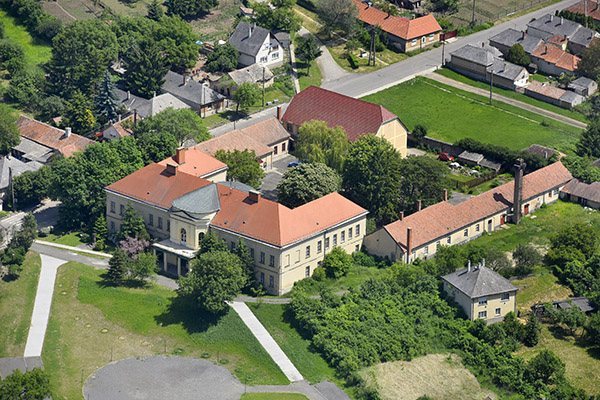
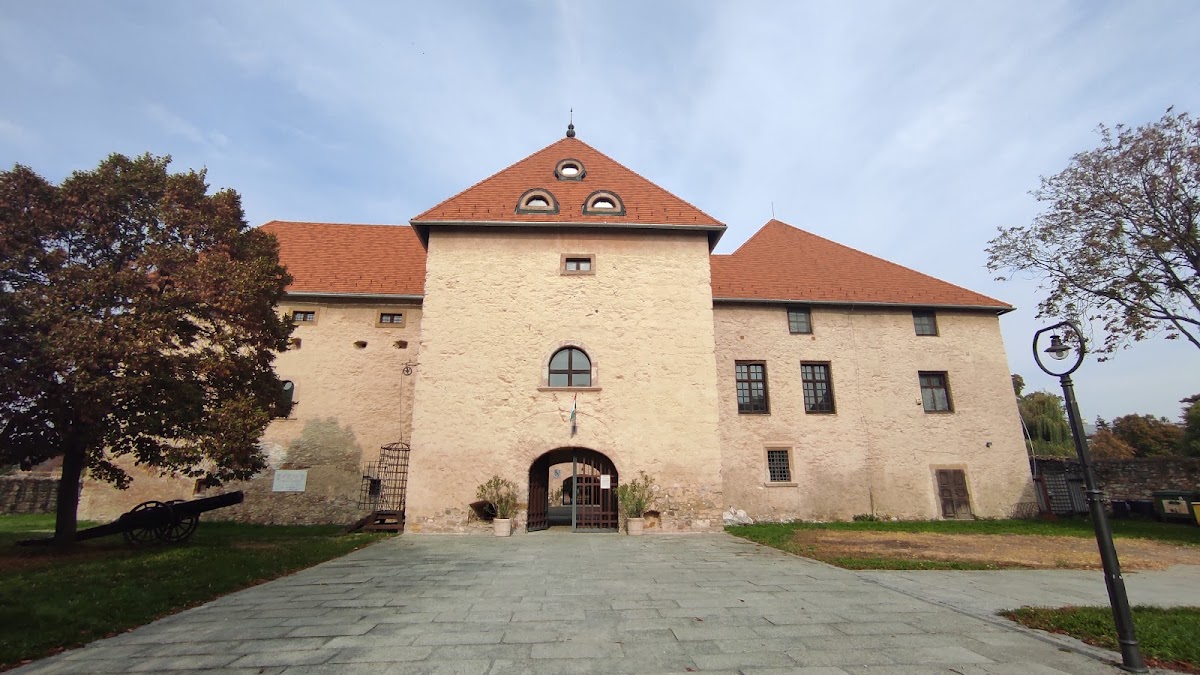
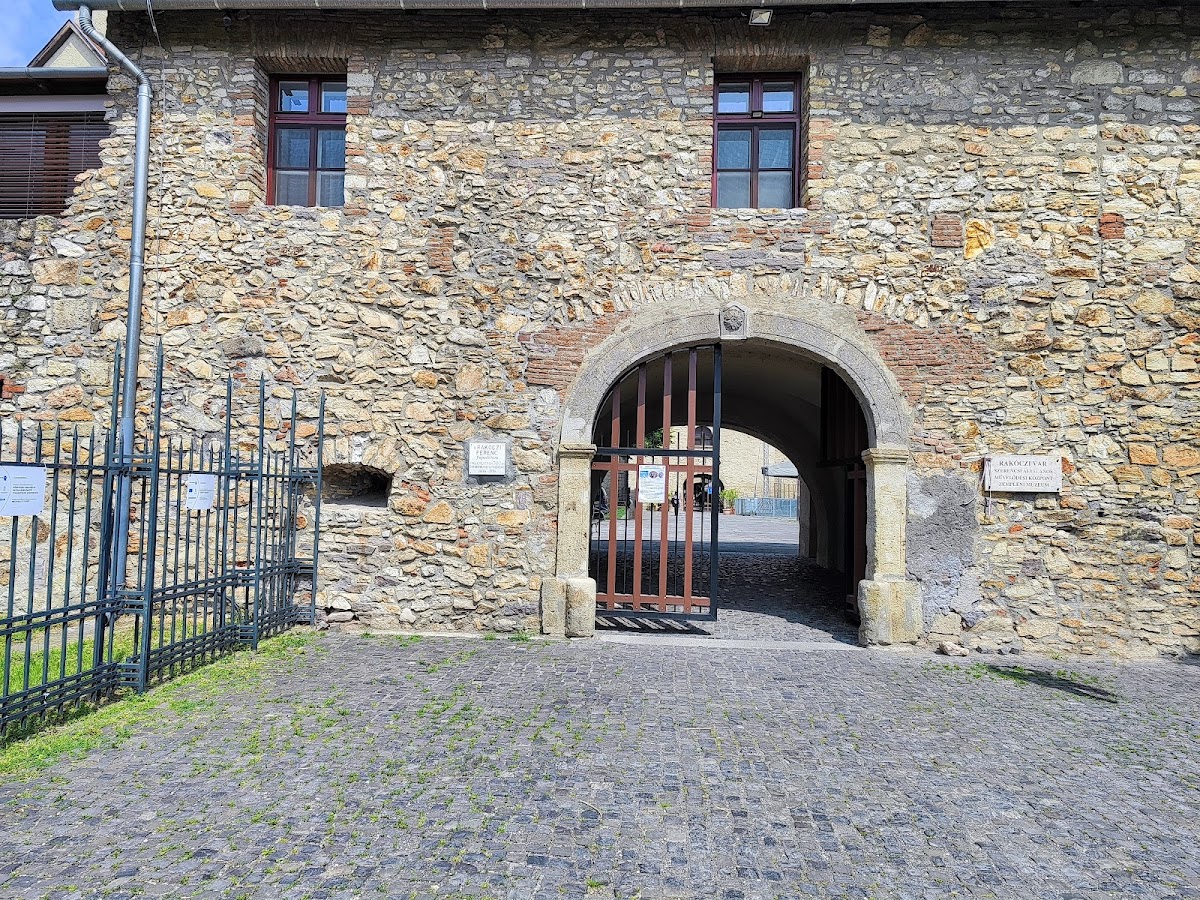
The complex occupies a slightly elevated rise within a marshy area. Stone walls belonging to the former Benedictine abbey form the core of the later fortress. Around this earlier nucleus, the castle developed into an outer defensive enclosure and a more compact inner block, while later alterations changed parts of the military complex into a residential castle.
Fortifications
Outer Castle
Németi Ferenc’s outer castle covered a larger area than the earlier abbey complex and was enclosed by a palisade. It accommodated the hussar garrison during the frontier period. In the Renaissance remodelling associated with Zsigmond Rákóczi, the outer castle received polygonal bastions. A bastion is a projecting fortification designed to provide flanking fire along adjoining walls. A 1635 inventory lists cannons positioned on the outer bastions.
Inner Castle
The inner castle was reorganized as a compact enclosed block with three wings surrounding an internal courtyard. The same 1635 inventory records an armory containing 50 firearms and 11 smaller artillery pieces, illustrating the military equipment maintained within the complex. During the second half of the eighteenth century, three inner-castle towers were demolished, and the southern tower remained.
Residential and Museum Building
The former defensive complex was later adapted into a Baroque residential castle. Baroque architecture is characterized by more elaborate forms and decoration than the earlier Renaissance style. Following the twentieth-century restoration, the building housed the Zemplén Museum’s postcard collection, while another part of the restored complex operates as a hotel.