Medininkai Castle: A Medieval Fortress in Lithuania
Visitor Information
Google Rating: 4.6
Popularity: Medium
Official Website: trakaimuziejus.lt
Country: Lithuania
Civilization: Medieval European
Site type: Military
Remains: Castle
History
Medininkai Castle stands in the village of Medininkai within the Vilnius district of Lithuania. This medieval fortress was built by the Grand Duchy of Lithuania, a significant state in Eastern Europe during the Middle Ages.
The origins of Medininkai Castle are most often dated to the early 14th century, although some experts suggest it could have been constructed in the late 13th century or even after 1380. From its inception, the castle served as a defensive bastion designed to protect local inhabitants from hostile forces, particularly the Teutonic Knights, who frequently launched attacks in the region. Historical chronicles from the 15th and 16th centuries recognize Medininkai as one of the principal castles of Aukštaitija, an important province within the duchy.
In the 14th century, Medininkai Castle gained association with prominent Lithuanian rulers, including Grand Duke Algirdas, who reportedly spent his summer months there. Later, during the 15th century, the castle became connected to King Casimir IV Jagiellon, who used it as a royal residence and a summer retreat for his children. This royal patronage highlights the castle’s dual role as both a military fortress and a noble residence.
A significant event occurred in 1402 when the castle was set ablaze during an assault led by Prince Svidrigaila of Lithuania, aided by Teutonic forces. Although the castle was rebuilt following this attack, its military importance began to decline after the decisive Battle of Grunwald in 1410, which shifted regional power balances. By the early 16th century, reports indicate the castle was largely abandoned. It suffered additional damage in 1519 during raids by Muscovite troops, and centuries later, retreating French forces dismantled its wooden structures during the Napoleonic Wars of 1812.
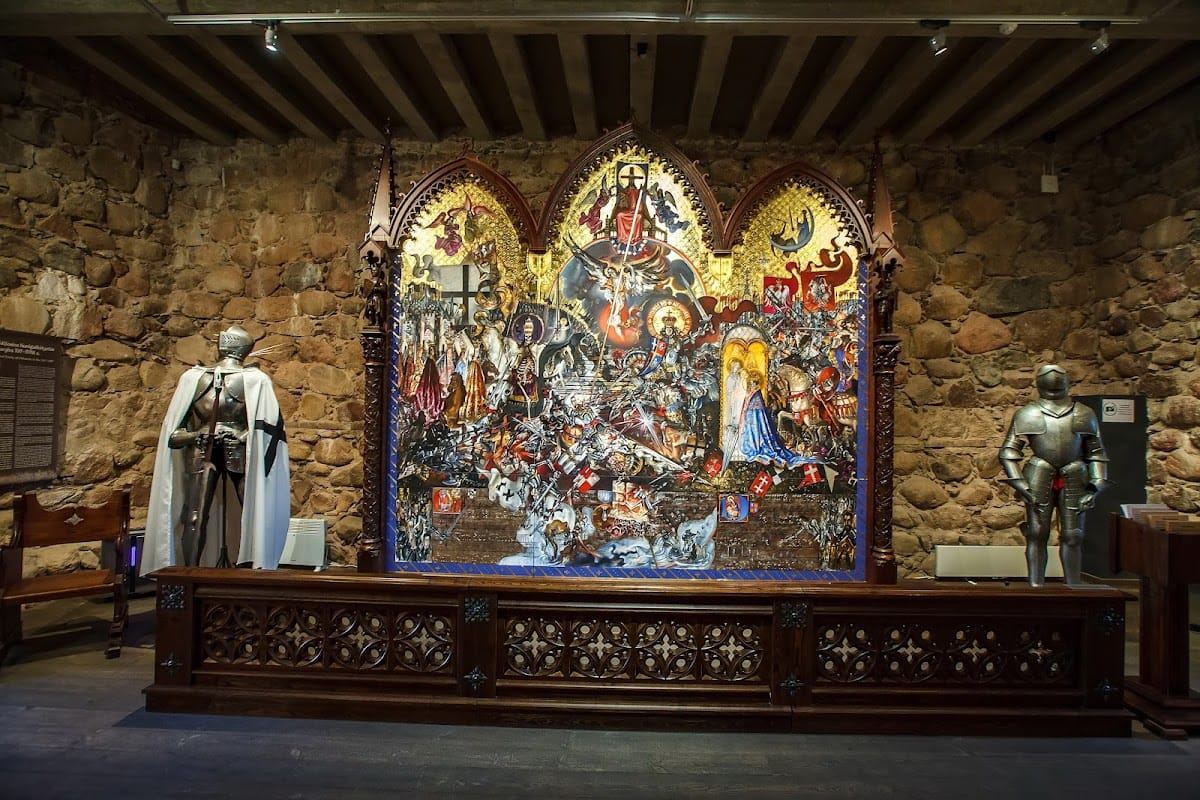
In the 20th century, Medininkai Castle’s ruins endured further harm amid the turmoil of World War I. During World War II, Soviet troops repurposed the site as a temporary camp in 1944, where thousands of Polish Home Army soldiers were detained. Archaeological research and preservation efforts began in earnest in the mid-20th century, with major excavations and restorative work occurring during the 1950s through the 1970s. Reconstruction of the main tower started in the 1990s and was completed by the early 2010s with support from international and European Union funding. Since 2004, the castle has been under the stewardship of the Trakai Historical Museum, housing exhibitions related to its rich history.
Remains
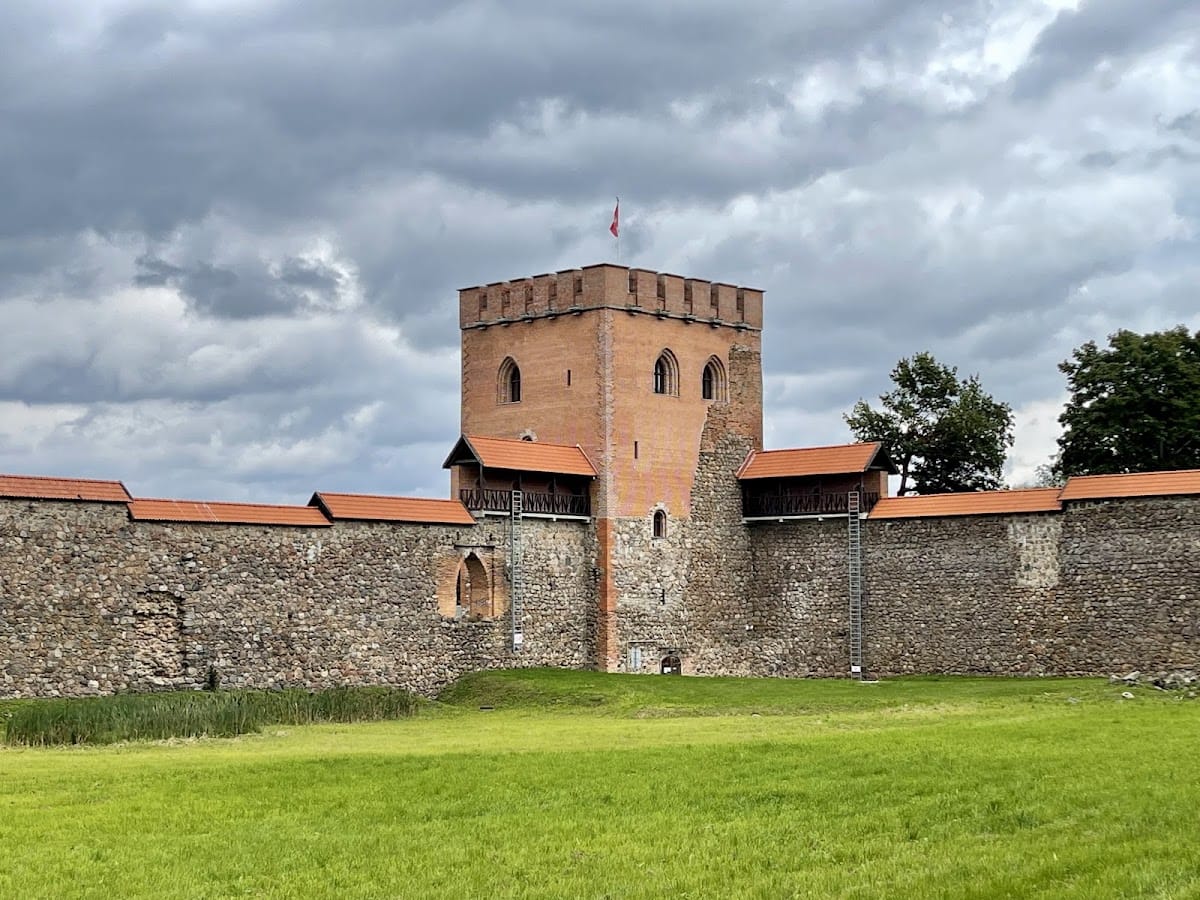
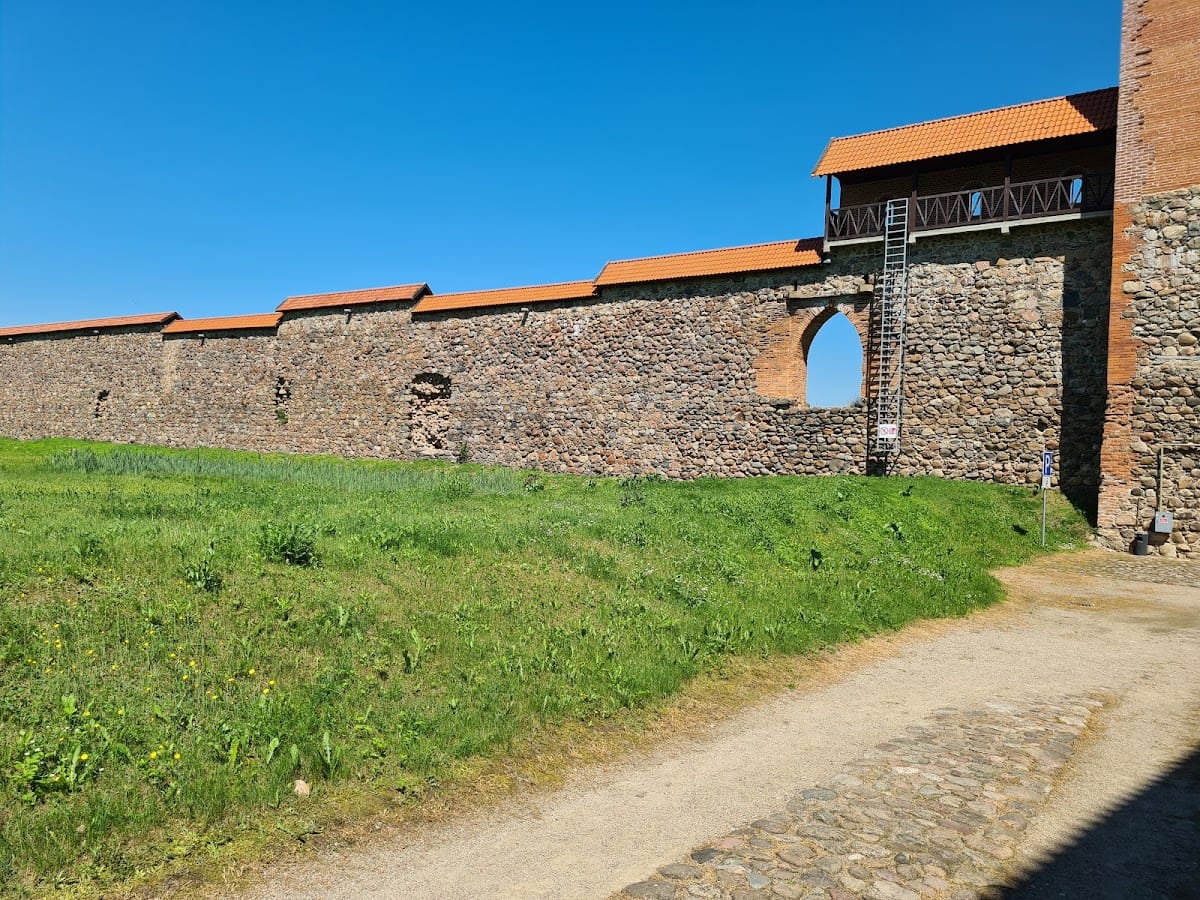
Medininkai Castle occupies an uneven quadrilateral-shaped area covering roughly two hectares, with its fortified complex, including surrounding moats and earthworks, extending over 6.5 hectares. The enclosing walls measure about 565.5 meters in length and rise impressively to 14 or 15 meters high. Built primarily from field stones bound by lime-sand mortar, the castle’s walls showcase a medieval Baltic masonry style. Brick is skillfully integrated at corners, battlements, and around door and window openings, including the narrow slits designed for archers.
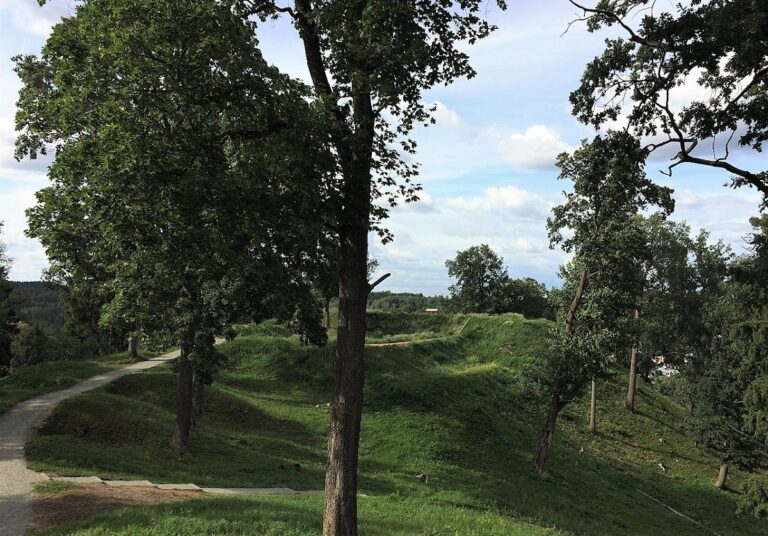
The fortress is encircled by a deep moat spanning six to seven meters across, complemented by two earthen embankments that strengthen its defense. Within the castle’s 1.85-hectare courtyard, wooden buildings once served as residences and utility structures, though these have not survived. Four gates provide access, each set in one of the walls: the eastern and western gates are at ground level, while the northern and southern ones are raised about five meters above the courtyard and reached via drawbridges, indicating a layered defensive strategy.
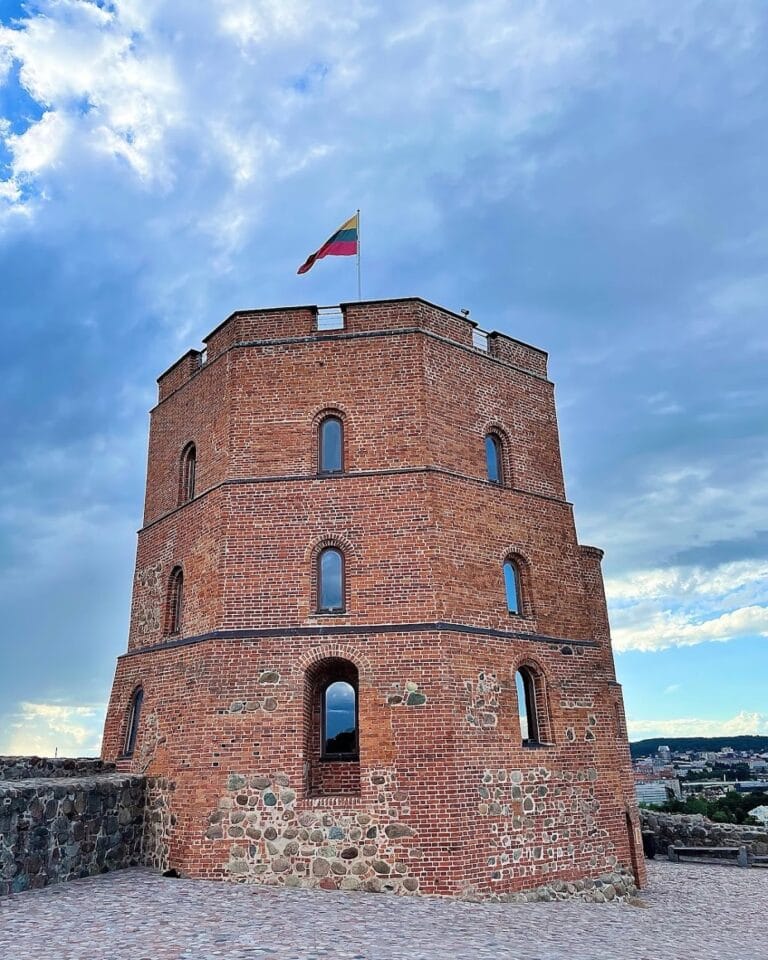
At the northeastern corner stands the main tower, or donjon, which dominates the site. This massive tower measures approximately 14.2 by 15.4 meters at its base and rises 30 meters high. It has five floors, with the upper three serving as living quarters. The tower’s walls are notably thick, ranging from 2.5 to 3 meters, and the tower projects beyond the outer walls to provide expanded visibility and defense.
Three additional towers guard the castle’s entrance points, reinforcing its perimeter defenses. Along the walls, about 280 arrow slits are arranged within a battlement gallery roughly 11 meters above ground, allowing defenders to launch projectiles while remaining protected. Decorative brick patterns run horizontally across the walls, adding an artistic element to the fortress.
Inside the main tower, fragments of frescoes reflect Byzantine artistic influence, attributed to the so-called “Pskov school,” a style known from other religious and cultural centers of the time. The castle sits upon an artificially created mound within a marshy meadow environment. Archaeological findings nearby point to a dense wooden settlement, or suburb, surrounding the castle during its period of use.
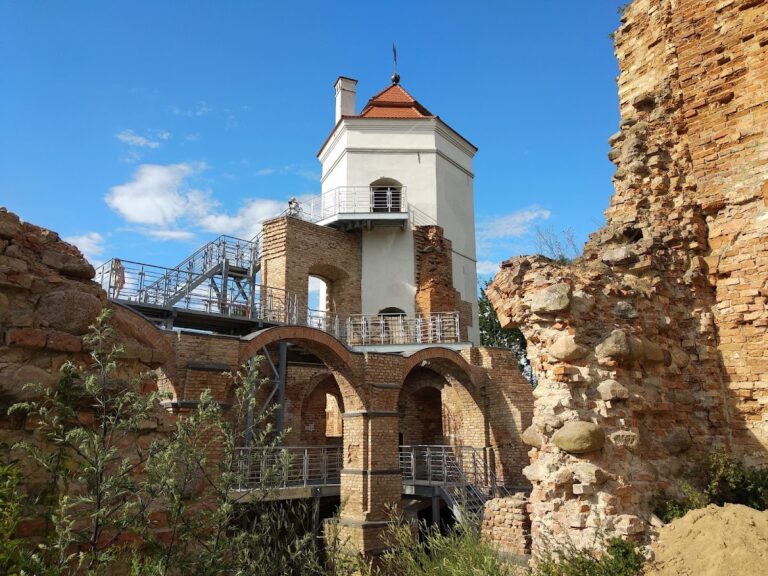
The design and construction methods of Medininkai Castle bear strong resemblance to those of the neighboring Lida and Kreva castles, suggesting shared architectural traditions within the region. Today, sections of the defensive walls and supporting towers survive in ruins, while the main tower has been reconstructed and now serves as a space for historical exhibitions relating to the castle’s long and varied past.
Nearby sites