Castle of Barisciano: A Medieval Fortress in Italy
Visitor Information
Google Rating: 4
Popularity: Very Low
Country: Italy
Civilization: Early Modern, Medieval European
Site type: Military
Remains: Castle
History
The Castle of Barisciano lies within the municipality of Barisciano in modern Italy. It was originally established by local communities around the 8th century to protect the settlement from hostile forces, taking advantage of its elevated position on Monte Costa Castello.
During the Middle Ages, particularly in the 13th century, the site was transformed into a fortified enclosure known as a castle-recinto. This adaptation allowed the local population to seek refuge within its walls during periods of danger, reflecting its strategic importance in the region. The castle also played a part in the foundation of the nearby city of L’Aquila, indicating its role within broader regional defense and settlement patterns.
In 1424, the fortress suffered an assault during the siege of L’Aquila when it was attacked and destroyed by the condottiero Braccio da Montone, a prominent military leader of the period. Despite this devastation, the castle remained under the jurisdiction of L’Aquila up until 1529. Afterwards, control passed to various aristocratic families, marking a shift from its communal defensive purpose to a noble fief.
By the 16th century, the castle lost its military relevance and was gradually abandoned. Around this time, the construction of the Church of San Rocco near one of the castle’s towers occurred as a response to the 1526 plague epidemic. This church was dedicated to Saint Roch, whose wooden statue and 16th-century frescoes inside commemorate the saint’s association with protection against the plague.
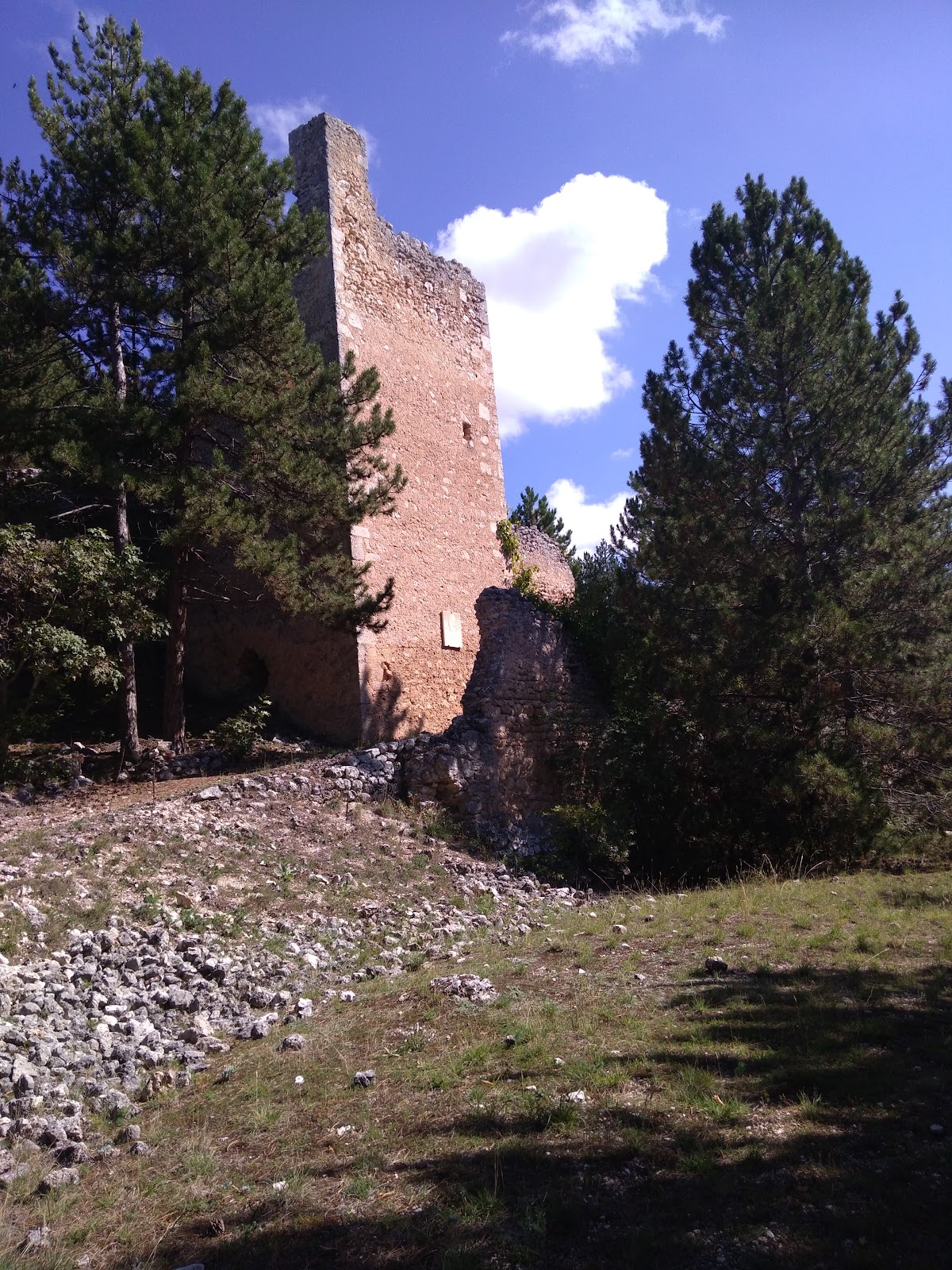
Further damage afflicted the castle over the centuries, notably from the earthquake of 1703, which caused structural harm, and from the removal of stones used in neighboring construction projects. The area was struck again in 2009 by a strong earthquake, which brought down the well-preserved western tower of the castle as well as the bell tower of the adjacent Church of San Rocco.
Remains
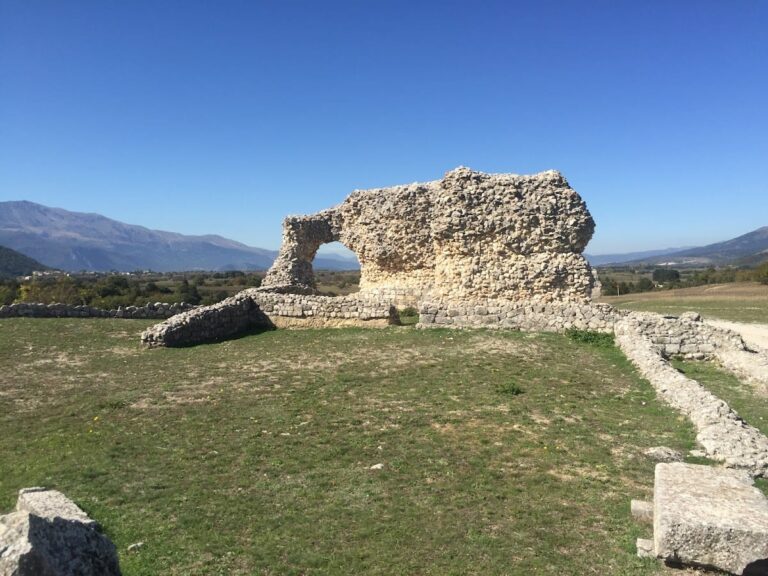
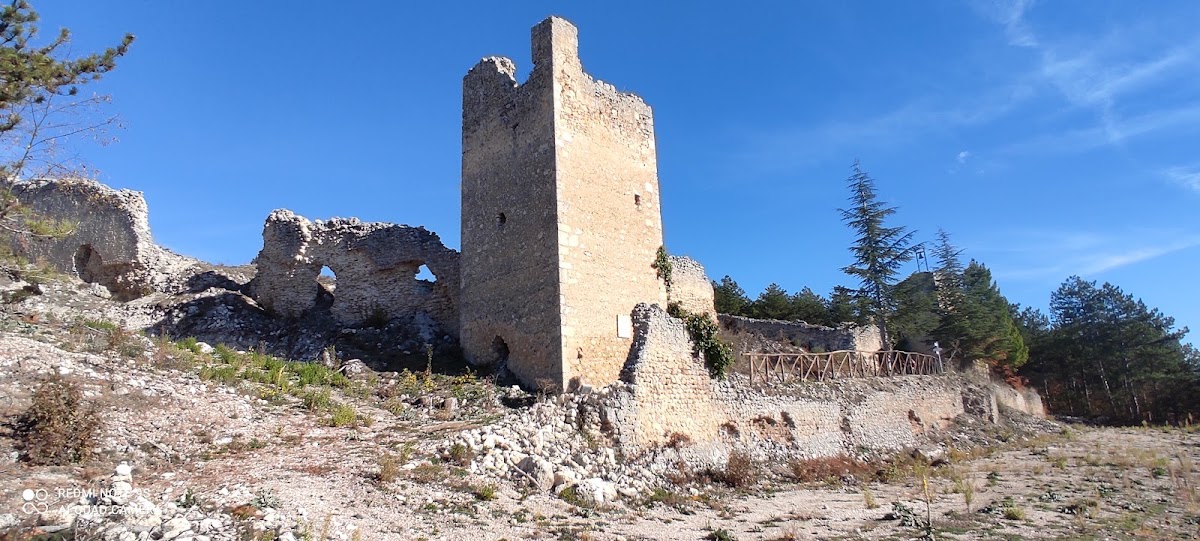
The Castle of Barisciano maintains a roughly rectangular layout encompassing about one kilometer of perimeter walls. These walls formed a protective enclosure around the settlement, built primarily for defense rather than permanent residence. The design includes a pentagonal main keep, or mastio, situated at the highest point of the enclosure, serving as a stronghold within the fortifications. Along the curtain walls, eight towers are arranged to provide flanking defense, allowing defenders to cover the approaches to the fortress from multiple angles.
Within the enclosure, the remains of buildings are visible, though like the castle walls, these structures were not designed for everyday living space but likely served military or refuge-related functions. These internal ruins reflect the castle’s primary role as a defensive refuge rather than a residential complex.
Near one of the castle towers stands the Church of San Rocco, built in the late 16th century in direct response to the plague. The church is characterized by its simple hut-like shape, featuring a sloping gable roof and a small bell gable. One of the castle towers was repurposed to function as its bell tower, integrating the religious building with the older fortifications. Inside, the church is modest with a single nave crowned by a barrel vault. Its interior preserves 16th-century frescoes illustrating scenes from the life of Saint Roch, and houses a wooden statue of the saint. The façade of the church has undergone restorations, though these efforts have been described as minimal and have left limited artistic decoration visible today.
Together, the castle’s defensive structures and the neighboring Church of San Rocco stand as enduring reminders of the historical interplay between military strategy and communal faith during times of both conflict and crisis in the region.
Nearby sites