Derg Castle: A Gaelic Irish and Plantation-era Fortification
Site at a Glance
- Rating
- 4.1
- Popularity
- Very Low
- Country
- United Kingdom
- Primary era
- Early Modern
- External website
- Open
- Eras represented
- Early Modern
- Civilizations
- English, Irish
- Site type
- Military
- Remains
- Castle
On this page8 sections
History
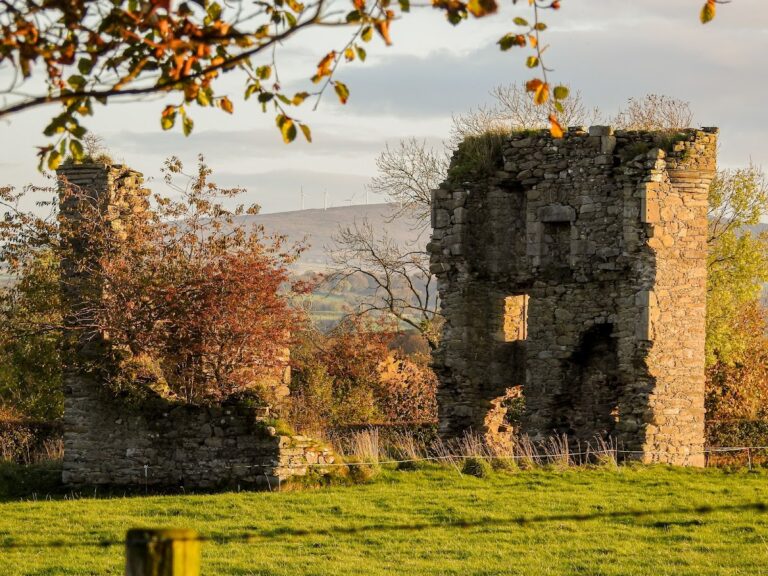
Derg Castle is a ruined fortification in Castlederg, Northern Ireland, United Kingdom. Its earliest form was probably built by Gaelic Irish dynasties as a square tower house, positioned to command and defend a ford across the River Derg. The castle was first recorded in 1497, when an O’Donnell stronghold at the site was attacked and captured by the O’Neills.
O’Neill and O’Donnell Rivalry
The castle was recaptured in 1505 and changed hands several times during the late fifteenth and early sixteenth centuries. These transfers formed part of the rivalry between the O’Neill and O’Donnell clans, powerful Gaelic Irish dynasties whose competition for territory and political supremacy shaped conflicts across parts of Ulster.
Plantation-era Reconstruction
In 1610, during the Plantation of Ulster, the English Crown’s scheme for transferring land in Ulster to settlers and proprietors, the area was granted to Sir John Davies, Attorney General for Ireland, during the reign of King James I. Davies reconstructed the existing castle as a bawn, a fortified enclosure, with three open flankers, which were projecting defensive structures intended to provide covering fire along the walls.
Davies also built Kirlish Castle, known as “Curlews” Castle, and linked the two fortifications with a straight causeway approximately 7 miles long. A survey of 1619 recorded that his 2,000 acres at Gavelagh and Clonaghmore were also associated with Castle Derg and Castle Curlews. It described both castles as built of lime and stone and stated that they had no bawns at that time. In 1622, Derg Castle was described as an unfinished stone-and-lime bawn measuring 100 feet by 80 feet and 5 feet high, with three open flankers of the same height.
Sieges and Abandonment
During the Irish Rebellion of 1641, an uprising that brought widespread conflict between Irish insurgents and settler communities, Derg Castle became a refuge for the local Scottish settler population. A small garrison resisted a much larger force led by Sir Phelim O’Neill, but eventually abandoned the castle when its ammunition was exhausted.
The settler population garrisoned Derg Castle again during the Williamite War in 1689. This conflict followed the removal of James II from the English throne and was fought in Ireland between his supporters and forces backing William III. The garrison surrendered to James II’s forces after receiving a promise that its members would be spared. The castle appears to have ceased to be used after 1689 and later fell into ruin.
The settlement of Castlederg takes its name from the castle, with the name deriving from an Irish phrase meaning “Castle on the Derg.” The ruins are a Scheduled Historic Monument administered by the Northern Ireland Department for Communities.
Remains
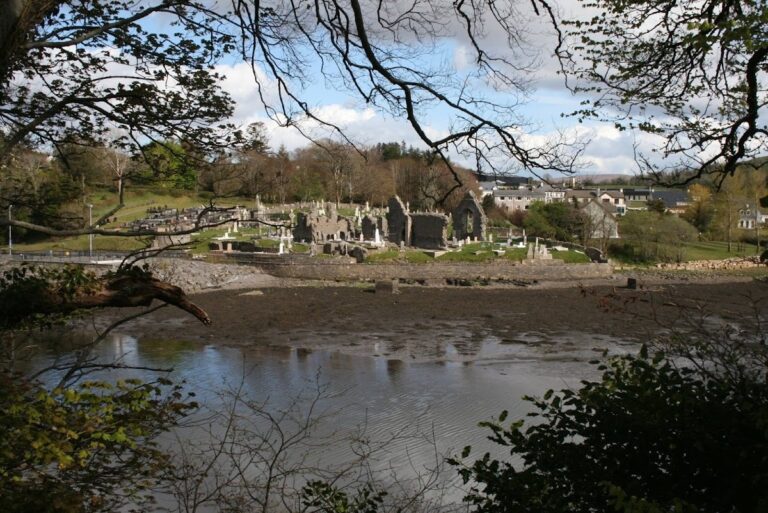
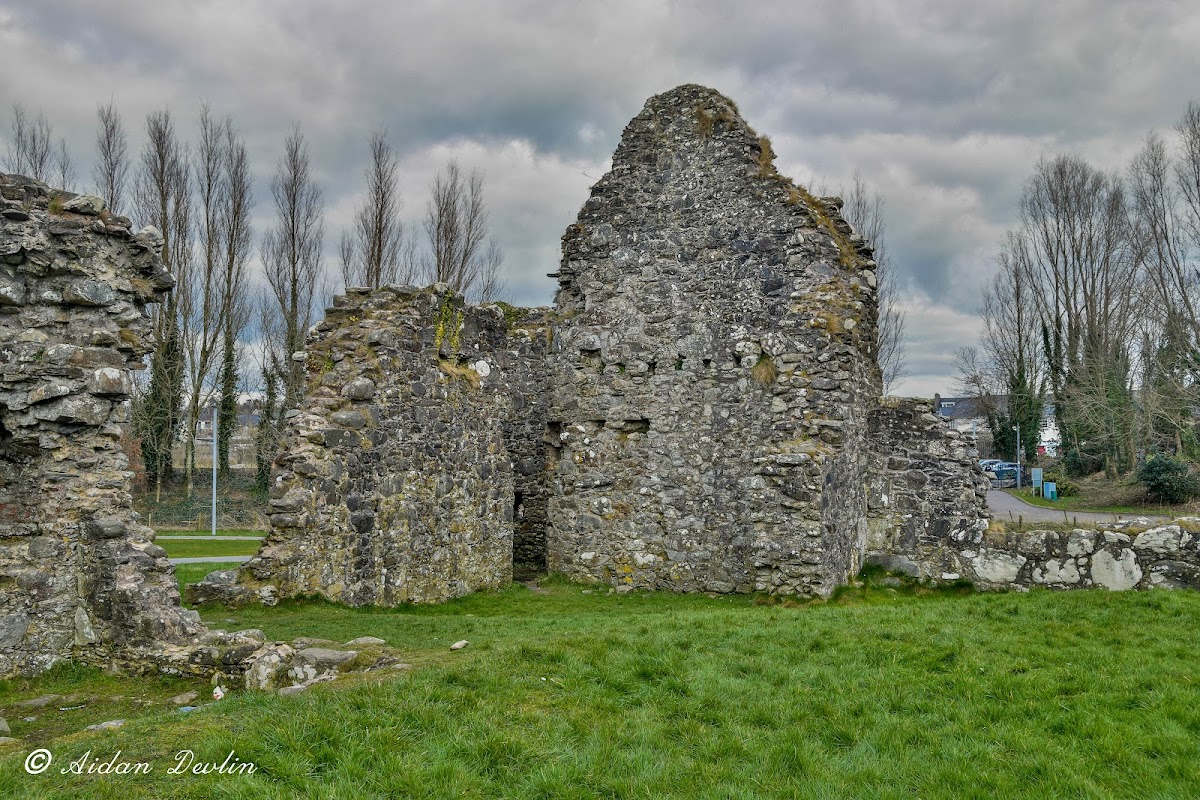
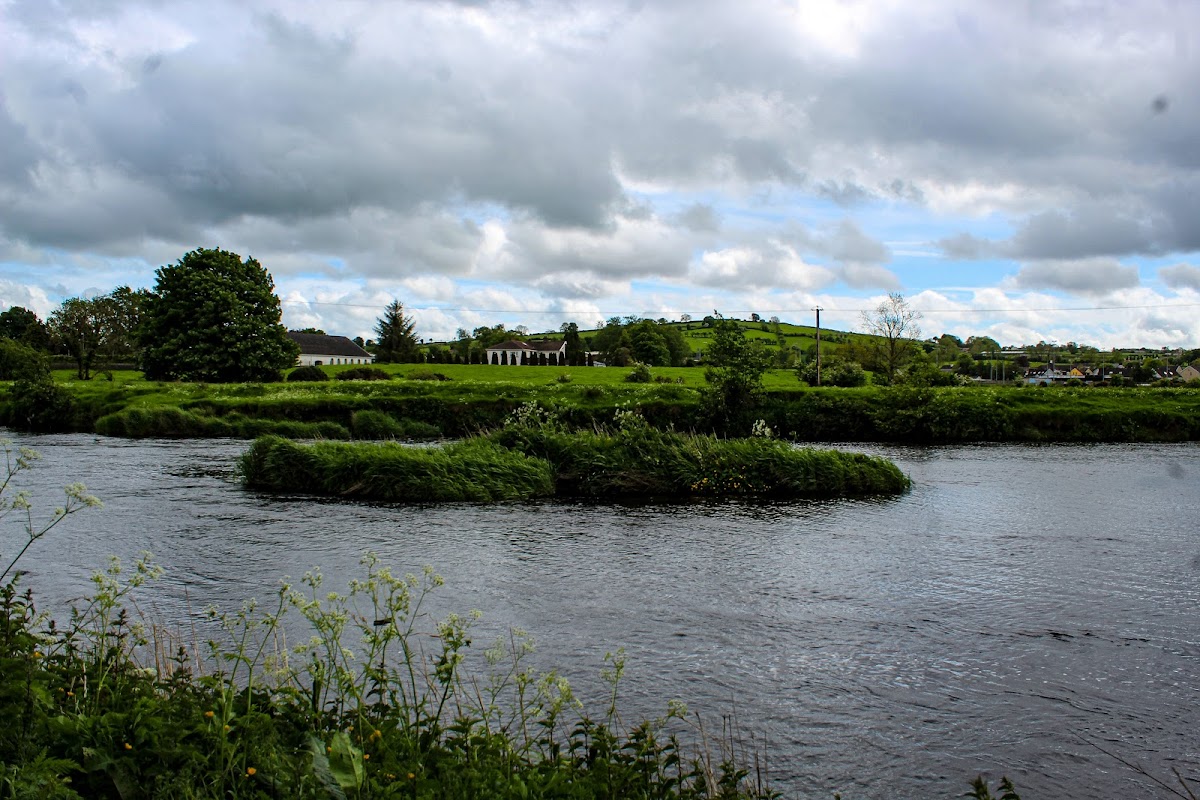
The ruined fortification stands on the north bank of the River Derg within Castlederg, County Tyrone. Its surviving history is represented by the transition from an early tower house to a later enclosed defensive complex built from stone and lime. The river has affected the preservation of the site, particularly along its southern side.
Early Tower House
The earliest fortification was probably a square tower house, built to control the ford across the River Derg. That tower has disappeared, leaving the later defensive enclosure as the principal surviving form of the castle.
Bawn and Flankers
The later complex consisted of a stone-and-lime bawn with three open flankers. The bawn was described in 1622 as 100 feet long, 80 feet broad, and 5 feet high. The three flankers were recorded as reaching the same height and projected from the enclosure to support defence along its walls. The walls and flankers on the south side have largely disappeared because of erosion by the River Derg.
Causeway to Kirlish Castle
A straight causeway approximately 7 miles long connected Derg Castle with Kirlish Castle. This link formed part of the landscape associated with Sir John Davies’s two fortified properties, although the surviving account of Derg Castle focuses on the ruined enclosure beside the river.