t Hof van Brussel: A Historic Estate in Belgium
Site at a Glance
- Rating
- 4.2
- Popularity
- Very Low
- Country
- Belgium
- Primary era
- Medieval
- External website
- Open
- Eras represented
- Medieval, Modern
- Civilizations
- Duchy of Brabant, Holy Roman Empire
- Site type
- Domestic
- Remains
- Castle
On this page8 sections
History
Origins and Early Ownership
t Hof van Brussel is a historic estate in Woluwe-Saint-Lambert, Belgium, near Saint Lambert’s Church in the former village center. Its exact origins are unknown, but its presence is documented from the fifteenth century. The present castle cannot be assigned a certain construction date. The site may have begun as a hunting lodge, while an earlier building or surviving predecessor remains may date to the twelfth century.
At the beginning of the fifteenth century, the estate passed to the Vandermeeren family, lords of Sterrebeek. Through the Vandernoot family, it later became the property of the de Longueville family, and in the sixteenth century it was held by the de Brouxelles family. During this period, its agricultural purpose gradually gave way to residential use. Its position in the former village center suggests that it may have functioned as the operating center of a demesne reserve, land managed directly for the benefit of a lord or estate holder.
Noble Estate and Agricultural Center
Philibert de Brouxelles, a chamberlain of Charles V, owned the estate with his family. A chamberlain was a senior official serving at a ruler’s court. The family probably did not live at t Hof van Brussel, which remained primarily an agricultural operating center during their ownership.
Until the end of the Ancien Régime, the estate passed among local nobles, lawyers, ducal officers, and members of the senior assemblies of the Southern Netherlands, the Habsburg-controlled territories corresponding broadly to present-day Belgium and nearby regions. It never formed an independent seigneurial lordship, meaning a territory where a lord exercised formal local authority.
Twentieth-Century Protection
After the First World War, ownership passed from the Sloors family to Paul Frison. The Gérard family acquired the estate in 1943. The buildings and park received protected-monument status in 1994, and the castle has been protected since 28 April of that year.
Remains
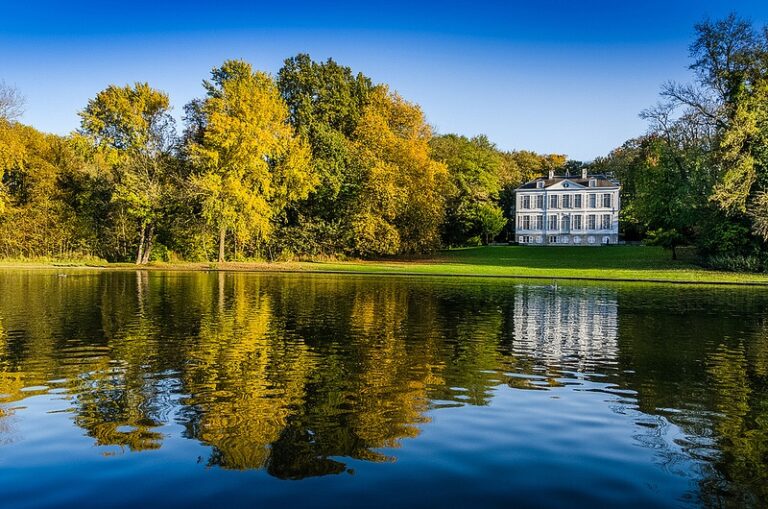
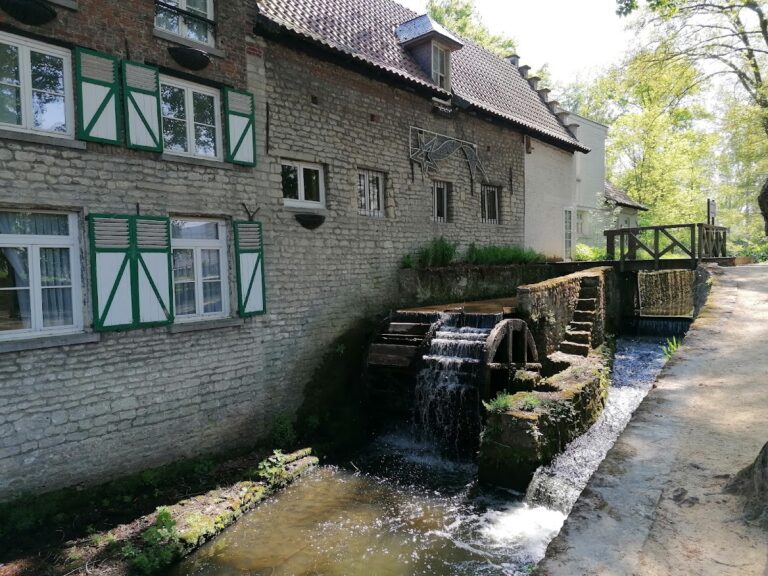
The estate consists of rubble-masonry buildings with slate roofs, set within an extensive wooded park containing a pond. Its architectural history combines the remains of a fifteenth-century farm organized around a courtyard with later residential additions and landscaped grounds. Saint Lambert’s Church stands immediately north of the castle, while Saint Peter’s Church is about 300 meters to the south, in the central district of neighboring Woluwe-Saint-Pierre.
Courtyard Farm and Castle
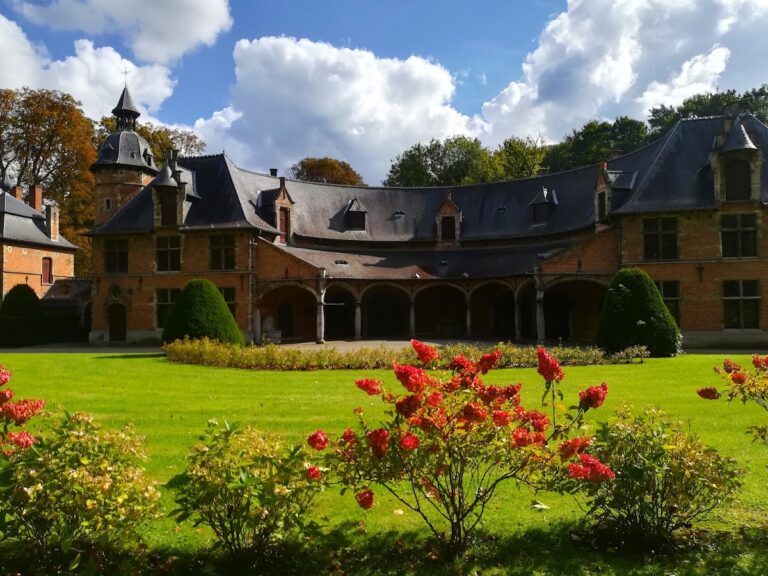
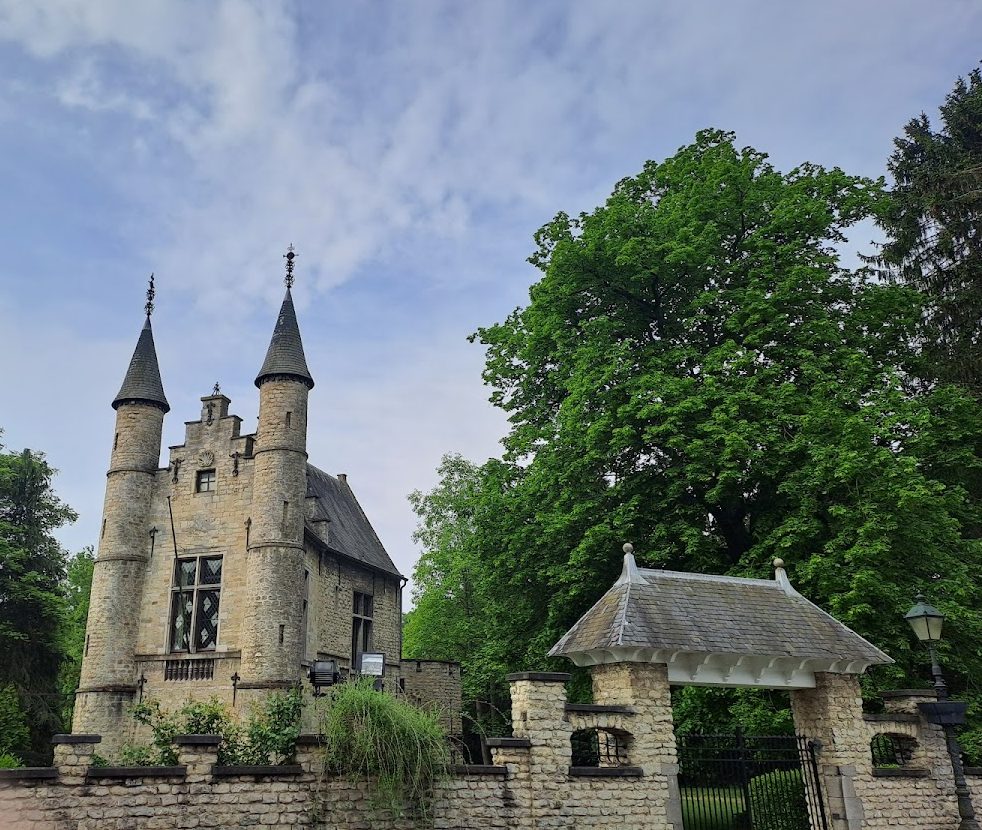
The original fifteenth-century buildings formed a farm arranged around a central courtyard. A broad portico provided entry to the courtyard, and elements of it remain visible in the central section of the present residence. The surrounding wall has been rebuilt several times. The surviving buildings retain rubble masonry and slate roofs, while the castle represents the later residential form of the estate.
Nineteenth-Century Additions
Nineteenth-century work changed the appearance of the residence by adding Spanish-style stepped gables, whose sloping sides rise in successive steps, along with two circular turrets and an octagonal tower. These features stand within the estate’s broader complex of buildings, enclosing walls, gardens, and wooded grounds.
Villa des Tilleuls and Park
Villa des Tilleuls was erected in 1837 and reflects the neoclassical influence found in Brussels country houses. Neoclassicism drew on the forms and principles of classical Greek and Roman architecture. The property also contains gardens and rare trees characteristic of Brussels neoclassical country houses, together with the wooded park and pond.
Nearby sites