Camponeschi Castle: A Medieval Fortified Village in Prata d’Ansidonia, Italy
Visitor Information
Google Rating: 4
Popularity: Very Low
Country: Italy
Civilization: Early Modern, Medieval European
Site type: Military
Remains: Castle
History
Camponeschi Castle is located in the village of Prata d’Ansidonia, Italy. It originated as a fortified settlement during the medieval period, constructed by the local population in the 13th century. The initial foundation of the site dates back to the 1200s when it served as a castrum, or fortified village, providing defense and habitation within its walls. Over the following centuries, particularly in the 15th century, the settlement underwent structural modifications, increasing its fortifications and residential complexity. The earliest known written record referring to the settlement dates from 1508, where it was documented under the name “Castrum S. Petri Camponeschi.” According to local legend, the village’s foundation is connected with the construction period of the nearby San Paolo di Peltuinum church, indicating a religious as well as strategic importance.
Subsequently, the castle became part of a feudal domain controlled initially by the Camponeschi family, a noble lineage originating from the city of L’Aquila. During the era of Spanish influence in Italy, governance of the fief shifted through various hands before ultimately coming under the ownership of the Nardis family from 1634. This family maintained possession of the castle up until the abolition of feudal rights in 1806, marking the end of feudal administration. Despite changes in ownership, the site remained continuously inhabited, with the final residents living on the premises until 1963, when they relocated to the nearby town of Prata.
In the 21st century, efforts to restore and preserve the castle began between 2003 and 2008 but were interrupted by the destructive 2009 earthquake in L’Aquila. The restoration was paused for several years until a renewed campaign started in January 2023. This new phase of conservation is supported by the National Recovery and Resilience Plan and is managed in cooperation between the local municipality and the Abruzzo regional government.
Remains
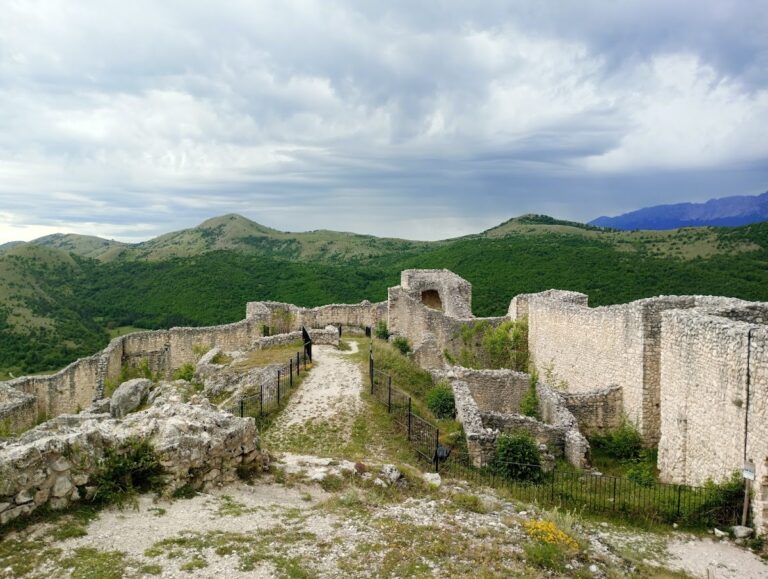
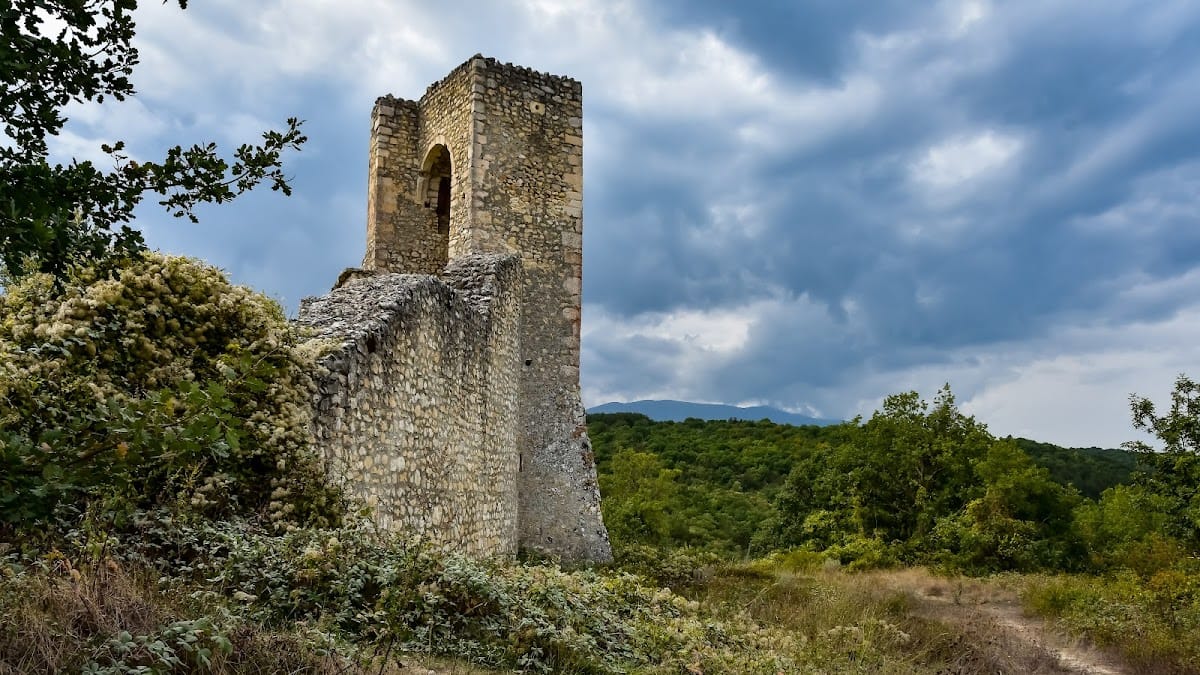
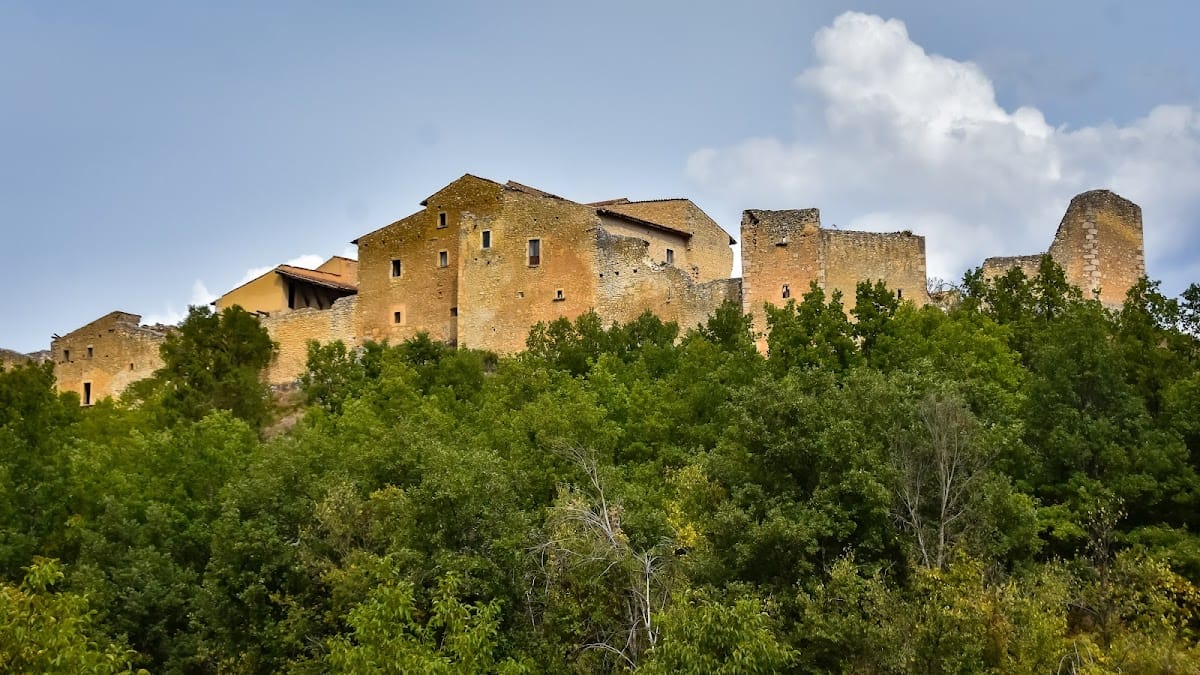
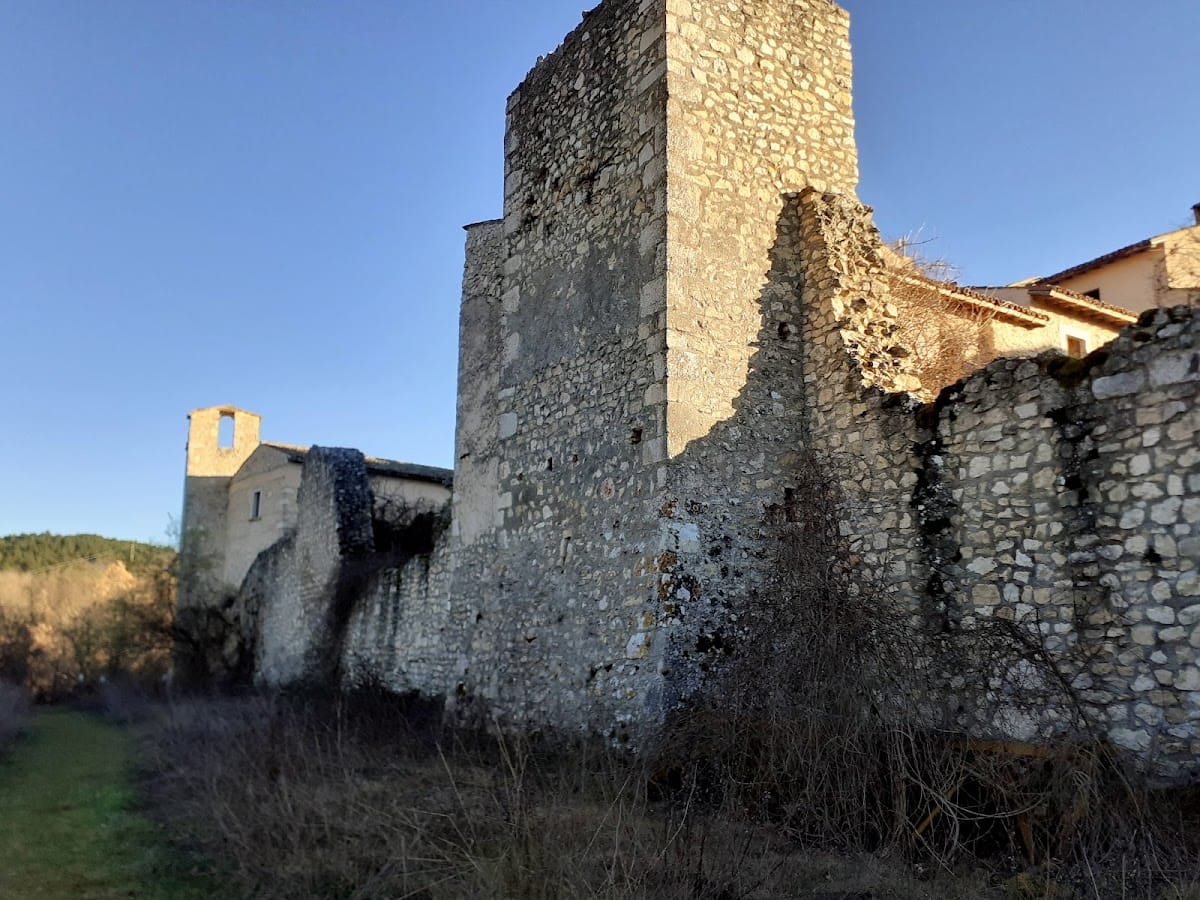
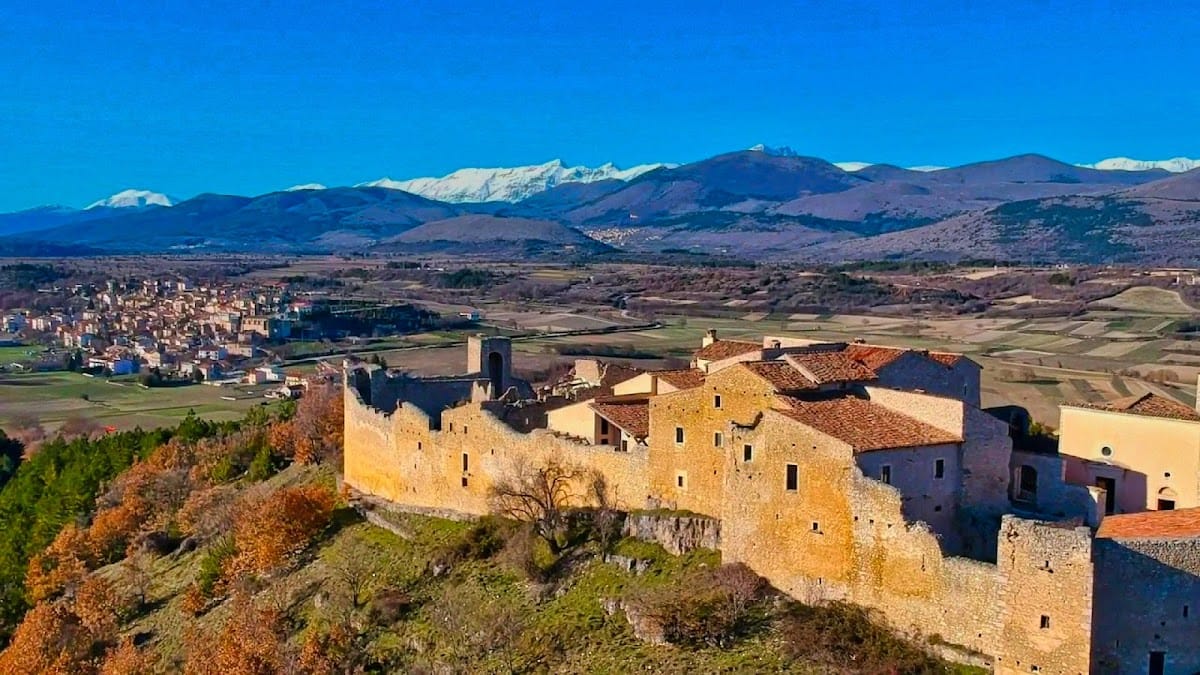
The site of Camponeschi Castle is enclosed within a roughly rectangular defensive wall that forms the boundary of the old village. This perimeter is strengthened by the presence of six remaining square-shaped towers, positioned at intervals along the wall. These towers once served as watchpoints and defensive strongholds and were built using traditional masonry techniques typical of medieval fortifications. They are now partially preserved and have been integrated over time with the residential buildings and noble residences within the settlement.
Two main medieval gates remain intact, providing access to the village’s primary streets, historically referred to as the cardo (north-south axis) and decumanus (east-west axis) following Roman urban planning principles. The western gate is particularly notable, featuring a classic Gothic pointed arch flanked by an irregular five-sided tower. Near this gate stands a now deconsecrated church dedicated to Saint Peter. The church itself shows a late Romanesque stone façade characterized by a horizontally aligned top and a square design consistent with the architectural style of L’Aquila. It has two portals, one of which reflects Renaissance influence with a stone lintel topped by a triangular pediment; above this portal lies a small circular window or oculus.
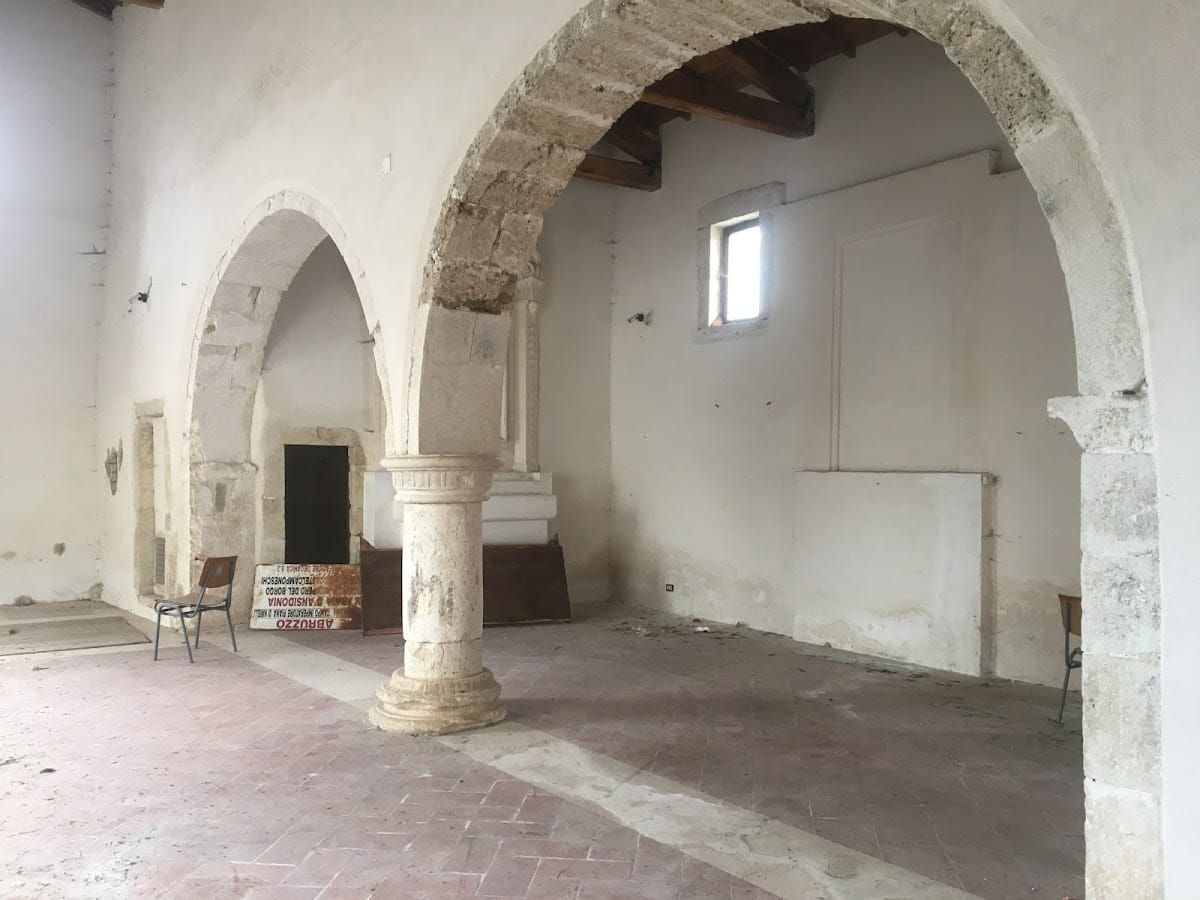
Inside the church, the interior space is divided into two naves, separated by rows of sturdy stone pillars supporting rounded arches. The chapels on either side house altars reflecting a Mannerist style, incorporating designs influenced by classical Greek tabernacles. A bell tower is integrated into one of the structural towers, ending in a gabled form known as a clocher-mur, indicating it was reconstructed during a later period.
The castle’s layout follows a pattern similar to the Tuscan fortified village of Monteriggioni, where residential buildings stand separate from the external walls rather than being built directly against them. Within the enclosure, the village consists mostly of simple, single-room rural homes crafted from masonry and connected by stone arches. Additionally, two more elaborate medieval palaces showcase the architectural style of the 15th century and likely belonged to the noble inhabitants.
A cobbled street, named via Camponeschi, runs from the western Gothic gate through the settlement, passing by the church square. The rear of the church is buttressed by the defensive wall, and an adjacent tower has been converted into the bell tower for the church. Although restoration work had begun in the early 2000s, the damage caused by the 2009 earthquake left the village partly restored and partly in ruins, with efforts to complete preservation still ongoing as of early 2023.
Nearby sites