Burg Neu-Leonroth: A Medieval Hill Castle in Austria
Visitor Information
Google Rating: 4.9
Popularity: Very Low
Official Website: www.ruine.at
Country: Austria
Civilization: Early Modern, Medieval European
Site type: Military
Remains: Castle
History
Burg Neu-Leonroth stands in the northern part of Sankt Martin am Wöllmißberg in Austria. This hill castle, constructed by medieval builders, traces its origin to the late 13th and early 14th centuries, a time when fortifications were commonly established along important routes.
The site’s story is closely connected with the nearby Burg Alt-Leonroth, first mentioned in 1218. Alt-Leonroth, originally known as “Levnrode,” was likely founded by the local noble family, the lords of Krems-Leonrode. Around the year 1300, Burg Neu-Leonroth started taking shape, possibly prompted by the rerouting of a road crossing the Pack Pass into the Gößnitzgraben valley. This strategic relocation may have encouraged the construction of a new stronghold to oversee and protect the altered travel passage.
In the middle of the 14th century, ownership of Neu-Leonroth changed hands to the lords of Walsee and subsequently to the lords of Leibnitz. Under these new rulers, the castle underwent expansion, reflecting its continued significance during this period. By 1681, records indicate the castle was still structurally intact though likely no longer inhabited, as illustrated in the drawings of the 17th-century topographer Georg Matthäus Vischer.
Despite the decline, the castle chapel remained in religious use for some time. In 1682, priests from the nearby St. Lambrecht monastery received permission to perform mass there, even as parts of the castle were falling into ruin. Over the course of the 17th century, Neu-Leonroth was gradually abandoned and left to deteriorate. In the modern era, archaeological research, notably a collection of finds undertaken in 2004 by H. Siegert, has helped reveal the castle’s historical layers and significance.
Remains
Burg Neu-Leonroth is situated on a flattened ridge of rock aligned northeast to southwest, overlooking steep slopes toward the south and southeast. This natural elevation rises above two nearby streams, the Gößnitzbach and the Wöllmißbach. To enhance defense, the castle is surrounded on three sides by artificial moats, cutting off access from the southwest, north, and northeast.
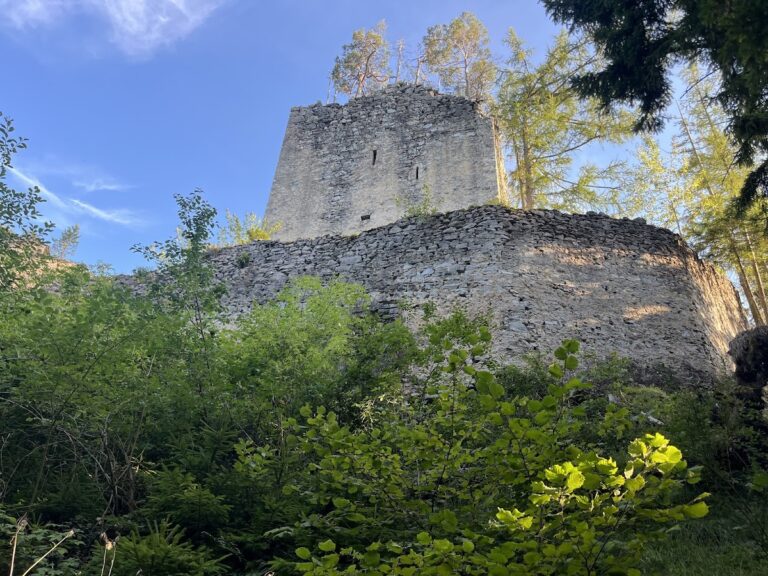
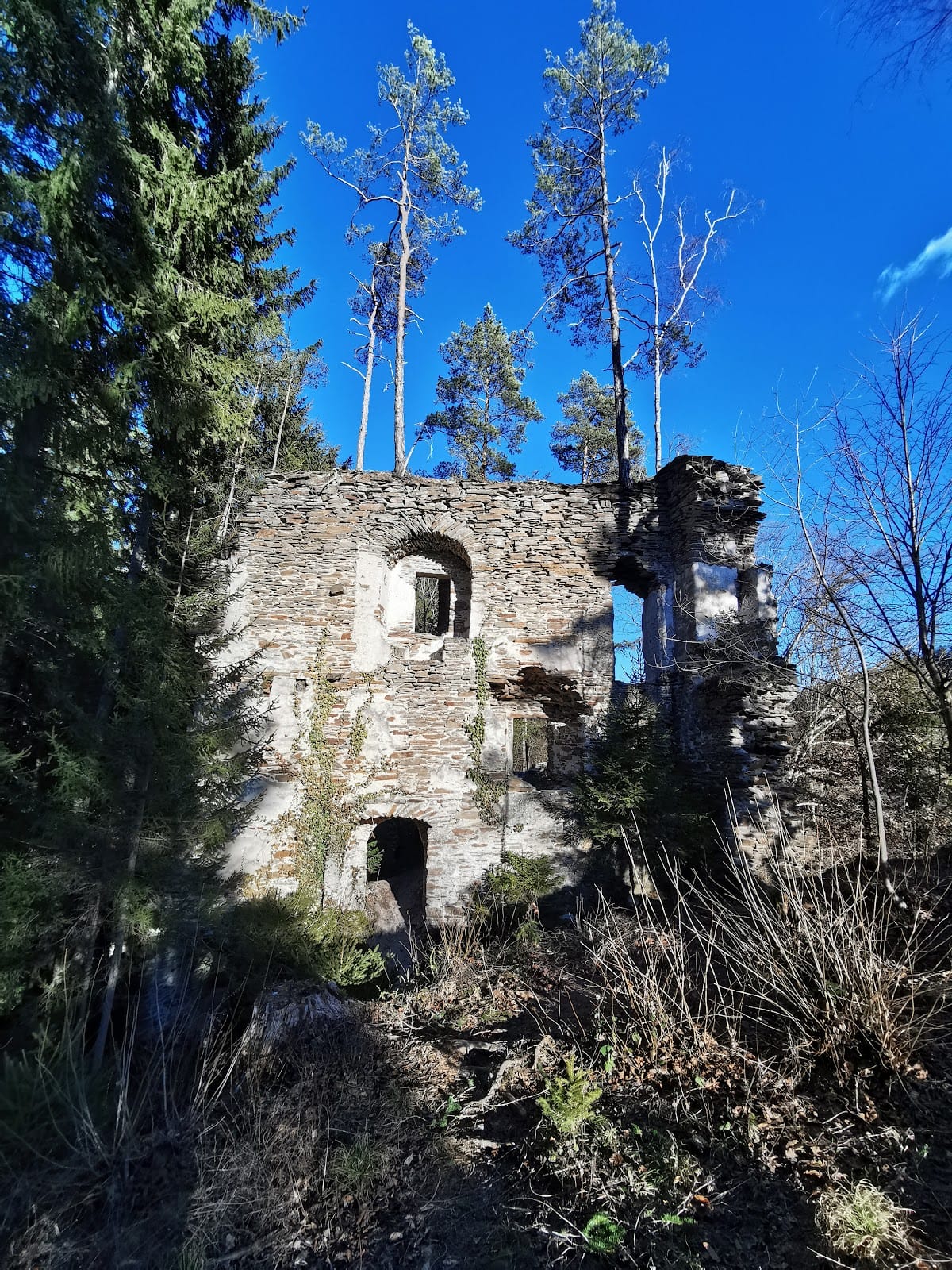
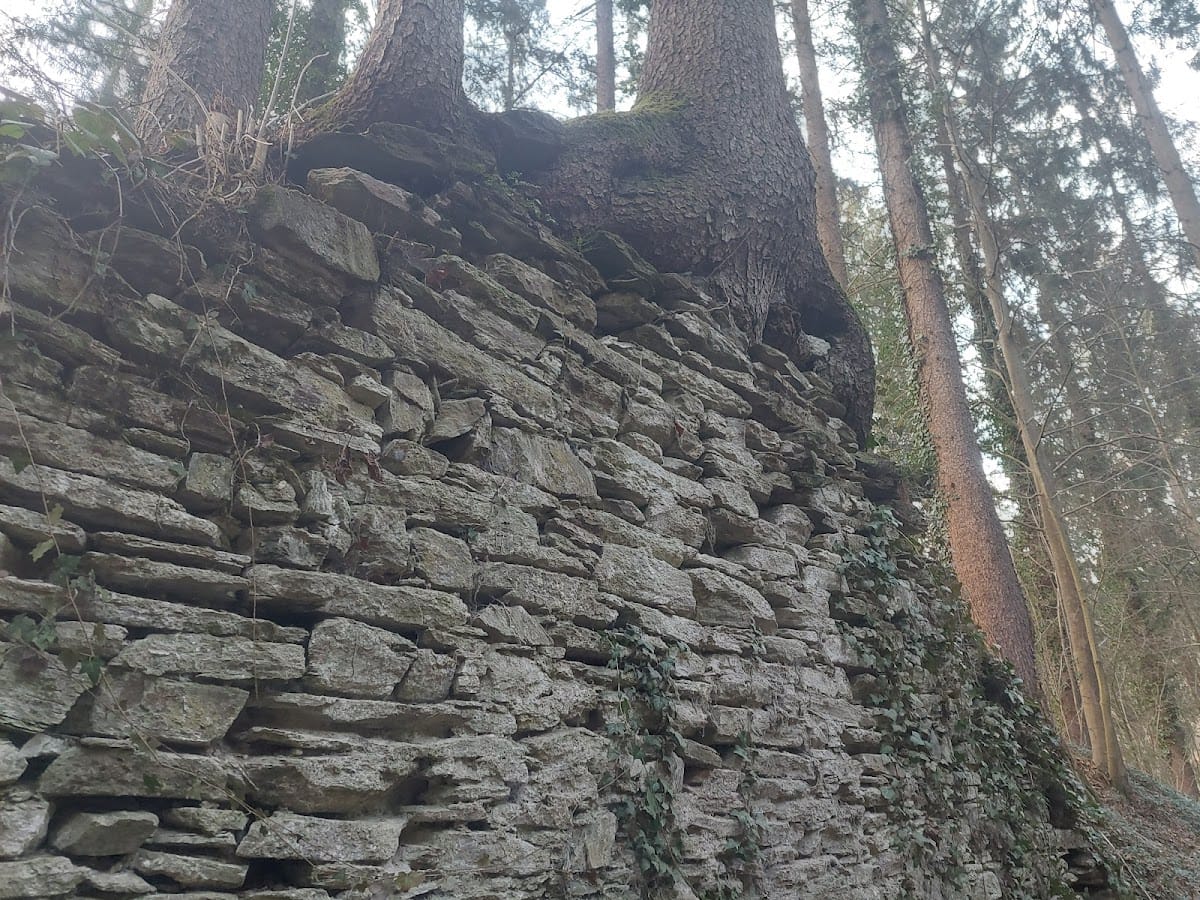
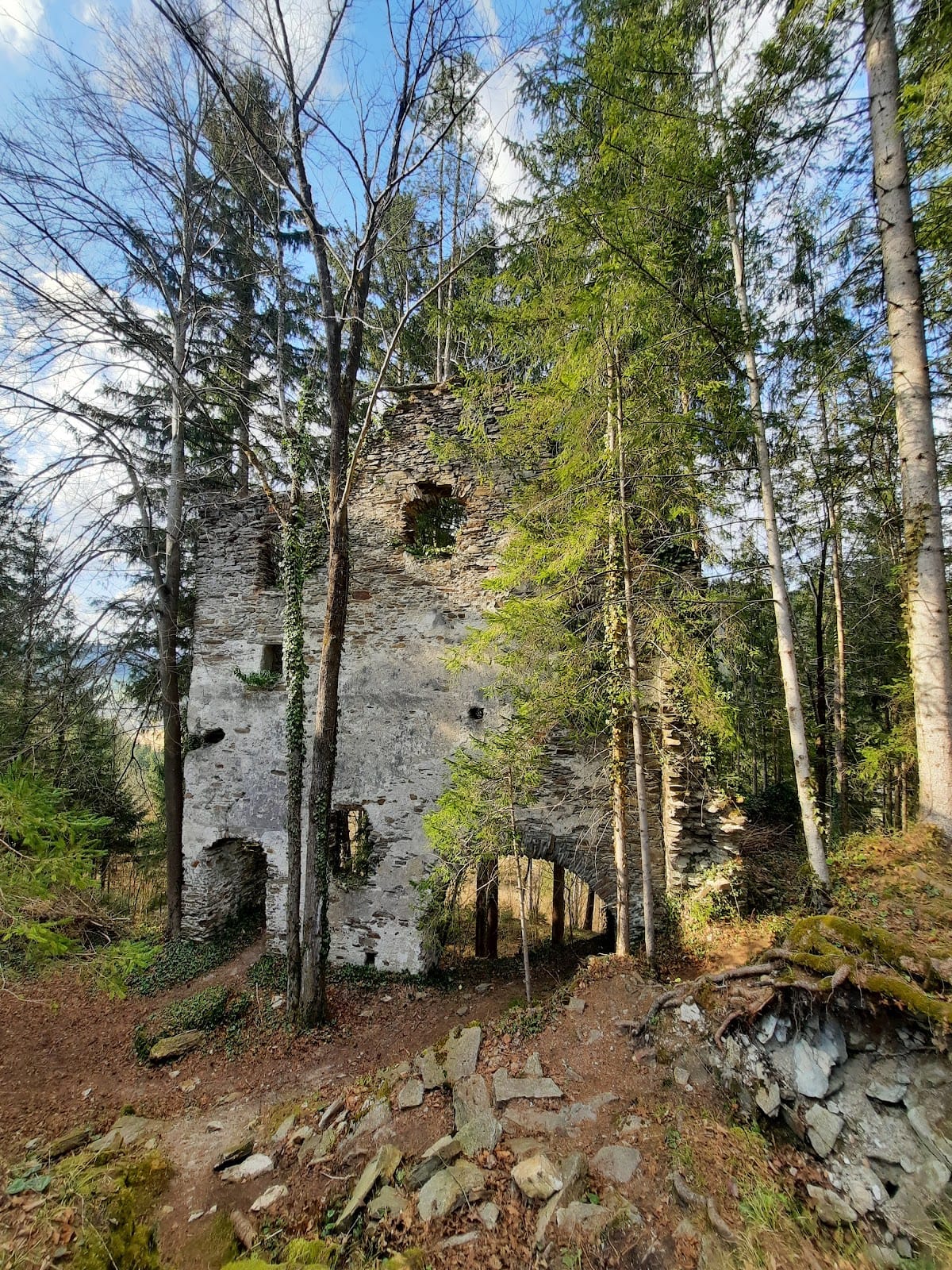
The oldest section visible today is a ring-shaped stone wall enclosing the highest western part of the site. This wall forms an elongated rectangle roughly 50 by 18 meters and is built with roughly layered rubble stone characteristic of early 14th-century construction. Attached to its western end stands a three-story residential building known as a palas, which served as the main living quarters. This palas dates to the initial building phase around 1300.
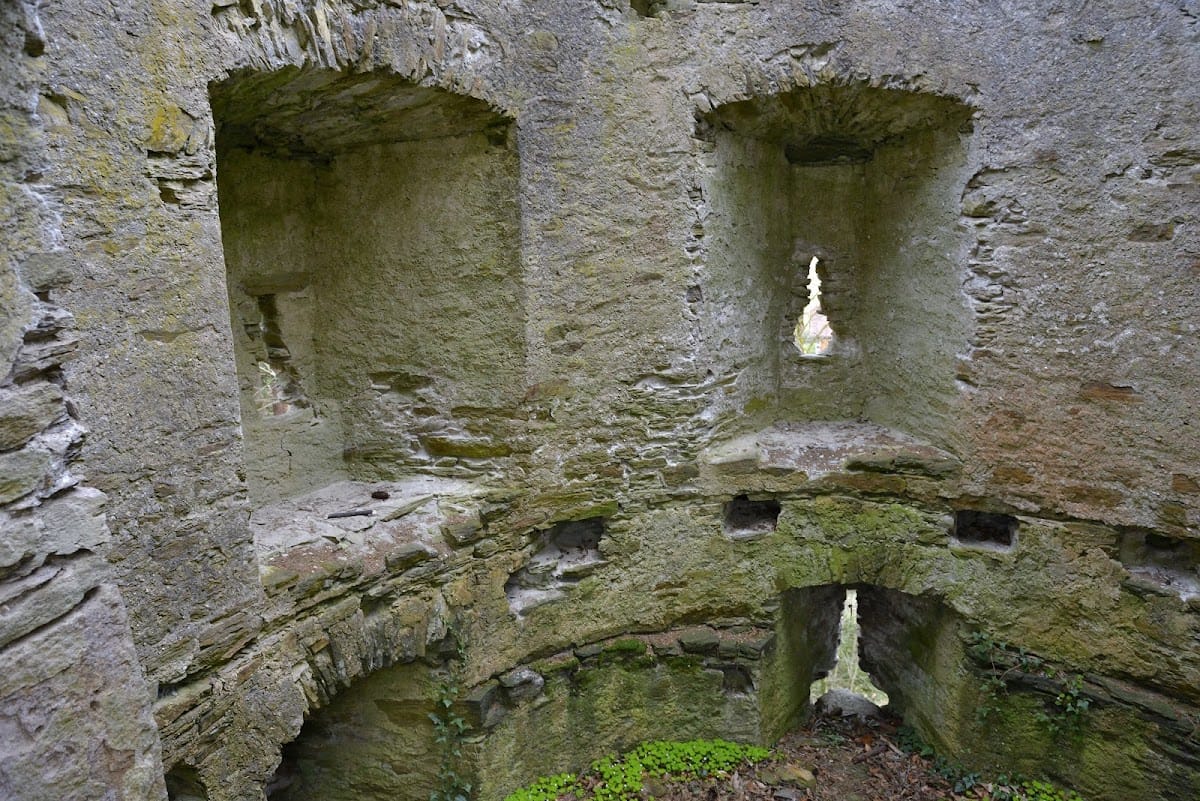
During the 14th or 15th century, a second palas was added along the southern and partly eastern sections of the ring wall. This newer building contains a castle chapel dedicated to Saint Catherine. The chapel is oriented toward the east and features a distinctive three-apse design, where the eastern end is divided into three small rounded sections, a style known in German as Dreiachtelschluss. Fresco fragments painted with mineral-based watercolors were uncovered in the chapel in 1990, providing testimony to its decorative interior.
Together, the original and later palas, along with a gate hall on the eastern side, enclose a central courtyard. Within this courtyard lies a cistern carved directly into the rock, serving as a water reservoir. Near the northern part of the courtyard, a stair tower was built during the castle’s final modifications. This tower preserves traces of Renaissance-era plaster decorated in a stylized pattern resembling stone blocks, reflecting artistic trends from that period.
The castle’s defensive entrance underwent changes over time. The inner gate, now mostly ruined, was reinforced in the 15th century by a narrow, steeply rising gate hall capped with a tower made of irregular rubble stone. This gate wall facing the approach from the northwest is pierced by several slots designed for archers, accompanied by openings for dropping objects to fend off attackers. Just beyond this gate, a partially excavated room remains, once part of a two-story rectangular building with a hipped roof that no longer stands.
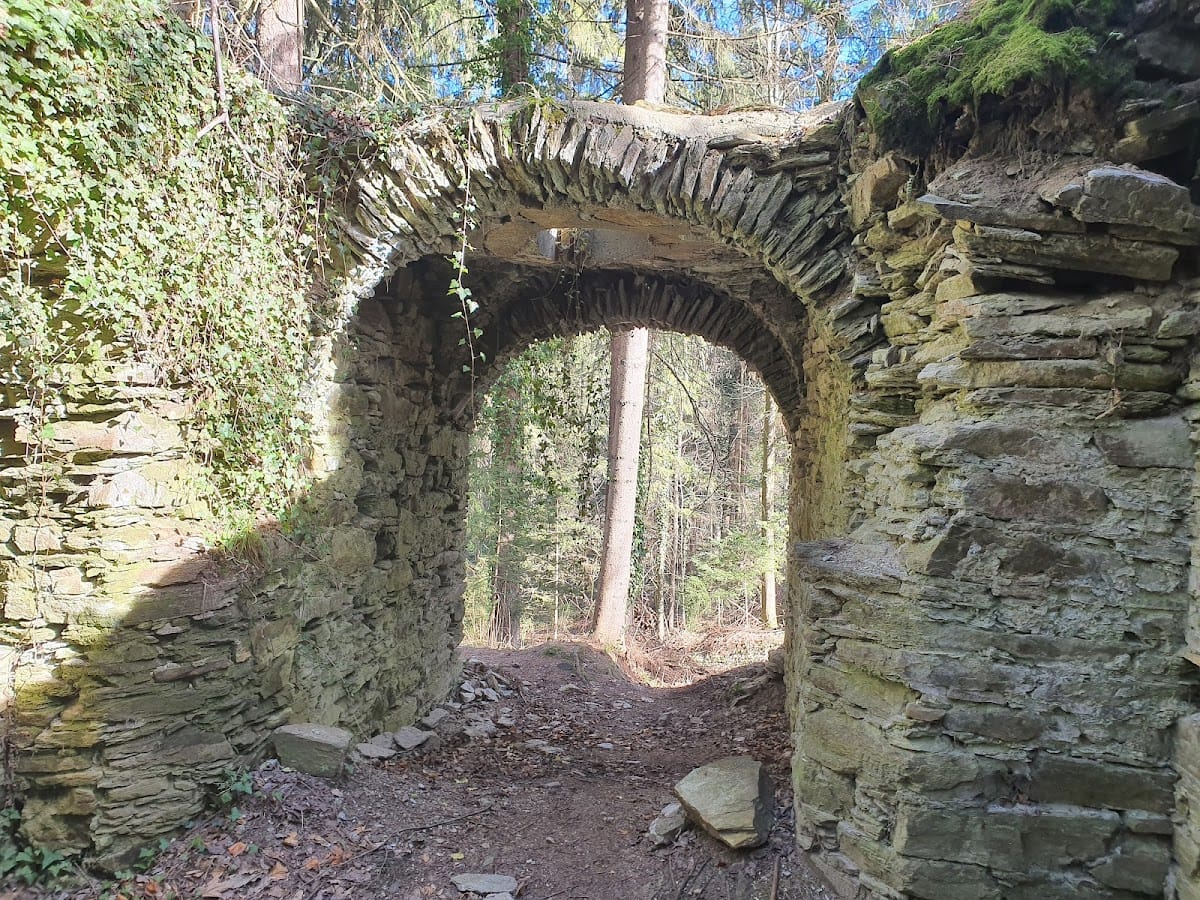
Further defensive features date to the late Gothic period, including a second gate strengthened by a stone ceiling formed of intersecting vaults, known as a cross vault. Outside the main enclosure, defensive earthworks and masonry date to the 15th century. These include partially stone-lined ditches and three semicircular towers placed to cover flanking approaches. The towers are equipped with narrow openings, or embrasures, shaped like keyholes and loops to allow defenders to fire while staying protected.
The outer defensive ring, about 90 by 25 meters in size, encloses an outer bailey northeast of the main castle. Constructed with smaller rubble stones, it connects these flanking towers by a surrounding wall. The largest northwest tower lies below the main castle and is linked by a barrier wall to it. Between this wall and the tower stands the outer castle gate, where traces of the drawbridge’s supporting niche and holes for the gate’s wooden beams remain visible today.
Together, these remnants reveal a castle complex that evolved over several centuries, combining living spaces, religious functions, and layered defenses adapted to changing military and architectural styles.
Nearby sites